Teeth Replaced
A complete denture replaces a full arch. A partial denture replaces one or more teeth while leaving suitable natural teeth in place.

Port Dover Family Dentistry
Compare complete and partial dentures in Port Dover with treatment planning based on missing teeth, oral health, support, comfort and daily care needs.
Let’s get you smiling
Tell us how we can help. Our team will follow up to confirm a time.
Complete and partial dentures in Port Dover
Complete and partial dentures solve different patterns of tooth loss. A complete denture replaces every tooth in an upper or lower arch, while a removable partial denture fills selected spaces and works with the natural teeth that remain.
The most suitable design depends on more than the number of missing teeth. We assess the health and position of remaining teeth, gum and bone support, bite, saliva, dexterity, appearance, maintenance and whether implants or another tooth-replacement option should also be considered.
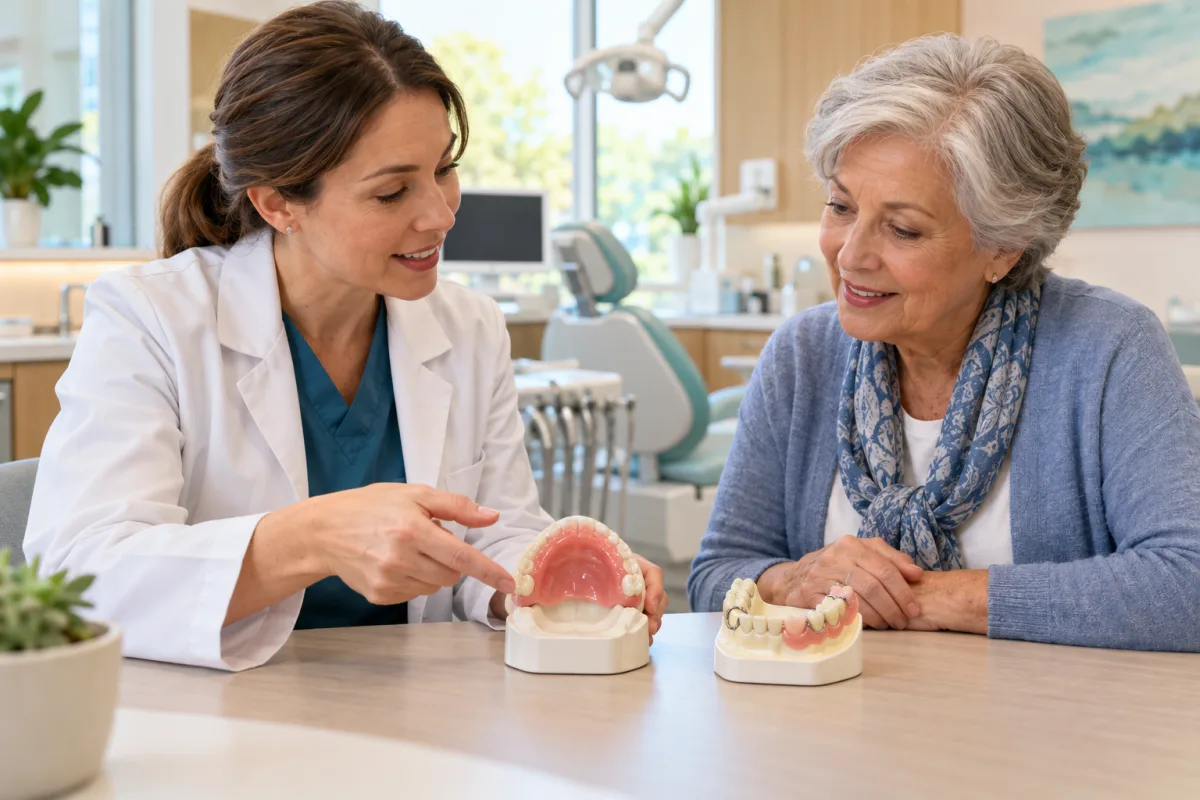
Preserve what is healthy
A partial denture should be planned around teeth worth maintaining. A complete denture is considered when an arch has no teeth or the remaining teeth cannot predictably support the chosen plan.
Two categories, many designs
Both are removable appliances, but they obtain support and retention in different ways and create different cleaning responsibilities.
A complete denture replaces a full arch. A partial denture replaces one or more teeth while leaving suitable natural teeth in place.
Complete dentures rely mainly on the gums, ridge shape, saliva and muscle control; partials can also use rests, clasps or precision components on teeth.
Acrylic and metal-based designs offer different thickness, strength, adjustability, clasp visibility and cost considerations.
Complete-denture care focuses on the appliance and oral tissues, while partial-denture care must also protect the supporting teeth from plaque and decay.
A design built from examination
Denture planning normally takes several stages so oral health, fit, bite and appearance can be checked before delivery.
We examine the mouth, remaining teeth, gums, ridge support, bite, jaw relationship, saliva and any existing appliance. X-rays may be recommended when diagnostically necessary.
We explain suitable complete, acrylic partial, metal-framework, immediate and implant-supported possibilities, including what each requires from the remaining teeth.
Impressions or digital records, bite measurements, tooth shade and trial arrangements help establish support, function and appearance.
At delivery, we check pressure areas, retention, speech and bite. Follow-up adjustments are expected as you learn to use the appliance.
Partial-denture foundations
A removable partial transfers chewing forces through its base and selected natural teeth. Those teeth must be evaluated for decay, gum support, mobility, existing restorations and the shape needed to guide and retain the appliance.
Some teeth may need cleaning, fillings, crowns or other care before the final partial is made. If a tooth has a poor prognosis, including it without a longer-term plan can shorten the useful life of the appliance.
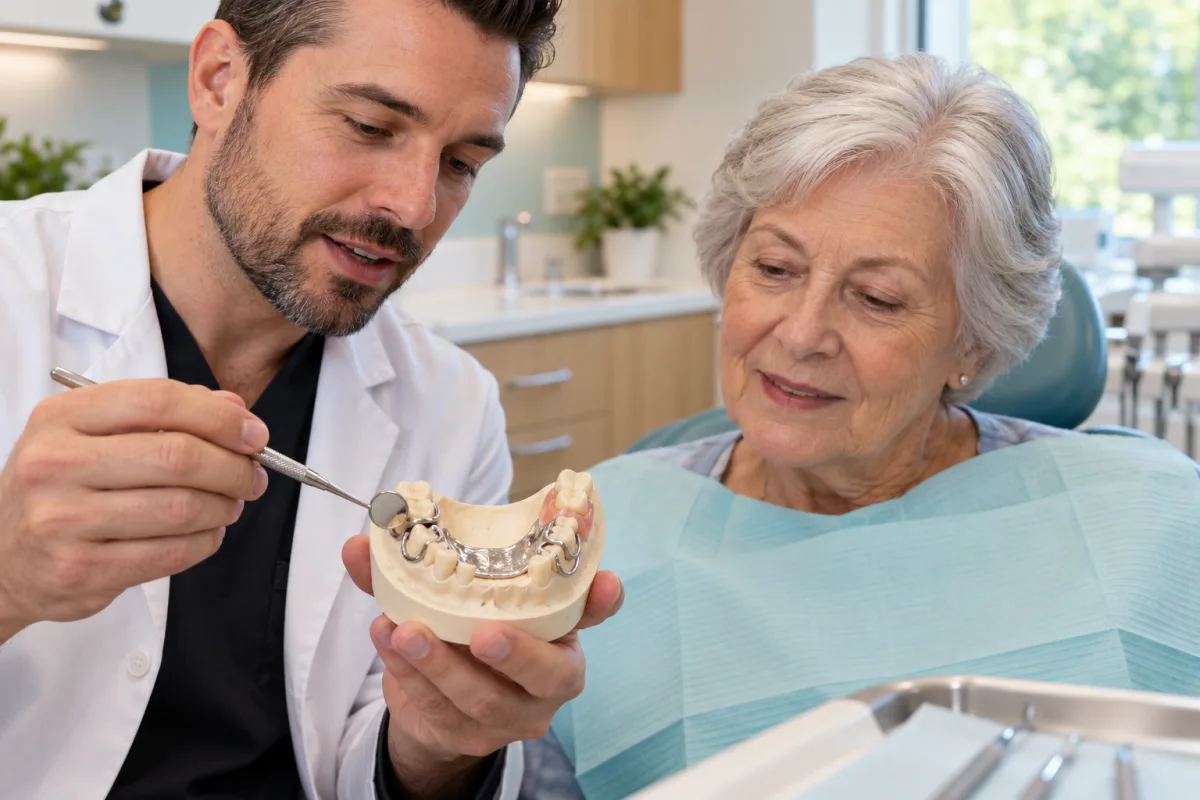
Rests and well-planned contact areas help direct pressure through suitable teeth and tissues.
Clasps or other components resist lifting while balancing visibility, tooth shape and hygiene.
The design should consider how repair or modification might work if the mouth changes later.
Options for different patterns of tooth loss
The names describe broad categories rather than one standard appliance. Your examination determines which variations are clinically reasonable.
Replaces all teeth in one arch and may be conventional, immediate after extractions or supported by implants in a suitable patient.
Uses an acrylic base and replacement teeth, often with wire clasps. It can be useful as an interim or definitive option in selected mouths.
Uses a rigid cast framework that can be thinner and distribute forces efficiently when supporting teeth and space allow.
A bridge, individual implants or an implant-supported denture may be compared when health, anatomy, treatment time and budget permit.
Removing teeth solely to simplify denture design is not automatic. We explain whether a tooth can be maintained, what care it needs and how it affects the alternatives.
Protect the appliance and your mouth
Cleaning instructions vary with the appliance material, natural teeth and implant components.
Brush the denture with a soft denture brush and recommended non-abrasive cleaner. Hot water can distort many denture materials.
With a partial denture, pay particular attention around clasped teeth, gumlines and spaces where food and plaque collect.
Unless instructed otherwise for a healing situation, remove the appliance overnight and store it as directed so tissues can rest.
Sores, looseness, clasp changes, tooth pain or difficulty chewing need assessment. Adhesive does not correct an unhealthy or poorly fitting appliance.
Denture consultation
We can assess your teeth and tissues, explain suitable designs and build a treatment sequence around your needs.
Complete and partial denture questions
A complete denture replaces every tooth in an upper or lower arch. A partial denture replaces selected missing teeth and uses the remaining teeth and oral tissues for support and retention.
Not in every situation. A cast-metal framework can be thinner and rigid, while acrylic may be easier to modify and can suit interim or selected definitive uses. Tooth support, space, appearance, future changes and cost influence the choice.
Visibility depends on which teeth can safely retain the partial, the smile line and the design. We discuss appearance alongside support, hygiene and durability before finalizing the plan.
An immediate denture may be possible. It is made before extractions and inserted at the extraction visit, but healing changes the ridge, so adjustments and a later reline or replacement are commonly needed.
Dentures can improve chewing, but they do not reproduce natural-tooth function exactly. Adaptation, balanced chewing, food modification and a stable fit all affect comfort and confidence.
Recognized year after year
Best Dentists in Norfolk
Proudly recognized among Norfolk’s top-rated dental practices for six consecutive years.

2021 Winner

2022 Winner

2023 Winner

2024 Winner

2025 Winner

2026 Winner
Stories from our patients
Watch a patient’s experience and browse more five-star reviews from people who have visited our Port Dover dental clinic.
Patient video
A patient shares the welcoming atmosphere and positive experience they found at our Port Dover office.
Google reviews
Swipe or use the arrows
Read all reviewsOur community
Your next visit can start today
New patients and CDCP patients are welcome. Tell us how we can help and our Port Dover dental team will follow up with you.
Evening appointments Monday and Tuesday