
Patient video
Welcoming and Wonderful Practice
A patient shares the welcoming atmosphere and positive experience they found at our Port Dover office.
★★★★★
Port Dover Family Dentistry
Regular exams track how a child’s teeth and jaws develop. Pine Grove families can see what a checkup covers and how to prepare for a visit in Port Dover.
Let’s get you smiling
Tell us how we can help. Our team will follow up to confirm a time.
Caring for Pine Grove patients at our Port Dover office
Browse every dental service for Pine GroveCheckups that grow with them
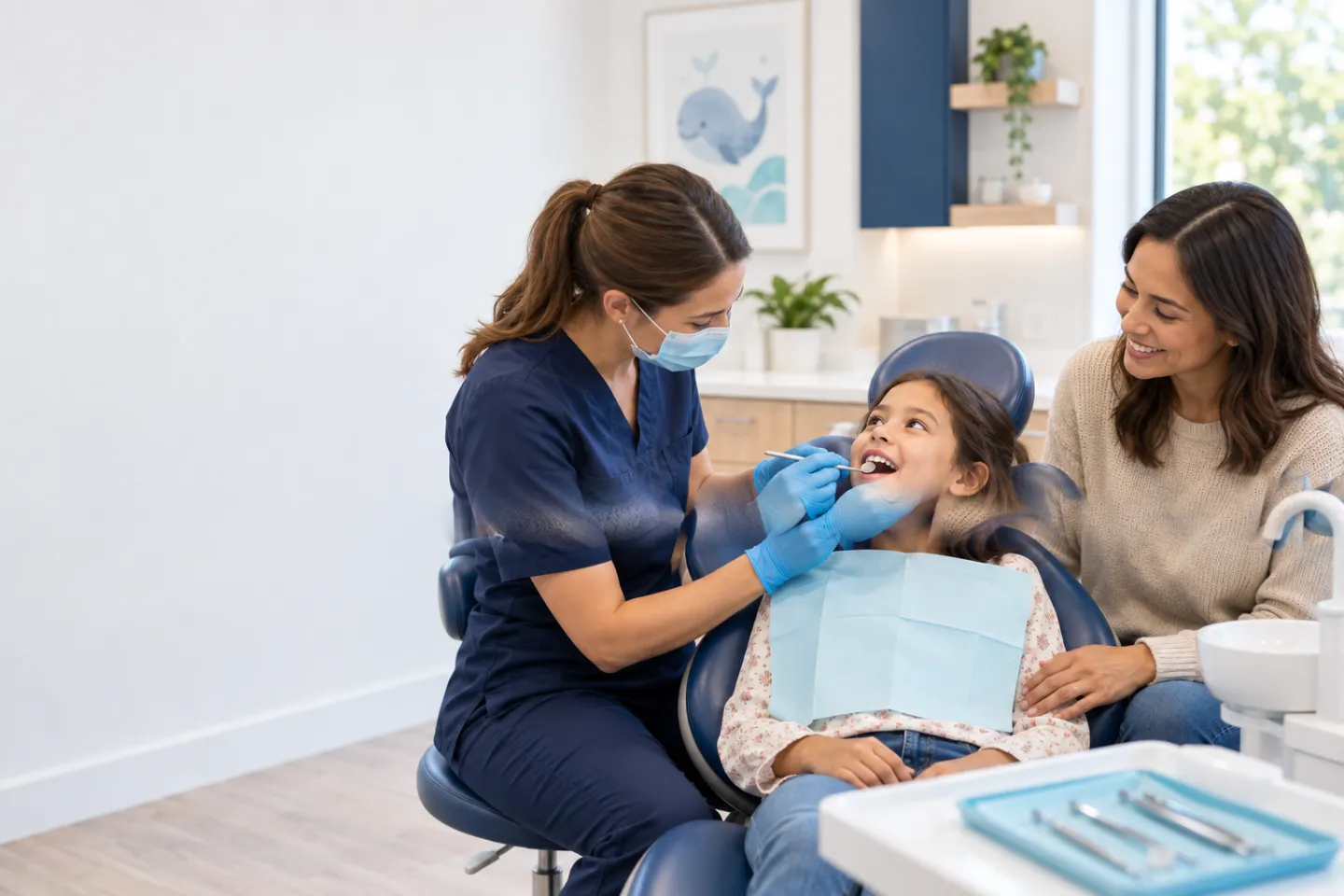
A child’s mouth changes a great deal between the first baby tooth and the arrival of the last adult molars. Regular examinations let the dentist watch for early decay, check how teeth are coming in and notice habits or bite patterns that may need attention. They also help children become familiar with the dental setting.
Pine Grove families are welcome at our Port Dover office for routine children’s exams. Tell the team how your child usually reacts to new experiences, so the visit can be explained and paced in a way that suits them.

Getting ready
Use plain, positive language when describing the appointment. Explain that the dentist will count and look at their teeth and may take pictures. Avoid words that might sound frightening, and do not promise that nothing will happen. Reading a children’s book about dental visits or practising opening wide at home can help.
Let the office know about your child’s health conditions, medications, allergies and any past dental experiences, good or difficult. If your child has sensory sensitivities or needs extra time, mention it when booking. Questions about thumb sucking, teething, grinding or diet can be noted ahead so they are not forgotten.
During the exam
Each tooth is examined for signs of decay, wear or damage. The gums, tongue, cheeks and palate are checked for anything unusual. X-rays may be suggested at certain ages or when there is a specific concern, such as decay between teeth. The dentist will explain why any image is recommended before it is taken.
The dentist will also note how baby teeth are being lost and adult teeth are arriving, and how the upper and lower jaws fit together. Crowding, spacing or bite concerns may be pointed out for monitoring. Habits such as thumb sucking or mouth breathing can be discussed if they appear to be affecting development.
Discussing results
After the exam, the dentist will describe what was found in language that makes sense to you and, where suitable, to your child. If treatment is recommended, ask what it involves, why it is advised and whether it is urgent or can be scheduled later. You can also ask what happens if you choose to wait.
Preventive suggestions might include fluoride varnish, sealants or changes to brushing and snacking routines. If a referral is suggested, such as to an orthodontist, ask what the referral is for and what to expect. Clear next steps make it easier to plan around school and family schedules.
Between checkups
Help young children brush twice daily until they have the coordination to do a thorough job on their own, which often takes until later in childhood. Use an age-appropriate amount of fluoride toothpaste and start flossing where teeth touch. Ask the hygienist to show your child a technique, then reinforce it at home.
Call the office before the next scheduled exam if your child has tooth pain, swelling, a dark spot, a chipped tooth or a sore that does not heal within about two weeks. Early calls often mean simpler care. Keeping regular exams on the calendar helps problems get noticed before they become uncomfortable.
Planning your appointment
Book your child’s exam at our Port Dover office and ask whether siblings can be seen around the same time. Choosing a time when your child is usually rested can make the visit easier.
Bring a list of medications, any previous dental records and the questions you want to ask about teeth, habits or development.
Before you book
Have a question about your situation? Our team can help you plan a visit.
Many children are seen about every six months, but the right interval depends on cavity risk and development. The dentist will recommend a schedule based on your child’s needs and can adjust it over time.
Not usually. X-rays are recommended based on age, risk and specific concerns. The dentist will explain why images are suggested and how often they are likely to be needed for your child.
Parents are generally welcome to stay, particularly with younger children. Let the team know your preference. Some older children prefer some independence, and that can be discussed too.
That happens, especially at early visits. The team can try gentle approaches, breaks or a shorter look. Building comfort over several visits is often more useful than pushing for a complete exam all at once.
Exams and cleanings are often scheduled together but are separate services. When you book, ask what is planned for the visit so you know how much time to allow and what will be done.
A child’s cleaning removes plaque and builds good habits. Pine Grove families can see what happens at a kids’ hygiene visit and how to help at home.
An early bite check can flag crowding, crossbites or habits while a child grows. Pine Grove parents can learn what is assessed and when referral helps.
Recognized year after year
Best Dentists in Norfolk
Proudly recognized among Norfolk’s top-rated dental practices for six consecutive years.

2021 Winner

2022 Winner

2023 Winner

2024 Winner

2025 Winner

2026 Winner
Stories from our patients
Watch a patient’s experience and browse more five-star reviews from people who have visited our Port Dover dental clinic.
Patient video
A patient shares the welcoming atmosphere and positive experience they found at our Port Dover office.
Google reviews
Swipe or use the arrows
Read all reviewsYour next visit can start today
New patients and CDCP patients are welcome. Tell us how we can help and our Port Dover dental team will follow up with you.
Evening appointments Monday and Tuesday