
Patient video
Welcoming and Wonderful Practice
A patient shares the welcoming atmosphere and positive experience they found at our Port Dover office.
★★★★★

Port Dover Family Dentistry
Children do not always say when a tooth hurts. Wilsonville parents can learn how decay is checked, why early care helps with chewing and how to prevent more.
Let’s get you smiling
Tell us how we can help. Our team will follow up to confirm a time.
Caring for Wilsonville patients at our Port Dover office
See every dental service for WilsonvilleSmall teeth, real decay
Baby teeth may eventually fall out, but they hold space for adult teeth, help children chew and speak, and can become painful or infected when decay goes untreated. Cavities in young mouths can progress quickly because enamel on primary teeth is thinner. Spotting a problem early usually means a simpler visit for your child.
Families in Wilsonville can bring a child to our Port Dover office for an assessment of a suspected cavity. When you call, mention which tooth concerns you, any complaints of pain and how your child usually copes with dental visits, so the team can plan a gentle appointment.
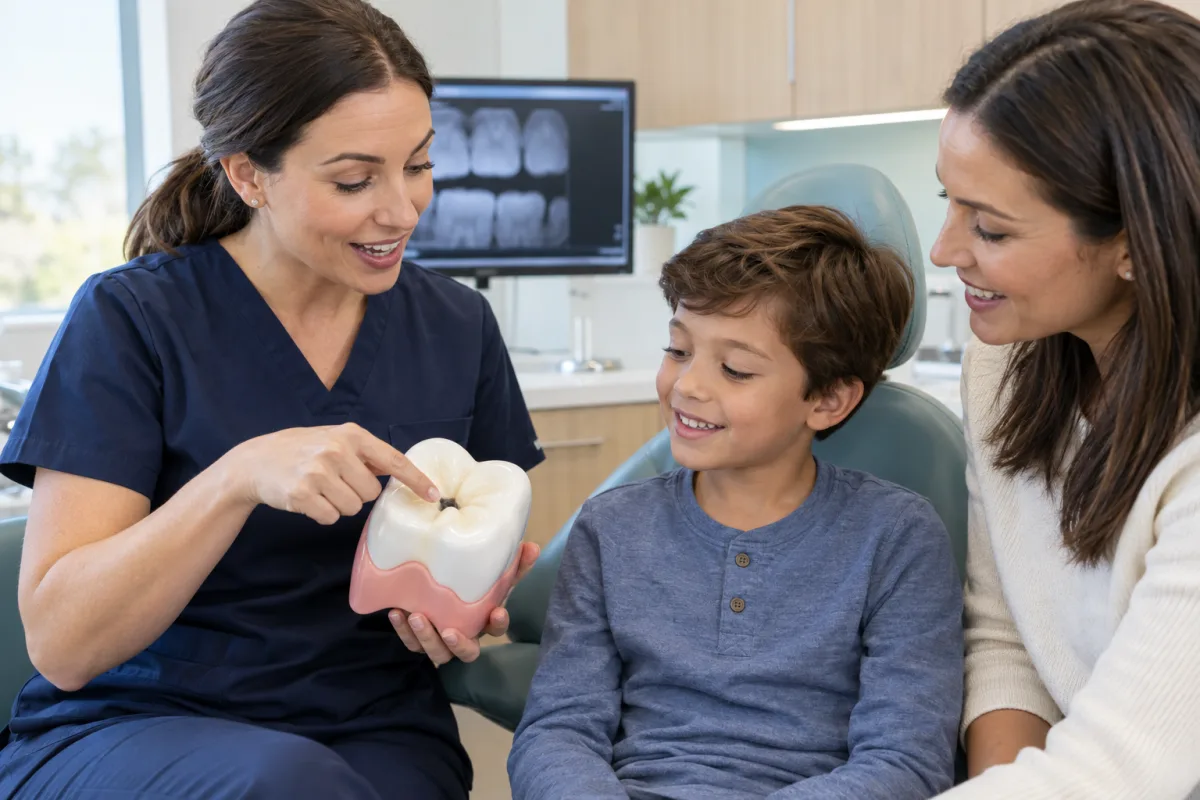
Signs of a cavity
Look for chalky white patches near the gumline, brown or black spots, small holes or food that keeps catching in the same place. Early decay may only appear as a dull white area that is easy to miss. Lifting the lip and checking the back teeth with good light during brushing can help you notice changes sooner.
A child may avoid chewing on one side, refuse cold drinks, wake at night or rub their cheek. Younger children may become irritable without explaining why. Any swelling of the gum or face should be reported promptly. Mentioning these observations when booking helps the team judge how soon your child should be seen.
Assessment
Your child’s dentist will look at the teeth, may use X-rays to see between them and will explain what is found in simple language suited to your child’s age. Very early decay can sometimes be managed with fluoride and closer monitoring. Deeper cavities usually need a filling or other treatment to stop the damage.
The dentist will consider the tooth involved, how close it is to falling out naturally and your child’s overall decay risk. Options are explained to you as the parent or guardian, including what happens if treatment is postponed. Ask questions until you are comfortable with the recommendation and the reasoning behind it.
Treatment visit
Use simple, positive words when explaining the visit and avoid phrases that may frighten, such as references to needles or pain. Let the team know about past experiences and what helps your child settle. A familiar toy or a favourite song in mind can be reassuring, and arriving unhurried makes a difference for many children.
Treatment usually involves numbing the area, removing decay and placing a filling, often in a tooth-coloured material. For badly damaged baby teeth, a crown or other approach may be discussed. The dentist will explain each step to your child as it happens. Comfort options may be discussed for children who find treatment especially difficult.
Preventing more decay
If local anaesthetic was used, watch that your child does not bite or chew the numb lip, cheek or tongue until feeling returns. Soft foods are easier for the rest of the day. Mild tenderness can occur, but report increasing pain, swelling or a filling that feels high when your child bites.
Brush twice daily with an age-appropriate amount of fluoride toothpaste and help children until they can brush thoroughly on their own. Limit sugary drinks and frequent snacking, especially before bed. Ask whether sealants or professional fluoride might suit your child, and keep up regular checkups so new problems are found early.
Planning your appointment
Call our Port Dover office to arrange an assessment and let the team know your child’s age, the tooth you are worried about and any pain or swelling. Ask how best to prepare your child for the appointment.
Bring your child’s medical information, any medication list and a note of comfort strategies that have helped at past appointments.
Before you book
Have a question about your situation? Our team can help you plan a visit.
Untreated decay in a baby tooth can cause pain and infection and may affect the adult tooth developing beneath it. Baby teeth also hold space for permanent teeth. Your dentist will consider timing and explain whether treatment is advisable.
Many fillings involve local anaesthetic to keep the area comfortable. The dentist will explain what is planned and use child-friendly language. Watch your child afterward so they do not bite the numb area while feeling returns.
Very early enamel changes may sometimes be stabilized with fluoride and improved habits. Once a cavity has formed, a filling or other treatment is usually needed. Regular checkups help catch decay at the earliest stage.
Discuss this with the team when booking. Many young children are comforted by a parent nearby. The dentist may suggest how you can support your child calmly while allowing them to focus on instructions.
Tell the team before the appointment. Gentle introductions, shorter visits and clear explanations can help. Comfort options, including sedation where appropriate, may be discussed after the dentist assesses your child’s needs and health history.
Tooth-coloured fillings repair cavities in baby and adult teeth with natural-looking material. Wilsonville parents can learn what to expect at our Port Dover office.
Sealants protect the grooves of back teeth and fluoride strengthens enamel. Wilsonville parents can ask whether these preventive steps suit their child in Port Dover.
Recognized year after year
Best Dentists in Norfolk
Proudly recognized among Norfolk’s top-rated dental practices for six consecutive years.

2021 Winner

2022 Winner

2023 Winner

2024 Winner

2025 Winner

2026 Winner
Stories from our patients
Watch a patient’s experience and browse more five-star reviews from people who have visited our Port Dover dental clinic.
Patient video
A patient shares the welcoming atmosphere and positive experience they found at our Port Dover office.
Google reviews
Swipe or use the arrows
Read all reviewsYour next visit can start today
New patients and CDCP patients are welcome. Tell us how we can help and our Port Dover dental team will follow up with you.
Evening appointments Monday and Tuesday