
Patient video
Welcoming and Wonderful Practice
A patient shares the welcoming atmosphere and positive experience they found at our Port Dover office.
★★★★★

Port Dover Family Dentistry
When a child in Townsend has a cavity, parents want clear answers. Learn how decay is assessed, treated and prevented at our Port Dover office, step by step.
Let’s get you smiling
Tell us how we can help. Our team will follow up to confirm a time.
Caring for Townsend patients at our Port Dover office
Every dental service for TownsendTreating decay in young teeth
It is easy to assume baby teeth do not matter because they eventually fall out, but they help children chew, speak and hold space for the adult teeth underneath. Untreated decay can cause pain, infection and missed school days, so catching and managing a cavity early keeps small problems from becoming bigger ones.
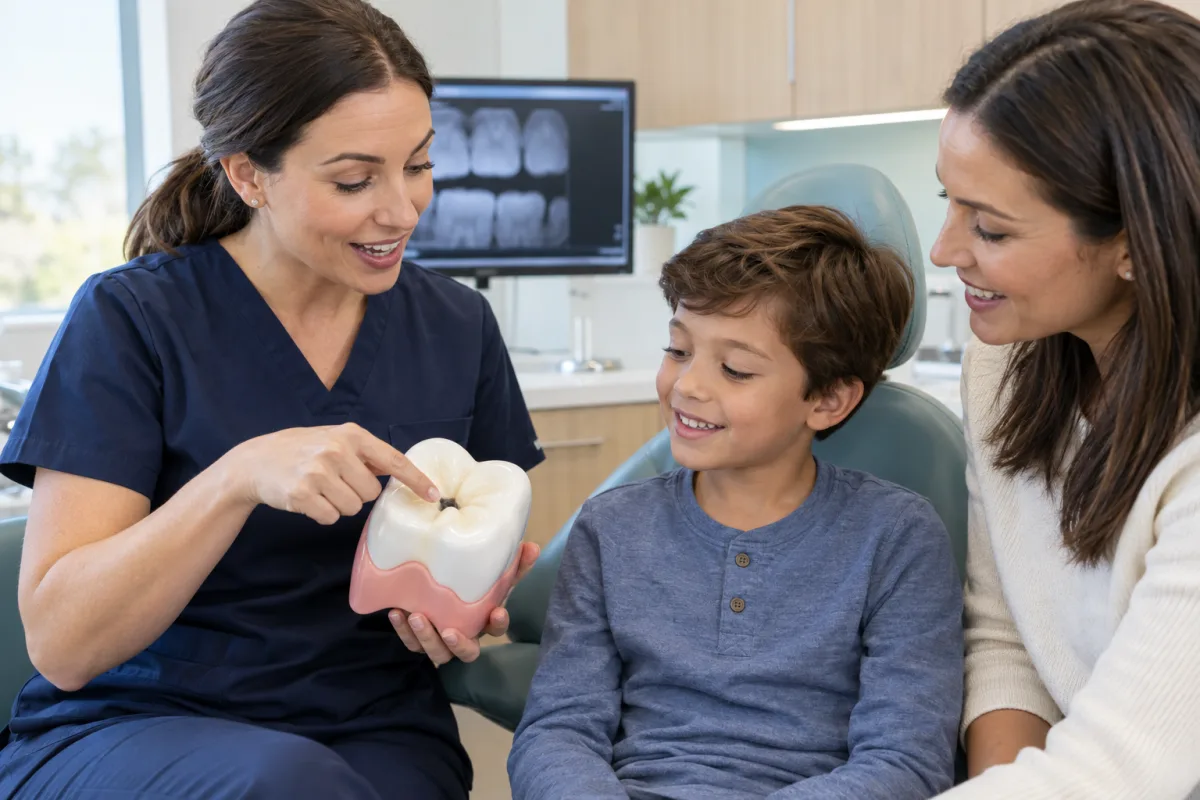
Families from Townsend can bring children to our Port Dover office for an assessment when a cavity is suspected or has been found at a checkup. The dentist will explain what the decay looks like, which options suit your child’s age and comfort, and how home habits can lower the risk of new cavities.
Spotting a cavity
Young children may not say a tooth hurts, so watch for chalky white spots, brown or dark areas, food catching in one place or reluctance to chew on one side. Complaints when eating sweets or cold foods can also be a clue. Some children simply become fussy at mealtimes without explaining why, which is worth noting for the dentist.
At the appointment, the dentist will look closely at each tooth and may recommend X-rays to see between the teeth, where decay often begins unseen. The size and depth of the cavity, along with the age of the tooth and when it is expected to fall out, all guide the recommendation.
Choosing treatment
Very early decay that has not broken through the enamel can sometimes be managed with fluoride, improved brushing and diet changes, then monitored at future visits. The dentist will explain whether this approach is reasonable for your child and what signs would mean the area needs more active treatment later on.
Once a cavity has formed, a filling is usually recommended to remove the decay and seal the tooth. Larger cavities in baby teeth may need a crown, and decay that reaches the nerve can require additional treatment. Ask the dentist to explain why each option is suggested and how it fits your child’s age.
The appointment
Use simple, neutral words when explaining the visit and avoid phrases that suggest it will hurt. Let the team know about any worries, past experiences or sensory sensitivities beforehand. A comfort item or familiar routine can help, and booking at a time when your child is usually rested often makes the appointment go more smoothly.
The dentist will usually numb the area so the child stays comfortable, then remove the decay and place the filling. The team will explain each step in child-friendly language and check in often. Afterwards, the lip or cheek may feel numb for a while, so watch that your child does not bite or chew it.
Preventing new cavities
Help your child brush twice a day with fluoride toothpaste in an amount suited to their age, and supervise until they can do it thoroughly on their own. Limit sugary drinks and frequent snacking, especially before bed. Water between meals and cleaning between teeth that touch can reduce the chance of new decay forming.
Regular checkups allow problems to be found while they are small. Ask the dentist whether sealants on the back teeth or professional fluoride would add protection for your child. If a filled tooth becomes sore, swollen or sensitive later, call the office rather than waiting for the next scheduled visit.
Planning your appointment
Call our Port Dover office and describe what you have noticed, whether your child has pain and any concerns about how they handle dental visits. The team can suggest an appointment time that suits your family.
Bring a list of medications or allergies, and let us know about any previous dental treatment your child has had elsewhere.
Before you book
Have a question about your situation? Our team can help you plan a visit.
Often they do, because decay can spread, cause pain and lead to infection before the adult tooth arrives. The dentist will consider the size of the cavity and when the tooth is likely to fall out before recommending treatment.
Most fillings involve local anaesthetic to keep the child comfortable. The team will explain the process in gentle terms. Very small areas may sometimes be managed differently, and the dentist can discuss this with you.
Look for white chalky spots, brown areas, food getting stuck or complaints when eating. Many cavities have no obvious signs early, so regular checkups and X-rays when recommended are the most reliable way to find them.
Tell the team ahead of time. They can take extra time to explain, use calm language and plan breaks. If anxiety is significant, ask about comfort options suitable for children and whether they apply to your child.
Supervised brushing with fluoride toothpaste, fewer sugary drinks and snacks, and regular checkups all help. Ask about sealants and fluoride treatments, which can give additional protection to teeth that are more prone to decay.
Tooth-coloured fillings repair children’s cavities while blending in. Learn how they are placed, how kids stay comfortable and how to care for them.
Sealants and fluoride add protection against cavities. Townsend parents can learn how each works, which teeth benefit and how both fit with home care.
Recognized year after year
Best Dentists in Norfolk
Proudly recognized among Norfolk’s top-rated dental practices for six consecutive years.

2021 Winner

2022 Winner

2023 Winner

2024 Winner

2025 Winner

2026 Winner
Stories from our patients
Watch a patient’s experience and browse more five-star reviews from people who have visited our Port Dover dental clinic.
Patient video
A patient shares the welcoming atmosphere and positive experience they found at our Port Dover office.
Google reviews
Swipe or use the arrows
Read all reviewsYour next visit can start today
New patients and CDCP patients are welcome. Tell us how we can help and our Port Dover dental team will follow up with you.
Evening appointments Monday and Tuesday