
Patient video
Welcoming and Wonderful Practice
A patient shares the welcoming atmosphere and positive experience they found at our Port Dover office.
★★★★★

Port Dover Family Dentistry
When a child has a cavity, families from Port Ryerse can learn what treatment involves, how to prepare and how to protect young teeth afterward in Port Dover.
Let’s get you smiling
Tell us how we can help. Our team will follow up to confirm a time.
Caring for Port Ryerse patients at our Port Dover office
Every dental service for Port RyerseSmall teeth, real decisions
Hearing that your child has a cavity can bring up worry about discomfort, cooperation and whether a baby tooth is worth fixing. Decay in primary teeth can progress quickly because the enamel is thinner. Treatment choices depend on the size of the cavity, the child’s symptoms and how long that tooth is expected to stay.
Families in Port Ryerse can bring their child to our Port Dover office for assessment and treatment planning. Talk with the team about your child’s temperament, past experiences and what usually helps them cope, so the appointment can be paced in a way that suits them.
Understanding the cavity
Cavities may be spotted during an examination, on X-rays or because a child complains of pain while eating. Early decay sometimes appears as a white or brown spot before a hole forms. Ask the dentist to show you where the problem is and explain whether it is early enough for preventive steps or needs a restoration now.
Baby teeth help children chew, speak clearly and hold space for permanent teeth. Untreated decay can lead to pain, infection and disruption to the teeth developing beneath. That said, a tooth that is close to falling out may be managed differently. The dentist will weigh timing and symptoms before recommending treatment.
Treatment choices
Small to moderate cavities are often repaired with a tooth-coloured filling. The decayed part is removed and the tooth is rebuilt and shaped. Local anaesthetic is commonly used to keep the area comfortable. For very early decay, fluoride treatments or sealants may be suggested to help stop it from progressing.
Deeper decay that reaches near the nerve may need a more involved treatment or a crown to protect the remaining tooth. In some cases, removing a badly damaged baby tooth is the most sensible option, possibly followed by a space maintainer. The dentist will explain the reasons for any recommendation and answer questions.
On treatment day
Use simple, neutral words when telling your child about the appointment and avoid describing needles or pain. Let the team know about any fears, sensory sensitivities or previous difficult visits. A regular meal beforehand, unless instructed otherwise, and a favourite comfort item can help. Plan the day so there is no rush before or after.
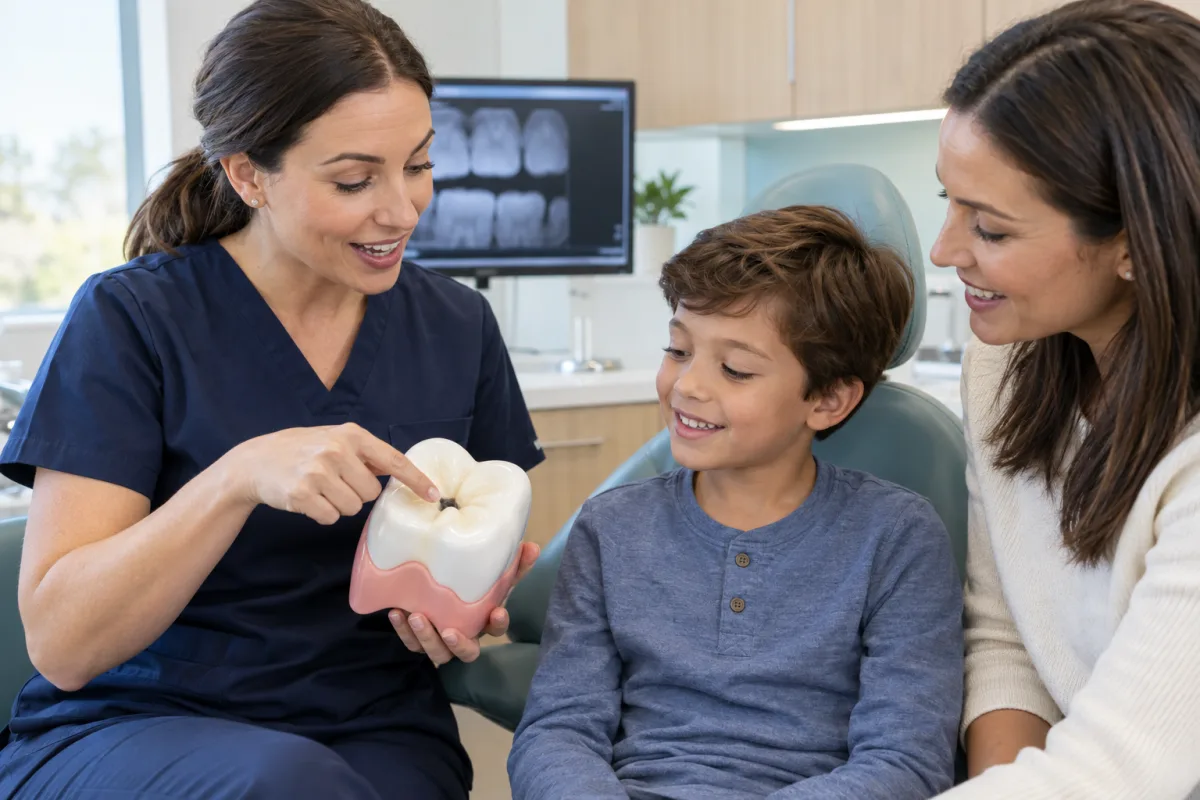
The dental team explains each step in child-friendly language and may use show-and-tell. Your child can be given a signal for needing a break. If a child becomes very distressed, it may be better to stop and plan a different approach rather than push through. Ask about comfort options if needed.
After the filling
If freezing was used, watch that your child does not bite or chew their lip, cheek or tongue until feeling returns. Soft foods are easiest for the rest of the day. Mild tenderness around the treated tooth can happen; contact the office if pain increases, swelling appears or the filling feels uneven.
Brushing twice daily with fluoride toothpaste, supervised for younger children, makes a real difference. Limit sugary drinks and frequent snacking, including juice sipped through the day. Ask about sealants for back teeth and regular checkups so any new decay is caught early, while it is easier to treat.
Planning your appointment
Call our Port Dover office to arrange the appointment and mention any worries your child has. Ask how long to plan for and whether a parent can stay close during treatment.
Choose a time of day when your child tends to be rested. Bring a comfort item if it helps them settle.
Before you book
Have a question about your situation? Our team can help you plan a visit.
Local anaesthetic is commonly used to keep the tooth comfortable. Your child may feel pressure, vibration or water, and the team will explain these sensations in simple terms. Ask what to expect beforehand so you can prepare your child calmly.
Sometimes, if the tooth is close to being lost and the decay is small. Often, though, decay grows and can cause pain or infection. The dentist will consider timing, symptoms and X-rays before advising whether treatment is needed.
It is common for young children to struggle. The team may suggest breaking treatment into shorter visits, trying behaviour approaches or discussing comfort options. In some situations, referral to a pediatric specialist may be considered.
Supervise brushing with fluoride toothpaste, clean between teeth that touch, limit sugary snacks and drinks, and keep up with regular checkups. Sealants and professional fluoride may add protection. The team can give advice suited to your child’s risk.
Often, yes. Tooth-coloured materials are commonly chosen, but the dentist may suggest a different material depending on the tooth, the size of the cavity and how well the area can be kept dry during treatment.
Tooth-coloured fillings repair cavities in children’s teeth with natural-looking material. Port Ryerse parents can learn what to expect at our Port Dover office.
Sealants protect the grooves of back teeth and fluoride strengthens enamel. Port Ryerse families can ask whether either suits their child at our Port Dover office.
Recognized year after year
Best Dentists in Norfolk
Proudly recognized among Norfolk’s top-rated dental practices for six consecutive years.

2021 Winner

2022 Winner

2023 Winner

2024 Winner

2025 Winner

2026 Winner
Stories from our patients
Watch a patient’s experience and browse more five-star reviews from people who have visited our Port Dover dental clinic.
Patient video
A patient shares the welcoming atmosphere and positive experience they found at our Port Dover office.
Google reviews
Swipe or use the arrows
Read all reviewsYour next visit can start today
New patients and CDCP patients are welcome. Tell us how we can help and our Port Dover dental team will follow up with you.
Evening appointments Monday and Tuesday