
Patient video
Welcoming and Wonderful Practice
A patient shares the welcoming atmosphere and positive experience they found at our Port Dover office.
★★★★★

Port Dover Family Dentistry
A painless cavity can still need attention. Our Port Dover guide helps parents ask what the examination shows and why the proposed care suits their child's tooth.
Let’s get you smiling
Tell us how we can help. Our team will follow up to confirm a time.
Dental care at our Port Dover practice on Norfolk County Highway 6
All Port Dover dental servicesUnderstand the tooth and the child
Hearing that your child has a cavity can raise questions about timing, comfort and whether a baby tooth needs treatment. The answer depends on the tooth’s condition, symptoms and stage of development.
At our Port Dover practice, ask the dentist to explain the findings and suitable options. The plan should also consider your child’s ability to participate and the practical preparation needed for treatment.
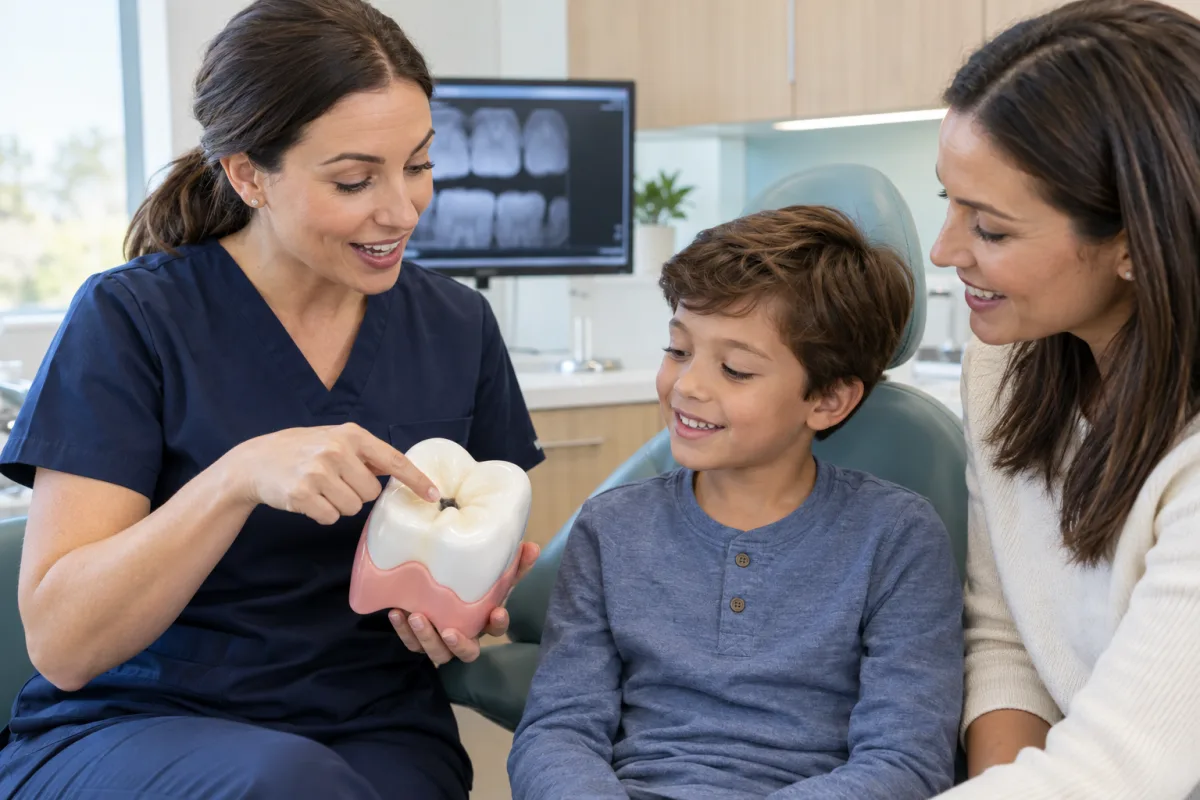
Assess the concern
Tell the dentist if your child avoids a food, chews differently, wakes at night or reacts to temperature. Visible changes matter too, but the absence of pain does not settle the condition of a tooth. Examination and relevant imaging help establish the extent of decay and the care appropriate to the findings.
Find out whether the affected tooth is primary or permanent and how its expected development influences the decision. A baby tooth's future loss does not, by itself, explain what to do about a current cavity. Ask the clinician to relate the recommendation to this tooth's condition and role in your child's mouth.
Compare options
The location and extent of decay, remaining structure and symptoms influence which treatment is suitable. A filling is not the automatic answer to every cavity. If several teeth need attention, ask why their recommendations differ rather than assuming one material or procedure should be used throughout the mouth.
Discuss reasonable alternatives and what waiting could mean for the tooth. If referral or more than one stage is proposed, clarify the reason and the purpose of each appointment. Knowing which decisions are settled and which depend on further assessment helps you organize care without mistaking an initial measure for a completed plan.
Prepare for treatment
Share the experiences and specific fears that may affect your child's participation, along with communication that has helped before. Ask how the procedure will be introduced and how comfort will be managed for the work involved. The plan should reflect both the dental need and the child's circumstances.
Confirm preparation instructions, the expected appointment length and what you can explain at home. If several teeth require treatment, discuss how visits will be organized and what each will accomplish. Raise uncertainties before the procedure day so the family understands the arrangements and any additional support being considered.
After the repair
Before leaving, check the aftercare instructions and any precautions while numbness remains. Know whom to contact if pain persists, changes or makes eating difficult. A child's complaint should not automatically be dismissed as adjustment to the repair; describe what you are observing so the team can advise on review.
Talk through cleaning assistance and eating routines without treating the cavity as a reason for blame. Repairing the affected tooth does not by itself change the factors contributing to decay. Agree on practical steps your household can maintain, then use follow-up to review both the restoration and the prevention plan.
Planning your appointment
When booking in Port Dover, mention pain, swelling and changes in eating or sleep. Ask whether the visit is for assessment or a procedure already recommended.
Bring current medical information and clarify any instructions or support required before treatment is arranged.
Before you book
Have a question about your situation? Our team can help you plan a visit.
The dentist considers its condition, symptoms and expected development. Ask why treatment or another approach is recommended for that tooth rather than assuming all baby teeth can simply be left until they fall out.
Yes. Symptoms alone do not establish the extent of decay. Examination findings help determine appropriate care, and the dentist can explain why a painless tooth may still need attention.
Material and restoration type depend on the damage and clinical circumstances. Ask which options are suitable and how they differ, rather than choosing the plan only by the appearance of the finished repair.
Raise that before the appointment and explain specific concerns. The team can discuss preparation, comfort options and whether another setting or provider should be considered for the treatment required.
Ask for advice based on the findings and your family’s routine. Discuss cleaning assistance, products and eating patterns, then identify changes you can maintain. Follow-up helps review both repairs and preventive needs.
Is your child avoiding a tooth after a filling? Tell our Port Dover team about an uneven bite or changed chewing so the tooth-coloured repair can be reviewed.
Preventive care changes as teeth and habits develop. At reviews in Port Dover, ask whether sealants remain intact and fluoride advice still fits your child's needs.
Recognized year after year
Best Dentists in Norfolk
Proudly recognized among Norfolk’s top-rated dental practices for six consecutive years.

2021 Winner

2022 Winner

2023 Winner

2024 Winner

2025 Winner

2026 Winner
Stories from our patients
Watch a patient’s experience and browse more five-star reviews from people who have visited our Port Dover dental clinic.
Patient video
A patient shares the welcoming atmosphere and positive experience they found at our Port Dover office.
Google reviews
Swipe or use the arrows
Read all reviewsYour next visit can start today
New patients and CDCP patients are welcome. Tell us how we can help and our Port Dover dental team will follow up with you.
Evening appointments Monday and Tuesday