
Patient video
Welcoming and Wonderful Practice
A patient shares the welcoming atmosphere and positive experience they found at our Port Dover office.
★★★★★

Port Dover Family Dentistry
When a Langton child has a cavity, learn how decay in baby and adult teeth is assessed, which repairs may be suggested and how to prepare your child.
Let’s get you smiling
Tell us how we can help. Our team will follow up to confirm a time.
Caring for Langton and the surrounding farm country from our Port Dover office
See every dental service for Langton patientsSmall teeth, real decay
Primary teeth hold space for adult teeth, help children chew and speak, and can become painful or infected when decay goes untreated. Because their enamel is thinner than that of adult teeth, cavities in baby teeth can progress fairly quickly. Finding them early usually means simpler, more comfortable care for the child.
Families in Langton can bring children to our Port Dover office for an examination, a clear explanation of what was found and a discussion about treatment. The dentist will talk about the tooth, your child’s age and temperament, and what the plan would involve before anything is started.
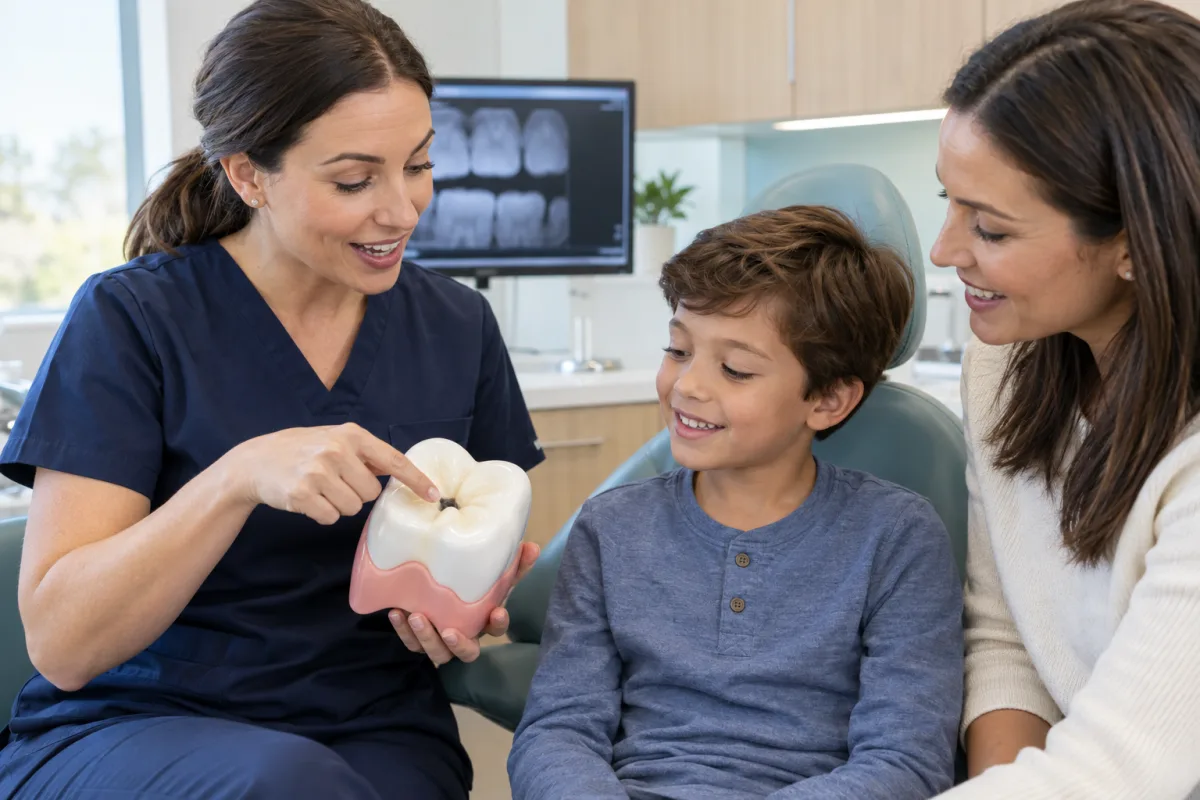
Spotting decay
Watch for white chalky spots near the gumline, brown or dark areas on chewing surfaces, food packing between back teeth and reluctance to chew on one side. Some children mention sensitivity to sweets or cold drinks. Others say nothing at all, which is one reason regular checkups are valuable even when the teeth seem perfectly fine to you.
Decay between teeth often cannot be seen without X-rays. The dentist looks for soft enamel, early lesions that may still be reversed with fluoride and deeper cavities that need repair. Explain any family history of cavities, frequent snacking, sipping juice through the day or bedtime bottles, so the dentist can understand your child’s overall risk and plan prevention as well as repair.
Treatment choices
Very early enamel changes can sometimes be managed with fluoride varnish, improved brushing and changes to snacks and drinks, then watched closely at future visits. The dentist may decide that a baby tooth expected to fall out soon can be monitored rather than restored. Ask why a particular recommendation fits that tooth and your child’s stage of development.
Established cavities usually need a filling, often with tooth-coloured material. Larger decay in a back baby tooth may be restored with a pediatric crown that protects it until it is naturally lost. If decay has reached the nerve, other treatment may be discussed. The dentist will describe what each choice involves for your child, including the number of visits it may take.
On treatment day
Use simple, neutral words when explaining the appointment, and avoid phrases like hurt or needle that can create fear before you even arrive. Schedule a time when your child is usually rested and has eaten. Let the team know about previous experiences, worries or sensory sensitivities so they can adjust their language, lighting and pace to suit your child.
Local anaesthetic is commonly used to numb the tooth. The team explains each step in child-friendly terms and allows short breaks where possible. If anxiety makes treatment difficult, ask about comfort options. Your child’s lip and cheek may stay numb for a while afterwards, so watch closely that they do not bite, suck or chew on them during the ride home.
Preventing more
Brush twice daily with an age-appropriate amount of fluoride toothpaste, and help or supervise until your child can do it thoroughly. Floss wherever teeth touch. Limit sugary drinks and frequent snacking between meals, and avoid putting a child to bed with juice or milk. Plain water is the best choice between meals, at school and during long days outdoors.
Return for regular exams so new decay can be found while it is still small. Ask whether sealants on back molars or professional fluoride are recommended for your child. Report pain, swelling or a broken filling right away, since problems in baby teeth can affect the developing adult teeth underneath and are easier to manage when caught early.
Planning your appointment
Call our Port Dover office to book a children’s exam or treatment visit. Mention any pain, swelling or worries your child has shared, so the team can plan appropriate timing and allow enough time for a relaxed appointment.
Bring a comfort item if it helps, and allow a little extra travel time so your child does not arrive feeling rushed.
Before you book
Have a question about your situation? Our team can help you plan a visit.
Some baby teeth stay in the mouth until about age twelve. An untreated cavity can cause pain, infection and early tooth loss that affects spacing for adult teeth. The dentist considers how long the tooth is likely to remain before recommending treatment.
Many fillings involve local anaesthetic to keep the tooth comfortable. The team uses gentle techniques and child-friendly explanations. Very small or shallow repairs may not need it. Ask the dentist what is planned so you can prepare your child honestly.
Frequent sugar exposure, sticky snacks, sipping juice or milk through the day or night, and plaque left on teeth all contribute. Some children are more prone because of enamel or saliva differences. The dentist can help identify your child’s specific risks.
Very early enamel weakening, often seen as white spots, may be strengthened with fluoride and better home care. Once a cavity forms a hole in the tooth, it cannot repair itself and usually needs a filling or other treatment.
Tell the team beforehand. They can take time to build comfort, use shorter steps or discuss other comfort measures. In some cases, referral to a pediatric specialist may be suggested. The goal is safe, manageable care for your child.
Tooth-coloured fillings repair cavities in children’s teeth while blending in naturally. Langton parents can learn how they are placed and cared for.
Sealants and fluoride add protection against cavities, especially in growing teeth. Langton parents can learn how each works and who benefits.
Recognized year after year
Best Dentists in Norfolk
Proudly recognized among Norfolk’s top-rated dental practices for six consecutive years.

2021 Winner

2022 Winner

2023 Winner

2024 Winner

2025 Winner

2026 Winner
Stories from our patients
Watch a patient’s experience and browse more five-star reviews from people who have visited our Port Dover dental clinic.
Patient video
A patient shares the welcoming atmosphere and positive experience they found at our Port Dover office.
Google reviews
Swipe or use the arrows
Read all reviewsYour next visit can start today
New patients and CDCP patients are welcome. Tell us how we can help and our Port Dover dental team will follow up with you.
Evening appointments Monday and Tuesday