
Patient video
Welcoming and Wonderful Practice
A patient shares the welcoming atmosphere and positive experience they found at our Port Dover office.
★★★★★

Port Dover Family Dentistry
When a La Salette child has a cavity, our Port Dover team explains the findings, options for baby or adult teeth and how to help your child feel ready.
Let’s get you smiling
Tell us how we can help. Our team will follow up to confirm a time.
Caring for La Salette patients at our Port Dover office
See every dental service for La SaletteSmall teeth, real decisions
Finding out your child has a cavity can bring up questions about what caused it, whether a baby tooth really needs treating and how your child will cope. Decay in primary teeth can progress, cause pain or infection and affect the adult teeth developing underneath, so a thoughtful plan matters.
Families from La Salette visit our Port Dover office for children’s dental care. The dentist will explain what was found, describe suitable options in words both you and your child can follow, and discuss ways to make the appointment feel manageable.
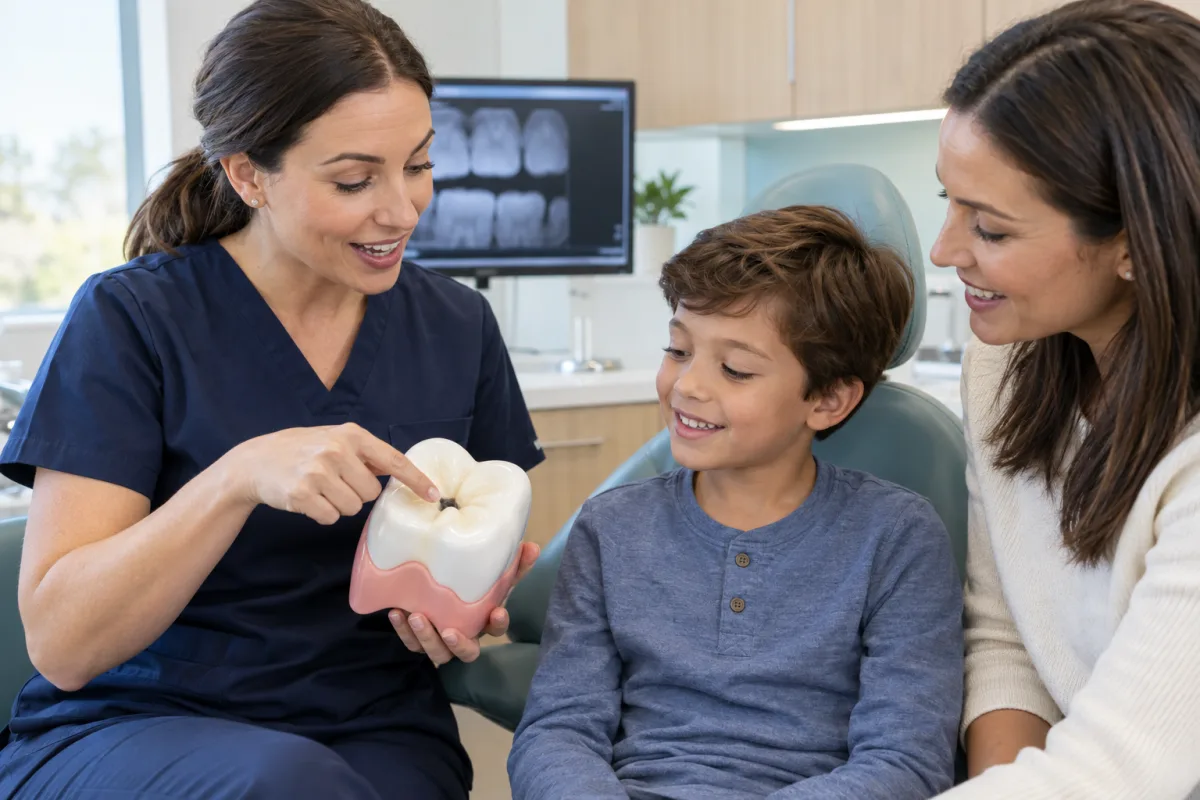
Understanding the finding
Early decay can look like a chalky white or brown spot, while deeper cavities may be visible holes or show only on X-rays between teeth. Your child might mention sensitivity to sweets or cold, or say nothing at all. Ask to see the photos or images so you understand the size and location before discussing treatment.
Baby teeth help children chew, speak and hold space for permanent teeth. A tooth that is close to falling out may sometimes be monitored, while one that needs to stay for years usually benefits from treatment. The dentist will consider the tooth’s expected lifespan when making a recommendation.
Treatment choices
Very early decay may sometimes be managed with fluoride and improved home care, followed by close monitoring. Small to moderate cavities are often restored with tooth-coloured filling material. The dentist can explain why one approach is suggested over another and what signs would mean the plan needs to change.
When decay is extensive, a crown designed for baby teeth or treatment of the tooth’s nerve might be discussed. In some situations removal is the most sensible choice, and a space maintainer could be considered afterward. Ask about the benefits, limitations and follow-up involved with each option before deciding.
Preparing your child
Keep explanations short and positive without promising that nothing will be felt. Phrases like the dentist will clean the sugar bug spot and make the tooth strong again work better than detailed descriptions. Let the team know if your child has had a difficult experience before, so they can adjust their approach.
Choose a time of day when your child is usually rested and fed. Ask whether numbing will be used and how long the area might feel strange afterward. If anxiety is significant, the dentist can discuss comfort options, including whether nitrous oxide may be appropriate for your child’s situation.
Preventing the next one
Help with brushing until your child can do it thoroughly, typically well into the school years, using fluoride toothpaste in the amount recommended for their age. Limit frequent sipping of juice or sweet drinks between meals, and avoid bedtime bottles containing anything but water. Small, consistent changes tend to make the biggest difference.
Regular exams let the team catch new decay early, when treatment is simpler. Ask whether sealants on back teeth or professional fluoride applications suit your child. If you notice pain, swelling or a dark spot between visits, call rather than waiting for the next scheduled checkup.
Planning your appointment
Book with our Port Dover office and mention the cavity and your child’s age. Tell us about any past dental experiences or worries so the team can plan a comfortable visit.
Bring a favourite small comfort item if it helps, and plan a calm activity for afterward while any numbness wears off.
Before you book
Have a question about your situation? Our team can help you plan a visit.
Often yes, especially if the tooth will be in place for several more years. Untreated decay can cause pain or infection. A tooth that is about to fall out may sometimes be monitored instead, which the dentist can explain.
Many fillings involve local anaesthetic to keep the tooth comfortable, though very small repairs sometimes do not. Ask the dentist what is planned so you can prepare your child with honest, calm language.
Some cavities show as white, brown or dark spots, but many are hidden between teeth. Sensitivity or complaints when chewing can be clues. Regular checkups with X-rays when recommended are the most reliable way to find them.
Frequent snacking, sweet drinks, the shape of the teeth and missed spots can all contribute. The team can look at your routine with you and suggest practical adjustments without placing blame.
Tell the team beforehand. They can use a gentle, step-by-step approach, and the dentist can discuss whether additional comfort measures are appropriate. Preparation at home also helps many children feel more settled.
Tooth-coloured fillings repair children’s cavities with a natural look. La Salette parents can learn how they are placed and how kids feel afterward.
Sealants and fluoride add protection against cavities. La Salette parents can learn how each works, which children may benefit and what the visit involves.
Recognized year after year
Best Dentists in Norfolk
Proudly recognized among Norfolk’s top-rated dental practices for six consecutive years.

2021 Winner

2022 Winner

2023 Winner

2024 Winner

2025 Winner

2026 Winner
Stories from our patients
Watch a patient’s experience and browse more five-star reviews from people who have visited our Port Dover dental clinic.
Patient video
A patient shares the welcoming atmosphere and positive experience they found at our Port Dover office.
Google reviews
Swipe or use the arrows
Read all reviewsYour next visit can start today
New patients and CDCP patients are welcome. Tell us how we can help and our Port Dover dental team will follow up with you.
Evening appointments Monday and Tuesday