
Patient video
Welcoming and Wonderful Practice
A patient shares the welcoming atmosphere and positive experience they found at our Port Dover office.
★★★★★
Port Dover Family Dentistry
When a child’s tooth has a cavity, Jarvis parents can learn how decay is assessed, how fillings are explained to kids and how to prevent new spots at home.
Let’s get you smiling
Tell us how we can help. Our team will follow up to confirm a time.
Seeing Jarvis patients at our Port Dover office
Every dental service for Jarvis patientsSmall teeth, real decisions
Hearing that your child has a cavity can bring up guilt or worry, but decay in young teeth is common and treatable. Baby teeth hold space for adult teeth and help with chewing and speech, so the dentist will usually recommend caring for them rather than waiting for them to fall out.
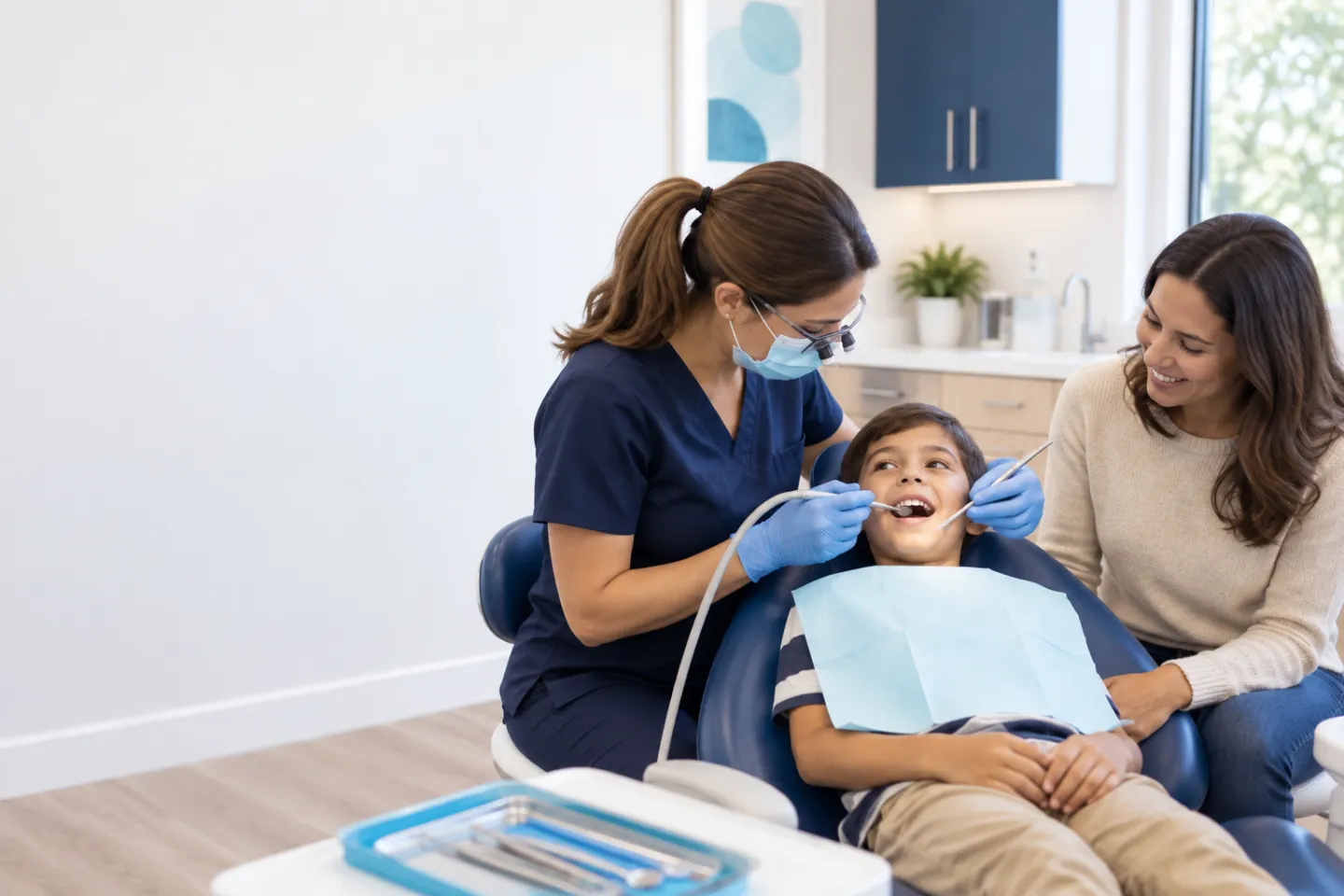
Families from Jarvis can bring their children to our Port Dover office for assessment and treatment of cavities. We will explain what we see, discuss options in plain language and help you prepare your child for the visit.
Spotting decay
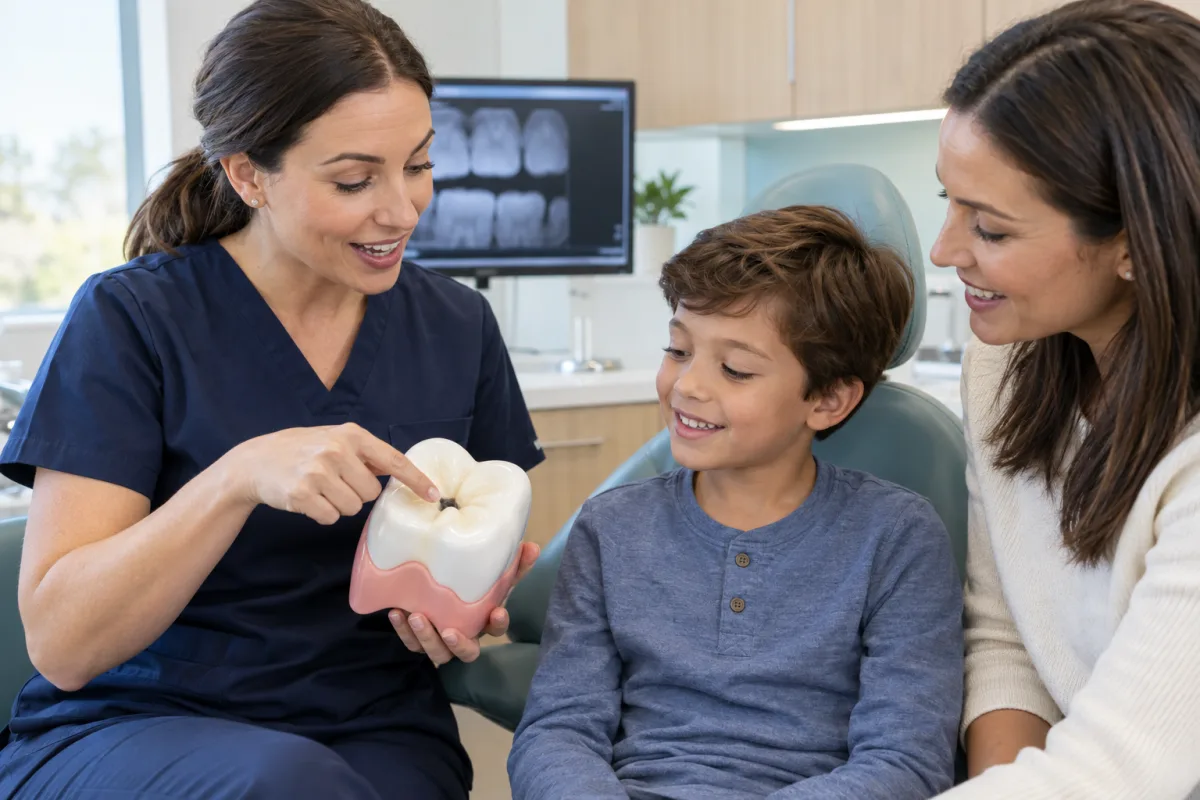
White chalky patches near the gums, brown or dark spots, food that keeps catching in one place or a child who avoids chewing on one side can all be clues. Some children mention sensitivity to sweets or cold, while others have no complaints at all. Any of these observations are worth mentioning when you book.
The dentist looks closely at each tooth and may recommend X-rays to see between teeth where cavities often start unnoticed. The size and depth of the decay, along with how long the baby tooth is expected to remain, help decide what treatment makes sense. You will be shown or told what was found.
Options explained
Some very early spots in enamel can sometimes be managed with fluoride, improved brushing and diet changes, then monitored at future visits. The dentist will explain whether this watchful approach is reasonable for your child, and what signs would mean the area needs a filling after all.
Once decay has formed a hole, a filling is usually recommended to stop it from growing. Tooth-coloured materials are commonly used. Deeper decay close to the nerve may need additional treatment. The dentist will talk through the options, how many visits are involved and what to expect for comfort.
The appointment
Use simple, neutral language when explaining the visit, such as saying the dentist will clean out a sugar bug and fix the tooth. Avoid words like hurt or needle that may raise fear. Let the team know about your child’s temperament, past experiences and anything that helps them feel safe, like a favourite toy.
The dentist uses child-friendly explanations and will numb the tooth when needed. Agree on a hand signal your child can use to ask for a break. If your child is very anxious, ask about strategies or comfort options that may be suitable. Your calm presence often helps more than anything said.
Preventing more
Help young children brush twice daily with fluoride toothpaste until they have the skill to do it well on their own, often around age seven or eight. Limit sticky snacks and sugary drinks between meals, and offer water rather than juice. Avoid letting a child fall asleep with a bottle of milk or juice.
Regular checkups allow new cavities to be found while they are small. Ask whether sealants on back teeth or professional fluoride treatment would help your child. After a filling, watch for chewing discomfort or a rough edge and call the office if anything seems unusual.
Planning your appointment
Call our Port Dover office to book an assessment or treatment visit. Let us know your child’s age, any pain or swelling and how they have managed previous dental visits.
Plan the visit for a time of day when your child is usually rested, and bring any recent dental records.
Before you book
Have a question about your situation? Our team can help you plan a visit.
Baby teeth help children chew and speak and hold space for adult teeth. Untreated decay can cause pain or infection, and some baby teeth stay in place for many years. The dentist will explain what makes sense for the specific tooth.
Often, for fillings that go beyond the surface. The dentist will explain what is planned and use gentle, child-appropriate language. Tell the team about any concerns so the approach can be explained to you in advance.
Not always, but the risk can be reduced a great deal. Fluoride toothpaste, supervised brushing, limited sugary snacks and drinks, and regular checkups make a meaningful difference. Sealants may help on deep grooves.
Children sometimes need more time or a different approach. The team can discuss strategies, splitting treatment into shorter visits or other options. Let us know in advance if your child struggles so we can plan with you.
Call promptly if your child has pain, especially with swelling, fever or difficulty eating. Facial swelling that spreads or any breathing or swallowing difficulty needs emergency medical care right away.
When a child needs a filling, tooth-coloured materials blend in with their smile. Jarvis parents can learn how these fillings are placed and how to help them last.
Sealants protect the grooves of back teeth and fluoride strengthens enamel. Learn how these preventive steps can help Jarvis children and when the dentist suggests them.
Recognized year after year
Best Dentists in Norfolk
Proudly recognized among Norfolk’s top-rated dental practices for six consecutive years.

2021 Winner

2022 Winner

2023 Winner

2024 Winner

2025 Winner

2026 Winner
Stories from our patients
Watch a patient’s experience and browse more five-star reviews from people who have visited our Port Dover dental clinic.
Patient video
A patient shares the welcoming atmosphere and positive experience they found at our Port Dover office.
Google reviews
Swipe or use the arrows
Read all reviewsYour next visit can start today
New patients and CDCP patients are welcome. Tell us how we can help and our Port Dover dental team will follow up with you.
Evening appointments Monday and Tuesday