
Patient video
Welcoming and Wonderful Practice
A patient shares the welcoming atmosphere and positive experience they found at our Port Dover office.
★★★★★

Port Dover Family Dentistry
A cavity in your child’s tooth? Glen Meyer parents can learn how decay is assessed, how treatment is explained to kids and what helps prevent new cavities.
Let’s get you smiling
Tell us how we can help. Our team will follow up to confirm a time.
Seeing patients from Glen Meyer and the surrounding countryside at our Port Dover office
Browse all dental services for Glen MeyerSmall teeth, real decay
Cavities in children can progress faster than many parents expect, partly because baby teeth have thinner enamel. Early decay may show as chalky white spots, while more advanced cavities can appear brown or cause pain with sweets or cold foods. Some cavities are only visible on X-rays between the teeth.
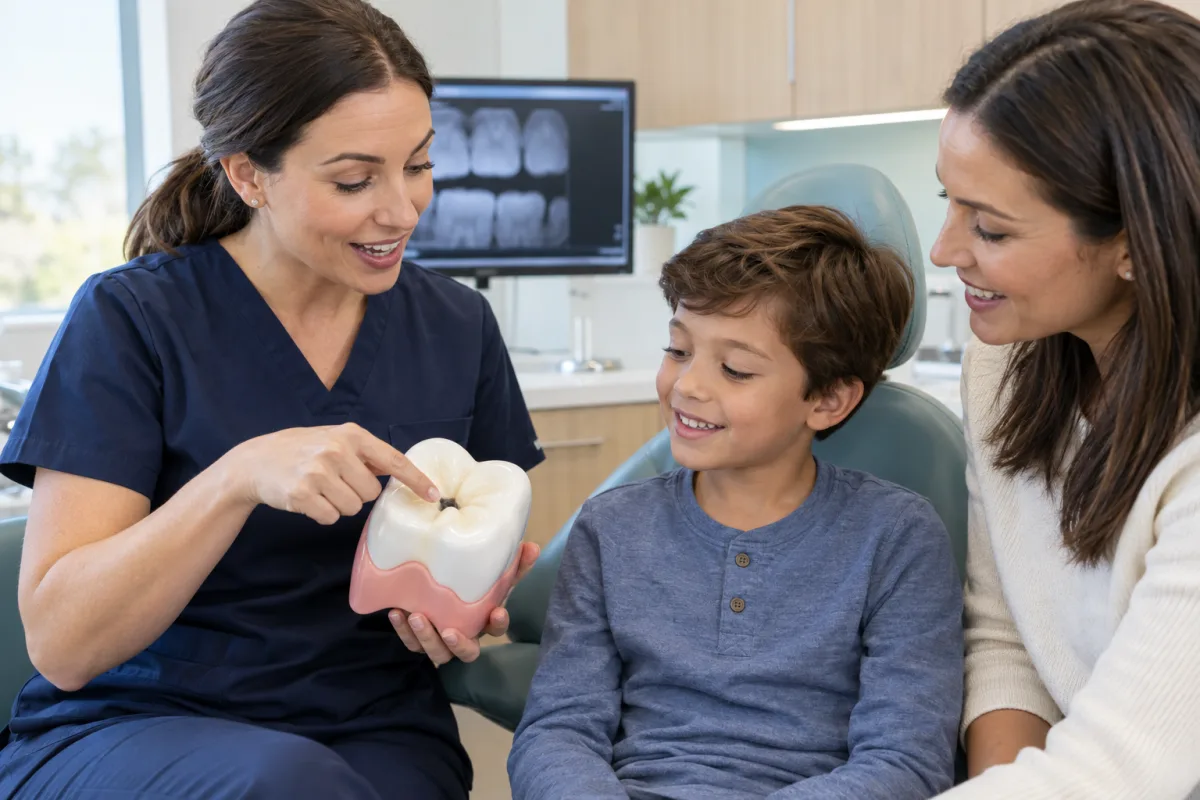
Families from Glen Meyer can bring their child to our Port Dover office to have a suspected cavity checked. The dentist will explain what was found, the options for that particular tooth and how the visit can be approached in a way that suits your child.
Spotting a problem
Look for white, brown or dark spots on the teeth, food that keeps getting stuck in one place or a tooth that seems to have a small hole. Swelling of the gum near a tooth or a pimple-like bump can signal infection and should be checked promptly. Gently lifting the upper lip every so often helps you see the front teeth clearly.
A child who suddenly avoids chewing on one side, refuses cold treats, rubs their cheek or wakes in the night may be experiencing tooth pain. Younger children often struggle to describe it or point to the right spot. Mention any of these changes when booking, along with roughly how long they have been happening and whether they seem to be getting worse.
The assessment
The dentist examines the teeth and may suggest X-rays to see how deep the decay goes and whether neighbouring teeth are affected. Very early decay can sometimes be managed with fluoride and closer monitoring. Deeper cavities usually need a filling, and decay that has reached close to the nerve may need additional treatment to keep the tooth comfortable.
Whether the tooth is a baby tooth or a permanent molar matters, and so does how long it is expected to stay. A baby tooth that will fall out soon may be handled differently from one needed for years to hold space for an adult tooth. Ask the dentist to explain the reasoning behind the recommendation so you can make an informed choice.
Treatment day
Use simple, honest language and avoid words that might frighten your child. Let the team know about past experiences, fears or sensory sensitivities before the day. Scheduling the visit at a time when your child is usually rested and fed can help. Ask whether you can stay nearby during treatment and how you can best support them without adding pressure.
The dentist typically numbs the area, removes the decayed part of the tooth and places a filling, often in a tooth-coloured material. If your child becomes upset, the team may pause or discuss finishing at another visit. For larger treatment needs or significant anxiety, other comfort approaches or a referral to a pediatric specialist may be discussed with you.
Preventing more cavities
Help young children brush twice daily with a fluoride toothpaste in an amount suited to their age, and supervise until they can reach every surface well. Frequent sipping of juice or grazing on snacks gives cavity-causing bacteria more fuel throughout the day. Ask the team for practical suggestions that fit your family’s routine and your child’s food preferences.
Sealants on the chewing surfaces of back teeth and professional fluoride treatments may lower cavity risk for some children. Regular checkups allow early decay to be caught while it is still small and easier to treat. The dentist can suggest a recall schedule based on your child’s individual risk rather than applying the same interval to every child.
Planning your appointment
Call our Port Dover office and describe what you have noticed, including any pain, swelling or trouble eating. The team can talk with you about how soon your child should be seen and what to expect.
Share your child’s medical history and any medications, and let the team know what usually helps your child feel more settled at appointments.
Before you book
Have a question about your situation? Our team can help you plan a visit.
Often, yes. Baby teeth help with chewing, speech and holding space for the adult teeth that follow. Untreated decay can lead to pain or infection. The dentist considers how long the affected tooth is likely to remain when recommending whether and how to treat it.
Many fillings are done with local anaesthetic so the tooth stays comfortable during treatment. The dentist can explain how it is given and what your child may feel. Afterward, remind them not to chew or bite their lip or cheek while the numbness wears off.
Very early enamel changes can sometimes be stopped or reversed with fluoride and better cleaning. Once a true cavity has formed, it usually needs treatment because the tooth cannot rebuild itself. An exam determines which stage your child’s tooth has reached.
Let the team know in advance so they can plan. A gradual approach, shorter visits or other comfort options may be discussed. Depending on the amount of treatment needed, referral to a pediatric dental specialist may sometimes be suggested as well.
Facial swelling, fever, severe pain or a bump on the gum can suggest infection and need prompt attention from the dental office. Seek emergency medical care right away if swelling spreads quickly or your child has any trouble breathing or swallowing.
White fillings repair children’s cavities while blending with their teeth. Glen Meyer parents can learn how they are placed, how kids are prepared and care.
Sealants protect deep grooves in back teeth and fluoride strengthens enamel. Glen Meyer parents learn who benefits, how each is applied and how long it lasts.
Recognized year after year
Best Dentists in Norfolk
Proudly recognized among Norfolk’s top-rated dental practices for six consecutive years.

2021 Winner

2022 Winner

2023 Winner

2024 Winner

2025 Winner

2026 Winner
Stories from our patients
Watch a patient’s experience and browse more five-star reviews from people who have visited our Port Dover dental clinic.
Patient video
A patient shares the welcoming atmosphere and positive experience they found at our Port Dover office.
Google reviews
Swipe or use the arrows
Read all reviewsYour next visit can start today
New patients and CDCP patients are welcome. Tell us how we can help and our Port Dover dental team will follow up with you.
Evening appointments Monday and Tuesday