
Patient video
Welcoming and Wonderful Practice
A patient shares the welcoming atmosphere and positive experience they found at our Port Dover office.
★★★★★

Port Dover Family Dentistry
When a Boston child has a cavity, our Port Dover team explains what was found, why baby teeth matter and how to make the filling visit manageable.
Let’s get you smiling
Tell us how we can help. Our team will follow up to confirm a time.
Caring for Boston, Ontario patients at our Port Dover office
See every dental service for Boston patientsSmall teeth, real decisions
Hearing that your child has a cavity can bring a mix of worry and guilt. Decay is very common in childhood, and baby teeth are softer and more vulnerable than many parents realise. What matters now is understanding how deep the cavity is, whether it is causing discomfort and what treatment makes sense.
Families from Boston and the nearby countryside are welcome at our Port Dover office for children’s dental care. If you have noticed a dark spot, food sensitivity or your child pointing to a sore tooth, mention it when you call so the visit can focus on that concern.
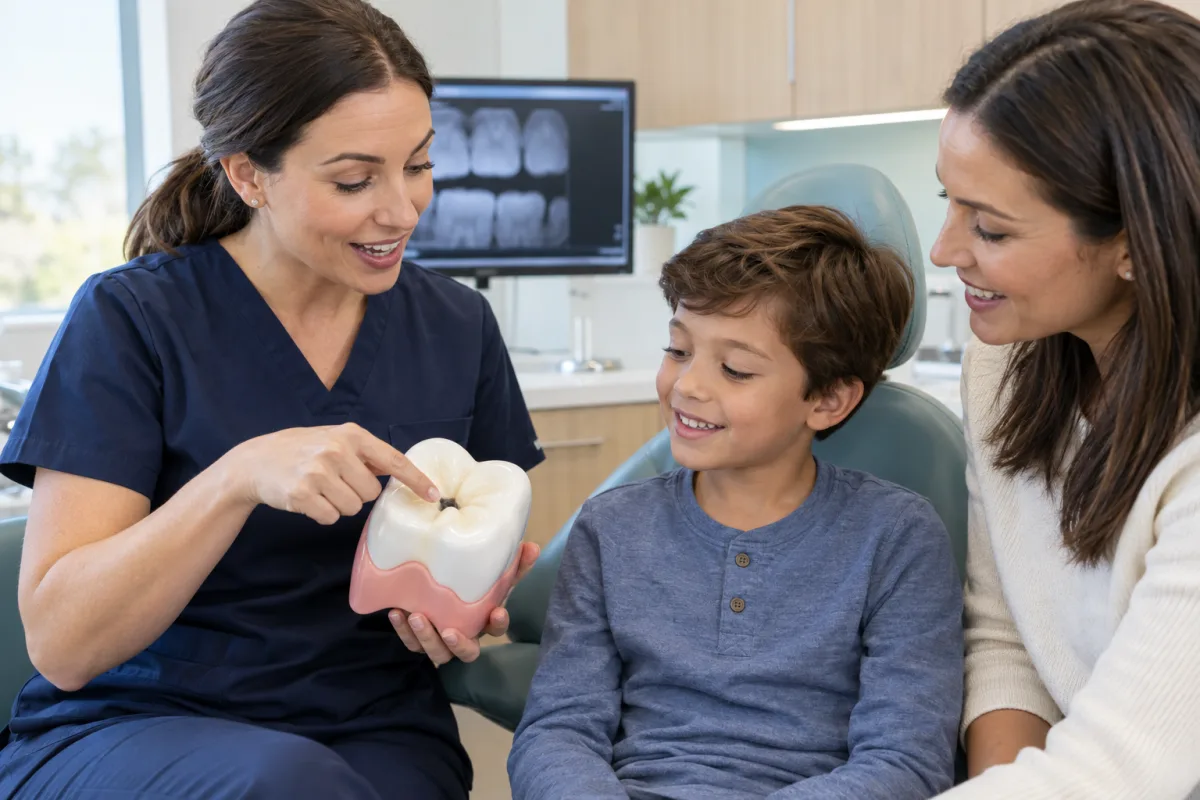
Noticing a problem
A brown or white chalky patch, a small hole, complaints about cold drinks or sweets, or reluctance to chew on one side may point toward decay. Younger children may simply be grumpy at mealtimes, push food away or rub their cheek. Describe these observations to the dental team, as they help narrow down which tooth needs attention during the examination.
Plenty of cavities, especially between teeth, are found only during an examination or on x-rays. That is one reason regular checkups are recommended even when a child seems perfectly fine. Catching decay while it is small usually allows simpler treatment and spares the child the discomfort and longer appointment that a larger cavity might eventually require.
Talking it through
Baby teeth help children chew, speak clearly and hold space for adult teeth. Untreated decay can lead to pain or infection, and losing a baby tooth early may affect how permanent teeth come in. The dentist will consider how long the tooth is expected to stay before recommending how to treat it, and will explain that reasoning to you.
Very early decay may be managed with fluoride and closer monitoring. Established cavities are usually cleaned out and filled, often with tooth-coloured material. Deeper decay close to the nerve may require more involved care, or occasionally a crown for a baby molar. Ask the dentist to explain each option in plain terms and how it fits your child’s age.
The appointment
Use plain, neutral language about the visit and avoid words that may frighten, such as needle or hurt. Let the team explain the steps in child-friendly terms. Schedule the appointment for a time of day when your child is usually rested and fed, and bring a comfort item if that helps them settle in an unfamiliar room.
Numbing is commonly used so the tooth can be treated without pain. Children may feel pressure or hear buzzing sounds, and the team can talk them through each step as it happens. If your child becomes very anxious, mention it early, as there may be other approaches, such as shorter visits or nitrous oxide, worth discussing for the future.
At home afterward
If numbing was used, watch that your child does not bite or chew their lip, cheek or tongue until normal feeling returns. Offer soft foods and lukewarm drinks for a few hours. Mild tenderness can occur. Contact the office if pain grows, swelling appears or the filling feels high when your child bites together at mealtimes.
Brushing twice daily with a fluoride toothpaste suited to your child’s age, flossing where teeth touch and limiting sugary snacks and drinks between meals all reduce future decay. Ask the team about sealants or fluoride treatments, which can add protection for teeth that are particularly at risk, especially newly arrived adult molars at the back of the mouth.
Planning your appointment
Call our Port Dover office and let the team know your child’s age, which tooth seems affected and whether there is pain or swelling. That helps the team arrange an appropriate appointment and allow enough time.
Bring any notes from previous dental visits and a list of the medications or health conditions your child currently has.
Before you book
Have a question about your situation? Our team can help you plan a visit.
Often they do. Baby teeth support chewing, speech and space for adult teeth, and leaving decay untreated can lead to pain or infection. The dentist will consider how long the tooth will remain before suggesting the most suitable approach for your child.
Numbing is commonly used to keep treatment comfortable, and the team will explain it in gentle terms. Afterward, supervise your child so they do not chew on their numb lip or cheek until normal feeling returns, which usually takes a few hours.
Look for dark or chalky spots, sensitivity to sweets or cold, or reluctance to chew on one side. Many cavities show no signs at all, though, which is why regular dental checkups and x-rays when needed are recommended for children.
Let the team know before the visit. They can explain steps in a gentle, age-appropriate way. Keeping your own language calm and neutral at home also helps. For very anxious children, other comfort options may be discussed with you.
Many can. Twice-daily brushing with fluoride toothpaste, flossing, limiting sugary snacks and drinks, and regular checkups all help. Sealants and professional fluoride treatments may provide extra protection for some children, depending on their individual risk.
Tooth-coloured fillings repair children’s cavities with material that blends in. Boston parents can learn how the visit works and how to help it last.
Sealants and fluoride add a layer of protection against cavities. Boston families can learn in Port Dover which children benefit and what is involved.
Recognized year after year
Best Dentists in Norfolk
Proudly recognized among Norfolk’s top-rated dental practices for six consecutive years.

2021 Winner

2022 Winner

2023 Winner

2024 Winner

2025 Winner

2026 Winner
Stories from our patients
Watch a patient’s experience and browse more five-star reviews from people who have visited our Port Dover dental clinic.
Patient video
A patient shares the welcoming atmosphere and positive experience they found at our Port Dover office.
Google reviews
Swipe or use the arrows
Read all reviewsYour next visit can start today
New patients and CDCP patients are welcome. Tell us how we can help and our Port Dover dental team will follow up with you.
Evening appointments Monday and Tuesday