Cavity Size
Small areas may need a conservative restoration, while deep or multi-surface decay may require a stronger full-coverage option.
Port Dover Family Dentistry
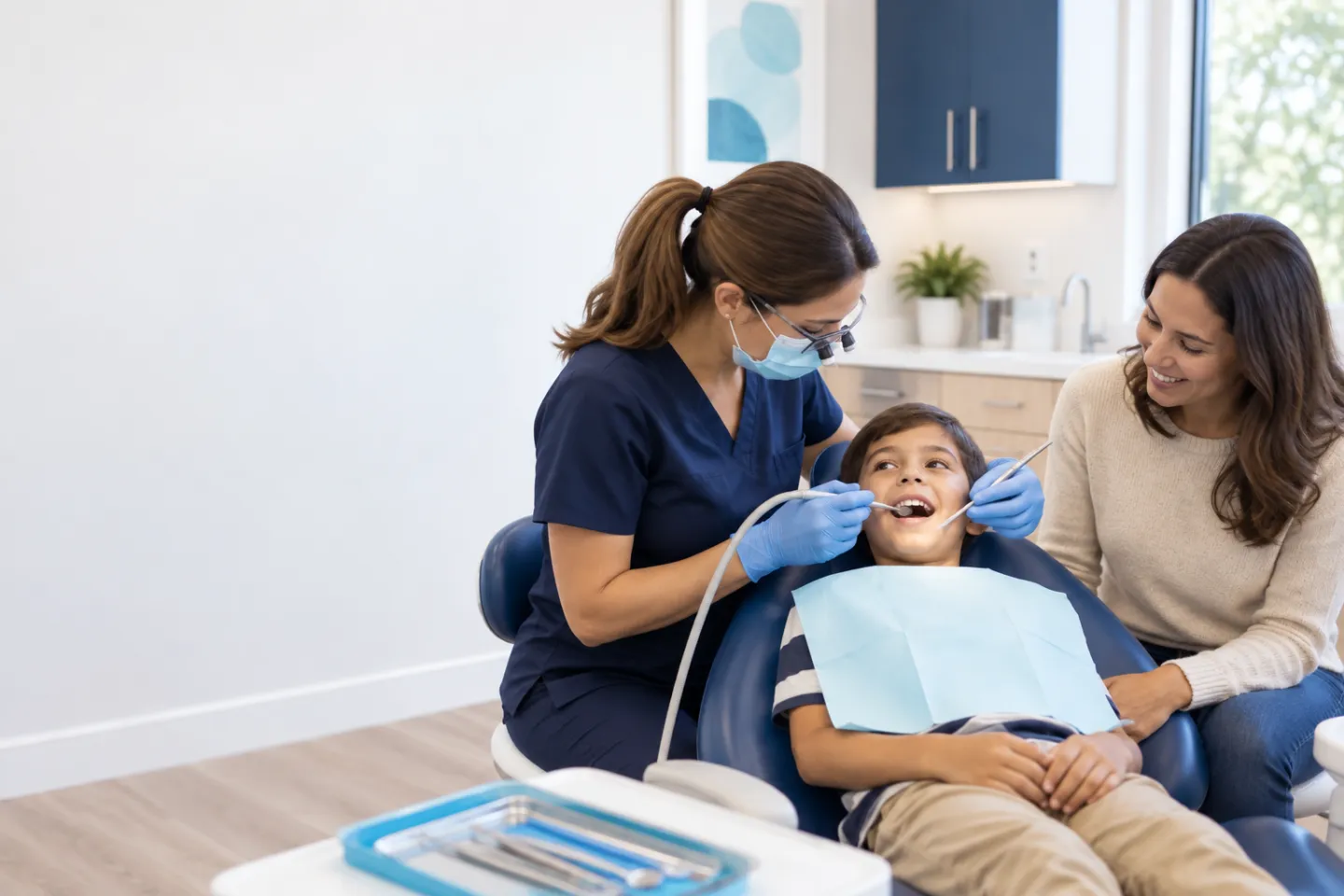
Children’s cavity treatment in Port Dover removes or controls decay, restores comfortable function and helps protect primary and permanent teeth.
Let’s get you smiling
Tell us how we can help. Our team will follow up to confirm a time.
Children’s cavity treatment in Port Dover
A cavity forms when repeated acid attacks weaken tooth structure. Children may not feel early decay, but an untreated cavity can grow, cause sensitivity or pain and eventually affect the dental pulp or surrounding tissues.
Treatment depends on the tooth, depth and location of decay, symptoms, cavity risk and how long a primary tooth is expected to remain. We explain the options and choose an approach designed to preserve healthy structure and keep your child comfortable.
Baby teeth deserve treatment
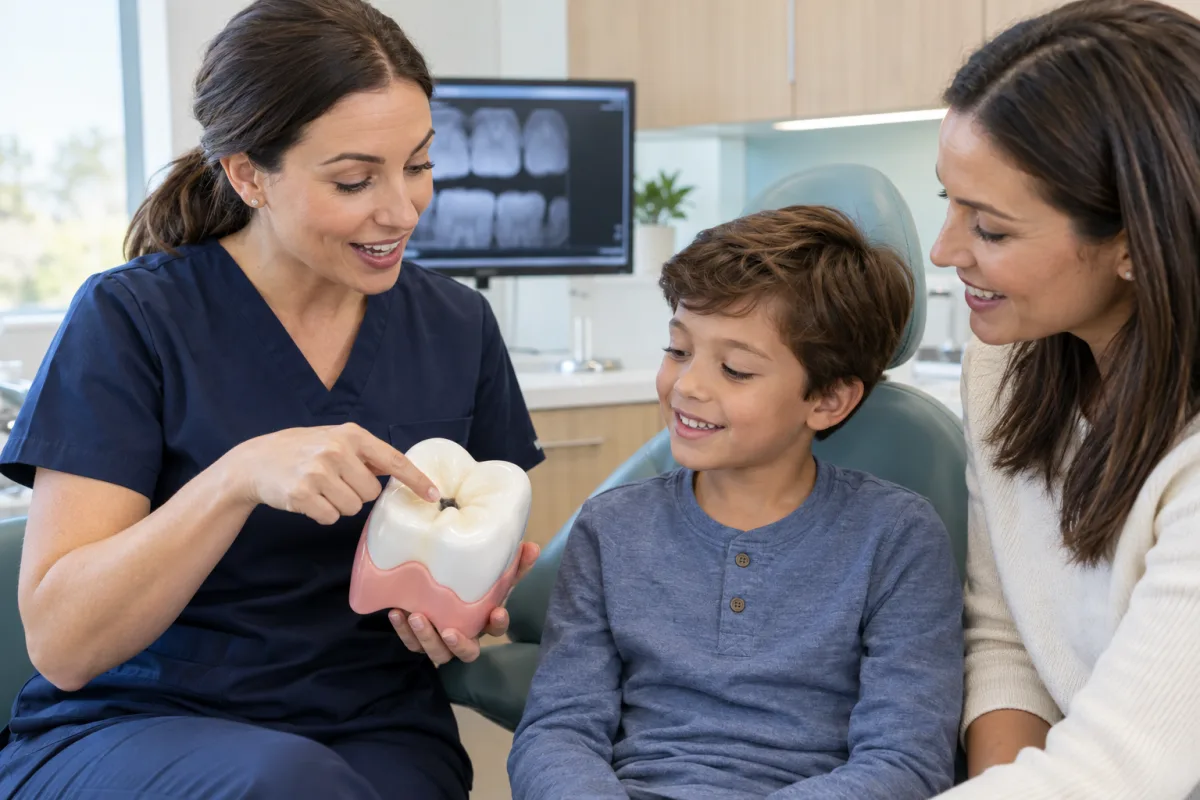
Primary teeth support chewing, speech, confidence and space for permanent teeth. Treating decay can relieve symptoms and reduce the risk of infection or premature tooth loss.
Individual treatment planning
Small areas may need a conservative restoration, while deep or multi-surface decay may require a stronger full-coverage option.
A primary tooth close to falling out naturally is considered differently from a newly erupted permanent tooth.
Pain pattern, examination findings and X-rays help determine whether the nerve is healthy, inflamed or infected.
Treatment is adapted to your child’s age, communication needs, anxiety level and ability to complete care safely.
A thoughtful approach
The dentist assesses the tooth and may recommend a dental X-ray to understand the depth of decay and its relationship to the pulp and nearby teeth.
We explain each step in age-appropriate language. Local anesthetic may be used to numb the tooth, and behaviour-guidance strategies help your child feel informed and supported.
Decay is managed and the tooth is sealed with the material best suited to the situation. We then address brushing, fluoride and diet factors that influence future risk.
More than one treatment path
Not every area of decay is treated in exactly the same way. An early non-cavitated lesion may sometimes be managed with fluoride, improved plaque control, diet changes and close monitoring, while a tooth with a physical cavity generally needs restorative or other operative care.
The amount of healthy tooth remaining, pulp status, expected life of a primary tooth and your child’s ability to complete care safely all influence whether a filling, full-coverage crown, pulp treatment or extraction is discussed.
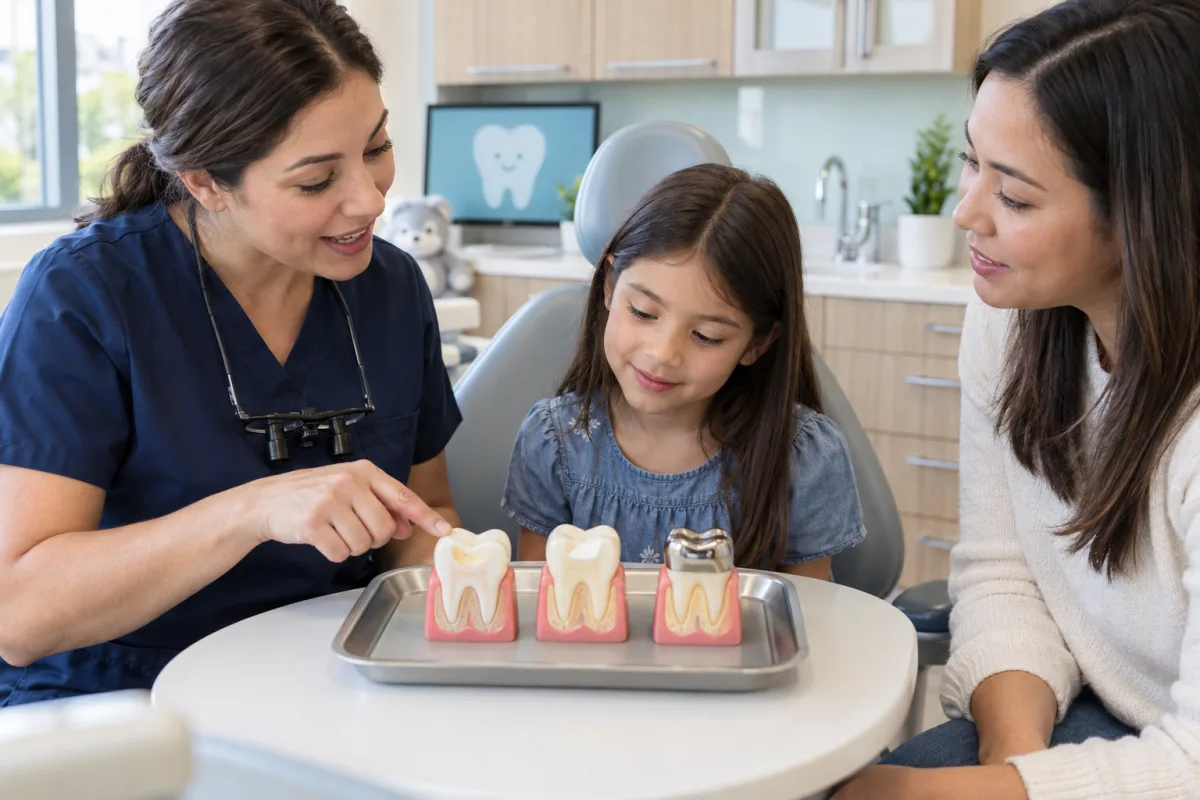
Selected early enamel changes may be managed without drilling when the surface is not cavitated and risk factors can be controlled.
A filling can repair a smaller cavity, while extensive or multi-surface decay may need stronger full coverage.
When the pulp is affected, pulp therapy or extraction may be considered after symptoms, X-rays and remaining structure are assessed.
Reasons not to delay
Decay is an active disease process. Restoring one tooth does not remove the factors that can place other teeth at risk.
A child may avoid cold, sweet or chewy foods or begin chewing on only one side before clearly describing pain.
Pain without an obvious trigger or discomfort that interrupts sleep can indicate deeper inflammation.
Gum or facial swelling, pus, a bad taste or fever with a dental concern requires prompt assessment.
Treating a baby tooth can preserve chewing, comfort and space until it is naturally ready to fall out.
Cavities do not jump directly from one tooth to another, but shared plaque, diet and fluoride factors can place several teeth at risk at the same time.
After treatment
If your child received local anesthetic, supervise them until normal feeling returns so they do not bite or chew the numb lip, cheek or tongue. Follow the specific eating instructions provided after the appointment.
A restoration repairs damage but does not remove cavity risk. Twice-daily brushing with an age-appropriate amount of fluoride toothpaste, cleaning between contacting teeth and limiting frequent sugary snacks and drinks remain important.
Comfortable children’s care
We can explain the extent of decay, available treatment options and practical steps for protecting your child’s smile.
Cavity treatment questions
Not always. Very early non-cavitated changes may sometimes be managed with preventive measures and monitoring. Once tooth structure has cavitated, a restoration or another treatment is commonly needed.
Baby teeth help children chew, speak and hold space for permanent teeth. Untreated decay can cause pain, infection and premature tooth loss before the tooth is ready to fall out.
Local anesthetic is often used when treatment could otherwise be uncomfortable. The dentist will explain the plan and how to protect the lip, cheek and tongue until feeling returns.
Deep decay may require pulp treatment, a crown or extraction depending on the tooth, symptoms and remaining healthy structure. The dentist will review the benefits and limitations of each option.
Cavities do not jump directly between teeth, but the same plaque, diet and fluoride factors can place several teeth at risk. Close contacts can also hide decay, making prevention and regular exams important.
Recognized year after year
Best Dentists in Norfolk
Proudly recognized among Norfolk’s top-rated dental practices for six consecutive years.

2021 Winner

2022 Winner

2023 Winner

2024 Winner

2025 Winner

2026 Winner
Stories from our patients
Watch a patient’s experience and browse more five-star reviews from people who have visited our Port Dover dental clinic.
Patient video
A patient shares the welcoming atmosphere and positive experience they found at our Port Dover office.
Google reviews
Swipe or use the arrows
Read all reviewsOur community
Your next visit can start today
New patients and CDCP patients are welcome. Tell us how we can help and our Port Dover dental team will follow up with you.
Evening appointments Monday and Tuesday