
Patient video
Welcoming and Wonderful Practice
A patient shares the welcoming atmosphere and positive experience they found at our Port Dover office.
★★★★★
Port Dover Family Dentistry
Grinding can go unnoticed until your teeth, jaw or sleep show the strain. Fishers Glen patients can have the habit and its triggers assessed in Port Dover.
Let’s get you smiling
Tell us how we can help. Our team will follow up to confirm a time.
Caring for Fishers Glen patients at our Port Dover office
See every service for Fishers GlenGrinding, clenching, jaw strain
Many people grind or clench without realizing it, either during sleep or while concentrating during the day. Clues can include flattened or chipped teeth, morning headaches, tired jaw muscles, sensitive teeth or a partner hearing grinding at night. Over time, the forces involved can wear enamel and damage fillings or crowns.
A bruxism assessment at our Port Dover office lets the dentist look for signs of wear and talk through when symptoms occur. For people in Fishers Glen, it can help to note the pattern for a week or two before the appointment so the discussion is grounded in what you actually experience.

Recognize the signs
Pay attention to jaw tightness on waking, aching near the ears, headaches at the temples or teeth that feel sensitive without an obvious cause. Some people notice they clench while driving, working at a screen or exercising. Writing down when the discomfort is worst helps the dentist tell night-time grinding from daytime clenching. Ask a partner whether they hear noise at night.
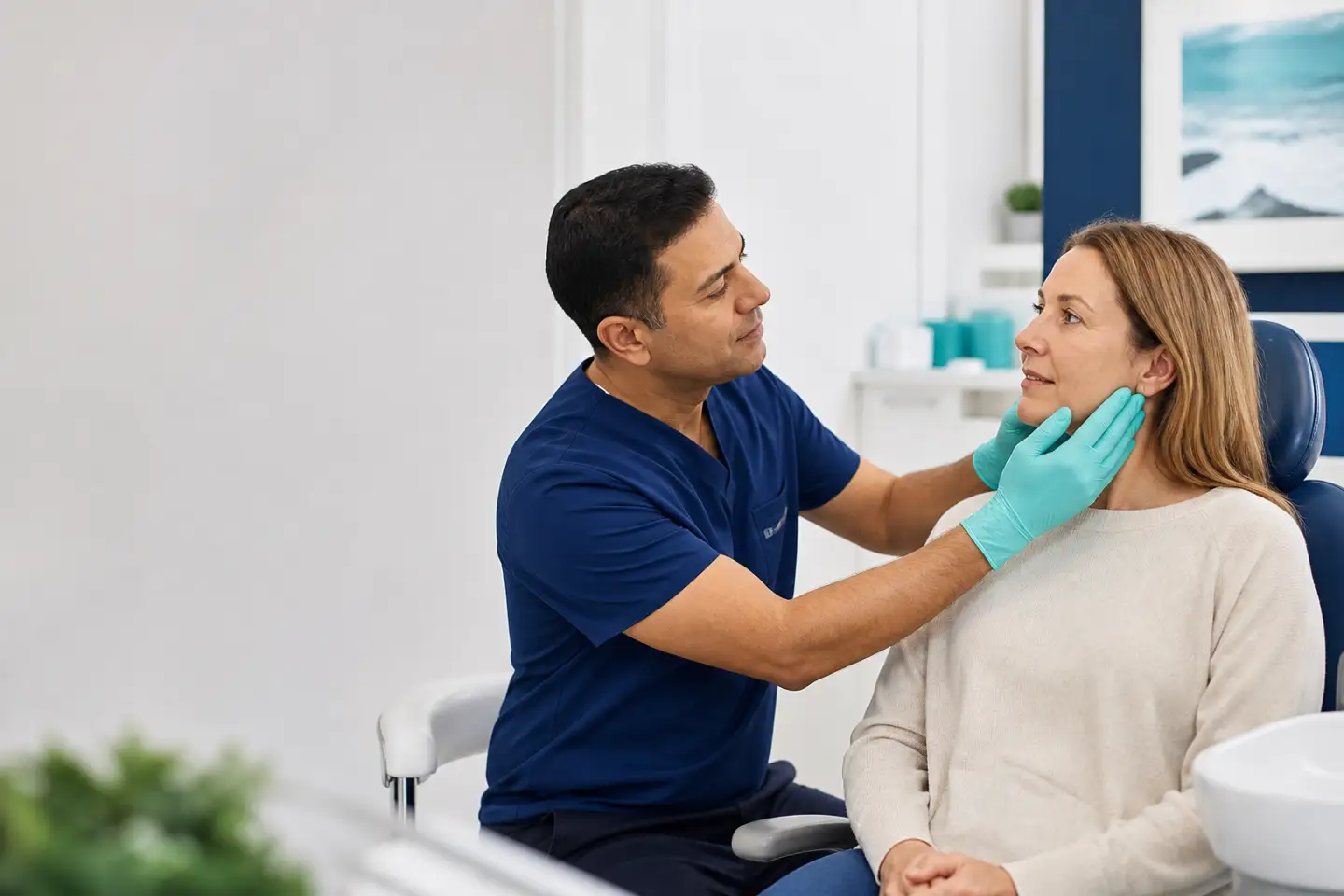
During the exam, the dentist may notice flattened biting edges, small fractures, notches near the gumline, worn fillings or enlarged jaw muscles. Tenderness when the muscles are pressed can also be a sign. These findings are considered together with your symptoms rather than treated as proof on their own. Photos may be taken so changes in wear can be compared at later visits.
Finding contributors
Stress, caffeine, alcohol, certain medications and disrupted sleep are all associated with grinding for some people. The dentist may ask about your routines, how you sleep and whether symptoms changed at a particular time. Identifying contributors does not always stop bruxism, but it can guide which approaches are worth trying. Small adjustments to routine are often a reasonable place to begin.
Loud snoring, gasping during sleep or daytime exhaustion may point to a sleep-related breathing problem that should be looked at by a physician. If jaw pain, clicking or limited opening is significant, TMJ assessment may also be appropriate. The dentist can explain when involving another health provider would be sensible. Sharing dental findings with your doctor can help that conversation.
Treatment options
A custom night guard is often recommended to cushion the teeth from grinding forces during sleep. It is made from impressions or scans of your teeth and adjusted for fit. A guard protects enamel and dental work but may not stop the underlying habit, so it is usually combined with other strategies. The dentist will adjust it until contacts feel even.
For daytime clenching, simple reminders to keep the teeth apart and the jaw relaxed can help. Damaged teeth or worn restorations may need repair once the forces are better controlled. Ask the dentist about sequencing, because placing new dental work before managing grinding can leave those repairs vulnerable to the same wear. Urgent repairs, of course, should not wait.
Long-term care
Rinse and brush your guard as instructed, store it in its case and keep it away from heat and pets. Bring it to checkups so the fit and surface wear can be checked. Let the office know if it starts to feel tight, loose, cracked or uncomfortable, or if your jaw symptoms change. Never trim it yourself.
At recall visits the dentist can compare wear patterns and check restored teeth. If headaches or jaw pain continue despite a guard, mention it so the plan can be reconsidered. Changes in medications, stress levels or sleep may affect grinding, so share any significant updates since your last appointment. Ongoing records help show whether the plan is protecting your teeth.
Planning your appointment
Call our Port Dover office and explain the jaw, tooth or headache symptoms you have noticed. Ask for an exam that includes a review of tooth wear and muscle tenderness.
Bring notes on when symptoms occur, any existing guard and a list of medications, as these details help the dentist interpret what they see.
Before you book
Have a question about your situation? Our team can help you plan a visit.
Ongoing grinding can wear enamel, chip teeth and damage fillings or crowns. Worn enamel does not grow back, which is why early assessment and protection are often recommended. The dentist can explain the level of wear present and the options for protecting your teeth.
Over-the-counter guards fit less precisely and may be bulky or shift during sleep. A custom guard is fitted to your teeth and can be adjusted. Ask the dentist which type suits your situation and how to tell if a guard is not fitting well.
A guard mainly protects the teeth from grinding forces rather than eliminating the habit. Some people notice muscle symptoms ease. Addressing stress, sleep or other contributors may also help, and the dentist can discuss a combined approach.
Grinding is fairly common in children and often changes as teeth develop. Mention it at your child’s dental exam. The dentist can check for wear or discomfort and advise whether any treatment or monitoring is needed.
Clenching can contribute to tension around the temples and jaw, particularly on waking. Headaches have many possible causes, though, so the dentist may suggest seeing your physician if the pattern does not fit a dental explanation.
A custom night guard is shaped to your bite to shield teeth from overnight grinding. Fishers Glen patients can learn about fitting and upkeep in Port Dover.
Jaw clicking, aching or limited opening can point to a TMJ problem. Fishers Glen patients can have it assessed in Port Dover and discuss conservative care.
Recognized year after year
Best Dentists in Norfolk
Proudly recognized among Norfolk’s top-rated dental practices for six consecutive years.

2021 Winner

2022 Winner

2023 Winner

2024 Winner

2025 Winner

2026 Winner
Stories from our patients
Watch a patient’s experience and browse more five-star reviews from people who have visited our Port Dover dental clinic.
Patient video
A patient shares the welcoming atmosphere and positive experience they found at our Port Dover office.
Google reviews
Swipe or use the arrows
Read all reviewsYour next visit can start today
New patients and CDCP patients are welcome. Tell us how we can help and our Port Dover dental team will follow up with you.
Evening appointments Monday and Tuesday