Tooth Wear Or Fracture
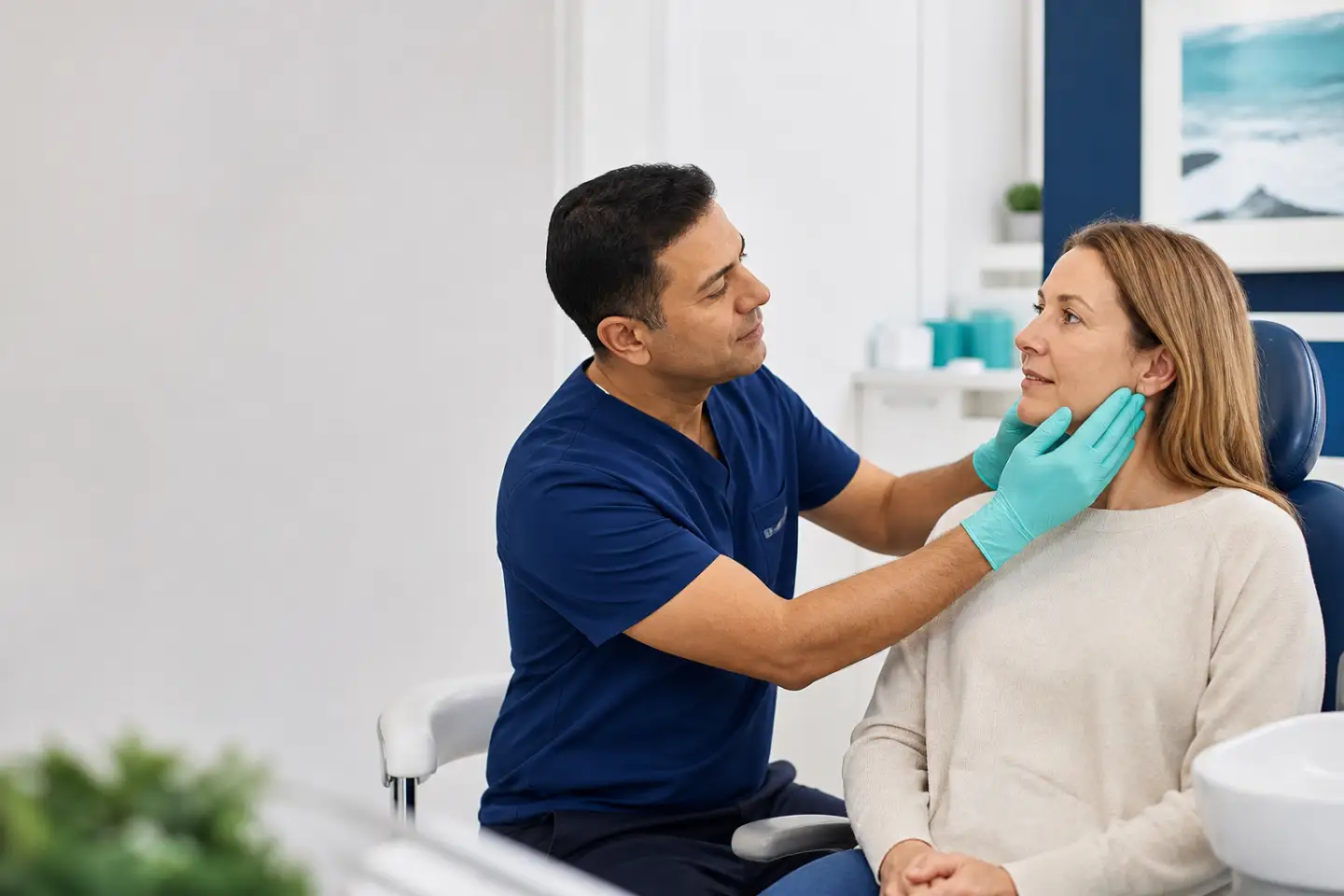
Flattened surfaces, chipped edges, enamel cracks and repeated failure of fillings or crowns can occur with strong loading.
Port Dover Family Dentistry
Bruxism treatment in Port Dover evaluates awake and sleep-related clenching or grinding, dental damage and contributing factors before planning care.
Let’s get you smiling
Tell us how we can help. Our team will follow up to confirm a time.
Bruxism treatment in Port Dover
Bruxism includes grinding, clenching and jaw bracing or thrusting. Awake bruxism often involves sustained or repeated muscle activity during concentration or stress, while sleep bruxism occurs without conscious control and may be heard by a sleep partner.
Many cases are mild and do not need active treatment. More frequent or forceful activity can contribute to tooth wear, fractures, restoration damage, sensitivity, morning jaw fatigue or headache. Assessment focuses on current harm, symptoms and modifiable contributors—not wear alone.
Several factors may overlap
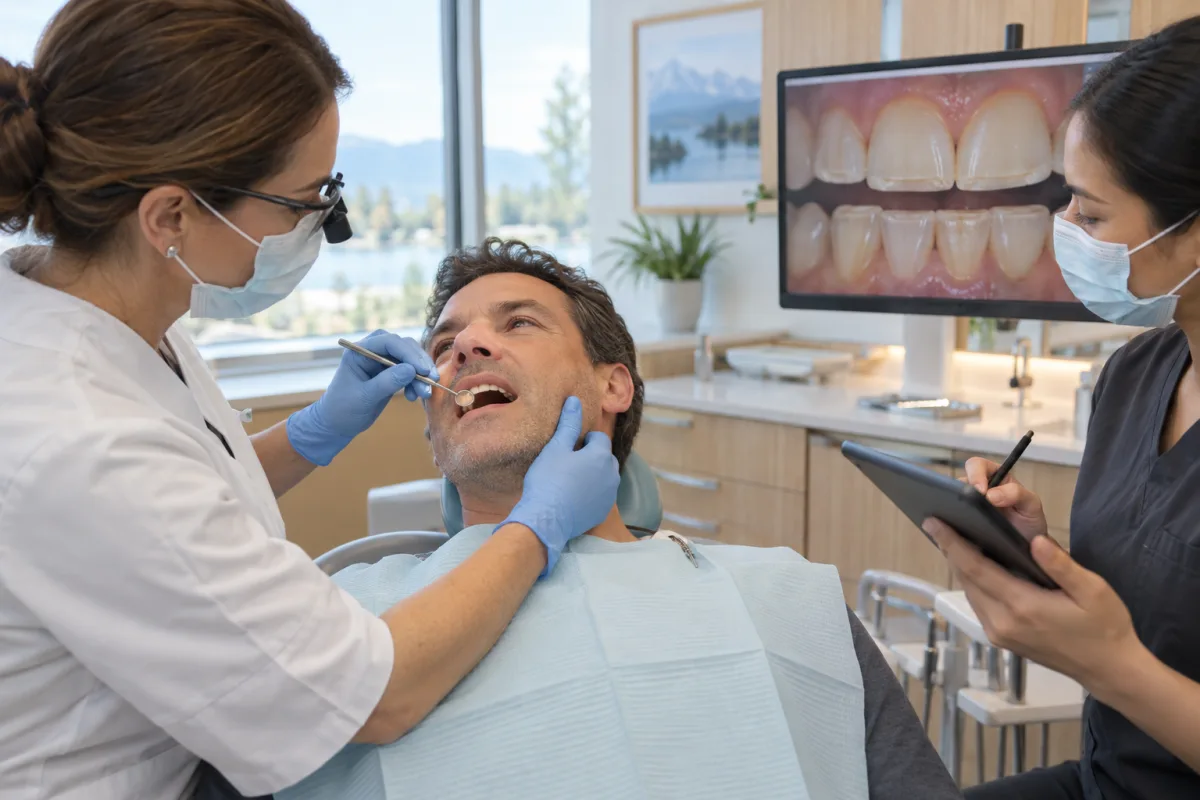
Stress can influence bruxism, but sleep, medications, caffeine, alcohol, tobacco, medical conditions and individual patterns may also matter. Care should not assume one universal cause.
Possible clues
Flattened surfaces, chipped edges, enamel cracks and repeated failure of fillings or crowns can occur with strong loading.
Tight, tired or tender chewing muscles on waking may occur with sleep-related clenching or grinding.
Teeth held together during work, driving, exercise or concentration can create sustained muscle loading.
A partner or family member may hear grinding during sleep even when the person has no awareness of it.
Headaches, tooth sensitivity, jaw pain and wear have other possible causes. No single sign confirms that bruxism is responsible.
Assess the pattern and impact
We ask when symptoms occur, whether anyone hears grinding, and about sleep, stress, caffeine, alcohol, tobacco, medications and health changes.
The dentist checks teeth, restorations, gums, bite, jaw movement and chewing muscles for current damage or tenderness.
Cracks, decay, pulp inflammation, gum disease, TMD and sleep-related breathing concerns may require separate testing or referral.
Observation, habit strategies, a protective appliance, restorative treatment or coordinated medical and physical care may be considered.
Treatment has more than one target
A custom guard can separate the teeth and reduce direct damage, but it does not guarantee that muscle activity will stop. Awake bruxism may respond to awareness cues and a relaxed resting posture, while sleep bruxism may require evaluation of sleep quality, breathing symptoms and medication or substance factors.
Teeth already cracked or heavily worn may need stabilization or restoration, but the loading environment should be considered before extensive work. Jaw pain is assessed on its own merits because treating the teeth alone does not necessarily resolve muscle or joint symptoms.
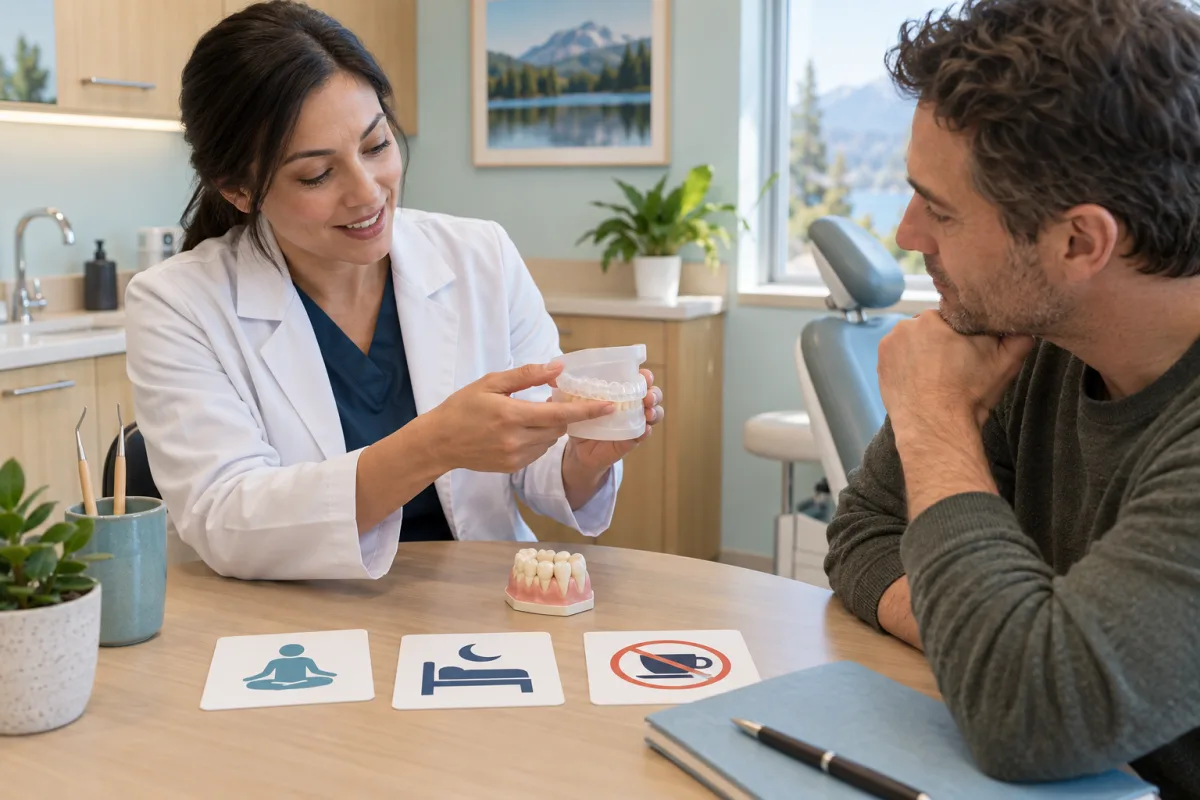
A monitored intraoral appliance may reduce further tooth and restoration damage in an appropriate patient.
Awareness, sleep routine, stress support and review of caffeine, alcohol, tobacco or medications may reduce selected contributors.
Sensitivity, cracks and lost tooth structure are treated according to depth, symptoms, pulp health and restorative needs.
Sleep symptoms change the pathway
Sleep bruxism does not prove sleep apnea, but the conditions can occur together. Breathing symptoms deserve medical evaluation rather than treatment with a standard night guard alone.
Persistent snoring can be a warning sign of airway obstruction and should be discussed with a medical provider.
Observed breathing pauses, choking or waking short of breath need medical sleep assessment.
Unrefreshing sleep, morning headache, brain fog or dangerous drowsiness while driving should not be dismissed as grinding.
New bruxism after a medication change or alongside neurologic, psychiatric or sleep symptoms may call for coordinated care.
Do not stop or change a prescribed medication on your own. Discuss concerns with the prescribing clinician and tell the dentist what you take.
Daily self-management
Simple habits can support a broader treatment plan, particularly for awake clenching and muscle fatigue.
When not chewing or swallowing, let the lips meet gently while the teeth remain apart and the tongue rests comfortably.
Phone reminders or activity cues can help identify clenching during work, driving, exercise or concentration.
A regular sleep routine and appropriate relaxation or counselling support may help when sleep disruption or stress is relevant.
Discuss heavy caffeine, alcohol, nicotine or other substance use with the appropriate healthcare professional rather than making assumptions.
Bruxism assessment
We can assess the pattern of wear and symptoms, identify problems needing repair and build a practical prevention and monitoring plan.
Bruxism questions
Possible clues include grinding sounds reported by a partner, flattened or chipped teeth, recurring restoration damage and morning muscle fatigue. These findings are not specific, so a dental examination is needed.
Stress can contribute, especially to awake clenching, but bruxism is multifactorial. Sleep, medications, caffeine, alcohol, tobacco, health conditions and individual physiology may also be relevant.
No. A guard primarily protects teeth and restorations and may alter muscle activity for some people. Behavioural, sleep, medical or pain-related factors may still need separate management.
It can occur with morning muscle fatigue, temple headache or jaw discomfort, but those symptoms have many causes. The dentist may recommend broader TMD, medical, physical-therapy or sleep evaluation.
Sometimes. Treatment depends on how much structure is lost, the bite, pulp health, symptoms and whether the damaging forces are reasonably controlled. Options can range from monitoring or bonding to crowns or more complex rehabilitation.
Recognized year after year
Best Dentists in Norfolk
Proudly recognized among Norfolk’s top-rated dental practices for six consecutive years.

2021 Winner

2022 Winner

2023 Winner

2024 Winner

2025 Winner

2026 Winner
Stories from our patients
Watch a patient’s experience and browse more five-star reviews from people who have visited our Port Dover dental clinic.
Patient video
A patient shares the welcoming atmosphere and positive experience they found at our Port Dover office.
Google reviews
Swipe or use the arrows
Read all reviewsOur community
Your next visit can start today
New patients and CDCP patients are welcome. Tell us how we can help and our Port Dover dental team will follow up with you.
Evening appointments Monday and Tuesday