
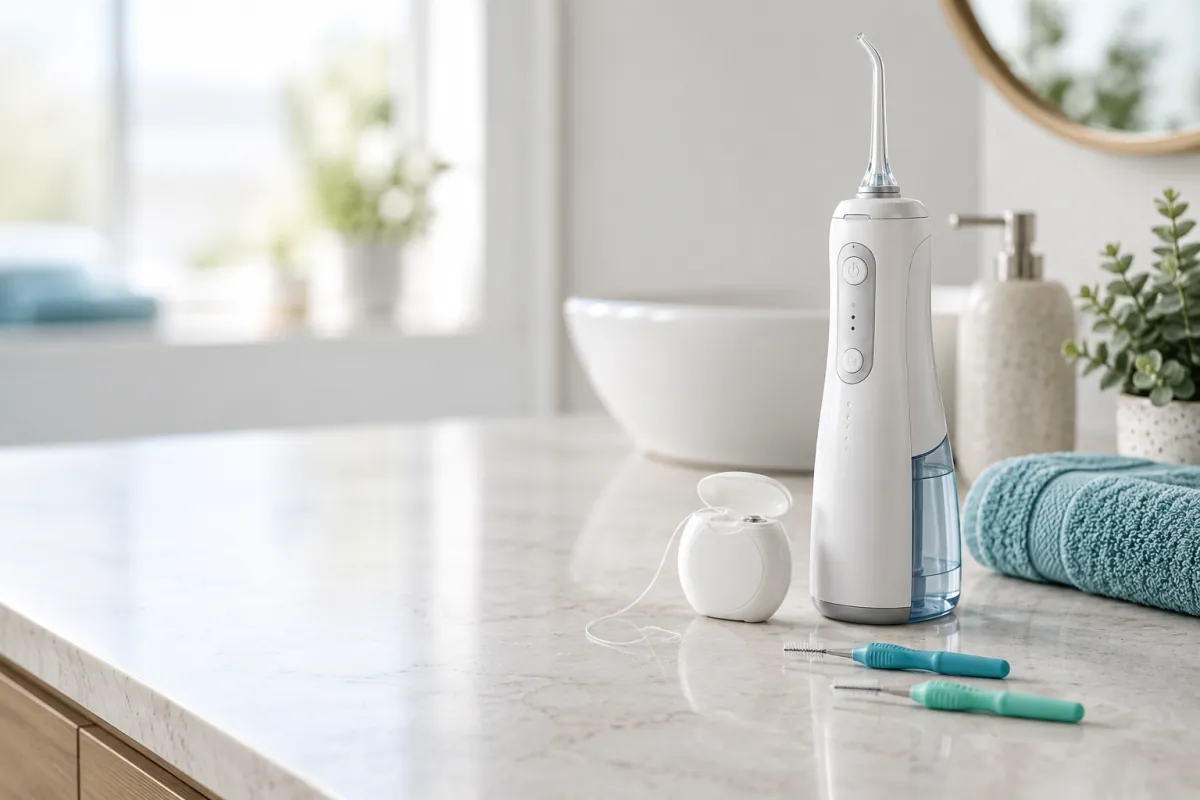
The most useful cleaning tool is the one that reaches the right surfaces and fits into your day. That sounds straightforward until you stand in front of an aisle of floss picks, tiny brushes and countertop machines. If you are comparing water flossers and flossing in Simcoe, start with your mouth rather than the packaging. Tight contacts, a bridge, limited hand movement and bleeding gums create different challenges.
Brushing is essential, but toothbrush bristles do not reliably clean every surface where neighbouring teeth meet. Cleaning between teeth adds a separate job to your routine. You do not need an elaborate collection of devices to do it well. You need a suitable tool, a gentle technique and a way to notice when an area still needs professional attention.
What you are actually trying to remove
Food caught after dinner is easy to notice. Dental plaque is less obvious. This soft bacterial film can remain along the sides of teeth even when no food seems trapped. A quick rinse may move loose crumbs without adequately disturbing the film attached to the tooth.
Interdental cleaning means cleaning between teeth. Depending on the space, that may involve wrapping floss against the surface, guiding a small brush through the gap or directing a water stream along the gumline. Each approach requires deliberate coverage. Racing through the visible front teeth leaves the back of the mouth untreated.
Hardened tartar is a different matter. No home device should be used as a substitute for professional scaling. If you feel a rough ledge that does not disappear with ordinary cleaning, have it checked instead of trying to pry it away.
When traditional floss makes sense
String floss is portable, inexpensive and useful where teeth contact tightly. Waxed floss or dental tape may slide more comfortably through certain contacts. The best texture is generally one you can control without shredding or forcing it through.
Guide the floss through the contact with a small, controlled movement. Curve it around one tooth in a C shape and move it gently along that surface. Then curve it against the neighbouring tooth. Simply pushing the strand straight down and pulling it back out misses much of the area you wanted to clean.
Use enough clean floss to maintain control as you move around the mouth. Remember the back surface of the last tooth on each side. If reaching the rear teeth feels awkward, ask for a demonstration using your own hand position; an explanation on a model may not address the practical difficulty.
What a water flosser can offer
A water flosser directs a stream of water through a small tip. It can make cleaning more manageable for people who struggle to manipulate string floss, and it may help around orthodontic appliances or complex restorations. The American Dental Association’s water-flosser guide describes these devices as an option for cleaning between teeth, particularly when conventional floss is difficult to use.
Start with the manufacturer’s directions and a comfortable low pressure. Lean over the sink, keep the tip inside your mouth before switching it on and allow water to drain rather than spraying across the room. Trace the gumline methodically, pausing between teeth as directed for your device.
A stronger setting is not automatically a better setting. Tender tissues, recent surgery and specialized tips require individual advice. Do not direct a tip forcefully into a healing extraction socket or beneath a surgical area unless the treating clinician has specifically instructed you to do so.
Where interdental brushes fit
A small brush can be especially practical when there is an open space between teeth. Its bristles contact the sides of the gap, while the handle gives more control than a loose strand. People with bridges, gum recession or some orthodontic appliances may find these brushes useful in selected areas.
Size matters. A brush that falls through without touching the sides may do little. One that needs to be forced can injure the gum or bend against the tooth. Your hygienist can identify a suitable size, and different spaces may need different sizes.
Rinse the brush during use, follow replacement instructions and stop using one with a damaged wire. Around implants, ask which design is appropriate for the restoration and exposed materials. The aim is controlled contact, not scraping the hardest possible object through a narrow opening.
Match the tool to the difficult area
Consider a person whose front teeth are tightly crowded but who also has a wider space near a back molar. Floss may suit the crowded contacts, while a correctly sized brush is easier at the wider gap. A single product does not have to solve every problem equally well.
Someone with a fixed bridge has a different challenge: the replacement tooth is connected to its neighbours, so ordinary floss cannot simply pass down from above. A threader, suitable bridge floss or another recommended aid may be needed beneath the false tooth. Our guide to dental bridge care in Simcoe explains that access in more detail.
For a fixed retainer, cleaning must account for the wire and the surfaces beside it. If the wire becomes loose or floss suddenly catches in a new place, stop tugging and arrange a check. A cleaning difficulty can sometimes reveal a mechanical problem.
Bleeding is information, not a target
Gums can bleed when inflamed tissue is first cleaned consistently. They can also bleed because floss is being snapped into the gum or a brush is too large. The correct response is gentle technique and assessment when the problem persists, rather than avoiding the area indefinitely or cleaning more aggressively.
Pay attention to the pattern. Is it one spot or the whole mouth? Does it happen with light brushing too? Is there swelling, a bad taste or discomfort when chewing? These details help the dental team distinguish technique problems from conditions that need treatment.
Heavy bleeding, unexplained bruising or bleeding that is difficult to stop requires prompt professional advice. Tell the dentist about medications that affect bleeding, but do not stop a prescribed medicine on your own. See our article on bleeding gums in Simcoe for further context.
Making a routine work on busy days
Choose a reliable cue: finishing the evening meal, starting your bedtime routine or taking out a removable appliance. Keep the cleaning tool somewhere visible and accessible. If it lives behind several bottles in a cupboard, using it becomes one more task to remember.
You can clean between teeth before or after brushing. Consistent, thorough cleaning matters more than turning the order into a reason to postpone it. Brush twice daily with fluoride toothpaste as well; interdental cleaning does not replace brushing the outer, inner and chewing surfaces.
When you miss a day, resume the routine without trying to compensate with force. Gum tissue does not benefit from a punishment session. A short, careful routine performed regularly is more useful than an occasional aggressive effort followed by several days of soreness.
Dexterity, sensory comfort and shared bathrooms
Arthritis, tremor, reduced vision and fatigue can make a technically simple task difficult. A floss holder may reduce the need to wrap string around fingers. A larger handle can make a brush easier to grip. A cordless irrigator may suit one bathroom, while a countertop reservoir is easier for someone who dislikes repeated refilling.
Think about comfort as well as features. Noise, water temperature, vibration and the feeling of floss between tight teeth can all influence whether a tool gets used. Mention these barriers openly. They are useful information for choosing a sustainable routine.
If family members share a water-flosser base, each person should have their own identified tip. Follow the device instructions for cleaning and drying the reservoir and replacing tips. A product that is difficult to maintain may be a poor fit even if its advertising sounds impressive.
Helping children without turning cleaning into a battle
Children need assistance until they can clean effectively, not simply until they reach a particular birthday. When teeth touch, those contacts may need cleaning before a child has the hand skills to use string floss independently. A parent can ask the dental team to demonstrate a safe position and suitable tool.
Use calm, specific coaching: clean this side, then the other side, and move to the next tooth. A mirror may help a child understand what is happening. Avoid telling them to push harder when an area is difficult.
A water flosser can be useful for some older children, but it is not automatically the best first tool for every child. Consider supervision, the ability to manage the water and any orthodontic instructions. Bring the appliance or a photograph of the tools to a visit if you want practical guidance.
Problems a new gadget will not solve
Floss that repeatedly shreds at the same contact can indicate a rough filling, tartar or another irregular surface. Food that packs into one gap after every meal may reflect the shape of the contact or a restoration. These problems deserve an examination instead of an endless search for tougher floss.
Persistent odour, pus, swelling, increasing pain or a loose adult tooth also needs assessment. A fresh feeling immediately after cleaning does not prove that the underlying tissues are healthy. The dental team may need to measure gum pockets or assess a tooth with an X-ray when clinically indicated.
Keep a short note of where the problem occurs and what triggers it. That is more useful than repeatedly testing the area with a sharp object, which can create an additional injury and obscure the original problem.
Frequently asked questions
Can a water flosser replace string floss?
A water flosser can be a suitable interdental cleaning tool for some people. The choice depends on tooth spacing, dental work, gum health and technique; ask your hygienist to check the areas you find difficult.
Should I stop flossing if my gums bleed?
Continue gentle cleaning unless your treating clinician has given different instructions. Persistent bleeding, pain or swelling needs an assessment rather than harder flossing.
Do I need to buy several cleaning devices?
Usually you can start with one tool that suits your main needs. Some mouths benefit from a second tool for a bridge, wider space or fixed retainer.
Get advice that fits your mouth
If you live in Simcoe, you can bring these questions to Port Dover Family Dentistry at 697 Norfolk County Hwy 6, Unit 2, Port Dover. Ask us to watch your technique and help identify a practical tool for the places you miss. Call 519-583-2929 or request an appointment for an assessment and personalized home-care guidance.
About the author
Port Dover Family Dentistry Team
Our team provides family-focused dental care in Port Dover, Ontario. We create practical oral-health education to help patients ask informed questions and feel more confident about care. This article is general information and does not replace an examination or personalized diagnosis.