The oral-care aisle can make a simple purchase feel complicated. Brushes advertise dozens of features, while toothpaste boxes promise whitening, sensitivity relief, tartar control and “natural” care. Choosing a toothbrush and toothpaste in Simcoe does not require the most expensive combination. It requires products you can use correctly, comfortably and consistently.
For most people, a soft-bristled brush that reaches every tooth and a fluoride toothpaste form a sound foundation. Specific concerns—dry mouth, sensitivity, braces, gum disease or a high cavity rate—may change the details. A dentist or hygienist can help match the product to the problem instead of relying on packaging alone.
Start with soft bristles
Medium and hard bristles are not more effective simply because they feel stronger. Aggressive brushing can irritate gums and wear exposed root surfaces. Soft bristles flex into the gumline and around curved tooth surfaces with less trauma.
The American Dental Association’s brushing guidance recommends a soft-bristled brush twice daily. The head should be small enough to reach the outer, inner and chewing surfaces, including behind the last molars.
If your bristles splay outward within a few weeks, the issue is usually pressure rather than brush quality. Lighten your grip and ask a hygienist to watch your technique.
Brush-head size and handle shape
A large brush may cover more area but struggle behind back teeth or in a small mouth. A compact head offers precision around crowded teeth, orthodontic appliances and the last molars. Children need an age-appropriate head rather than an adult brush cut down to size.
The handle should feel secure without forcing the wrist into an awkward angle. A thicker grip can help someone with arthritis, tremor or limited hand strength. Silicone sleeves and adapted handles may improve control.
There is no universal perfect shape. Bring your current brush to an appointment if you repeatedly miss the same area or find brushing painful.
Manual toothbrushes can work very well
A manual brush is inexpensive, portable and easy to replace. With good technique, it can remove plaque effectively. The challenge is that the user must control timing, pressure and movement.
Use short, gentle strokes at the gumline rather than long horizontal scrubbing. Clean one section at a time and follow the same sequence so no surfaces are skipped. Tilt the brush vertically behind the front teeth and use small up-and-down strokes.
Do not assume a vigorous sensation means a better clean. Plaque is a soft biofilm; disrupting it requires contact and organization, not force.
When an electric brush may help
Powered brushes provide consistent head movement and can reduce the fine hand motion needed. Many include two-minute timers, quadrant pacing and pressure sensors. These features may help people who brush too briefly, press too hard, wear braces or have reduced dexterity.
An electric brush still needs guidance. Hold the head against each surface long enough for the bristles to work, then move methodically. Scrubbing rapidly on top of the motor’s motion can increase pressure without improving access.
Choose a replacement-head system you can find and afford. A sophisticated handle is not useful if heads are unavailable or too expensive to replace.
Electric versus manual is not the main question
The most important brush is one you will use twice daily with good coverage and light pressure. A manual brush used carefully outperforms an electric brush left on the charger. Conversely, a timer and sensor can correct habits that a manual brush makes difficult to monitor.
Consider:
- whether you consistently reach two minutes;
- how quickly bristles wear;
- wrist and hand comfort;
- travel and charging needs;
- head-replacement cost;
- noise or sensory preferences; and
- whether braces or dental work create difficult angles.
Ask a hygienist to assess the plaque left behind with your chosen brush rather than deciding from advertising claims.
Fluoride is the key toothpaste ingredient
Fluoride supports remineralization and makes enamel more resistant to acid. Unless a clinician recommends otherwise, choose a fluoride toothpaste appropriate for the user’s age.
The ADA toothpaste overview identifies fluoride as the cavity-fighting ingredient and explains that other formulas may target sensitivity, gingivitis or surface stain. A recognized independent seal can help confirm that safety and effectiveness claims were evaluated.
Not every “natural” toothpaste contains fluoride. Read the active-ingredient panel, not just the front label. A pleasant flavour matters only if it encourages consistent use without irritation.
Toothpaste for sensitive teeth
Desensitizing formulas use ingredients that reduce nerve response or block microscopic dentin channels. They generally need consistent use over days or weeks rather than one application.
Sensitivity has several possible causes, including exposed roots, decay, cracks, worn fillings and enamel erosion. Toothpaste can help appropriate cases but should not be used to mask a new, localized or worsening symptom.
Apply a small amount as directed and avoid switching formulas every few days. If sensitivity lingers after heat or cold, wakes you or hurts on biting, arrange an examination.
Whitening toothpaste has limits
Whitening toothpaste mainly removes surface stain with polishing or chemical agents. It does not change filling, crown or veneer colour and cannot correct internal discoloration. More abrasive products can increase wear on exposed roots or sensitivity when used aggressively.
If stain is caused by coffee, tea or tobacco, a professional cleaning may help. If the natural shade is the concern, discuss peroxide-based whitening after the teeth and gums are healthy.
Avoid charcoal powders and improvised abrasive mixtures. A product’s popularity online does not establish safety for enamel and restorations.
Tartar-control and gum-care formulas
Some toothpastes reduce plaque, gingivitis or the rate at which tartar forms. They do not detach existing calculus. Once plaque mineralizes, professional scaling is needed.
Therapeutic ingredients can be useful, but strong flavours or detergents may irritate some mouths. A toothpaste for bleeding gums does not replace periodontal assessment if bleeding persists.
Our guide to plaque versus tartar in Simcoe explains why home brushing and professional cleaning have different roles.
Prescription-strength fluoride
People with dry mouth, frequent cavities, exposed roots, radiation-related salivary damage or extensive restorations may benefit from a prescription-strength fluoride toothpaste. It contains more fluoride than ordinary retail products and must be used exactly as directed.
Do not share it with other household members or leave it where a child can use it. Follow instructions about quantity, rinsing and eating afterward.
Higher concentration is not automatically better for every person. It is a risk-based treatment that should be prescribed and reviewed.
Toothpaste for children
Begin brushing when the first tooth erupts. Use a small, soft brush and an age-appropriate amount of fluoride toothpaste. Caregivers should dispense the toothpaste and supervise brushing so the child does not swallow more than intended.
The ADA’s fluoride guidance recommends a rice-grain-sized smear for children under three and a pea-sized amount from ages three through six. A child’s dentist can individualize advice according to cavity risk and local fluoride exposure.
Choose a mild flavour if strong mint causes refusal. Bright packaging is less important than fluoride, correct quantity and caregiver involvement.
When can a child brush alone?
Independence depends on dexterity and consistency, not a birthday alone. A child who can tie shoes may still rush, miss molars or swallow toothpaste. Caregivers often need to brush or closely supervise into the early school years and beyond.
Use a predictable sequence and a timer. Disclosing products may help older children see plaque if a dental professional recommends them. Keep the tone practical rather than treating plaque as a personal failure.
Replace a child’s brush after illness if advised and whenever bristles become chewed or splayed.
Braces and fixed retainers
Brackets and wires create areas a standard head may not reach easily. A compact orthodontic brush, single-tuft brush or electric head can improve access. Small interdental brushes clean under the wire and beside brackets.
Fluoride toothpaste is especially important because plaque around brackets can cause permanent white-spot lesions. Whitening toothpaste may create uneven colour and can be unnecessarily abrasive during treatment.
The orthodontist and hygienist should demonstrate a routine using the actual appliance. Read our braces oral-hygiene guide for a step-by-step approach.
Cleaning dentures is different
Regular toothpaste may be too abrasive for acrylic dentures. Use a denture brush and cleanser recommended for the material. Clean over a folded towel or basin of water to reduce breakage if the appliance is dropped.
Brush the gums, tongue and remaining teeth separately with suitable products. Never use boiling water, bleach or household cleaner unless the dental professional gives product-specific instructions.
Denture adhesive should not be used to hide a poor fit or sore spot. The appliance and tissue need examination.
Replace worn brush heads
The ADA recommends replacement about every three to four months or sooner when bristles fray. A worn head bends away from the tooth and cleans less effectively. Heavy early wear may signal excess pressure.
Also replace a head if it becomes damaged, contaminated or difficult to clean. Follow public-health or clinician advice after an infectious illness; routine replacement after every mild cold is not universally necessary.
Mark the change date on a calendar or subscribe to a reminder that matches the head you use.
Store the brush so it can dry
Rinse thoroughly and store upright in open air. Avoid keeping a wet brush sealed in a travel cap for long periods. Do not let household brush heads touch one another.
Do not share toothbrushes, even with family. Sharing can transfer saliva and microorganisms. Keep brushes away from cleaning chemicals and toilet splashes.
For travel, use a ventilated cover and remove it when you arrive so the head can dry.
Toothpaste foam does not equal cleaning
Foaming agents spread toothpaste and create a sensation of freshness, but foam is not proof that plaque has been removed. Some people with dry mouth, ulcers or flavour sensitivity prefer low-foaming options.
Likewise, a strong mint taste does not treat bad breath caused by gum disease, decay or dry mouth. Persistent odour needs assessment.
Use only enough paste to deliver the active ingredient and support brushing. A large ribbon mostly increases foam and swallowing risk.
A better two-minute routine
Divide the mouth into four sections. Spend roughly equal time on each, cleaning outer, inner and chewing surfaces. Angle bristles toward the gumline and use light circular or short strokes. Brush the tongue gently if comfortable.
Two minutes is a useful target, but time alone does not guarantee coverage. A rushed pattern can scrub the same front surfaces while missing back molars. Use a mirror until the sequence becomes automatic.
Clean between teeth daily with floss, interdental brushes or another recommended device. Toothbrush bristles do not predictably clean tight contacts.
Choosing products near Simcoe
You do not need a clinic-branded product. Look for soft bristles, a head that reaches comfortably and fluoride toothpaste with evidence-based claims. If you have sensitive teeth, braces, implants, dentures, dry mouth or repeated cavities, ask which features matter for that condition.
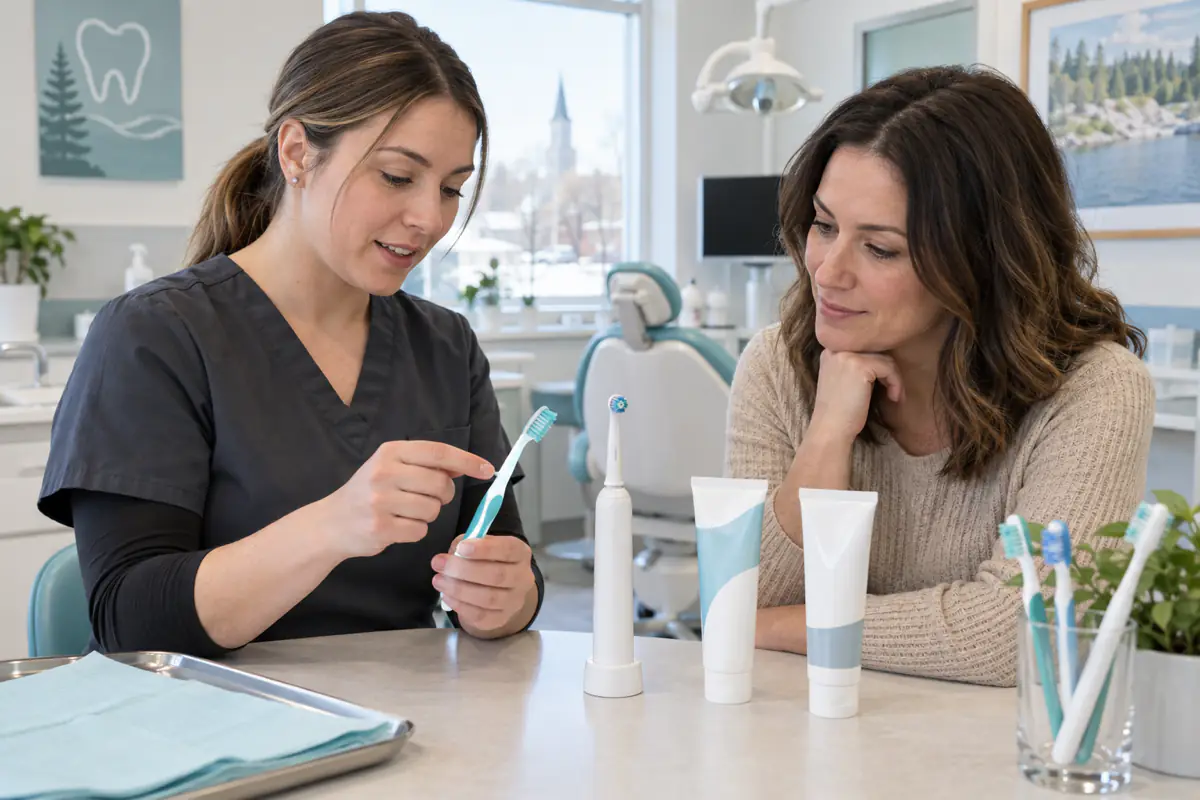
Port Dover Family Dentistry supports patients from Simcoe and throughout Norfolk County with personalized brushing instruction. Bring your current brush and toothpaste to a hygiene appointment so advice can be based on the way you actually clean.
Call 519-583-2929 or request an appointment.
Frequently asked questions
Is a hard toothbrush good for stains?
No. Hard bristles and force can injure gums and wear roots while failing to remove deeper stain or calculus. Professional cleaning and appropriate whitening are safer options.
Do I need to rinse after brushing?
Follow the directions on your toothpaste and advice from your dental professional. Vigorously rinsing immediately can reduce fluoride contact, but swallowing toothpaste should be avoided.
Can family members share an electric handle?
They may share a compatible handle if each person has a clearly identified removable head and the system is cleaned according to its instructions. Brush heads themselves should never be shared.
About the author
Port Dover Family Dentistry Team
Our team provides family-focused dental care in Port Dover, Ontario. We create practical oral-health education to help patients ask informed questions and feel more confident about care. This article is general information and does not replace an examination or personalized diagnosis.