
A toothache in Simcoe can be sharp, throbbing, dull, pressure-like or difficult to locate. Pain might appear only with cold water, wake you during the night or spread toward the ear and jaw. These patterns offer clues, but they do not provide a reliable diagnosis without an examination.
Tooth pain is a symptom, not a disease. Decay, a crack, a damaged filling, an inflamed nerve, gum infection, grinding and even a sinus problem can produce similar sensations. Temporary home measures may make waiting more comfortable, but definitive relief usually depends on treating the cause.
Why teeth hurt
The visible crown is covered by enamel. Under it lies dentin, a porous layer connected to the pulp at the centre of the tooth. The pulp contains nerves, blood vessels and connective tissue. Irritation can begin at any level.
When enamel is worn or a root becomes exposed, cold can move fluid in dentin and trigger a short sensation. Deeper decay, trauma or a crack can inflame the pulp. If bacteria reach the pulp and it dies, infection may spread through the root into surrounding bone and soft tissue.
Pain can also arise from the ligament around the root, gums, jaw muscles or temporomandibular joint. That is why “the painful tooth” is not always the tooth responsible.
Brief cold sensitivity
A quick twinge that stops when the cold stimulus is removed may come from an exposed root, early decay, enamel wear or a small gap around a filling. Recent dental work can also temporarily irritate a tooth.
Use a soft toothbrush and desensitizing fluoride toothpaste while arranging a routine assessment. Avoid extreme temperature triggers. If the sensation becomes stronger, begins without a trigger or lingers after the cold is gone, contact the dental office sooner.
Do not assume sensitivity is harmless because it is brief. A clinician still needs to check for a cavity, crack, recession or restoration problem, especially when only one tooth has changed.
Lingering heat or cold pain
Pain that continues well after a hot or cold item is removed can indicate more advanced pulp inflammation. The duration, intensity, spontaneity and response to testing help determine whether the pulp might recover or requires treatment.
This type of pain can be difficult to localize and may refer to another tooth or the opposite jaw. Patients sometimes request a specific tooth be treated, but the dentist must reproduce and interpret the symptoms before acting.
Root canal treatment may be recommended when the pulp is irreversibly inflamed or infected and the tooth is restorable. Extraction is an alternative when the tooth cannot be predictably repaired or the patient chooses removal after discussing consequences.
Sharp pain when biting
Pain on biting or on release can be associated with a cracked tooth, loose filling, decay, inflamed ligament or damage inside the tooth. The problem may occur only with a particular cusp or hard food.
Stop testing it with nuts, ice or crunchy snacks. Chew on the other side and arrange a prompt examination. Repeated loading can extend a structural crack.
The American Association of Endodontists’ tooth-pain guide describes how biting pain, lingering temperature sensitivity and constant pressure can point to different possible problems. These are starting points for evaluation, not instructions for self-treatment.
Constant throbbing or spontaneous pain
Pain that starts without eating or drinking, wakes you at night or throbs with your heartbeat may reflect significant pulp inflammation or infection. The tooth can feel elevated, and lying down may intensify pressure.
Call for an urgent dental appointment. Waiting until the pain is unbearable can reduce treatment options and increase the risk of swelling. Pain medicine may temporarily reduce symptoms but cannot remove decay, clean an infected root canal or drain an abscess.
Sudden disappearance of severe pain is not proof of healing. The pulp may have lost vitality while infection remains beyond the root.
Swelling and dental abscess
An abscess is a collection of infection associated with a tooth or gum. Possible signs include localized gum swelling, a pimple-like bump, bad taste, facial swelling, fever, tender lymph nodes or difficulty opening the mouth.
Dental treatment may involve drainage, root canal treatment, periodontal care or extraction depending on the source. Antibiotics are used when clinically indicated, particularly when infection is spreading or systemic signs are present. They do not reliably eliminate the infected tissue inside a tooth and are not a routine cure for every toothache.
Do not squeeze or puncture a swelling. Our dental abscess guide explains why definitive treatment and follow-up matter.
When tooth pain may not start in a tooth
Upper back teeth sit near the maxillary sinuses. Congestion or sinus inflammation can create pressure across several teeth, often changing when bending forward. Jaw-muscle pain from clenching can feel like a diffuse ache, particularly in the morning. Temporomandibular joint problems may cause pain near the ear with clicking or limited opening.
Nerve disorders and other medical conditions can also cause facial pain. Rarely, heart-related pain can refer to the jaw, especially when associated with exertion, chest pressure, sweating, shortness of breath or nausea. Call emergency services for possible heart symptoms.
A dentist evaluates the teeth first and coordinates medical assessment when findings do not explain the pain.
What you can do while waiting
Call the dental office, describe the pattern and ask how soon you should be seen. While waiting:
- keep the mouth clean with gentle brushing;
- rinse with lukewarm water after eating;
- use floss carefully if food is trapped between teeth;
- choose soft, moderate-temperature food;
- chew on the opposite side;
- sleep with your head slightly elevated if lying flat increases throbbing; and
- ask a pharmacist which non-prescription pain medicine is safe for you.
The pharmacist needs to know about pregnancy, ulcers, kidney or liver disease, blood thinners, allergies and other medicines. Follow the package and professional directions, and avoid taking two products that contain the same ingredient.
Pain medicine is temporary support
Evidence-based guidance from the American Dental Association supports non-opioid options for temporary management of many adult and adolescent toothaches when definitive care is not immediately available. Individual safety still matters.
Ibuprofen and other non-steroidal anti-inflammatory drugs are not appropriate for everyone. Acetaminophen also has dose limits and may be present in cold, flu and combination products. Children require age- and weight-appropriate advice, and aspirin should not be given to children or teenagers unless a physician specifically directs it.
Medication should make the wait safer and more tolerable, not postpone treatment indefinitely.
What not to put on a painful tooth
Do not place aspirin against the tooth or gum. It can cause a chemical burn without treating the source. Avoid applying alcohol, peroxide, essential oils or household chemicals to the area.
Clove-containing products and topical numbing gels can irritate tissue or be unsafe when overused or swallowed. Ask a pharmacist or dentist before using them, particularly for a child.
Never use leftover antibiotics or someone else’s prescription. The drug may be wrong for the condition, create side effects or interactions, and delay necessary treatment.
Do not glue a crown, filling or tooth fragment with household adhesive.
When to call a dentist promptly
Book an assessment for pain that persists, returns or affects sleep and eating. Call sooner for:
- spontaneous or severe pain;
- swelling of the gum, cheek or jaw;
- fever or feeling unwell;
- a bad taste or drainage;
- pain after a blow to the face;
- a broken tooth or lost restoration;
- difficulty opening the mouth; or
- pain in a person who is immunocompromised or receiving cancer therapy.
Do not wait for a regular cleaning appointment to mention significant pain. Dental teams reserve urgent time based on triage, so explain the symptoms clearly.
When to seek emergency medical care
Some oral infections and injuries extend beyond what an office visit can safely manage. Call 911 or go to an emergency department for trouble breathing, swallowing or speaking; swelling that approaches the eye or neck; rapidly spreading facial swelling; confusion or severe illness; uncontrolled bleeding; or major facial and jaw trauma.
Chest pressure, shortness of breath, sweating, faintness or pain spreading to the arm or jaw also requires emergency medical assessment. Do not assume jaw discomfort is dental when those symptoms occur.
The hospital may stabilize a serious infection or injury. Definitive tooth treatment may still be needed afterward.
How a dentist diagnoses toothache
The visit begins with a focused history. Be ready to explain when pain started, what triggers it, how long it lingers, whether it wakes you, and which medicines you took. Mention recent dental work, trauma, sinus symptoms and medical conditions.
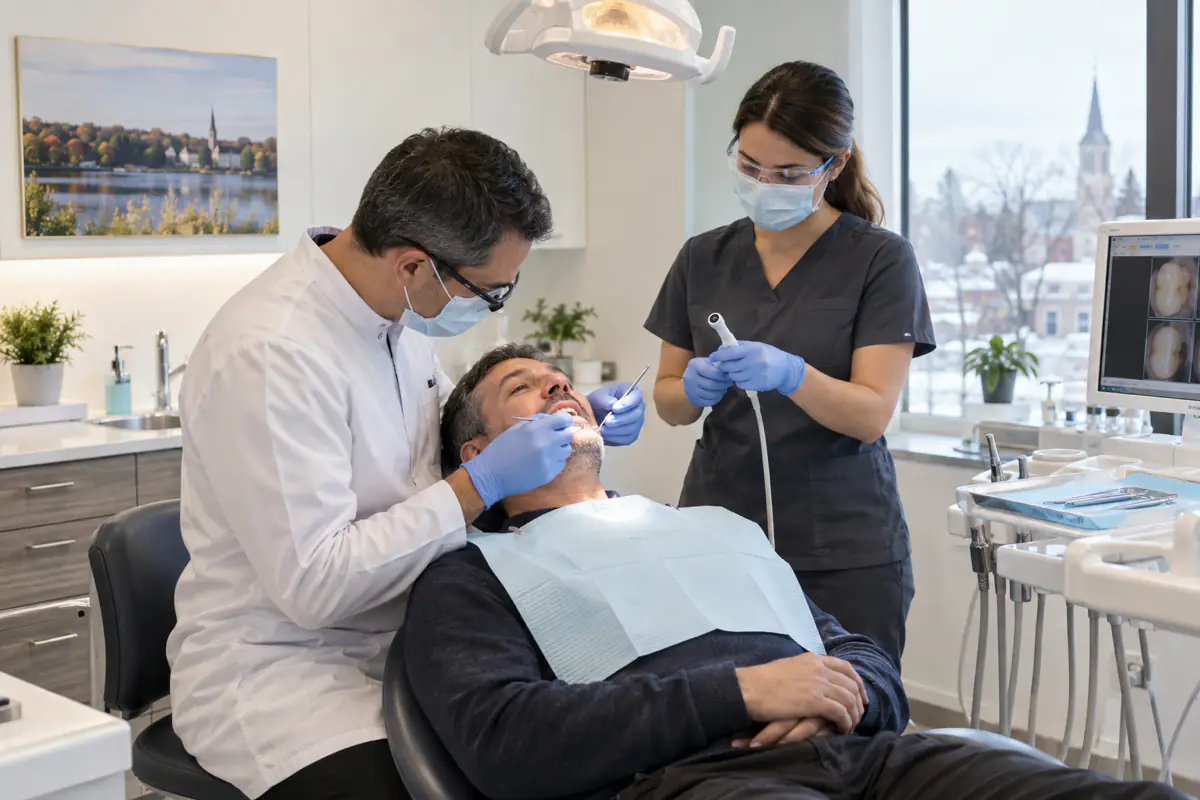
The dentist examines teeth, restorations, gums, bite and soft tissues. Testing may include cold, tapping, pressure, bite tests, gum measurements and dental X-rays. Comparison with nearby teeth helps interpret the result.
No single test provides every answer. A fine crack may not appear on an X-ray, while an early pulp problem may not yet create a bone change. Sometimes monitoring or referral to an endodontist is appropriate before irreversible treatment.
Treatment depends on the cause
A small cavity may be restored with a filling. A larger weakened tooth may need a crown or onlay. If the pulp is irreversibly inflamed or infected, root canal treatment can remove the diseased tissue and preserve a restorable tooth. A non-restorable tooth may require extraction.
Gum-related pain may need professional cleaning, drainage or periodontal therapy. A high or loose restoration can sometimes be adjusted or replaced. Grinding-related pain may call for habit changes, bite assessment and a protective appliance.
The correct treatment is the least invasive option that predictably addresses the diagnosis. Antibiotics and pain medicine alone generally do not repair dental structure.
Toothache in children
Children may describe tooth pain as an earache, avoid chewing without explaining why or become irritable at meals. Look for swelling, a broken tooth, a visible cavity or food trapped between teeth, but do not probe with a sharp object.
Call a dentist for guidance and provide the child’s age, weight, symptoms and medical history. Never estimate an adult medication dose. Facial swelling, fever, reduced drinking, unusual sleepiness or trouble breathing or swallowing needs urgent attention.
Baby teeth matter for comfort, nutrition, speech and space. Infection in a primary tooth should not be ignored simply because the tooth will eventually fall out.
Toothache during pregnancy
Pregnancy is not a reason to live with untreated infection. Tell the dental team how far along you are, provide your prenatal clinician’s contact information when relevant and list all medicines and supplements.
Dental examination and necessary treatment can be planned with appropriate precautions. Do not self-medicate based on advice intended for a non-pregnant adult; medicine choices may differ by pregnancy stage and health history.
Hormonal changes can increase gum inflammation, but a localized toothache still needs assessment for decay, cracks and infection.
Preventing future tooth pain
Brush twice daily with fluoride toothpaste, clean between teeth and attend examinations at the interval recommended for your risk. Limit frequent sugary drinks and snacks, choose water routinely and avoid chewing ice or using teeth as tools.
Wear a mouthguard for contact sports. Ask about a night guard if grinding signs are present. Complete definitive restorations after root canal treatment and replace failing fillings when clinically necessary.
Prevention cannot stop every cracked tooth or injury, but it can reduce common causes and find problems before they become painful.
Toothache care near Simcoe
Port Dover Family Dentistry welcomes patients from Simcoe and throughout Norfolk County for assessment of tooth pain. Depending on findings, care may include a restoration, emergency stabilization, root canal treatment, extraction planning or referral.
Call 519-583-2929 and describe swelling, fever, trauma and pain severity so the team can triage the concern. For non-urgent needs, request an appointment online; the request is not confirmed until our team contacts you.
Frequently asked questions
Why does my toothache feel worse at night?
Fewer distractions, lying flat and changes in blood flow or pressure can make pain more noticeable. Night pain is not a diagnosis, but pain that disrupts sleep deserves prompt assessment.
Can a cavity hurt only sometimes?
Yes. Early decay may cause no symptoms, and deeper decay can react intermittently to sweets or temperature. A dental examination and X-rays when indicated determine whether decay is present.
What if I cannot tell which tooth hurts?
Referred pain is common. Avoid choosing a tooth for treatment based on sensation alone. Dentists compare several teeth and use multiple tests to identify the most likely source.
About the author
Port Dover Family Dentistry Team
Our team provides family-focused dental care in Port Dover, Ontario. We create practical oral-health education to help patients ask informed questions and feel more confident about care. This article is general information and does not replace an examination or personalized diagnosis.