
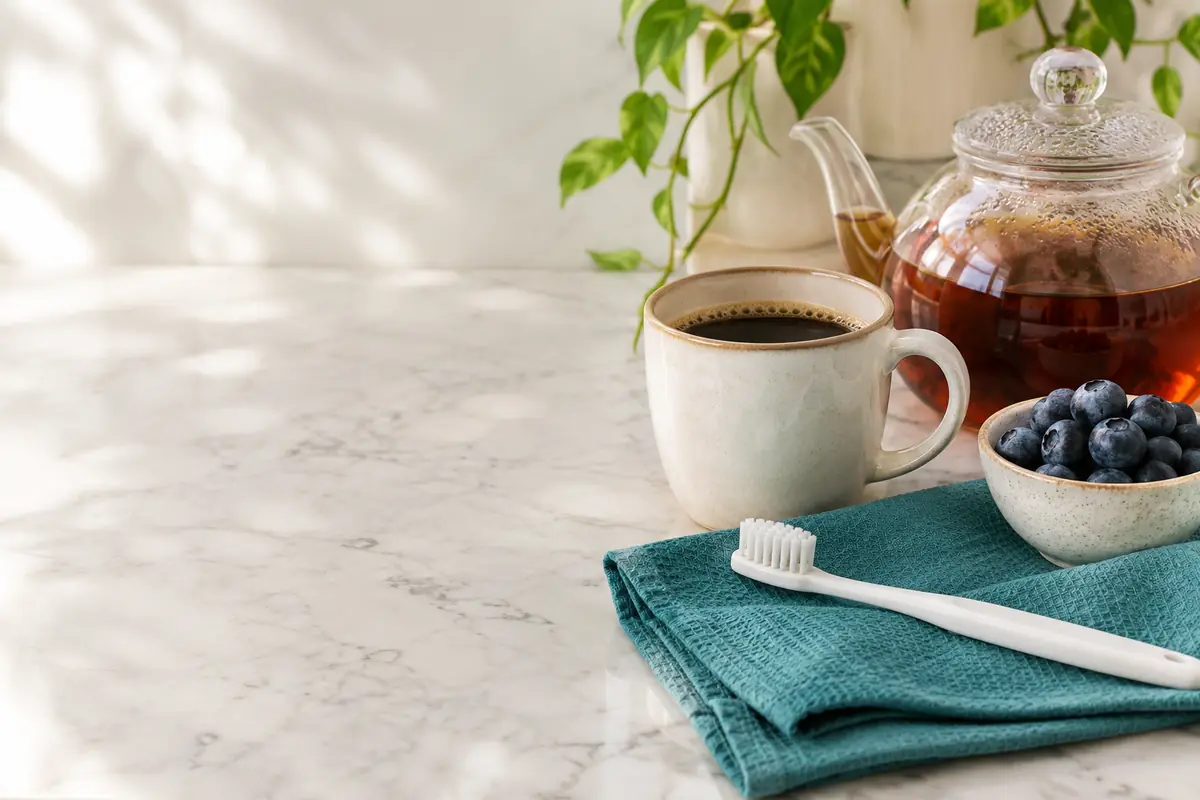
Teeth are not naturally pure white. Their colour comes from two layers working together: a translucent outer coat of enamel and the warmer, more yellow dentin beneath it. Light passes through the enamel and reflects off the dentin, so the shade you see in the mirror depends on the thickness and clarity of the enamel, the colour of the dentin and anything sitting on the surface.
When people ask about tooth stains and discolouration in Port Dover, they are often describing very different things. A brown line along the gums from coffee, a single front tooth that has turned grey, chalky white patches and a general yellowing that has crept in over the years all count as discolouration, but they have different causes and respond to different treatments.
Dentists usually group colour changes into two broad families: extrinsic stains, which sit on or in the outer surface, and intrinsic discolouration, which comes from within the tooth. Understanding which one you have is the first step toward an option that actually works.
Extrinsic stains: colour on the surface
Extrinsic stains form when pigments from food, drink or tobacco attach to the thin protein film that coats the enamel. Over time, they can darken and become more firmly bound, especially in the tiny grooves and pits of the tooth and along the gumline where plaque gathers.
Common sources include coffee, tea, red wine, cola, dark berries, curry and soy sauce, along with smoking and chewing tobacco. Some mouthrinses, particularly chlorhexidine used for gum treatment, can leave a brown film with regular use. Certain iron supplements can also leave dark deposits.
Because extrinsic stains sit on the outside, many can be reduced with a professional cleaning and polishing, and with daily brushing using fluoride toothpaste. Tartar, which is hardened plaque, absorbs stain readily and can only be removed professionally.
Intrinsic discolouration: colour from within
Intrinsic discolouration involves the internal structure of the tooth. It may develop while teeth are forming in childhood or appear later in adult life.
Developmental causes include excess fluoride exposure during early childhood, which can produce white flecks or, less commonly, brown mottling; certain antibiotics such as tetracycline taken while teeth were forming, which can cause grey or brown banding; and inherited conditions that affect enamel or dentin. Illness or high fever in early childhood can sometimes affect enamel development as well.
Later causes include trauma that damages the nerve and blood supply inside a tooth, breakdown products from the pulp, materials used in some older root canal treatments and decay that has spread beneath the surface. The American Dental Association’s whitening information also notes that some medications and treatments, including head and neck radiation and chemotherapy, can affect tooth colour.
Age-related yellowing
Many people notice teeth looking more yellow in their fifties and sixties. Part of this is the gradual accumulation of surface stain. Part is structural: enamel slowly thins with years of chewing and brushing, allowing more dentin to show through, while the dentin itself tends to become darker and thicker with age.
Gum recession can add to the effect by exposing root surfaces, which are naturally more yellow than enamel and pick up stain easily. In this sense, ageing produces a mixture of extrinsic and intrinsic change.
When one tooth changes colour
A single tooth that turns grey, brown, pink or noticeably darker than its neighbours deserves attention. The most common explanation is an old injury, sometimes one the person barely remembers, such as a fall from a bike or a hockey puck years ago. Bleeding inside the tooth or loss of vitality in the pulp can darken it gradually.
A dark tooth may be painless, but that does not mean it is healthy. The pulp could have died, and infection can develop at the root tip without obvious symptoms. An examination and X-ray help determine whether the tooth needs root canal treatment before any cosmetic change is considered. Our article on root canal treatment in Port Dover explains when that may be recommended.
A pink or reddish hue near the gumline can occasionally indicate a process called resorption, in which tooth structure is broken down from inside. It is uncommon, but it is one more reason not to assume a colour change is simply cosmetic.
White spots, brown spots and black lines
Chalky white patches near the gumline can be the earliest stage of decay, where minerals have been lost from the enamel surface. They are especially common after braces if plaque collected around the brackets. White flecks or streaks present since childhood may instead be developmental. Our article on white spots on teeth looks at these in more detail.
Brown or black spots in the grooves of back teeth may be harmless stain, or they may be decay. Only an examination, sometimes with X-rays, can tell the difference. A thin black line along the gumline in some children and adults can be a harmless type of bacterial stain, but it is still worth having it checked rather than scrubbing at it.
Dark shadows around old silver fillings sometimes reflect the metal showing through thin tooth structure, and sometimes indicate decay underneath. Again, assessment is needed.
Why diagnosis comes before treatment
It is tempting to buy a whitening kit at the first sign of yellowing. For many people that is fine. But whitening a mouth with untreated decay, gum inflammation or exposed roots can cause sensitivity and may mask problems that need attention.
There is also the practical matter of existing dental work. Fillings, crowns, bridges and veneers do not change colour with whitening. If you whiten your natural teeth, older tooth-coloured restorations on visible teeth may no longer match and might need to be replaced to blend in.
A checkup also helps sort out the type of stain. Surface stain may disappear with a cleaning, saving you the cost of whitening altogether.
Professional cleaning and polishing
For extrinsic stain, a professional cleaning is often the simplest first step. The hygienist removes plaque and tartar, then polishes the teeth to lift remaining surface pigment. Many patients are surprised by the difference this alone makes, particularly coffee and tea drinkers.
Regular cleanings at the interval your hygienist recommends help keep stain from building up again. Between visits, brushing twice daily with fluoride toothpaste and cleaning between the teeth slow the return of stain-catching plaque.
Whitening for general yellowing
Peroxide-based whitening works by breaking down pigment molecules within the enamel and dentin. It tends to work well for general yellowing and many long-term food and drink stains, and less predictably for grey or banded discolouration.
Options include in-office whitening, custom trays used at home with a professional-strength gel, and over-the-counter products. Temporary sensitivity and gum irritation are the most common side effects. Our guide to teeth whitening in Port Dover compares these approaches and explains what results are realistic.
A single dark tooth that has had root canal treatment may sometimes be lightened from the inside, a technique known as internal bleaching. Whether it is suitable depends on the tooth and its previous treatment.
Bonding, veneers and crowns for deeper discolouration
When whitening cannot reach the problem, covering the discoloured surface may be an option. Composite dental bonding applies tooth-coloured resin to mask a spot, a stained area or a small defect. It is usually conservative, though composite can stain and chip over time.
Porcelain veneers cover the front surface of a tooth and can address more widespread or stubborn discolouration. They usually require removal of a thin layer of enamel, which is irreversible. Crowns may be considered when a tooth is also weakened, heavily filled or has had root canal treatment.
Some white spots can be improved with a technique called resin infiltration or by gentle microabrasion. Each option has trade-offs in cost, longevity and how much tooth structure is affected, so a cosmetic consultation is a good place to compare them.
Home habits that reduce staining
You do not need to give up coffee or blueberries to keep a bright smile. A few habits make a meaningful difference:
- Drink staining beverages with meals rather than sipping them slowly all day.
- Rinse with water after coffee, tea or red wine.
- Use a straw for iced drinks if it is comfortable.
- Brush twice daily with fluoride toothpaste and a soft brush, and clean between teeth daily.
- Avoid tobacco in all forms.
Whitening toothpastes contain mild abrasives or polishing agents that can help remove surface stain. They do not change the internal colour of teeth. Use them as directed, and switch to a regular fluoride toothpaste if your teeth become sensitive.
Remedies to avoid
Activated charcoal powders, lemon juice, strawberry and baking soda pastes, and other popular online remedies are often abrasive or acidic. Scrubbing with them can wear away enamel, which may ultimately make teeth look more yellow as dentin shows through. Acidic mixtures can also contribute to erosion.
Bleaching products not intended for teeth should never be used in the mouth. If a stain bothers you, have it assessed rather than experimenting.
When colour change needs prompt care
Contact a dental office soon if a tooth darkens after an injury, if discolouration comes with pain, swelling or a bad taste, if a dark spot feels rough or catches floss, or if a tooth changes colour quickly. Swelling of the face, fever or difficulty swallowing should be treated as urgent; seek emergency medical care if breathing or swallowing is affected.
Changes in the colour of the gums, cheeks or tongue, such as a red or white patch that does not heal within about two weeks, are different from tooth stains and should also be examined.
Frequently asked questions
Will whitening remove every kind of tooth stain?
No. Whitening tends to work best on general yellowing and many food and drink stains. Some deep discolouration, such as certain medication-related or developmental stains, responds poorly, and whitening does not change the colour of fillings, crowns or veneers.
Why has only one of my teeth turned grey or dark?
A single darkening tooth is often related to past trauma or changes inside the tooth, such as damage to the pulp. It should be examined, sometimes with an X-ray, because the cause affects treatment and the tooth may need care beyond cosmetic change.
Can I scrub stains away with baking soda or charcoal?
Abrasive home remedies can wear enamel and irritate gums, which may make teeth look more yellow over time as dentin shows through. A professional cleaning and advice on safe products are better first steps.
Find out what is behind the colour change
The best treatment for a stain depends on where it comes from, and that starts with a look at your teeth. Visit Port Dover Family Dentistry at 697 Norfolk County Hwy 6, Unit 2, Port Dover, call 519-583-2929, or request an appointment. If you are weighing whitening, bonding or veneers, a cosmetic dental consultation is a practical place to begin.
About the author
Port Dover Family Dentistry Team
Our team provides family-focused dental care in Port Dover, Ontario. We create practical oral-health education to help patients ask informed questions and feel more confident about care. This article is general information and does not replace an examination or personalized diagnosis.





