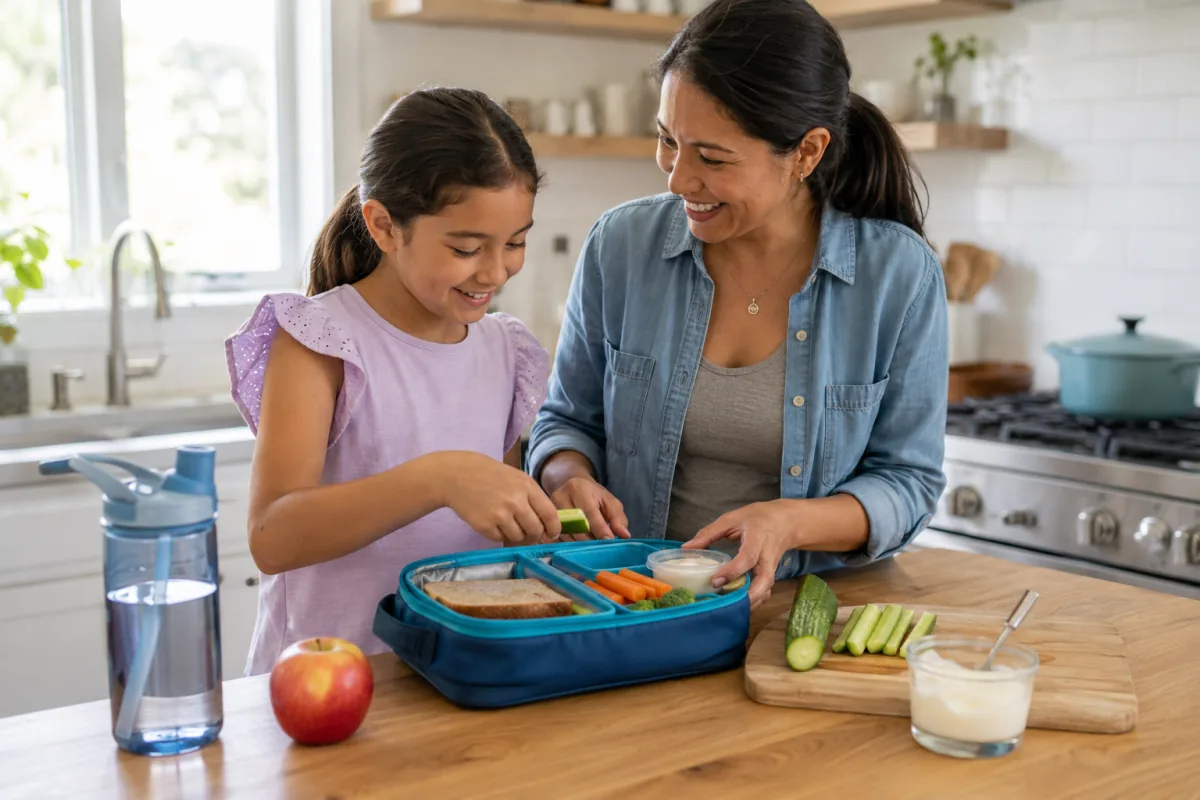
Packing tooth-friendly school lunches in Norfolk County does not require specialty foods, perfect containers or a ban on every treat. Teeth benefit from the same broad pattern that supports a child through the school day: satisfying meals, planned snacks, plain water and fewer foods that cling to teeth or are sipped for hours.
The most important dental issue is often frequency. Each exposure to sugar or refined starch allows plaque bacteria to produce acid. Saliva repairs early mineral loss between meals, but constant grazing shortens that recovery time. Families in Port Dover and surrounding communities can protect teeth by organizing familiar foods into clear eating periods.
Build a lunch, not a collection of snacks
A lunch made only of small packaged snacks may be easy to pack but encourages nibbling. Start with a satisfying main component, add vegetables or fruit, and include another food that fits the child’s appetite and culture.
Examples include:
- whole-grain sandwich or wrap with a protein filling;
- leftovers in an insulated container;
- unsweetened yogurt with fruit and oats;
- hummus with vegetables and pita;
- cheese, whole-grain crackers and cut vegetables; or
- rice, beans and cooked vegetables.
These are ideas, not rigid rules. Canada’s healthy eating at school guidance emphasizes that choices can reflect taste, culture and budget and encourages involving children in packing.
Water is the routine winner
Plain water does not feed cavity-causing bacteria or expose teeth to dietary acid. Pack a reusable bottle and wash it daily. Water also rinses food debris and helps children who take medicines that cause dry mouth.
Juice, pop, sports drinks, sweet tea and flavoured water may contain sugar, acid or both. Even 100% juice can contribute to cavities and erosion when sipped slowly. “No sugar” drinks may still be acidic.
Milk can be nutritious and less acidic, but it should be kept cold and consumed with the meal rather than carried all afternoon. Chocolate milk contains added sugar and should not replace plain water as an all-day drink.
Sticky does not only mean candy
Gummies, fruit snacks, dried fruit and chewy granola bars can remain in grooves and between teeth. Some are marketed with fruit imagery but behave like sticky sweets in the mouth.
Refined crackers and chips also cling and break down into carbohydrates. They are not forbidden; serve a portion as part of the meal rather than an open bag for repeated snacking.
Whole fruit generally offers fibre, chewing and nutrition that juice lacks. Cut it in an age-appropriate way and follow school food-safety practices.
Frequency beats perfection
A small dessert eaten with lunch creates one defined exposure. The same item divided into bites every class period creates repeated acid attacks. School rules usually limit eating times, which can help.
At home, avoid sending a child out the door with a sweet drink they continue through the morning. After school, offer one planned snack instead of leaving food available until dinner.
This approach leaves room for celebrations. Oral health is shaped by what happens most days, not one birthday cupcake.
A practical lunch formula
Choose one from each flexible group:
- Main: sandwich, wrap, leftovers, egg, bean dish or yogurt bowl.
- Produce: whole fruit, cut vegetables or unsweetened applesauce eaten with a spoon.
- Additional food: cheese, seeds if allowed, whole-grain crackers or another culturally familiar side.
- Drink: plain water.
Adjust for allergies, medical needs, religious practices and the child’s appetite. A lunch that comes home untouched protects neither nutrition nor teeth, so include the child in planning.
Budget-friendly choices
Tooth-friendly does not mean expensive. Use leftovers, seasonal produce, store-brand unsweetened yogurt, beans, eggs and larger packages portioned into reusable containers. Frozen vegetables and fruit can be economical and nutritious.
Compare unit prices and nutrition facts rather than relying on front-label claims. Products described as organic or natural can still be sticky, sugary or acidic.
If food access is difficult, school meal programs and community resources can help. Dental advice should never shame a family for working within real constraints.
Food allergies and school rules
Follow the school’s allergen policy. Nut-free does not mean nutrition-free: seed butters where permitted, cheese, eggs, beans, lentils, yogurt and other options may work depending on the child.
Read labels every time because formulations change. Prevent cross-contact using clean utensils and containers. A safe lunch takes priority over an idealized dental menu.
Children with diabetes, celiac disease, swallowing concerns or other medical needs require individualized plans. Coordinate with the medical team and school rather than removing essential foods for dental reasons.
Food safety matters
Use an insulated lunch bag and cold packs for foods that require refrigeration. Preheat an insulated container for hot food and follow the manufacturer’s instructions. Wash produce, hands, bottles and containers.
Do not ask a child to eat food that smells, looks or feels unsafe simply to avoid waste. Health Canada’s safe school lunch guidance offers packing and temperature advice.
Picky eaters
Pressure can make eating more stressful. Include at least one familiar accepted food and add small exposures to newer foods without forcing a bite. A child may need many neutral encounters before accepting a texture.
If the diet is extremely limited, growth is affected or chewing seems painful, speak with the physician, dietitian and dentist. Avoidance of hard food can signal a cavity, loose tooth, jaw problem or sensory issue.
Do not use candy as a reward for finishing the “healthy” part. It elevates the treat and turns the rest into a chore.
Braces and dental appliances
Hard, sticky foods can break orthodontic wires or brackets. Follow the orthodontist’s list. Cut apples and firm vegetables into manageable pieces rather than biting directly with brackets. Avoid popcorn kernels, hard candy and chewing ice.
Food collects around brackets, so thorough morning and bedtime brushing is essential. A small interdental brush may help after lunch if the child can use and store it hygienically.
Removable aligners should come out for eating and for drinks other than water. Teeth should be clean before reinsertion when possible. Never wrap an aligner in a napkin; use its case.
Sports days
Water suits most ordinary school sports. Sports drinks are usually unnecessary for a short practice or gym class and can be acidic and sugary. Prolonged intense activity may require personalized sports nutrition, but exposure can still be limited to the activity.
Wear a properly fitted sports mouthguard when impact is possible. Remove it for eating, rinse it before reinsertion and never fill it with a sugary drink.
Brushing around the school day
Thorough brushing twice daily with fluoride toothpaste is the foundation. An adult should help or check younger children. Clean between touching teeth once a day.
Most students do not need to brush after every meal if morning and night care is effective. Children with braces, very high cavity risk or medically reduced saliva may receive different advice.
If a toothbrush is kept at school, it must dry upright without touching others. Do not store a wet brush sealed in a dirty bag. The school should know about any medical or support needs.
Sweet medicines and dry mouth
Some children use sweetened liquid medicine, inhalers or drugs that reduce saliva. Do not change treatment. Ask the pharmacist whether a sugar-free formulation exists and follow inhaler-rinsing instructions.
Water after medicine and consistent fluoride can reduce risk. A child with chronic dry mouth may need more frequent dental review and professional fluoride.
Reading labels without obsession
The nutrition facts table lists total sugars, while the ingredient list shows sources. Added syrup, honey, concentrate and sugar still count as fermentable carbohydrate.
Acids such as citric and phosphoric acid affect erosion even when sugar is absent. Front-label claims like “made with real fruit” do not answer either question.
Use labels to compare similar products, not to classify every food as good or bad. Timing and the whole pattern remain important.
A five-day rotation
To reduce decision fatigue, families can rotate broad formats:
- Monday: sandwich, cucumber, apple and water.
- Tuesday: leftovers, yogurt and water.
- Wednesday: hummus, pita, vegetables, pear and water.
- Thursday: egg or bean wrap, berries and water.
- Friday: child-chosen main, cheese, fruit and water.
Substitute based on culture, availability and school restrictions. Repetition is acceptable if nutrition is varied across the week and the child eats it.
When to call the dentist
Arrange an assessment for tooth pain, sensitivity, food trapping, a visible hole, swelling, a broken tooth or repeated avoidance of chewing. Early cavities may not hurt, so risk-based examinations remain important.
Facial swelling, fever with dental pain, difficulty swallowing or breathing, or a seriously unwell child requires urgent care. Our children’s cavity guide explains early signs and fluoride prevention.
Family dental care near Port Dover
Port Dover Family Dentistry helps families from Port Dover and across Norfolk County build realistic prevention routines. We offer children’s dentistry, examinations, cleaning, sealants and fluoride recommendations based on individual risk.
Call 519-583-2929 or request an appointment if you have questions about a child’s cavity risk, braces, sensitivity or chewing.
Frequently asked questions
Are granola bars healthy for teeth?
They vary. Many are sticky and contain concentrated sugars. Choose lower-sugar options, serve one with a meal and avoid continuous nibbling.
Is fruit sugar bad for teeth?
Whole fruit is a valuable food. Juice, dried fruit and fruit snacks create different exposure because sugar is concentrated, fibre is reduced or texture is sticky. Frequency matters.
Can cheese prevent cavities?
Cheese can be a low-sugar part of a meal and may stimulate saliva, but it does not cancel poor brushing or repeated sugary drinks. Think of it as food, not a dental treatment.
About the author
Port Dover Family Dentistry Team
Our team provides family-focused dental care in Port Dover, Ontario. We create practical oral-health education to help patients ask informed questions and feel more confident about care. This article is general information and does not replace an examination or personalized diagnosis.