
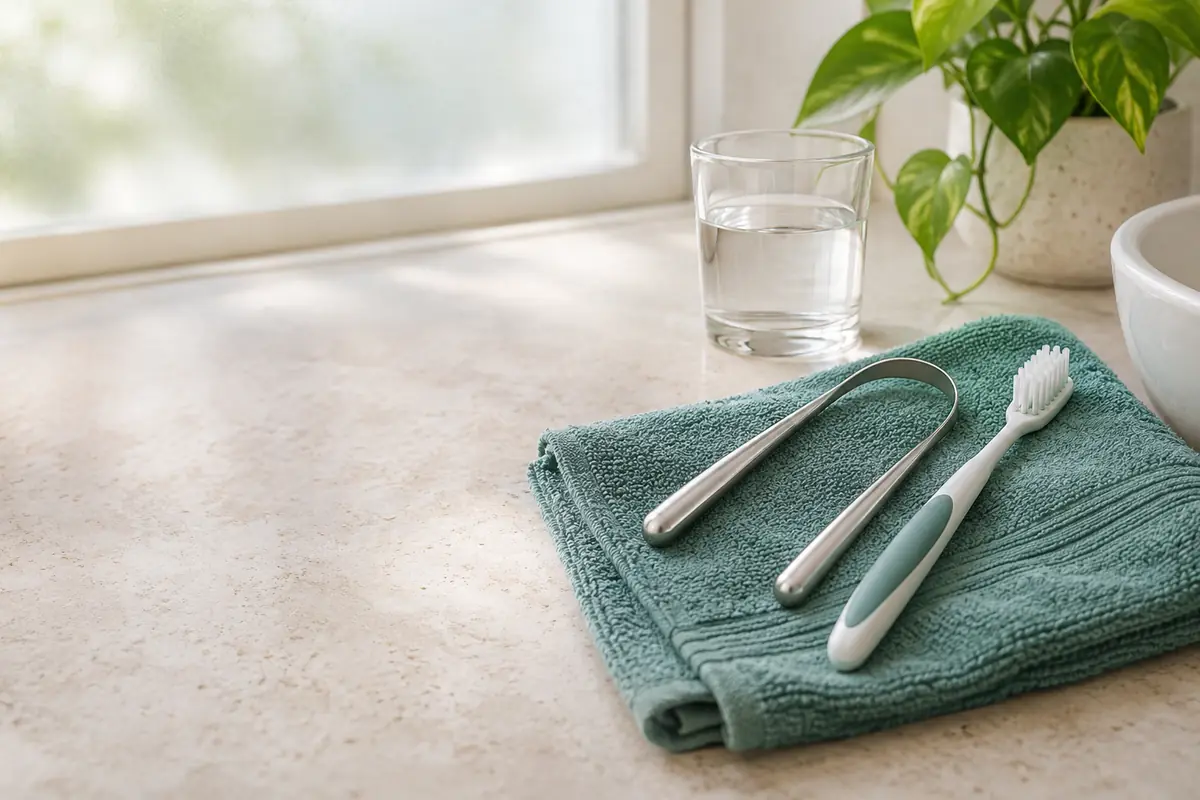
The top of the tongue is not smooth. It is covered in thousands of tiny projections called papillae, with grooves and crevices between them. That texture helps us taste and move food, but it also gives bacteria, shed cells and food particles plenty of places to settle. For many people, the coating that builds up there is a bigger source of bad breath than the teeth themselves.
Tongue cleaning in Port Dover households is often overlooked because it is not part of the classic “brush and floss” message. Adding a few seconds of gentle tongue care to your routine is simple, inexpensive and helpful. It also gives you a daily look at a part of the mouth that can show useful clues about your health. This article explains how to do it well and which changes are worth showing a dentist or physician.
Why the tongue collects a coating
A light film on the tongue is normal, particularly toward the back where the surface is rougher and the tongue moves less against the palate. The film thickens overnight because saliva flow drops during sleep, which is why the tongue often looks whiter first thing in the morning.
Several things make the coating heavier: breathing through the mouth, dry mouth from medicines or dehydration, smoking, a soft diet with less natural scrubbing, illness with fever, and gum disease that adds more bacteria to the mouth. Bacteria in this layer break down proteins and release sulphur-containing gases, which have the familiar unpleasant smell.
How to clean your tongue with a scraper
Tongue scrapers are usually a U-shaped strip of stainless steel or plastic, or a small handle with a flat edge. To use one:
- Stick your tongue out and relax it, breathing through your nose.
- Place the scraper as far back as is comfortable without triggering a gag.
- Press lightly and draw it forward to the tip in one smooth stroke.
- Rinse the scraper and repeat two or three times, covering the centre and both sides.
- Rinse your mouth with water and clean the scraper with warm water and soap.
The pressure should be gentle. You are removing a soft coating, not trying to strip the surface. If the tongue bleeds, feels raw or stings afterward, you are pressing too hard or scraping too often.
Using a toothbrush instead
If you do not want another tool in the bathroom, a soft toothbrush works. After brushing your teeth, place the brush toward the back of the tongue and sweep forward with light strokes. Some toothbrushes have a ridged pad on the back of the head designed for this. A small amount of toothpaste is fine, though some people find plain water more comfortable.
Brushing can be more likely to trigger a gag reflex because the bristles are taller and catch the soft palate. Exhaling slowly, keeping the tongue extended and starting from the middle before working further back over a few days can help the reflex settle.
Does tongue cleaning really help breath?
Studies of tongue cleaning suggest it can reduce the coating and the odour-producing compounds associated with morning breath, at least in the short term. It is not a cure on its own. Breath also depends on gum health, cavities, dry mouth, sinus or throat problems, diet and general health.
If breath remains a concern despite good brushing, cleaning between teeth and tongue care, it is worth looking for another cause. Our article on bad breath in Port Dover and Norfolk County explains the common sources and how they are assessed.
Tongue cleaning should be done in addition to brushing and interdental cleaning, never instead of them. Plaque along the gumline and between teeth is still the main driver of decay and gum disease.
What a healthy tongue usually looks like
There is a wide range of normal. Generally, a healthy tongue is pink with a thin, whitish film, slightly rough because of the papillae and moist. It moves freely, does not hurt and has no lumps or persistent patches. Some people naturally have deep fissures or grooves across the surface, which is often harmless but makes cleaning those grooves more important.
The appearance can change temporarily after eating coloured foods, drinking coffee or red wine, taking some medicines or having a cold. A useful habit is to glance at your tongue while cleaning it. When you know what is normal for you, changes are easier to notice.
The NHS page on sore or white tongues lists several common causes of a white or painful tongue and advises seeing a GP or dentist if symptoms do not go away or get worse.
A thick white coating
A heavier white coating is commonly linked to dehydration, mouth breathing, smoking, fever or reduced cleaning. It usually improves with fluids and gentle daily cleaning.
Patches that are creamy white and can be wiped off, sometimes leaving a red or sore surface underneath, may suggest oral thrush, a yeast infection. Thrush is more likely in babies, in people who wear dentures, after antibiotics, with inhaled corticosteroids, with diabetes or with reduced immunity. It needs assessment because treatment usually involves antifungal medicine and dealing with the underlying cause.
White patches that cannot be wiped off are different. These may be leukoplakia, lichen planus or another condition. Many are benign, but some white or red patches can be precancerous, so any persistent patch that will not scrape away should be examined.
Black or brown, hairy-looking tongue
This unusual-looking condition happens when the papillae become longer than usual and trap pigment from bacteria, food, coffee, tea or tobacco. The surface can look dark and almost furry. It is often linked to smoking, poor oral hygiene, dry mouth, certain antibiotics and some mouth rinses or medicines containing bismuth.
Though it can look alarming, it is usually harmless and often improves with regular, gentle tongue cleaning and by addressing contributing factors. If it does not settle, or if you are unsure what is causing a dark area, have it looked at. A flat dark spot that is not a coating is a different finding and should also be checked.
Map-like patches that move
Geographic tongue shows up as smooth, red patches with pale or white borders that look a bit like a map. The patches can change shape and location over days or weeks. It is common, not contagious and usually painless, although some people notice sensitivity to spicy, acidic or very hot foods during flare-ups.
There is no need to scrape these areas harder; doing so may increase irritation. If they become sore, avoiding trigger foods and using a mild toothpaste may help. Diagnosis by a dental professional provides reassurance that the pattern fits geographic tongue and not something else.
Red, smooth or sore tongue
A tongue that looks unusually smooth and red, or that burns, can have many causes. Low iron, vitamin B12 or folate can produce a smooth, sore tongue. Infections, allergies, irritation from toothpaste ingredients, dry mouth and some medicines can also play a role. A “strawberry” appearance in a child with fever and rash needs prompt medical assessment.
Burning mouth sensations without visible changes are another category, more common in older adults, and deserve a conversation with both your dentist and physician. Because several of these causes relate to general health, a dentist may suggest blood tests through your family doctor.
Ulcers, lumps and bites
A small painful ulcer on the side or tip of the tongue is often a canker sore or the result of biting it. These usually heal within one to two weeks. A sharp tooth edge, broken filling or rough denture can cause repeated irritation in the same spot, so it is worth having the cause fixed. Our article on mouth sores in Port Dover covers the common types.
A sore, lump, thickened area or red or white patch that does not heal within about two weeks should be examined, particularly on the sides or underside of the tongue. Most turn out to be harmless, but these are also the locations where oral cancer is more commonly found. Smoking, heavy alcohol use and some HPV infections increase the risk. Early assessment matters. Regular checkups include a look at the tongue, and the practice offers oral cancer screening as part of examinations.
When dryness is part of the picture
A dry mouth makes the tongue feel sticky and coated, and it allows odour-producing bacteria to thrive. Many medicines for blood pressure, mood, allergies and bladder control reduce saliva. Mouth breathing, snoring and CPAP use can also leave the mouth dry overnight.
Sipping water, using a humidifier during the heating season, choosing sugar-free gum or lozenges and limiting alcohol-containing mouthwashes can help. Persistent dryness also raises the risk of cavities, so it should be discussed with your dentist. The article on dry mouth has more practical tips.
Tongue care for children, denture wearers and caregivers
Children can start gently brushing the tongue once they are comfortable with tooth brushing. Make it quick and playful, and avoid pushing far back. A child’s scraper is not necessary.
People who wear full dentures should still brush the gums, palate and tongue daily with a soft brush. Without natural teeth, the tongue may collect more coating, and thrush under dentures is more common.
If you help someone else with mouth care, such as an older parent, a quick sweep of the tongue with a soft brush or a moistened gauze is often enough. Go slowly, explain what you are doing and stop if it causes distress.
Common mistakes to avoid
Avoid using metal spoons, sharp objects or rough tools on the tongue. Do not scrape until it bleeds. Avoid strong alcohol-based rinses to cover a coating, as they can dry the mouth and make the problem worse. Remember that a fresh feeling after scraping does not replace a full brushing and flossing routine.
Also avoid trying to diagnose changes from photographs online. Many tongue conditions look similar, and context such as symptoms, medicines and health history matters.
Frequently asked questions
Is a tongue scraper better than a toothbrush?
Both can work. A scraper covers the surface quickly and some people find it triggers less gagging, while a soft toothbrush is already in the bathroom and does a reasonable job. Gentle, consistent cleaning matters more than the tool you choose.
How often should I clean my tongue?
Once a day is enough for most people, often after brushing at night or in the morning. Cleaning more aggressively or many times a day can irritate the surface without improving breath further.
When should I have a tongue change checked?
Book an examination for any patch, sore, lump or colour change that does not clear within about two weeks, or sooner if it is painful, bleeding or growing. Swelling of the tongue with trouble breathing or swallowing needs emergency care immediately.
Let us take a closer look
A quick daily clean keeps the tongue fresher, and a regular checkup makes sure any change gets the attention it deserves. Port Dover Family Dentistry welcomes patients from Port Dover, Simcoe and across Norfolk County at 697 Norfolk County Hwy 6, Unit 2, Port Dover. Phone 519-583-2929 or request an appointment. If breath is your main worry, our bad breath treatment page explains how we look for the cause.
About the author
Port Dover Family Dentistry Team
Our team provides family-focused dental care in Port Dover, Ontario. We create practical oral-health education to help patients ask informed questions and feel more confident about care. This article is general information and does not replace an examination or personalized diagnosis.





