
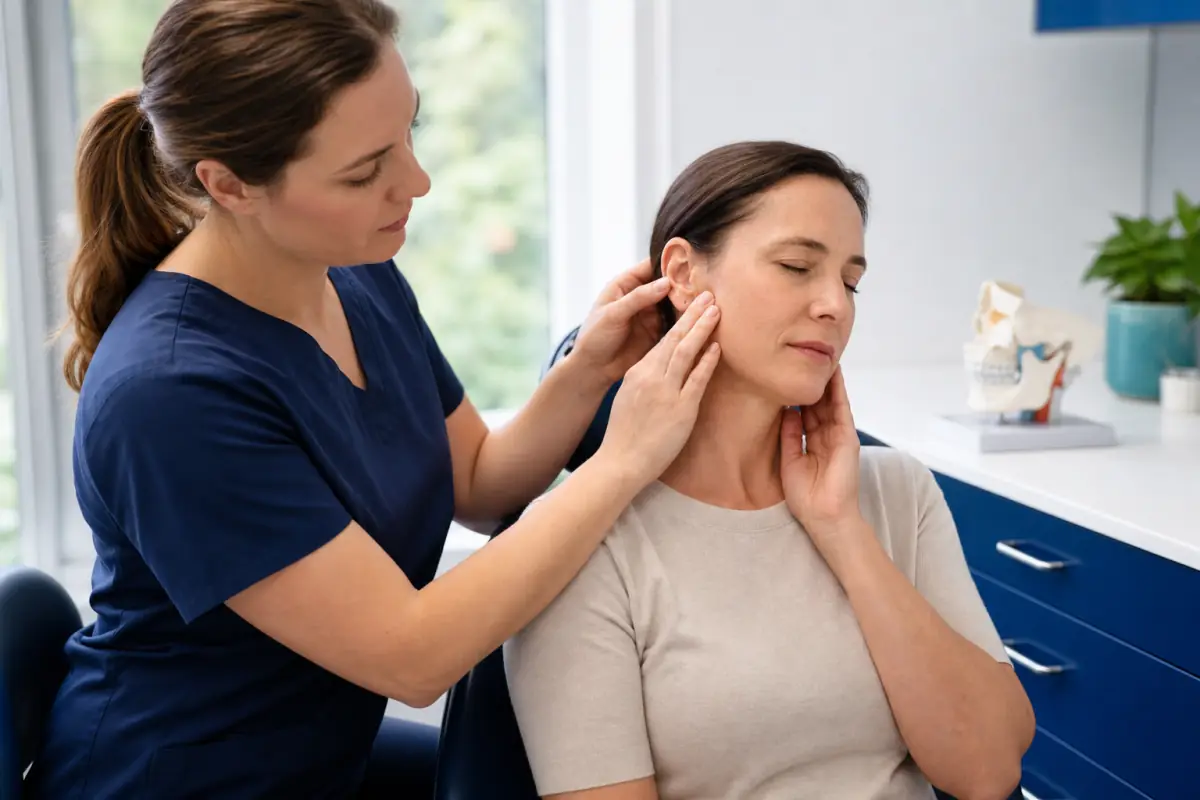
TMJ therapy in Port Dover should begin with diagnosis because “TMJ” is not one disease. The temporomandibular joints sit in front of the ears, while muscles, ligaments and discs coordinate jaw movement. Pain may arise from muscle overuse, joint inflammation, disc changes, arthritis, injury or overlapping headache and pain conditions.
Many temporomandibular disorders improve with time and conservative care. Irreversible bite changes, surgery or extensive dental work should not be the automatic first step.
TMJ versus TMD
TMJ means the temporomandibular joint itself; every person has two. TMD means temporomandibular disorders—a group of more than 30 conditions involving joints, chewing muscles or associated headaches.
The NIDCR’s TMD resource recommends starting with simple treatments and notes that symptoms resolve without treatment in many people.
Our TMJ therapy service page introduces assessment at our practice.
Common symptoms
- Jaw-muscle or joint pain
- Headache near the temples
- Pain when chewing or yawning
- Clicking, popping or grinding sounds
- Limited or uneven opening
- Jaw locking open or closed
- Ear-area fullness or pain without ear disease
- Facial fatigue
- Tooth wear from clenching or grinding
- A bite that suddenly feels different
Painless joint sounds alone are common and may not need treatment. Pain, locking, trauma or progressive limitation deserves assessment.
What causes jaw pain?
Muscle overuse
Clenching, grinding, gum chewing, nail biting and prolonged jaw postures can fatigue chewing muscles. Stress may increase muscle tension, but symptoms are not “all in your head.”
Disc displacement
A small disc cushions each joint. Movement out of coordination can create clicking; reduced movement may lead to locking. Imaging is not required for every click.
Arthritis or inflammation
Degenerative or systemic inflammatory conditions can affect joints. Medical coordination may be appropriate when multiple joints or systemic symptoms are involved.
Injury
A blow, whiplash or prolonged opening can trigger symptoms. Fracture or dislocation requires urgent assessment.
Dental and non-dental mimics
Tooth infection, cracked teeth, sinus disease, ear conditions, neuralgia and some headaches can refer pain to the jaw. A thorough history prevents treating the wrong structure.
How TMD is diagnosed
The clinician asks about location, duration, triggers, locking, trauma, headaches, sleep, stress, habits and previous treatment. Examination may assess opening path, range, joint sounds, muscle tenderness, bite, tooth wear and oral disease.
Routine dental x-rays show teeth and some bone but not the disc. Panoramic imaging, CT or MRI is reserved for specific indications. MRI displays soft tissue and disc position; CT better shows bone.
No single bite measurement or device diagnoses every TMD. Be cautious of claims that all jaw pain comes from a minor bite “imbalance.”
Conservative self-care
For a short flare, professional advice may include:
- temporarily choose softer foods;
- avoid very wide opening and hard chewing;
- stop gum chewing and nail biting;
- use warm or cold compresses based on comfort;
- practise relaxed jaw posture: lips together, teeth apart;
- support sleep and stress-management habits;
- use medication only when safe and advised; and
- gradually return to normal function as symptoms settle.
A permanently restrictive soft diet can weaken muscles and increase fear of movement. Self-care should be time-limited and reassessed.
Physical therapy
A physiotherapist experienced in orofacial pain may use education, manual therapy, posture work and graded exercises. The goal is comfortable function, not forcing the joint into a “perfect” position.
Exercises should match the diagnosis. Random online jaw exercises can aggravate locking or inflammation.
Occlusal splints and night guards
A custom splint covers teeth and can protect against grinding wear, distribute forces or reduce muscle activity for selected patients. It should be fitted, adjusted and monitored.
Splints have limitations:
- They do not stop all grinding.
- They do not cure every TMD.
- Poor fit can change the bite or damage teeth.
- Partial-coverage devices can move teeth if used improperly.
- Store-bought guards may be bulky and increase clenching.
Bring the appliance to follow-up and report a bite that remains changed after removal.
Medications and injections
Short-term anti-inflammatory or pain medication may be considered, but suitability depends on health and other drugs. Muscle relaxants have selected uses and side effects. Opioids are generally not first-line for chronic TMD.
Evidence for injections varies by diagnosis and product. Botulinum toxin may reduce muscle activity in selected cases but can cause weakness and bone or facial changes with repeated use. Joint injections and surgery belong with appropriately trained specialists after conservative care and clear diagnosis.
Should the bite be changed?
Irreversible grinding of teeth, crowns, orthodontics or jaw repositioning should not be presented as a routine cure for TMD. Bite treatment may be appropriate for independent dental reasons, but evidence does not support assuming small occlusal differences cause all pain.
The NIDCR advises caution with treatments that permanently change teeth, bite or jaw. Seek another opinion before extensive irreversible care proposed solely for nonspecific jaw symptoms.
TMD and teeth grinding
Bruxism can occur awake or during sleep. Signs include wear, chips, muscle fatigue and tongue or cheek ridging, but tooth wear also has other causes. A partner may hear grinding at night.
Awake clenching responds to awareness: set reminders to keep teeth apart and identify concentration or stress triggers. Sleep bruxism is not a simple habit you can consciously stop.
A guard protects teeth but does not necessarily reduce the neurological drive to grind. Sleep apnea and some medications can coexist and should be assessed when relevant.
TMD and sleep apnea
Jaw pain can complicate oral-appliance treatment for sleep apnea. Conversely, severe daytime sleepiness and snoring should not be explained only by grinding. Medical sleep diagnosis comes first.
Read our guide to sleep apnea oral appliances in Port Dover.
When specialist referral is useful
Referral may be appropriate for persistent pain, recurrent locking, major trauma, suspected inflammatory disease, neurological signs, substantial limitation, unusual imaging or symptoms not responding to conservative care.
Depending on cause, specialists can include oral medicine, oral surgery, pain medicine, rheumatology, neurology, ENT, physiotherapy and psychology. Multidisciplinary care is not dismissal; chronic pain often involves several systems.
Red flags requiring prompt care
Seek urgent assessment for:
- major trauma or suspected fracture;
- jaw locked open and unable to close;
- rapidly increasing swelling or fever;
- breathing or swallowing difficulty;
- new facial weakness or neurological symptoms;
- unexplained weight loss or neck lump; or
- persistent oral lesion.
A sudden bite change can also signal joint inflammation, fracture or dental infection.
Managing work and daily habits
Screen posture and concentrated work can encourage clenching. Keep shoulders relaxed, avoid supporting the chin and take movement breaks. Headset use can reduce holding a phone between shoulder and jaw.
During a flare, cut firm foods rather than biting with the front teeth. Avoid repeated “testing” of the click. Yawn with gentle support and limit opening only temporarily.
Stress-management, cognitive behavioural therapy and sleep improvement can reduce pain amplification and coping burden. They do not imply the pain is imaginary.
Tracking symptoms without becoming consumed by them
A brief two-week diary can reveal patterns: note pain location, morning versus evening timing, locking, headache, sleep quality, chewy foods and unusual stress. Use a simple zero-to-ten rating once or twice daily rather than checking the joint every few minutes. Repeatedly opening to test a click can irritate tissues and reinforce worry.
Bring the diary and a list of previous treatments to the appointment. Include which approaches helped, worsened symptoms or produced side effects. This is more useful than trying to remember every fluctuation.
Improvement can mean easier eating, fewer flare days, better opening and less interference with work—not necessarily zero sound or perfect symmetry. Agreeing on functional goals helps avoid escalating to invasive treatment solely because a harmless click remains.
Cost and CDCP considerations
Cost depends on assessment, imaging, splint design, adjustments, physiotherapy and referral. Ask what follow-up is included.
The current CDCP benefits guide lists temporomandibular-joint therapy and appliances among exclusions. Other diagnostic or dental services may have separate eligibility. Confirm exact procedures rather than assuming broad coverage.
Questions to ask about TMJ therapy
- Is pain mainly muscle, joint or another source?
- Are red flags present?
- Is imaging necessary, and how would it change care?
- What reversible option should we try first?
- What is the goal of a splint?
- How will improvement be measured?
- When should referral occur?
- Does any proposed treatment permanently change my bite?
TMJ assessment in Port Dover
Port Dover Family Dentistry assesses jaw symptoms, teeth, muscles and joints and helps patients begin conservative TMJ therapy in Port Dover. When pain is complex or persistent, we coordinate referral.
Call 519-583-2929 or request an appointment. For major trauma, breathing difficulty or a locked-open jaw, seek urgent care.
Frequently asked questions
Is clicking dangerous?
Painless stable clicking often needs no treatment. Clicking with pain, locking, reduced opening or bite change should be evaluated.
Can stress cause TMD?
Stress can increase clenching and pain sensitivity, but TMD has biological and mechanical contributors. Management can include both physical and stress-related strategies.
Will Invisalign fix TMJ pain?
Orthodontic treatment is not a guaranteed TMD cure. It should be recommended for an orthodontic diagnosis, with jaw symptoms assessed separately.
About the author
Port Dover Family Dentistry Team
Our team provides family-focused dental care in Port Dover, Ontario. We create practical oral-health education to help patients ask informed questions and feel more confident about care. This article is general information and does not replace an examination or personalized diagnosis.