
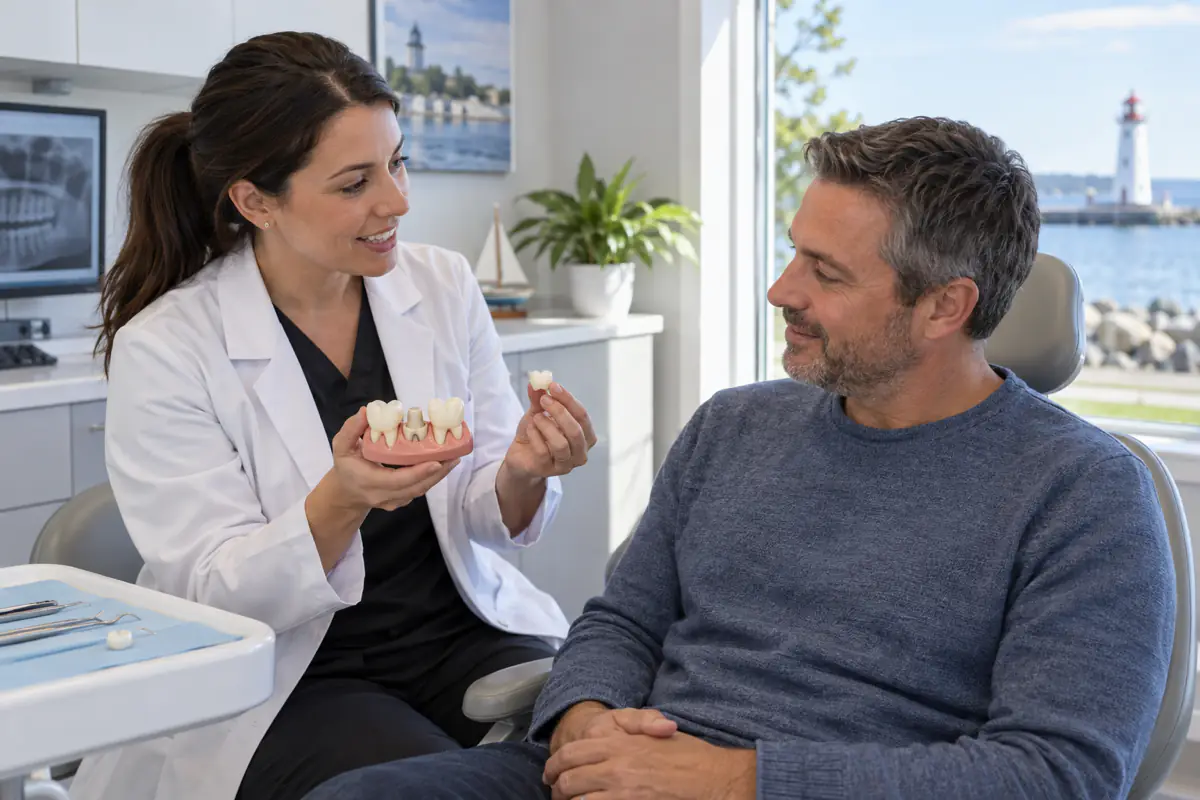
A provisional restoration protects a prepared tooth while the final crown is being made. Good temporary crown care in Port Dover reduces the chance that it loosens, fractures or allows the prepared tooth to shift. The temporary also gives the dentist useful information about bite, contour and gum response before the definitive restoration is placed.
“Temporary” does not mean unimportant. It means the materials and cement are selected so the restoration can usually be removed at the next visit. That makes it less durable than the final crown and changes how you should eat and clean for the short interval between appointments.
What a temporary crown does
To place many crowns, the dentist reshapes the tooth so the final restoration has room and a stable path of placement. The exposed prepared surface needs protection from temperature, chewing pressure, food and plaque. A temporary crown covers it.
The provisional can also:
- hold neighbouring teeth in position;
- reduce gum irritation around the preparation;
- maintain appearance and speech when a front tooth is involved;
- let you chew gently;
- preserve the bite relationship; and
- help evaluate planned length, shape or contacts.
The American Dental Association explains that a crown can strengthen a tooth with extensive damage, protect a weak tooth, support a bridge or restore shape and appearance. The temporary phase protects that work in progress; it is not the completed treatment.
The first hours after the appointment
Wait until local anaesthetic has worn off before chewing. Numb cheeks, lips and tongue are easily bitten, and very hot drinks can burn tissue without an immediate warning sensation. Follow any specific timing provided by your dental office.
The gum may feel tender where the dentist worked, and the tooth can be mildly sensitive to cold or pressure. A little awareness is common, especially if the preparation was deep. Symptoms should trend toward improvement rather than becoming more intense.
If the bite feels clearly high—if the temporary tooth meets first or feels bruised when you close—call for an adjustment. Repeated excess force can make the tooth sore or loosen the provisional.
Foods that protect the temporary
For the first day, favour food that requires modest chewing: eggs, pasta, fish, cooked vegetables, yogurt or soup that is not too hot. Chew mostly on the other side when practical.
Avoid foods that can pull, wedge or fracture the crown:
- chewing gum and sticky candy;
- toffee, caramel and very chewy bread;
- ice, popcorn kernels and hard nuts;
- hard candy and brittle snack foods;
- tough meat that requires forceful tearing; and
- using the crowned tooth to open packaging or bite objects.
Food restrictions are temporary, but they matter. Even a strong-looking provisional is intended for limited service. Cut firm foods into smaller pieces instead of biting directly with a temporary front crown.
Brushing around the crown
Brush twice daily with a soft-bristled brush and fluoride toothpaste. Plaque along the gumline can create swelling that makes the final crown appointment more difficult and can contribute to decay on exposed tooth structure.
Use gentle circles or short controlled strokes where the temporary meets the gum. Do not avoid the area because it is mildly tender. If brushing causes substantial bleeding or the tissue becomes more swollen each day, contact the office.
An electric brush is generally acceptable when used gently, but do not jam the head beneath the temporary edge. A pressure sensor can help reduce force.
Flossing without lifting the crown
Cleaning between teeth remains important, but the removal technique changes. Ease the floss through the contact, curve it against the neighbouring tooth and the temporary, then slide it out through the side. Do not snap the floss upward, because it can catch the crown margin and pull against the temporary cement.
If the contact is too tight to pass floss or the floss shreds, stop forcing it and tell the dentist. For a temporary bridge, the cleaning instructions may involve a threader or interdental brush and should be demonstrated for that design.
Water flossers can create pressure around a vulnerable margin. Use one only according to the clinician’s advice and at an appropriate setting.
Sensitivity: expected versus concerning
Brief sensitivity to cold can occur while the tooth is provisionally restored. Gum tenderness may last a few days. Over-the-counter pain medicine may be considered only if it is safe for you and used according to the label; ask a pharmacist about medical conditions, pregnancy and medication interactions.
Contact the dental office if pain:
- is severe or increasing;
- lingers after heat or cold;
- occurs spontaneously or wakes you;
- develops with swelling, fever or a bad taste;
- makes the tooth painful to touch; or
- returns after initially improving.
These symptoms may indicate pulp inflammation, infection, a crack or a bite problem. A crown does not automatically solve disease inside the tooth.
If the temporary crown feels loose
A loose provisional may rock, click, trap food or feel different when flossing. Stop chewing on it and call the office. Continued movement can allow decay, break the temporary or irritate the prepared tooth.
Do not keep testing it with your tongue or fingers. If it remains partly attached, leave it alone unless the dental team gives instructions. A crown that comes off during sleep could be swallowed or inhaled, so prompt advice matters.
The dentist may clean and recement it, adjust the bite or make a new provisional. A repeated loss can signal inadequate retention, heavy bite force or a problem with the preparation that needs attention.
If the temporary crown comes off
Retrieve the crown if possible, rinse it gently with water and keep it in a clean container. Do not scrub or alter the inside. Call the dental office and explain whether the tooth hurts and when the crown was lost.
Until you are seen:
- Avoid chewing on the exposed tooth.
- Keep the area gently clean.
- Avoid extreme temperatures if it is sensitive.
- Do not use superglue, craft glue or nail products.
- Do not force the crown into position.
Pharmacy temporary dental cement may be discussed in some circumstances, but it is not suitable for every preparation and can seat the crown incorrectly. Ask the dental office before using it. Never sleep with a crown that is loosely placed.
Why household glue is dangerous
Household adhesive is not made for oral tissue, saliva contact or precise dental fit. It may burn tissue, contaminate the restoration and make professional recementation more difficult. Holding a crown at the wrong angle can also change the bite or trap debris against the tooth.
Even products sold as “tooth repair” are short-term measures, not an assessment. The tooth may have fractured beneath the provisional, and simply gluing the shell back would hide the problem.
A cracked or chipped temporary
A small rough edge may be polishable. A split provisional may no longer seal or stabilize the tooth. Save any pieces, avoid the area and call.
Orthodontic wax can temporarily cover a sharp edge that irritates the cheek, but keep the area clean and do not let the wax delay an appointment. Never file or trim the crown at home.
Front-tooth temporaries can be especially vulnerable to direct biting. Cut sandwiches, apples and firm foods into pieces and chew with back teeth.
Protecting a tooth after root canal treatment
A root-canal-treated tooth can be structurally weakened by previous decay, access preparation and large restorations. A temporary filling or crown seals it until the final restoration is placed. The American Association of Endodontists advises avoiding hard chewing on the treated tooth and contacting the office for severe pain, swelling, an uneven bite or loss of the temporary restoration.
Do not delay the final crown because the tooth no longer hurts. The temporary is not designed as a long-term seal, and an unprotected back tooth can fracture.
Read root canal treatment in Port Dover for the complete treatment sequence.
How long should a temporary stay on?
Many provisional crowns are worn for a few weeks while a laboratory makes the final restoration. Timing varies for implant healing, gum shaping, root canal evaluation or complex treatment. The dentist should explain the planned interval.
If the final appointment must be rescheduled, tell the office how long the delay will be. Cement can wash out, teeth can shift and plastic can wear. A temporary that feels fine is not proof that it can remain indefinitely.
Keep the scheduled visit and bring up any changes in bite, sensitivity or appearance before the final crown is cemented.
The final crown appointment
The dentist removes the temporary and remaining cement, then checks the prepared tooth. The final crown is evaluated for fit, margins, contact with neighbouring teeth, bite and appearance. A front crown may require careful shade and shape review.
Speak up before final cementation if the bite feels wrong or you have an aesthetic concern. Minor adjustments may be possible, while larger changes could require laboratory revision.
After the final crown is placed, follow the office’s eating instructions while the cement sets. Continue brushing and cleaning between teeth; a crowned tooth can still develop decay at its margin.
Preventing future problems
Crowns withstand ordinary chewing but are not indestructible. Avoid ice, hard objects and using teeth as tools. If you clench or grind, a night guard may protect the crown and opposing teeth once the restoration is complete and stable.
Control dry mouth and keep sugar exposure less frequent. Regular examinations allow the dentist to check margins, gum health and bite. See dental crown aftercare in Simcoe for longer-term care after the permanent crown is fitted.
When urgent attention is needed
Call promptly for facial or gum swelling, fever, pus, severe increasing pain, trauma or a crown that has come off a tooth with very little remaining structure. Rapidly spreading swelling or difficulty breathing or swallowing requires emergency medical care.
A lost temporary without pain is still time-sensitive because the tooth can shift or become contaminated. Contact the dental office rather than waiting for the final appointment.
Get temporary crown help in Port Dover
Port Dover Family Dentistry can assess a loose, broken or lost provisional and help protect the tooth until definitive treatment is completed. Bring the temporary crown or fragments with you if they came out.
Call 519-583-2929 for a temporary-crown problem. For non-urgent crown planning, you may also request an appointment. Tell us about pain, swelling or a high bite when you contact the office so the urgency can be assessed.
About the author
Port Dover Family Dentistry Team
Our team provides family-focused dental care in Port Dover, Ontario. We create practical oral-health education to help patients ask informed questions and feel more confident about care. This article is general information and does not replace an examination or personalized diagnosis.