
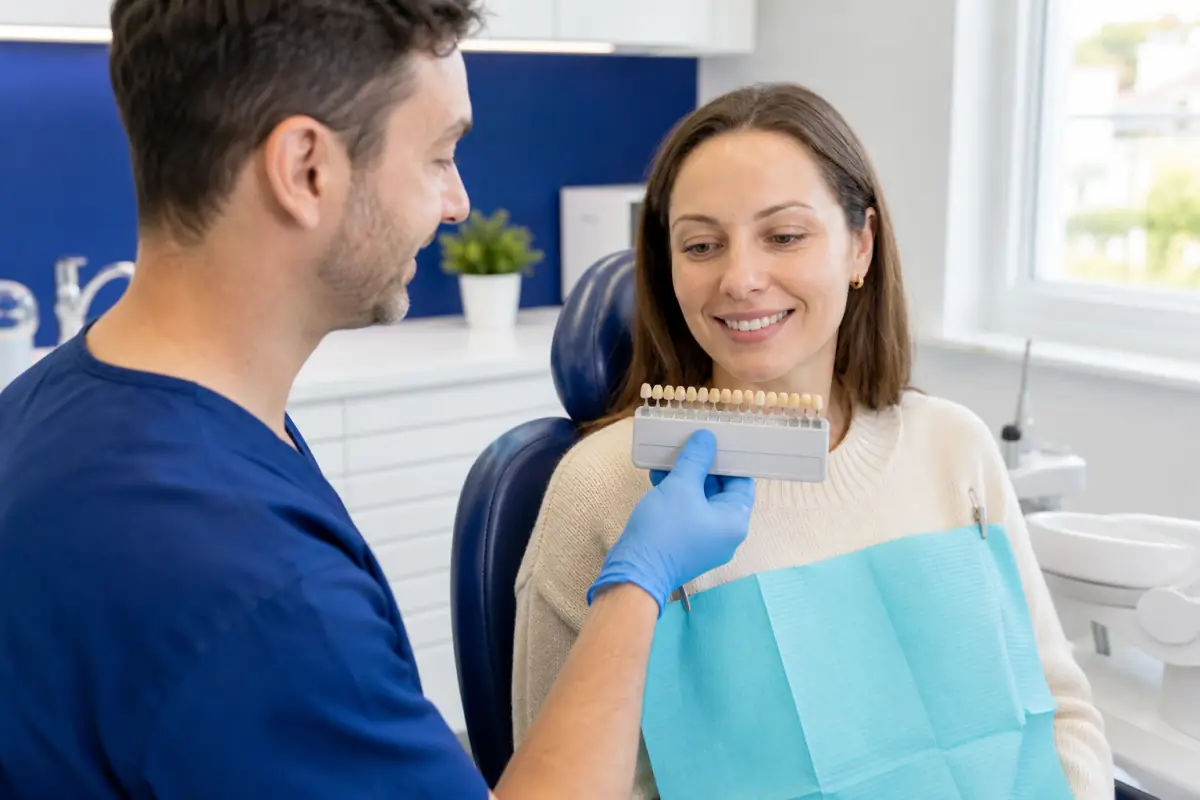
Teeth whitening in Port Dover can brighten natural enamel affected by age, coffee, tea, tobacco and other stains. It is one of the most conservative cosmetic dental treatments, but it still deserves an examination and a realistic plan. Whitening cannot lighten crowns or fillings, cannot hide every type of discoloration and can temporarily increase sensitivity.
The safest option depends on oral health, stain source, existing restorations and goals. This guide compares professional in-office whitening, custom take-home trays and over-the-counter products without promising an artificial shade or permanent result.
Why teeth change colour
Tooth colour comes from translucent enamel over naturally yellow-toned dentin. Enamel becomes thinner and surface stains accumulate with time. Discoloration may be extrinsic, intrinsic or a combination.
Extrinsic stains
These develop on the outer surface from coffee, tea, red wine, tobacco, strongly pigmented foods and plaque. Professional cleaning may remove some external stain, while bleaching can further lighten natural tooth structure.
Intrinsic discoloration
Colour within dentin or enamel may result from development, medication exposure, trauma, aging or a tooth losing vitality. Intrinsic stains respond variably and may require prolonged whitening or another treatment.
One dark tooth
A single tooth that darkens after injury may have pulp damage. It requires vitality testing and radiographs before cosmetic treatment. Internal bleaching may be considered only after appropriate root canal treatment and assessment.
How whitening works
Carbamide peroxide and hydrogen peroxide break down coloured molecules within dental hard tissues, making them reflect light differently. Whitening does not scrape off enamel when used appropriately; it is a chemical bleaching process.
The ADA’s review of whitening identifies in-office treatment, dentist-supplied home products and over-the-counter whiteners. It notes that temporary tooth sensitivity and gum inflammation are the most common adverse effects.
Professional in-office whitening
In-office whitening uses a higher-concentration product under professional isolation and supervision. The gums and soft tissues are protected before gel is applied. One appointment can create a noticeable change, although more than one session or home follow-up may be needed.
Advantages include controlled application, immediate progress and professional management. Limitations include higher cost, temporary sensitivity and the fact that a dramatic same-day shade may rebound slightly as teeth rehydrate.
A light may be used with some systems, but the bleaching agent—not the light alone—creates the colour change. Ask what product is used and what evidence supports the protocol.
Custom take-home whitening trays
A dentist makes trays fitted to your teeth and prescribes gel concentration, amount and wear schedule. Close fit helps control where gel sits and reduces unnecessary soft-tissue exposure.
Home treatment changes shade gradually over days or weeks and can be adjusted if sensitivity develops. Trays may be reused for supervised touch-ups if they still fit and the gel remains appropriate.
Do not add extra gel to speed the process. Excess leaks onto gums and is swallowed without improving tooth contact.
Over-the-counter whitening
Whitening strips, gels and some toothpastes can lighten selected stains when used according to instructions. Products vary widely in ingredient, concentration, fit and evidence.
Whitening toothpaste mainly removes surface stain through abrasives; it does not bleach deeply like peroxide. Highly abrasive DIY powders can wear enamel or roots, especially when used aggressively.
If choosing a consumer product, look for recognized regulatory compliance and evidence-based acceptance programs where relevant. Stop if gums burn or significant pain develops.
Professional versus store-bought options
| Factor | In-office | Custom take-home | Over-the-counter |
|---|---|---|---|
| Supervision | Direct | Dentist-prescribed | Self-directed |
| Speed | Fastest visible change | Gradual | Variable |
| Fit | Professional isolation | Custom trays | Generic strips/trays |
| Sensitivity adjustment | Immediate support | Concentration/time can be adjusted | Limited personalization |
| Cost | Highest | Moderate | Lower |
| Best for | Faster result with assessment | Controlled gradual whitening | Mild goals in healthy mouths |
The best method is not necessarily the strongest. Lower concentrations over controlled time can produce excellent results with better comfort for some patients.
Who should have an examination first?
Everyone benefits from assessment, but it is especially important with:
- untreated cavities;
- cracked or sensitive teeth;
- gum recession or exposed roots;
- pregnancy or breastfeeding questions;
- significant gum inflammation;
- many visible restorations;
- one unusually dark tooth;
- severe developmental staining; or
- previous adverse reactions.
Whitening gel can enter a cavity or crack and increase pain. Gum disease should be treated before cosmetic procedures.
What whitening cannot change
Bleaching does not lighten:
- composite fillings;
- crowns or bridges;
- porcelain or composite veneers;
- implant crowns; or
- tartar and plaque.
If front restorations match the current shade, whitening can make them look darker by comparison. Plan colour first, allow it to stabilize, then replace restorations only if necessary. This sequencing is particularly important before dental bonding or veneers.
Very grey, banded or developmental discoloration may not reach an even result. Conservative improvement can still be worthwhile, but veneers or bonding should be considered only after understanding irreversible trade-offs.
Why sensitivity occurs
Peroxide can temporarily increase fluid movement within dentin and irritate the pulp, creating short, sharp responses to cold or air. Risk increases with higher concentration, longer contact, existing recession, cracks and previous sensitivity.
Your dentist may recommend:
- a lower gel concentration;
- shorter or less frequent wear;
- sensitivity toothpaste containing potassium nitrate or fluoride;
- a pause between sessions; or
- professional fluoride or desensitizing products.
Do not take medication pre-emptively without advice. Severe, spontaneous or one-tooth pain may signal something other than normal whitening sensitivity.
Learn more about tooth sensitivity treatment.
Gum irritation and uneven whitening
Gel contacting gums can cause temporary white patches or burning. Remove the tray, rinse and follow professional advice. A custom tray may need adjustment.
White spots can appear more obvious early in whitening because different enamel areas respond at different rates and teeth temporarily dehydrate. Some variation blends as treatment continues or teeth rehydrate. Persistent spots may reflect developmental enamel differences or early mineral loss requiring assessment.
Are DIY natural whitening methods safe?
Social media recommends charcoal, lemon, vinegar, baking soda combinations and abrasive powders. “Natural” does not mean gentle. Acids dissolve enamel; abrasive scrubbing can wear surfaces and increase sensitivity. Charcoal products lack strong evidence for safe whitening and can be highly abrasive.
The ADA’s DIY dentistry guidance warns that unproven hacks can cause damage and overlook underlying disease. Use products designed and tested for oral use.
How white should teeth become?
Natural teeth are not paper white. Dentin, enamel thickness, skin tone, lighting and dehydration influence appearance. A good outcome looks brighter while remaining believable and harmonious with restorations.
Whitening response cannot be guaranteed from a shade guide or photo. Agree on a safe endpoint rather than repeatedly bleaching to chase an impossible colour. Overuse raises sensitivity and irritation without endless improvement.
How long do results last?
Whitening is not permanent. Teeth gradually pick up new stain and natural aging continues. Duration varies with:
- coffee, tea and red wine frequency;
- tobacco or cannabis smoke;
- pigmented foods;
- plaque control;
- initial stain type;
- treatment method; and
- touch-up habits.
Rinse with water after staining drinks, maintain cleanings and discuss occasional touch-ups. Do not use gel continuously without reassessment.
Caring for teeth after whitening
- Follow the prescribed gel amount and schedule.
- Brush gently with fluoride toothpaste.
- Clean between teeth daily.
- Avoid tobacco.
- Limit frequent acidic beverages.
- Use a straw only when safe and appropriate; it does not eliminate exposure.
- Store trays clean, dry and away from heat.
- Keep gel away from children and check expiry/storage instructions.
Professional teeth cleanings in Port Dover can remove surface deposits before whitening and support even results.
Cost and coverage in Port Dover
Cost depends on in-office versus take-home treatment, number of sessions, tray fabrication and product. Request a complete estimate, including replacement trays or future gel.
Whitening is elective cosmetic care and is commonly excluded from private dental benefits. The Canadian Dental Care Plan currently excludes cosmetic whitening. Do not rely on coverage when budgeting.
Questions to ask before whitening
- What is causing my discoloration?
- Are my teeth and gums healthy enough?
- Which restorations will not change colour?
- Which method fits my sensitivity history?
- What result is realistic?
- How should I respond to sensitivity?
- When should touch-ups occur?
- Should other cosmetic treatment happen after whitening?
Teeth whitening at Port Dover Family Dentistry
Our approach to teeth whitening in Port Dover begins with an oral-health assessment and a shade plan that respects existing restorations. We discuss professional options, realistic results and sensitivity before treatment.
Call 519-583-2929 or request a cosmetic consultation. Our teeth whitening service page provides a quick overview.
Frequently asked questions
Can whitening damage enamel?
Evidence-based peroxide products used as directed are designed to whiten without mechanically removing enamel. Misuse, excessive exposure and acidic or abrasive DIY methods can cause problems.
Can I whiten while pregnant?
Elective whitening is commonly postponed during pregnancy and breastfeeding because it is not necessary and evidence is limited. Discuss personal circumstances with healthcare providers.
Why did one tooth not whiten?
It may contain a restoration, have a different stain type or have changed vitality after trauma. A single resistant tooth needs assessment before more bleaching.
About the author
Port Dover Family Dentistry Team
Our team provides family-focused dental care in Port Dover, Ontario. We create practical oral-health education to help patients ask informed questions and feel more confident about care. This article is general information and does not replace an examination or personalized diagnosis.