
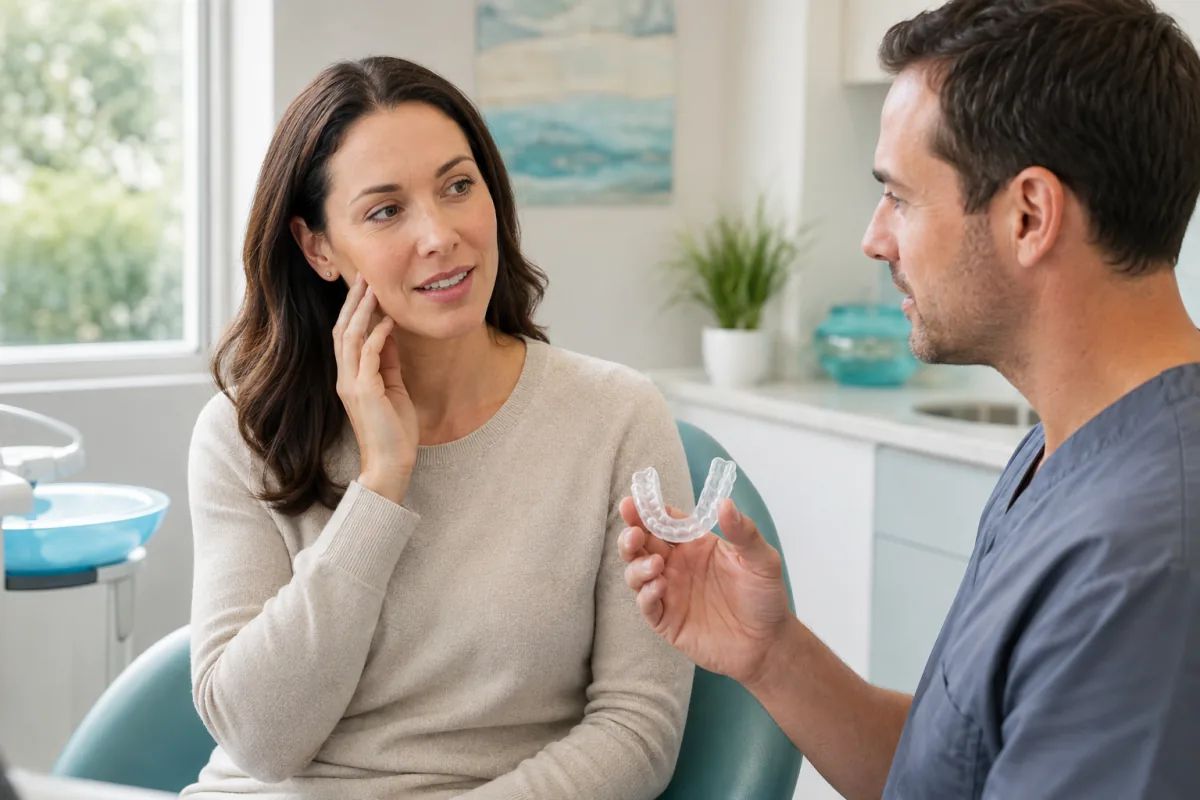
Teeth grinding in Port Dover is often discovered indirectly: a partner hears a sound at night, a filling chips, or the jaw feels tired every morning. Bruxism includes grinding, clenching or bracing the jaw while awake or asleep. These behaviours are related but not identical, and treatment depends on which pattern is present.
Mild bruxism may not require treatment. More severe or persistent activity can wear teeth, overload restorations and contribute to muscle pain. For patients in Port Dover and across Norfolk County, the first goal is to identify actual damage and modifiable factors—not assume every headache or flat tooth is caused by grinding.
Awake versus sleep bruxism
Awake bruxism often appears as clenching or holding the jaw tense during concentration, driving, computer work or stress. Because you are conscious, reminders and behaviour change can help.
Sleep bruxism occurs during sleep-related arousals and cannot be stopped by willpower. It may happen in episodes rather than continuously. A person can have both patterns.
The NIDCR bruxism guide notes that children and adults can be affected and that severe cases may damage teeth or cause jaw fatigue and headache.
Signs in the teeth
Possible dental signs include:
- flattened or shiny wear areas;
- shortened edges;
- chips and cracks;
- repeated fracture of fillings or porcelain;
- exposed yellow dentin;
- tooth sensitivity;
- notches near the gumline; and
- mobility in teeth with reduced support.
None is diagnostic alone. Acid erosion can create broad smooth wear, an abrasive habit can notch roots, and an old restoration may fracture without bruxism. The pattern, history and rate of change matter.
Photographs, study models or digital scans can document progression. A stable wear pattern from years ago does not necessarily require aggressive reconstruction.
Jaw, face and headache symptoms
Clenching can fatigue the masseter and temple muscles. People may wake with jaw tightness, facial aching or a dull temporal headache. Symptoms can worsen after prolonged concentration or emotionally demanding days.
Jaw clicking is not proof of grinding, and many painless clicks require no treatment. Ear pain, sinus symptoms, migraine and nerve pain can mimic jaw problems. A careful history and examination helps separate them.
Seek prompt medical or dental care for major trauma, sudden bite change, facial weakness, swelling, fever, neurological symptoms or a jaw locked open.
Our TMJ therapy guide explains conservative jaw-pain assessment and red flags.
What contributes to bruxism?
Bruxism does not have one universal cause. Factors may include stress and mood, genetics, sleep arousals, alcohol, caffeine, nicotine and certain medicines. Some antidepressants, stimulants and seizure medicines have been associated with grinding in selected patients.
Do not stop medication on your own. Tell the prescriber and dentist when symptoms began and whether they followed a dose or drug change. The medical benefit may outweigh the oral side effect, and adjustments require clinical supervision.
Misaligned teeth are often blamed, but small bite variations do not explain all bruxism. Irreversibly grinding down teeth to “balance” a bite is not a routine cure.
Sleep apnea and grinding
Sleep bruxism and obstructive sleep apnea can occur in the same person. Grinding is not a reliable diagnostic sign of apnea and a night guard does not treat airway collapse.
Tell a physician about loud snoring, witnessed pauses, gasping, morning headaches or excessive daytime sleepiness. Medical sleep testing determines diagnosis. Some guard designs may affect jaw position and airway comfort, which is another reason to disclose possible apnea before obtaining an appliance.
See our sleep apnea oral appliance guide for the difference between a protective guard and a prescribed airway device.
How a dentist evaluates grinding
The dentist reviews symptoms, sleep, caffeine and alcohol, tobacco, medication, stress, injuries and restoration history. Examination includes tooth wear, cracks, bite, gum support, jaw movement and muscle tenderness.
Radiographs may assess teeth and bone but do not show bruxism itself. In complex sleep cases, a sleep study can record muscle activity alongside breathing and sleep stages, but it is not required for every person with tooth wear.
The key questions are: Is there active damage? Is pain present? What can be modified? What protection is proportional?
Awake-clenching strategies
At rest, lips may touch gently while teeth remain apart and the tongue rests comfortably. Teeth should contact during chewing and swallowing, not all day.
Set discreet reminders on a phone, monitor or steering wheel. When the cue appears, drop the shoulders, relax the jaw and take a slow breath. The goal is awareness, not constant monitoring that increases tension.
Identify triggers such as intense screen work, workouts, commuting or caregiving stress. Change the environment where possible: support posture, take movement breaks and avoid chewing pens or gum when the muscles are sore.
Counselling, mindfulness and stress-management practices may reduce awake bracing. This does not mean pain is imaginary; muscle behaviour and the nervous system respond to context.
What a night guard does
A night guard, also called an occlusal splint, creates a controlled surface between the arches. It can protect enamel and restorations, distribute force and provide diagnostic information from wear marks. Some people experience reduced muscle symptoms.
It cannot guarantee that grinding stops, prevent every crack or cure all TMD. The person may still generate force against the appliance.
A full-coverage design is usually important so uncovered teeth do not move. The guard should be checked and adjusted after delivery. A bite that remains altered after removal, new pain or a loose fit needs review.
Store-bought versus custom guards
Boil-and-bite guards cost less and may provide short-term protection. They can be bulky, distort, fit unevenly or encourage clenching in some people. Partial-coverage devices can move teeth when used improperly.
A custom guard is made from a scan or impression and adjusted to the bite. Material and design depend on tooth condition, missing teeth, restorations, grinding pattern and jaw symptoms.
Custom does not mean indestructible. Heavy grinders may wear through a guard and need repair or replacement. Bring it to every dental visit.
Guard cleaning and care
Rinse the appliance with cool water after removal. Brush gently with a compatible cleaner and soft brush. Toothpaste can scratch some materials. Avoid boiling water, dishwashers and hot cars.
Air-dry it and store it in a ventilated case away from pets. Clean the case regularly. Insert the guard only after brushing and flossing so plaque and sugar are not trapped against teeth overnight.
Report cracks, rough edges, persistent odour or fit changes. Do not use household glue or remould a professional guard.
Repairing worn teeth
Not every worn tooth needs rebuilding. If wear is active, control risk and protect the teeth before extensive cosmetic work. Small chips may suit bonding; weakened teeth may require onlays or dental crowns.
Severe generalized wear can change tooth length and bite. Rehabilitation may involve multiple restorations and careful planning. Restorations are still vulnerable if the underlying forces and acid exposure remain.
Enamel does not grow back, but sensitivity can often be managed. A conservative plan balances appearance, function, biology and the amount of healthy tooth removed.
Children and grinding
Children commonly make grinding sounds during sleep, especially during tooth eruption. Many cases lessen with growth and do not cause meaningful damage.
Assessment is appropriate for pain, pronounced wear, broken teeth, poor sleep, snoring or daytime symptoms. Adult-style hard guards may interfere with growth or eruption and should not be improvised.
Parents should record timing and symptoms without waking the child repeatedly. A short audio clip may help the clinician understand the report.
Lifestyle changes that may help
Reduce excess caffeine, particularly later in the day, and limit alcohol if it worsens sleep. Avoid nicotine and recreational substances. Keep a consistent sleep schedule and address insomnia with medical support.
Do not chew ice or use teeth to open packaging. Wear a sports mouthguard during injury-risk activities, but do not use the sports guard as a night appliance.
Stretching or physiotherapy can help selected muscle problems, but random forceful jaw exercises can aggravate joint symptoms. Obtain diagnosis-specific guidance.
Questions to ask about a guard
- Is my wear active or historical?
- Do I have awake clenching, sleep grinding or both?
- Are acid or abrasion also contributing?
- What is the guard intended to protect?
- Will it cover every tooth?
- How will the bite be checked?
- Could sleep apnea be relevant?
- What symptoms should make me stop using it?
- How should it be cleaned?
- When will it be reviewed?
Bruxism care near Port Dover
Port Dover Family Dentistry assesses tooth wear, cracks, jaw muscles, bite and restoration risk for patients from Port Dover and surrounding Norfolk County communities. When appropriate, we can discuss a custom night guard and coordinate medical or specialist referral.
Call 519-583-2929 or request an appointment if you wake with jaw fatigue, keep breaking restorations or have been told you grind.
Frequently asked questions
Should I wear my night guard every night?
Follow the prescribing dentist’s instructions. Consistent wear is often recommended for protection, but stop and call if it causes persistent pain, loosens teeth or leaves a lasting bite change.
Can Botox treat teeth grinding?
Botulinum toxin may reduce muscle force in selected cases but is not a universal first-line treatment and does not protect tooth surfaces directly. Benefits, weakness, facial change and repeated-treatment risks require a qualified assessment.
Why did I crack a tooth even with a guard?
A guard reduces and redistributes force but cannot eliminate every crack. Existing fracture lines, large fillings, chewing impacts and severe load still matter. Have both the tooth and guard examined.
About the author
Port Dover Family Dentistry Team
Our team provides family-focused dental care in Port Dover, Ontario. We create practical oral-health education to help patients ask informed questions and feel more confident about care. This article is general information and does not replace an examination or personalized diagnosis.