
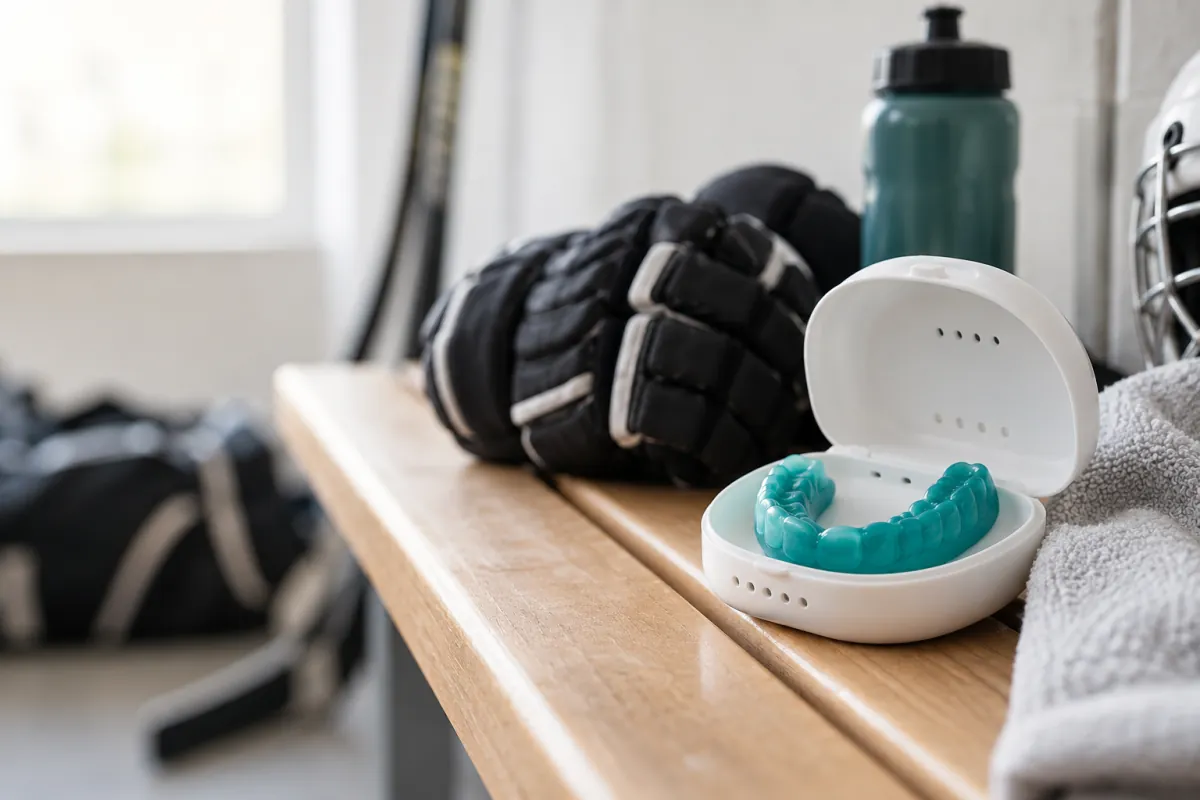
A mouthguard only helps when it is in the mouth at the moment of impact. That makes comfort and fit more than minor preferences. If a player keeps removing a loose or bulky guard to breathe, speak or concentrate, the equipment is failing an everyday test even before a collision occurs.
Choosing sports mouthguards in Simcoe means thinking about the sport, the person wearing the guard and the changes likely during the season. A growing child with braces needs a different plan from an adult recreational athlete with stable teeth and a front crown. Both deserve protection they can use consistently during practices as well as games.
Which activities deserve a mouthguard conversation?
Contact sports are the obvious starting point, but contact is not the only route to a dental injury. Falls, an elbow, a ball or a collision with equipment can affect the mouth during activities that are not usually described as full-contact sports.
Discuss the actual risks of the activity rather than relying only on its label. A player’s position, speed, surroundings and history of injury can all matter. Follow the rules of the relevant league or organization, and ask a dental professional when you are unsure what protection is appropriate.
The ADA’s mouthguard guidance describes mouthguards as protective equipment for sports and recreation that put the mouth at risk. They are part of a wider safety plan that may include helmets, face protection, coaching and sensible play.
What the guard is designed to do
A sports mouthguard provides a cushioning barrier around the teeth and helps protect soft tissues from contact with tooth edges. Its design needs enough coverage and thickness for its intended use while allowing the athlete to function comfortably.
That balance is important. Trimming away large sections because a guard feels bulky may compromise the intended protection. A dentist can assess whether the problem is the fit, the design or the need for an entirely different appliance.
Mouthguards do not make risky contact harmless. They cannot guarantee that a tooth will never fracture, and they should not be promoted as a guarantee against concussion. After a significant impact, symptoms still need attention even if the guard appears intact.
Comparing common options
Stock guards are sold in a ready-made shape. They may be inexpensive, but retention and comfort can be limited. If the wearer must constantly clench to hold one in place, speaking and breathing may become awkward.
Boil-and-bite guards are softened and adapted according to the manufacturer’s instructions. Results depend on the product and how well the fitting process is performed. Incorrect heating or biting can create thin areas or a poor fit. Children need appropriate adult supervision during any fitting process involving hot water.
Custom guards are made from an impression or scan and adjusted for the individual mouth. They can offer a more tailored fit, but still need review as teeth or restorations change. Ask about the intended design, expected replacement needs and what to do if the finished appliance rubs.
A fit check you can understand
Put the guard in place without forcing it. It should feel secure and cover the intended teeth, without sharp edges digging into the cheeks or gums. You should be able to breathe comfortably and communicate adequately for the activity.
Try the fit before the first game. Waiting until warm-up leaves little time to address rubbing or instability. A child may describe discomfort vaguely, so ask whether the guard feels too tight, falls down, catches the lip or triggers gagging.
Bring the guard to a dental visit for review. A clinician can inspect retention, wear, coverage and the relationship to the bite. Do not assume that a product is still suitable merely because it can physically be pushed over the teeth.
Growing smiles need repeated review
Children’s mouths can change considerably between seasons. A baby tooth may loosen, a permanent tooth may erupt or spacing may change. A guard that fitted well earlier can become tight or fail to cover a newly erupted tooth properly.
Check the fit regularly and after noticeable dental changes. Do not force a guard over a loose tooth or a new restoration. Let the dental team know when a tooth is erupting or orthodontic treatment is about to begin so the timing of a new appliance can be considered.
There is no reliable replacement calendar that fits every child. Growth, wear and design matter more than the number of months on a receipt. Budgeting for possible replacement during a growth phase is sensible when comparing options.
Braces change the design requirements
Brackets can injure the inside of the lips and cheeks during an impact. At the same time, teeth are moving during orthodontic treatment, so a guard must accommodate that movement rather than lock tightly onto the current position.
Ask the orthodontist or dentist which type is appropriate. Depending on the appliance and sport, protection may be needed for the lower teeth as well. A conventional tightly adapted guard may not be suitable around active braces.
Review the guard after orthodontic adjustments if it no longer seats comfortably. Do not reshape it around brackets without advice or assume a clear aligner provides impact protection. Orthodontic appliances and sports protection have different jobs, even when both fit over the teeth.
Crowns, bridges and implants deserve attention too
Adults with dental work should mention it during the mouthguard consultation. A crown, implant restoration or bridge changes the contours around which the guard must fit. A recent restoration can also make an older appliance feel unexpectedly tight.
Do not test a poor fit by biting harder until the guard clicks into position. That can place unnecessary stress on teeth or restorations. Have it assessed before returning to play.
A guard does not remove the need to investigate a loose restoration or painful tooth. If a tooth already hurts during chewing, book an examination. Covering it with protective equipment may hide a symptom while leaving the underlying problem unresolved.
Cleaning after practice should be simple
Rinse the guard after use and clean it using the method recommended for its material. A soft brush and appropriate cleaner may be advised. Avoid boiling water, a hot dishwasher or harsh household chemicals unless the manufacturer explicitly states that the material tolerates them.
Let the appliance dry and store it in a ventilated protective case. A damp guard left inside a sealed sports bag is unpleasant to put back in the mouth and harder to keep clean. Wash and dry the case too.
Keep the guard away from pets, direct heat and a hot vehicle dashboard. Do not share it with a teammate. If it develops a persistent odour, rough surface or visible damage despite proper care, ask whether replacement is needed rather than covering the smell with a strong rinse.
Chewing the guard shortens its useful life
Some athletes chew a mouthguard while waiting on the bench. Over time, that can deform it or create thin, damaged areas. Once the shape changes, it may no longer provide the fit or coverage it was designed to deliver.
Make checking the guard part of checking the rest of the equipment. Look for tears, rough edges, flattened areas and a change in retention. If a child suddenly resists wearing it, discomfort or damage may explain the change.
A guard that has taken a substantial impact deserves review even if damage is not obvious. Describe the incident and any symptoms. The condition of the teeth and supporting tissues matters as much as the condition of the appliance.
What to do after a blow to the mouth
Stop the activity and assess the person first. Significant head injury, loss of consciousness, breathing difficulty, uncontrolled bleeding or suspected jaw fracture needs urgent medical attention. Follow the sport’s head-injury protocol; a mouthguard does not rule out concussion.
For a broken, displaced or knocked-out tooth, seek urgent dental advice. A knocked-out permanent tooth is time-sensitive. Handle it by the crown, avoid scrubbing the root and obtain immediate guidance about replantation or suitable storage. Do not put a knocked-out baby tooth back into its socket.
Keep any tooth fragments in a clean container and bring them to the appointment. Our guide to a knocked-out tooth in Simcoe explains the distinction between permanent and baby teeth and why prompt action matters.
A tooth can be injured without breaking
After a collision, a tooth may look intact but feel tender, sit differently or become sensitive. The supporting tissues can be affected even when no obvious piece is missing. A dental assessment may be needed to establish the extent of injury and plan follow-up.
Symptoms can change over time. Tell the dentist about later colour changes, swelling, a new gum bump or pain that returns after seeming to settle. Keep the follow-up appointments recommended after trauma.
Do not repeatedly wiggle the tooth to test it, and avoid using it to bite hard foods until you have advice. A photograph taken soon after the incident may help document a visible change, but it cannot replace examination or clinically indicated imaging.
Build a routine that survives the season
Keep the case with equipment that always travels to practice. Before leaving home, check that the guard is clean, undamaged and actually inside the case. Small habits prevent the familiar problem of discovering an empty case at the venue.
Parents and coaches can reinforce wearing it during practice, where many impacts also occur. Make discomfort a problem to solve rather than a reason to blame the athlete. A better fit is often more effective than repeated reminders to wear something painful.
If a guard is lost or damaged, ask about the safest replacement approach before the next session. Avoid improvising with an old sibling’s appliance or a grinding splint. Proper protection requires a device intended for the wearer and the activity.
Frequently asked questions
Can I wear my night guard for sports?
A night guard and sports mouthguard serve different purposes. Ask for an appliance designed for impact protection rather than using a grinding appliance during sport.
Do children with braces need a mouthguard?
They should use appropriate protection for activities with an injury risk. The dentist or orthodontist can recommend a guard that accommodates brackets and planned tooth movement.
Does a mouthguard prevent every dental injury or concussion?
No. A properly fitted guard helps protect teeth and oral tissues, but no device prevents every injury. It should not be presented as a guarantee against concussion.
Plan protection near Simcoe
Port Dover Family Dentistry welcomes Simcoe athletes and families at 697 Norfolk County Hwy 6, Unit 2, Port Dover. Call 519-583-2929 or request an appointment to discuss mouthguard fit, dental changes and the activity you play. Bring your current guard so we can assess it with your teeth and bite.
About the author
Port Dover Family Dentistry Team
Our team provides family-focused dental care in Port Dover, Ontario. We create practical oral-health education to help patients ask informed questions and feel more confident about care. This article is general information and does not replace an examination or personalized diagnosis.