
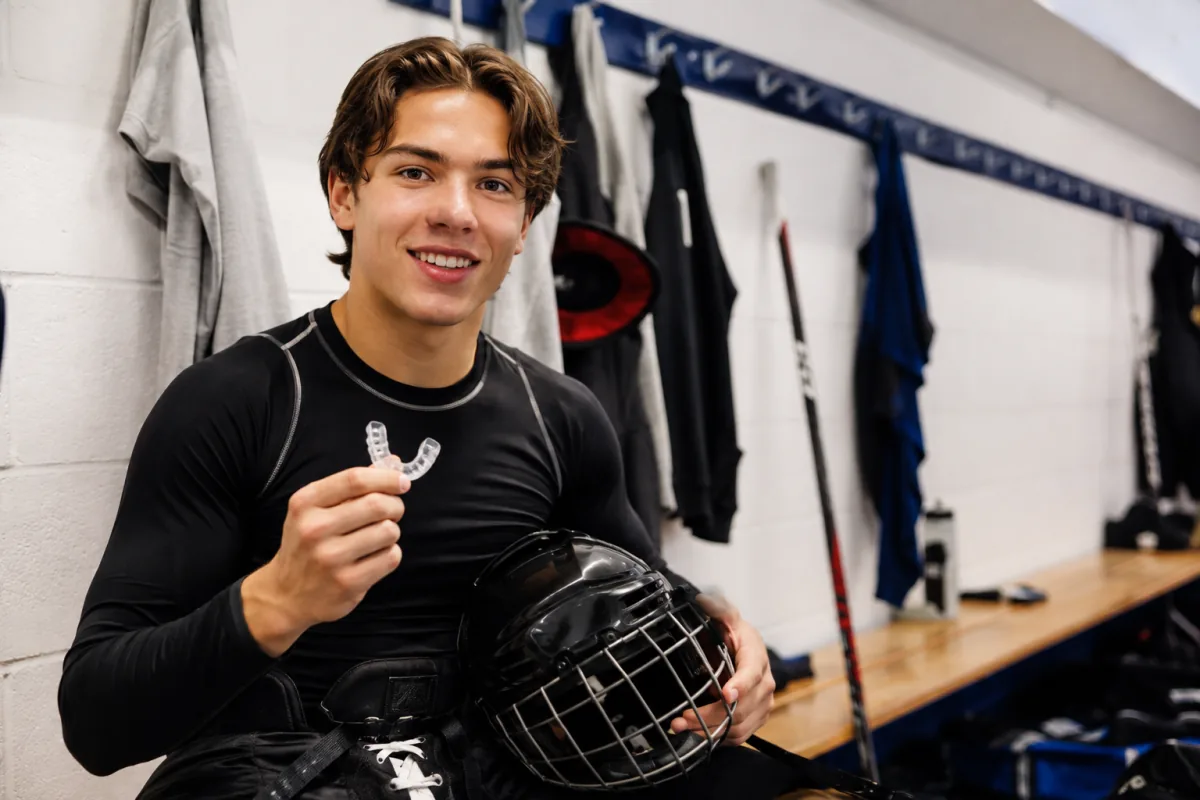
Good sports mouthguards in Norfolk County do one simple job well: they stay in position and cushion the teeth and soft tissues when an unexpected impact happens. The best guard is not necessarily the thickest or most expensive. It must fit the athlete’s current mouth, allow comfortable breathing and be worn consistently.
From hockey and ringette to soccer, basketball, baseball, martial arts, cycling and skateboarding, oral injuries are not limited to sports labelled “contact.” A ball, elbow, stick, fall or collision can chip teeth, cut lips or displace a jaw. Families in Port Dover and surrounding communities can reduce that risk by choosing protection before the season, not after the first injury.
What a mouthguard can—and cannot—do
A sports mouthguard places resilient material around the teeth, usually in the upper arch. It can absorb and distribute force, reduce direct tooth contact, and help shield lips and cheeks from sharp tooth surfaces or orthodontic brackets.
It can reduce the risk or severity of:
- chipped, broken or displaced teeth;
- cuts to lips, tongue and cheeks;
- direct impact between upper and lower teeth; and
- some supporting-bone injuries.
No guard makes a sport injury-proof. It cannot protect areas it does not cover, and a severe impact can still damage teeth, jaw or face. The Canadian Dental Association’s position supports properly fitted mouthguards while noting their very limited role in preventing brain concussion.
Do not market or use a mouthguard as a concussion device. Proper helmets, face protection, safe coaching, rule enforcement, recognition of symptoms and removal-from-play protocols remain critical.
Who should consider one?
Follow the rules of the league or activity, but do not limit protection to mandatory situations. Consider a mouthguard whenever there is a meaningful chance of falling, colliding with a person or surface, or being struck by equipment.
That can include hockey, lacrosse, football, rugby, basketball, soccer, baseball, softball, field hockey, martial arts, wrestling, gymnastics, mountain biking, skateboarding and skiing. Position and style of play matter too. A recreational athlete can still experience a hard fall.
Adults benefit as well as children. Restorations such as crowns, veneers and implants can be costly to repair, while natural teeth may suffer lifelong effects after trauma.
The three main types
Stock mouthguards
Stock guards are preformed and ready to wear. They are inexpensive and easy to find, but limited sizes can make them loose or bulky. An athlete may need to clench to hold one in place, interfering with breathing and communication.
They may be better than no protection in a short-term situation, but poor retention makes consistent wear less likely. A guard that falls out when the mouth opens is not performing ideally at the moment of impact.
Boil-and-bite mouthguards
These are softened in hot water and shaped around the teeth according to manufacturer instructions. A careful fit can be more retentive than a stock guard. Overheating, biting through the material or stretching it too thin reduces protection.
Follow the product directions exactly. Children should be supervised around hot water. Remould only when the manufacturer permits it; repeated heating can distort or weaken the guard.
Custom-fitted mouthguards
A dental professional makes a custom guard from a scan or impression of the athlete’s teeth. Material thickness and extension can be designed for the mouth and activity. A close fit generally improves comfort and retention, which matters because the guard only works when it is worn.
Custom does not mean permanent. Children’s teeth erupt, jaws grow and dental treatment changes contours. Adults also need replacement when material wears or the bite changes.
Our sports guards service page explains how custom protection is planned at Port Dover Family Dentistry.
What a good fit feels like
A suitable upper mouthguard should:
- stay up without constant clenching;
- cover the vulnerable teeth and gum-side contours as designed;
- have smooth, rounded edges;
- allow the athlete to breathe and speak reasonably;
- avoid triggering persistent gagging; and
- feel balanced without one hard pressure point.
New guards can feel unfamiliar, and brief adaptation is normal. Pain, gum blanching, cuts, jaw fatigue or a bite that remains changed after removal are not signs to “push through.” Have the fit checked.
The athlete should practise with it during training before competition. Familiarity makes insertion automatic and reveals comfort issues while there is time to correct them.
Mouthguards and braces
Orthodontic brackets add sharp surfaces and teeth are moving. A guard must provide room for that movement and protect the lips without locking onto the appliance. An ordinary tightly moulded guard may become stuck or restrictive.
Ask the orthodontist or dentist for a brace-compatible design and replacement schedule. Never trim around brackets with a household knife. Check fit frequently as treatment progresses.
Both upper and lower braces may require special planning. Continue wearing the guard after an adjustment only if it seats passively and comfortably.
Growing children need frequent checks
A child can outgrow a guard during one season. Erupting teeth, lost baby teeth and jaw growth change retention. Write the athlete’s name on the case rather than on a surface that sits in the mouth, and inspect the guard every few weeks.
Replace it if it:
- no longer stays in place;
- cannot seat fully;
- develops tears or thin spots;
- has rough, chewed edges;
- causes pain;
- has persistent odour that cleaning does not resolve; or
- no longer fits after a filling, crown or orthodontic change.
Bring it to routine visits. A quick fit check can catch changes the athlete has accepted gradually.
Caring for the guard
Rinse it with cool water immediately after use. Brush gently with a soft brush and the cleaner recommended for its material. Toothpaste can scratch some appliances. Avoid boiling water, dishwashers, direct sun and hot cars because heat can distort the fit.
Let it dry in a ventilated, rigid case. A closed wet container encourages odour and microbial growth. Keep the case clean and replace it when damaged. Store guards away from pets; dogs commonly chew dental appliances.
The athlete should brush before wearing it when practical and never share it. Inspect both sides under good light. Household glue cannot safely repair a split.
Sports drinks and mouthguard use
Sipping a sugary or acidic drink while wearing a guard can hold liquid against teeth. For most ordinary practices, plain water is the best routine hydration choice. More intensive endurance activity may require an individualized nutrition plan, but frequency and exposure still matter.
Remove the guard when eating. Rinse the mouth and guard with water before reinserting it. Do not chew the appliance between plays; chewing thins the areas intended to absorb force.
What to do after a dental injury
Stop play and check the athlete. Headache, confusion, memory problems, loss of consciousness, dizziness or vomiting may indicate head injury and must follow the sport’s medical protocol. Do not return an athlete to play based on the condition of the teeth alone.
For oral bleeding, use clean gauze with gentle pressure. Apply a cold pack outside the face. Find broken tooth pieces and keep them moist. If a permanent tooth is completely knocked out, handle it by the crown, not the root; reinsert it if appropriate or store it in milk and seek immediate dental care. Never replant a baby tooth.
Call the dental office promptly for a loose, displaced, broken or painful tooth, a changed bite or a cut that may need care. See our broken or chipped tooth guide for step-by-step first aid.
Seek emergency medical help for uncontrolled bleeding, serious facial trauma, breathing or swallowing difficulty, suspected jaw fracture or neurological symptoms.
Can the same guard be used at night?
A sports mouthguard and a night guard are designed for different situations. Sports protection absorbs unpredictable impacts and is worn during activity. A night guard manages tooth contact over many hours and is shaped according to bite and grinding concerns.
Using one device for both may provide poor fit, hygiene and function. Do not sleep in a sports guard unless a dental professional specifically directs it.
Cost versus replacement cost
Stock and boil-and-bite products cost less initially, while a custom guard includes clinical assessment, records, fabrication and fit checks. The relevant comparison is not price alone: retention, comfort, expected wear, growth and frequency of use matter.
Repairing an injured front tooth can involve bonding, root canal treatment, a crown and maintenance over many years. A mouthguard cannot prevent every injury, but prevention is usually simpler than reconstructive care.
Ask a benefit provider whether sports guards are eligible and how often replacement is covered. League or team programs may also support access.
A pre-season checklist
- Confirm the sport’s equipment rules.
- Complete needed dental treatment before impressions or scans.
- Choose a guard that stays without clenching.
- Practise speaking and breathing with it.
- Label and clean the ventilated case.
- Pack plain water.
- Review knocked-out-tooth first aid with coaches.
- Check the fit throughout the season.
Keep the dental office number with team emergency contacts. Knowing the first step reduces panic when minutes matter.
Sports mouthguards near Port Dover
Port Dover Family Dentistry provides custom sports guard assessment for children and adults from Port Dover and across Norfolk County. We can check teeth, restorations, bite and growth, explain the available guard types and verify the finished fit.
Call 519-583-2929 or request an appointment before the season or when an existing guard becomes loose or damaged.
Frequently asked questions
Can I wear a mouthguard over a missing tooth?
Usually, but the space and any temporary replacement must be considered. A custom design can protect the area without unstable pressure. Do not insert a removable tooth replacement during contact sport unless the dentist approves it.
Why does my mouthguard make me gag?
Excessive bulk, length or looseness can trigger gagging. A fit adjustment or different design may help. Do not make deep cuts yourself because this can remove protective coverage and create sharp edges.
Should a mouthguard cover the upper or lower teeth?
Most sports guards cover the upper teeth, but bite, braces and injury history can change the recommendation. A dental professional can select the arch and design for the individual.
About the author
Port Dover Family Dentistry Team
Our team provides family-focused dental care in Port Dover, Ontario. We create practical oral-health education to help patients ask informed questions and feel more confident about care. This article is general information and does not replace an examination or personalized diagnosis.