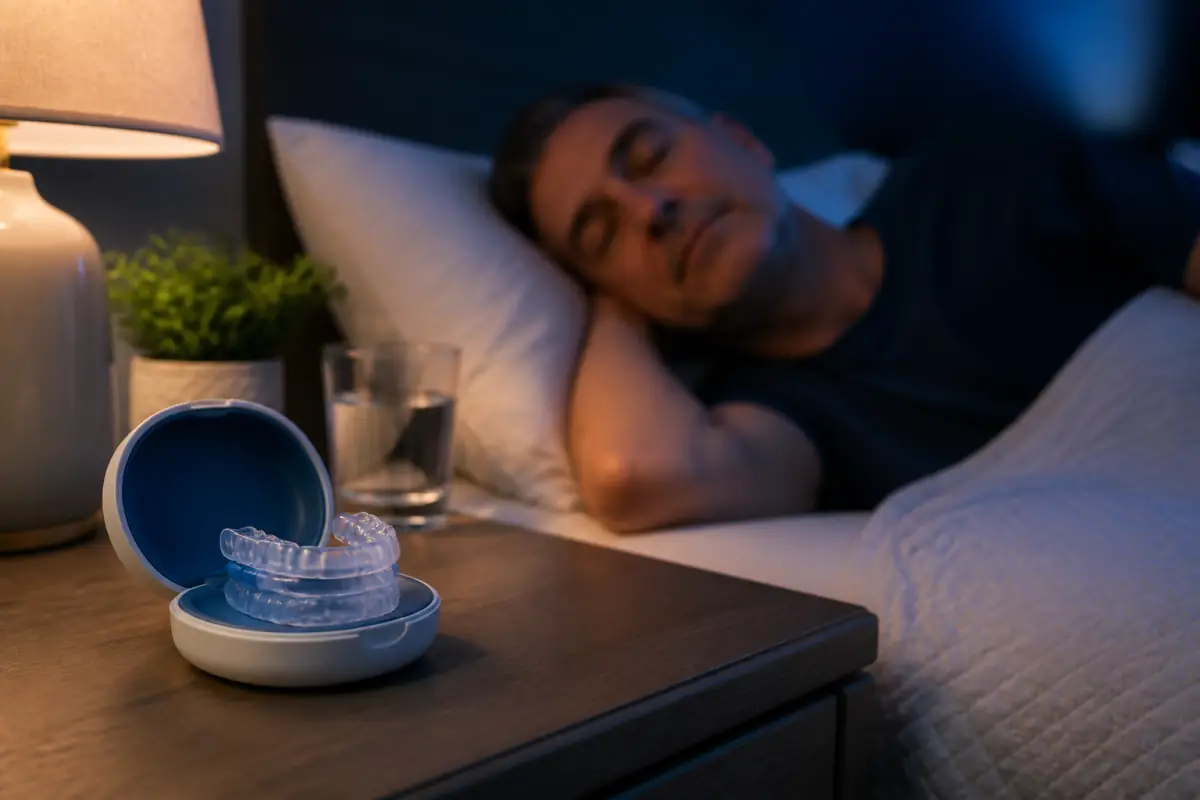
Sleep apnea oral appliances in Port Dover can be part of treatment for selected people with obstructive sleep apnea, usually after medical diagnosis and coordination between a physician and trained dentist. These custom devices hold the lower jaw or tongue forward during sleep to reduce airway collapse. They are not interchangeable with ordinary sports guards or store-bought snoring trays.
Snoring can be socially disruptive, but obstructive sleep apnea is a medical condition associated with repeated breathing interruptions. Treating sound without assessing breathing can hide a warning sign. A sleep study and medical interpretation establish the diagnosis and severity.
What is obstructive sleep apnea?
During sleep, throat muscles relax. In obstructive sleep apnea, the upper airway repeatedly narrows or closes, reducing or stopping airflow even though the body continues trying to breathe. The brain briefly arouses the person to reopen the airway, fragmenting sleep.
The NHLBI lists symptoms including loud snoring, witnessed pauses, gasping, daytime sleepiness, fatigue, dry mouth, morning headache and difficulty concentrating. Children may show hyperactivity, bedwetting or school problems rather than classic sleepiness.
Not everyone who snores has sleep apnea, and some people with apnea do not report loud snoring. Screening is a starting point, not diagnosis.
Why diagnosis must come first
A medical provider evaluates sleep history, health and risk and may order home or laboratory sleep testing. The study measures breathing events, oxygen, sleep stages, heart rate and other variables. Severity and pattern guide treatment.
Dental examination cannot measure nighttime oxygen or distinguish obstructive from central sleep apnea. Central apnea involves reduced respiratory effort and is not treated by advancing the jaw.
If a partner witnesses breathing pauses or you have substantial daytime sleepiness, speak with a physician. Do not drive when dangerously sleepy.
How an oral appliance works
The most common dental sleep device is a mandibular advancement appliance. It covers upper and lower teeth and holds the lower jaw in a forward position, helping maintain airway space. A tongue-retaining device holds the tongue forward and may be considered in selected situations.
The NHLBI’s treatment guide states that a provider may prescribe an oral device when a patient does not want or cannot tolerate CPAP and that a dentist or orthodontist custom fits it.
Advancement is adjusted gradually to balance symptom improvement with jaw and tooth comfort. Maximum forward movement is not automatically best.
CPAP versus oral appliance therapy
Continuous positive airway pressure uses air pressure through a mask to keep the airway open. It is the most common sleep-apnea treatment and is highly effective when worn consistently.
| Factor | CPAP | Oral appliance |
|---|---|---|
| Mechanism | Pneumatic airway support | Holds jaw/tongue forward |
| Effectiveness | Strong across severities | Best for selected patients |
| Portability | Machine and supplies | Small removable device |
| Common challenges | Mask leak, dryness, tolerance | Jaw discomfort, bite change |
| Follow-up | Sleep/medical provider | Medical plus dental monitoring |
Choice is individualized. Severe apnea, low oxygen, medical risk and airway anatomy can make CPAP preferable. Some patients use both or combine treatment with lifestyle change.
Who may be a candidate?
Potential candidates generally have:
- medically diagnosed obstructive sleep apnea or primary snoring;
- a prescription or physician-supported plan;
- enough stable teeth or an appliance design suitable for their mouth;
- healthy gums and manageable decay risk;
- adequate jaw movement; and
- willingness to wear, clean and attend follow-up.
An oral appliance may be considered for mild to moderate OSA or for selected more severe cases when CPAP is not tolerated, under medical direction. It is not appropriate for every jaw, dentition or sleep disorder.
Dental assessment before treatment
The dentist evaluates teeth, restorations, gums, jaw joints, bite, range of motion, tongue, saliva and habits. Active disease is treated first. Significant mobility, insufficient retention, uncontrolled periodontitis or acute TMD may limit use.
Records can include photographs, scans or impressions and bite measurements. Denture wearers or patients with few teeth require specialized design considerations.
See our sleep apnea treatment service for the practice overview.
Fitting and adjustment
After fabrication, the appliance is checked for retention, comfort and initial jaw position. You receive instructions for insertion, removal, cleaning and gradual advancement.
Morning bite exercises or a repositioning device may help the jaw return to its usual position. Follow the schedule; aggressive self-advancement can cause pain and bite change without improving airway control.
Symptoms such as quieter snoring can improve before apnea is adequately controlled. Follow-up sleep testing confirms effectiveness.
Side effects and long-term changes
Short-term effects can include:
- tooth pressure;
- excess saliva or dry mouth;
- gum irritation;
- jaw-muscle fatigue;
- temporary morning bite change; and
- joint discomfort.
Long-term use can move teeth and alter the bite. The amount varies. This is why baseline records and periodic comparison matter. Untreated apnea also has important health consequences, so risks must be balanced rather than viewed in isolation.
Report persistent jaw pain, a cracked tooth, loose restoration, gum swelling or appliance damage. Our TMJ therapy page explains jaw assessment.
Follow-up and proving effectiveness
The NHLBI recommends dental follow-up after approximately six months and then annually for oral-device users. Visits check wear, fit, bite, teeth and gums. Medical follow-up determines whether symptoms and sleep-study measures improve.
Repeat testing is especially important after final adjustment, weight change, symptom return or major health change. Snoring reduction alone is not a sufficient treatment endpoint.
Lifestyle measures that support treatment
Based on medical advice, helpful changes may include:
- achieving or maintaining a healthy weight;
- regular physical activity;
- limiting alcohol near bedtime;
- stopping smoking;
- keeping a consistent sleep schedule;
- treating nasal congestion appropriately; and
- side sleeping when recommended.
These may improve severity but do not replace prescribed therapy. Do not stop CPAP after losing weight or feeling better without reassessment.
Oral health with an appliance
Brush and floss before inserting the device. Plaque trapped overnight increases decay and gum risk. Clean the appliance with cool water and recommended products; hot water can distort it.
Store it ventilated and away from pets. Bring it to dental and sleep follow-ups. If it no longer fits after dental work, do not force it.
Dry mouth should be addressed because it raises decay risk. Regular professional cleanings support monitoring.
Store-bought snoring devices
Boil-and-bite or online devices may fit poorly, move teeth unpredictably and cover untreated disease. More importantly, they can reduce snoring while significant oxygen drops continue, creating false reassurance.
The ADA warns that direct-to-consumer snoring appliances remove professional diagnosis and management. Use a medically coordinated pathway.
Travel, replacement and dental-work planning
One advantage of an oral appliance is portability, but travel still requires planning. Carry the device in a ventilated protective case rather than checked luggage, pack its cleaning supplies and continue any other prescribed therapy. If you also use CPAP, ask the sleep physician whether both devices should travel with you; do not decide that the smaller option is an equivalent substitute without confirmed testing.
Appliances wear over time. Grinding, cleaning products, heat and daily insertion can cause cracks or distortion. A damaged device should not be repaired with household glue or adjusted using hot water. Contact the providing dentist, because a rough or altered surface may injure tissue or change jaw position.
Tell every dentist that you use a sleep-apnea appliance before crowns, fillings, bridges or major tooth movement. Even a small change in tooth shape can affect fit. Bring the appliance to the appointment so the relationship can be checked. If planned dental treatment will make the device unusable, the sleep physician and dentist should coordinate interim airway management and eventual replacement.
Weight change, surgery and new medications can alter apnea severity or device response. A comfortable appliance is not proof that it remains effective years later. Continue medical follow-up even when snoring stays controlled.
Cost and coverage in Port Dover
Fees can include consultation, records, device, adjustment visits and replacement. Ask what is included and how repairs are handled. Private medical or dental plans classify devices differently and may require a sleep-study report and prescription.
The current CDCP benefits guide excludes sleep-apnea appliances. Verify current rules and do not assume a medical diagnosis changes dental-plan eligibility.
Questions to ask
- What did my sleep study show?
- Why is an appliance suitable for my severity?
- Is CPAP still recommended?
- How will effectiveness be confirmed?
- What dental or jaw risks apply?
- How often will my bite be measured?
- What does the fee include?
- What happens if the device fails?
Sleep-apnea support in Port Dover
Port Dover Family Dentistry can discuss dental sleep screening and whether oral appliance assessment fits a physician-led plan. We do not diagnose sleep apnea from symptoms alone.
For questions about sleep apnea oral appliances in Port Dover, call 519-583-2929 or request a consultation. Bring relevant sleep-study and physician information.
Frequently asked questions
Does an oral appliance stop snoring?
It often reduces snoring, but response varies. Treatment success for apnea must be measured with follow-up testing, not sound alone.
Can an appliance change my bite?
Yes. Tooth movement and bite change are known long-term effects. Monitoring and morning repositioning help manage risk.
Should I stop CPAP when I receive a device?
No, not without direction from the treating sleep physician. Continue prescribed therapy until effectiveness of the alternative is confirmed.
About the author
Port Dover Family Dentistry Team
Our team provides family-focused dental care in Port Dover, Ontario. We create practical oral-health education to help patients ask informed questions and feel more confident about care. This article is general information and does not replace an examination or personalized diagnosis.