
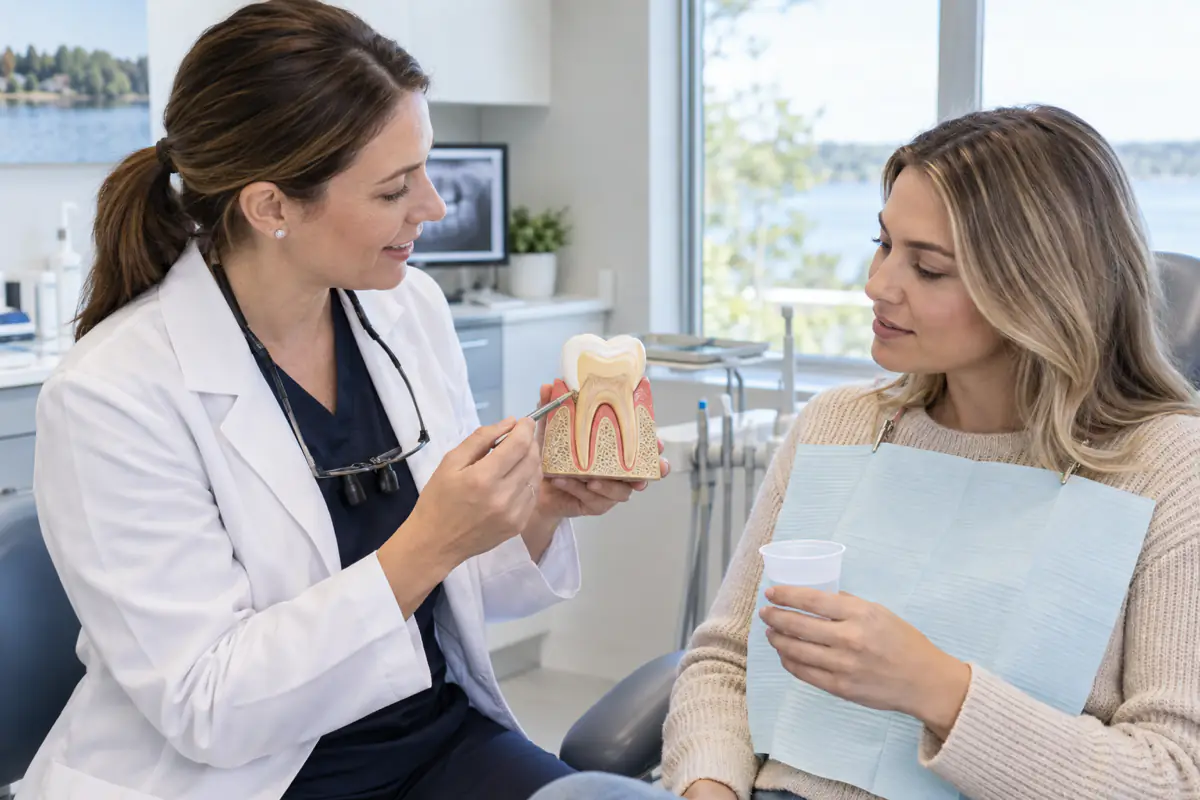
A sip of cold water should not feel like an electric shock. Yet sensitive teeth in Simcoe are common, and the triggers can range from cold air to sweet food or a toothbrush touching one spot. Sensitivity is a symptom, not a diagnosis. The correct response depends on what has exposed or irritated the inner tooth.
Many cases involve dentin—the layer beneath enamel and root cementum—and can be managed conservatively. Others are early warnings of decay, a leaking filling, a crack or inflammation inside the tooth. Noting the pattern helps your dentist distinguish a brief surface response from pain that requires prompt treatment.
Why exposed dentin hurts
Enamel protects the crown of a healthy tooth. Cementum covers the root below the gumline. Under both is dentin, a living, porous tissue containing thousands of microscopic tubules that communicate toward the pulp.
When dentin loses its covering, temperature, touch and certain foods can shift fluid within those tubules. The movement stimulates nerves at the pulp edge and produces a short, sharp sensation. Receding gums commonly expose root dentin, while acid or wear can thin enamel on the crown.
The American Dental Association’s MouthHealthy guidance lists tooth decay, fractured teeth, worn fillings, gum disease, worn enamel and exposed roots among possible causes. That range is why one product cannot solve every sensitive tooth.
Pattern matters
Typical dentin hypersensitivity is brief and linked to a trigger. The feeling fades quickly once cold, sweetness, air or touch is removed. Several teeth may react around areas of recession.
Arrange an examination sooner when pain:
- lingers after heat or cold is gone;
- occurs spontaneously or wakes you;
- throbs or builds over time;
- is isolated to one tooth and worsening;
- occurs when biting or when pressure is released;
- follows a blow or recent crack; or
- is accompanied by swelling, a bad taste or fever.
These patterns may involve pulp inflammation, infection or a fracture rather than simple surface sensitivity.
Gum recession and exposed roots
Roots lack the thick enamel that covers tooth crowns. When gums recede, a root may react to cold air, brushing and sweets. Recession can be associated with periodontal disease, thin tissue, tooth position, forceful brushing or several factors together.
Reducing pain does not identify why the gum moved. Periodontal measurements, brushing review and sometimes X-rays are needed to assess supporting tissues. A desensitizing paste may control symptoms while the underlying cause is treated or monitored.
See gum recession in Simcoe for detailed information about stabilization, root protection and when grafting may be considered.
Acid erosion
Acid can soften enamel and expose dentin. Frequent pop, energy drinks, citrus water, sour candy and sports drinks create repeated dietary acid contact. Stomach acid from reflux or recurrent vomiting can affect different surfaces and may require medical care.
Do not brush immediately after a strong acid exposure. Rinse with plain water and allow saliva time to neutralize the mouth before brushing gently. Do not use baking soda or aggressive polishing in an attempt to remove a rough feeling.
Changing frequency is often more protective than making one drink slightly smaller. Finish an acidic beverage with a meal rather than sipping it for hours, avoid swishing and use plain water between meals.
Brushing abrasion
Hard bristles and forceful horizontal scrubbing can contribute to root wear and gum trauma, especially when combined with acid-softened surfaces. A brush should remove plaque without flattening its bristles against the teeth.
Choose soft bristles, light pressure and controlled movements along the gumline. A powered brush with a pressure indicator can help some people, but it is still possible to push too hard. Abrasive stain-removal toothpaste may worsen exposed-root sensitivity.
Do not avoid the sensitive area completely. Plaque-related inflammation can worsen gum health. Ask a hygienist to demonstrate technique using your own brush and mouth.
Cavities and defective restorations
Decay can produce sensitivity when damage progresses through enamel toward dentin. A cavity between teeth may be invisible in a mirror. Around a filling or crown, a gap, fracture or new decay can expose tissue or allow fluid movement.
Sensitivity after a new restoration can be temporary, particularly if the cavity was deep. A filling that feels high may make the tooth sore to bite. Increasing, lingering or spontaneous pain needs review. The dentist may adjust the bite, monitor recovery, replace a defective restoration or recommend pulp treatment depending on findings.
Our guide to dental filling aftercare in Simcoe explains normal short-term changes and warning signs after treatment.
Cracks and grinding
A crack may cause a sharp pain on biting or release, often inconsistently. Temperature can also trigger it. Large fillings, trauma, chewing hard objects and repeated heavy forces can contribute.
Grinding can wear enamel and stress teeth or restorations. A night guard may protect teeth when bruxism is diagnosed, but it cannot seal an existing crack. If a single tooth has unpredictable biting pain, avoid hard food on that side and arrange an assessment.
Cracks do not show reliably on every X-ray. Diagnosis may involve magnification, bite tests, light transmission and examination around the tooth. Read cracked tooth in Simcoe for treatment considerations.
Whitening-related sensitivity
Peroxide whitening products can temporarily increase sensitivity. Concentration, contact time, frequency and individual anatomy all influence the response. More product or longer wear does not guarantee a better result and can irritate gums.
Pause whitening if discomfort develops and follow the product or dentist’s instructions. A lower frequency, different formulation or desensitizing plan may help. Have untreated cavities, cracks and significant recession assessed before whitening, since cosmetic treatment will not correct those conditions.
Whitening changes natural tooth colour but not crowns, veneers or fillings. Planning first can avoid an uneven final result.
Using desensitizing toothpaste
Desensitizing toothpaste contains compounds designed to reduce nerve response or block dentin tubules. It generally needs consistent use rather than one application. Brush twice daily according to the label with a soft brush.
Some dentists advise placing a small smear directly over a sensitive root after brushing, but only do this with a suitable product and professional guidance. Do not combine multiple high-strength products without advice. If one formulation irritates the mouth or symptoms fail to improve, bring the tube to your dental appointment so ingredients can be reviewed.
Choose a fluoride toothpaste. Fluoride strengthens tooth surfaces and supports remineralization. “Natural” or charcoal products are not automatically gentle; abrasiveness and fluoride content matter more than marketing language.
Professional fluoride and sealants
A dentist or hygienist may apply fluoride varnish or another concentrated fluoride product to sensitive areas. These treatments can strengthen the surface and reduce tubule transmission. Reapplication may be needed, especially when roots remain exposed.
For a small localized defect, bonding resin or a sealant-like coating may cover dentin. A restoration may be appropriate where root wear is deep, decay is present or cleaning is difficult. Restoring every shallow notch is not always necessary; shape, progression, symptoms and gum health guide the decision.
Gum grafting and periodontal treatment
When recession is significant, a periodontist may evaluate whether a gum graft can cover a root, thicken vulnerable tissue or improve cleanability. Coverage is not equally predictable at every site. Tooth position, bone support, recession pattern and plaque control affect the result.
If periodontal disease caused attachment loss, inflammation must be treated. Scaling and root planing or ongoing periodontal maintenance may be recommended. A graft does not replace disease control.
When root canal treatment is considered
Severe, lingering or spontaneous temperature pain can indicate irreversible pulp inflammation. If the tooth is restorable, root canal treatment removes inflamed or infected pulp and seals the internal canal space. It is not a routine treatment for ordinary exposed-root sensitivity.
Before recommending it, the dentist correlates symptoms with testing and imaging. Referred pain can make the wrong tooth feel responsible, so a careful diagnosis matters. If uncertainty remains, an endodontist can provide specialized testing.
A practical two-week trial
For mild, generalized, short-lived sensitivity without warning signs, try a consistent routine while arranging routine review:
- Use a fluoride desensitizing toothpaste morning and night.
- Switch to a soft brush and reduce pressure.
- Stop abrasive whitening or charcoal products.
- Limit acidic drinks and avoid prolonged sipping.
- Clean between teeth gently each day.
- Record which teeth and triggers are involved.
Do not use a home trial for severe or increasing pain, swelling, trauma or a suspected crack. A diary is useful only if it does not delay needed care.
When sensitivity is urgent
Brief cold sensitivity usually does not require an emergency department. Call a dentist promptly if pain is severe, spontaneous, lingering, associated with biting, or preventing sleep. A chipped or cracked tooth after trauma needs timely assessment even if discomfort is modest.
Facial swelling, fever with dental pain, a bad taste from drainage or difficulty opening the mouth can indicate infection. Rapidly spreading swelling or difficulty breathing or swallowing requires emergency medical care.
Preventing recurrence
Control the factors you can: use fluoride toothpaste, clean plaque gently, reduce acid frequency and avoid using teeth as tools. Keep routine examinations so early decay, recession and restoration wear can be compared over time.
Tell the dental team about reflux, eating disorders, dry mouth, grinding and new medications. These are health details, not reasons for judgment, and they change prevention. Photographs and measurements can show whether recession or wear is stable.
Have sensitive teeth assessed near Simcoe
Port Dover Family Dentistry welcomes patients from Simcoe and throughout Norfolk County. We can identify likely triggers, check for cavities and cracks, review brushing technique and recommend treatment that matches the cause.
Call 519-583-2929 or request an appointment if cold, sweets or brushing repeatedly cause pain. Mention swelling, trauma, spontaneous pain or sleep disruption when you contact us so the urgency can be assessed appropriately.
About the author
Port Dover Family Dentistry Team
Our team provides family-focused dental care in Port Dover, Ontario. We create practical oral-health education to help patients ask informed questions and feel more confident about care. This article is general information and does not replace an examination or personalized diagnosis.