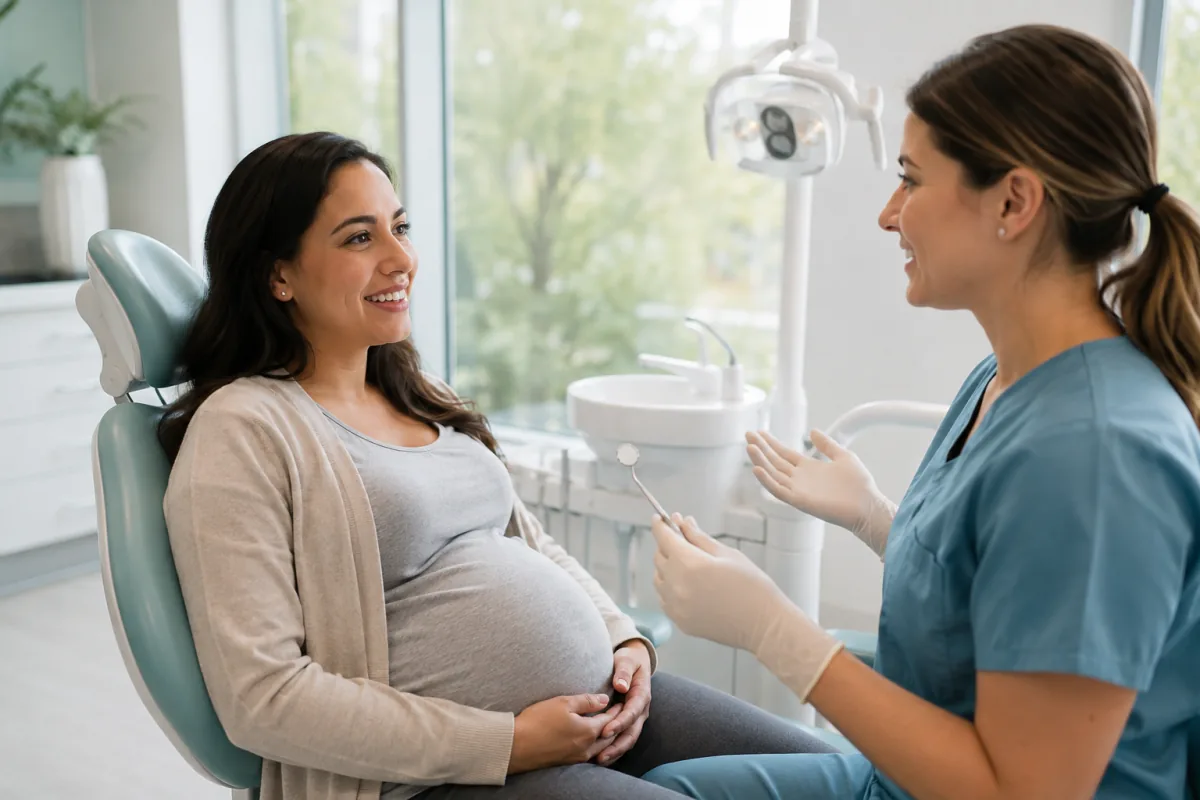
Good oral health during pregnancy in Norfolk County supports comfort, nutrition and freedom from preventable infection at a time when the body is already changing. Pregnancy can make gums more reactive to plaque, increase nausea and alter eating patterns. It does not mean teeth inevitably become weak or that dental care must stop for nine months.
Tell your dentist that you are pregnant or may be pregnant, including the expected due date and any complications. Most decisions are straightforward, while higher-risk pregnancies may require communication with the prenatal care provider.
Pregnancy gingivitis
Increased estrogen and progesterone can exaggerate the gum response to plaque. Gums may look red, feel tender and bleed during brushing or flossing, often between the third and ninth months.
Bleeding is a reason to improve gentle plaque removal, not abandon it. Brush twice daily with fluoride toothpaste and a soft brush angled toward the gumline. Clean between teeth every day. Heavy scrubbing can traumatize tissue without cleaning more effectively.
Professional cleaning removes tartar that brushing cannot. If bleeding is persistent, the dentist evaluates whether it is pregnancy gingivitis, periodontitis, local irritation or another condition. Our gum disease guide explains these diagnoses.
Periodontitis and pregnancy outcomes
Periodontitis destroys the support around teeth. Research has found associations between periodontal disease and outcomes such as preterm birth and low birth weight, but association does not prove a simple direct cause, and treating gums cannot guarantee a pregnancy outcome.
The clear reason to treat gum disease is to control oral infection, bleeding and tissue destruction. Maintain prenatal medical care as recommended. Claims that one cleaning prevents obstetric complications overstate the evidence.
Morning sickness and enamel
Stomach acid softens enamel. After vomiting, rinse with plain water or a fluoride rinse recommended for you. Wait at least 30 minutes before brushing so you do not scrub the softened surface. The Public Health Agency of Canada gives the same practical advice.
If vomiting is frequent, tell the prenatal provider; hydration and nutrition matter beyond the teeth. The dentist may recommend additional fluoride or assess new sensitivity and erosion.
Do not brush harder to remove the taste. A mild baking-soda rinse is sometimes advised to neutralize acid, but confirm the recipe and suitability with a professional rather than mixing a concentrated solution.
Cravings, snacks and cavities
Pregnancy may change appetite and meal timing. Cavities are driven partly by frequency: sweet or starchy snacks eaten repeatedly give plaque bacteria many chances to make acid.
Choose defined meals and snacks when nausea allows, and use plain water for routine sipping. Cheese, unsweetened yogurt, vegetables, nuts when safe and other minimally sweet options can be tooth-friendly choices within your prenatal nutrition plan.
Do not restrict needed calories because of dental fear. If frequent eating is medically necessary, focus on fluoride, cleaning and lower-sugar choices with guidance from the prenatal team.
Is it safe to have a dental examination?
Yes. A checkup can identify decay, gum inflammation, broken teeth and infection before they become urgent. The federal pregnancy guidance recommends an oral health check in the first trimester and indicates the second trimester is often a comfortable time for needed fillings.
Necessary care is not automatically postponed based on trimester. Severe pain or infection may present greater risk than appropriately planned treatment. Elective procedures can sometimes wait for convenience, but the decision should be clinical rather than based on a blanket rule.
Dental X-rays during pregnancy
Dental radiographs are used only when the result is expected to affect diagnosis or treatment. Modern equipment focuses a small beam on the head, not the abdomen. Tell the dentist if you are pregnant so appropriate precautions and timing can be considered.
Health Canada’s dental X-ray guidance explains that X-rays help diagnose conditions difficult to see and that patients should disclose possible pregnancy. Do not refuse an image needed for a serious infection without discussing the comparative risks.
Local anaesthetic and dental medications
Local anaesthetic allows necessary treatment without pain and is commonly used during pregnancy with appropriate selection and dose. The dental team reviews trimester, health, allergies and other medicines.
Never assume a non-prescription pain reliever is safe because it is sold without a prescription. Acetaminophen, anti-inflammatory drugs and antibiotics have different pregnancy considerations and timing. Follow directions from the dentist, physician, midwife or pharmacist.
Do not take leftover antibiotics or stop a prescribed course early. Antibiotics do not fix decay or a broken tooth, so definitive treatment still matters.
Urgent dental problems
Call promptly for swelling, severe pain, fever, pus, trauma, a broken tooth or difficulty opening the mouth. A dental abscess will not resolve safely through home remedies. Treatment may involve drainage, root canal therapy or extraction, with medication when indicated.
Seek emergency medical care for breathing or swallowing difficulty, rapidly spreading facial or neck swelling, uncontrolled bleeding or serious illness. Tell every provider that you are pregnant.
Pregnancy tumours on the gums
Some pregnant patients develop a localized red gum growth that bleeds easily, often called a pregnancy tumour or pyogenic granuloma. Despite the alarming name, it is usually benign and associated with irritation and hormonal response.
It should still be examined because other lesions can look similar. Improved plaque control may help, and removal is considered when it interferes with eating, bleeds repeatedly or does not resolve. Never attempt to cut or treat a growth at home.
Dry mouth or excess saliva
Pregnancy can change saliva in either direction. Dry mouth increases cavity risk and may relate to dehydration, vomiting, medication or mouth breathing. Use plain water, fluoride and professional advice rather than constant sour candy.
Excess saliva, or ptyalism, can accompany nausea. It is uncomfortable but often temporary. The prenatal provider should assess severe symptoms, inability to swallow fluids or dehydration.
Dental care later in pregnancy
Lying flat can become uncomfortable because the uterus may compress major blood vessels. Tell the team immediately about dizziness, nausea or shortness of breath. Position can be adjusted with a more upright chair or a slight tilt.
Shorter appointments and breaks may help. Do not skip urgent care because sitting is difficult; call ahead so accommodations can be planned.
After the baby arrives
Continue brushing and flossing during the disrupted newborn period. Keep your follow-up if pregnancy gingivitis or unfinished treatment was present. Gum changes often improve after birth, but persistent bleeding needs reassessment.
Caregiver oral health matters, yet cavities are not a reason to avoid affection. Do not share toothbrushes or clean a pacifier in your mouth. Begin cleaning the baby’s first tooth and arrange a dental visit by age one or within six months of eruption.
Our first dental visit guide helps parents prepare for that milestone.
Breastfeeding and the parent’s teeth
Breastfeeding does not remove calcium from formed teeth. The larger dental challenges for a new parent are often practical: interrupted sleep, missed brushing, frequent snacks and a water bottle replaced by sweetened drinks. Keep fluoride toothpaste near the routine you can maintain, even if brushing happens at a different time than it did before birth.
If you need dental medication while breastfeeding, tell both the prescriber and dentist. Many treatments can be planned safely, but the specific medicine, dose, infant age and feeding pattern matter. Do not discard milk or postpone urgent dental care based only on general advice from social media; obtain guidance for the actual medication from a physician or pharmacist.
Myths worth leaving behind
“A baby takes calcium from the teeth” is inaccurate. Teeth do not dissolve to supply fetal calcium. Cavities may increase because of changed diet, acid exposure, plaque and reduced care—not because pregnancy extracts minerals from formed teeth.
“Bleeding gums are normal, so ignore them” is also misleading. They are common but benefit from cleaning and assessment.
“No dental care is safe until delivery” can allow disease to progress. Necessary diagnosis and treatment are planned with pregnancy in mind.
A simple pregnancy oral-care plan
- Tell the dental office and prenatal provider about pregnancy and medicines.
- Brush twice daily with fluoride toothpaste.
- Clean between teeth daily, even if gums bleed gently.
- Rinse after vomiting and wait before brushing.
- Use plain water for routine sipping.
- Keep snacks defined when possible.
- Have persistent pain, swelling or lesions assessed.
- Complete recommended follow-up after delivery.
Pregnancy dental care near Port Dover
Port Dover Family Dentistry provides examinations, preventive care and treatment planning for pregnant patients from Port Dover and across Norfolk County. We coordinate with prenatal providers when health factors require it and explain the reason for any recommended image or medication.
Call 519-583-2929 or request an appointment. Mention your pregnancy and due date so the visit can be planned comfortably.
Frequently asked questions
Can I have my teeth cleaned while pregnant?
Yes. Professional cleaning helps manage plaque and tartar, particularly when gums are inflamed. Tell the dental team about pregnancy and any medical restrictions.
Can pregnancy make teeth loose?
Hormonal changes can affect gums, but noticeable mobility may indicate periodontal disease, trauma or another problem. It should be assessed rather than accepted as a routine pregnancy change.
Should I postpone a root canal until after birth?
Not automatically. A painful or infected tooth may require timely treatment. The dentist weighs diagnosis, pregnancy health, imaging and medication needs and coordinates when appropriate.
About the author
Port Dover Family Dentistry Team
Our team provides family-focused dental care in Port Dover, Ontario. We create practical oral-health education to help patients ask informed questions and feel more confident about care. This article is general information and does not replace an examination or personalized diagnosis.