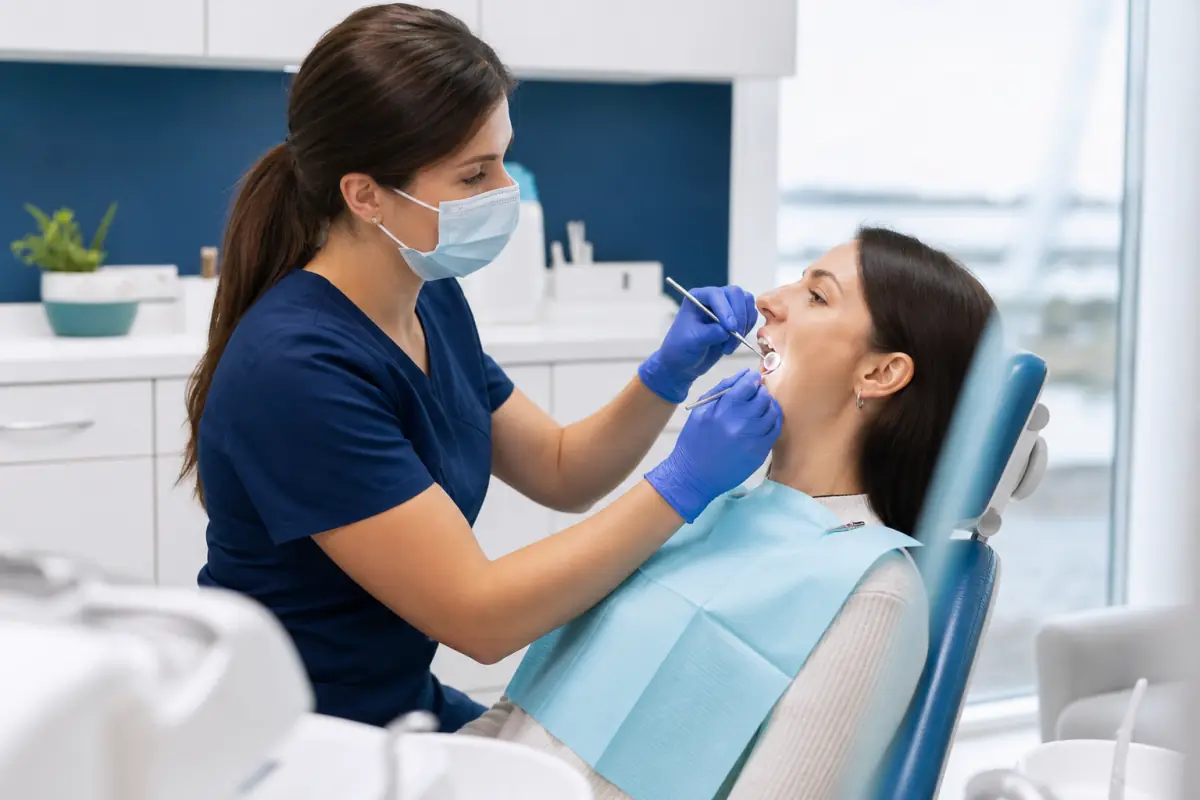
Oral cancer screening in Port Dover is a careful examination of the mouth, lips, jaw and neck for changes that may need further investigation. It is often part of a dental examination and usually takes only a few minutes. Screening does not diagnose cancer; it identifies suspicious findings that may require monitoring, referral or biopsy.
Many mouth changes are caused by irritation, infection or benign conditions. The important step is not to panic, but not to ignore a persistent change either. Earlier evaluation can shorten uncertainty and, when disease is present, support earlier diagnosis.
What is oral cancer?
Oral cancer begins in cells of the oral cavity, including the lips, cheeks, floor of mouth, hard palate and front portion of the tongue. Most oral cancers are squamous cell carcinomas arising from the lining tissue, although other types occur.
The Canadian Cancer Society’s medically reviewed overview distinguishes cancer from benign and precancerous changes. A lesion’s appearance alone is not enough for diagnosis.
Cancers in the throat or base of tongue are often grouped differently as oropharyngeal cancers. Dental professionals may notice signs in visible areas and recommend medical or specialist assessment.
Warning signs that deserve attention
Arrange assessment for a change that lasts roughly two weeks, recurs, grows or has no clear explanation, including:
- a sore or ulcer that does not heal;
- a red, white or mixed-colour patch;
- a lump, thickened area or rough spot;
- unexplained bleeding;
- persistent numbness or pain;
- difficulty chewing, swallowing or moving the tongue;
- persistent hoarseness or sore throat;
- a feeling that something is caught in the throat;
- a neck lump;
- a denture that suddenly fits differently; or
- an unexplained loose tooth.
Urgent medical help is appropriate for breathing or swallowing difficulty. A two-week guideline is not permission to wait when symptoms are severe or rapidly worsening.
Risk factors for oral cancer
Tobacco
Smoking cigarettes, cigars or pipes and using smokeless tobacco increases risk. Cannabis smoke also exposes oral tissues to heat and combustion products, though risk patterns continue to be studied. Stopping tobacco benefits oral and overall health at any age.
Alcohol
Heavy alcohol use increases risk, and tobacco and alcohol together multiply risk more than either alone. Tell clinicians honestly; the purpose is appropriate prevention, not judgment.
Human papillomavirus
Certain HPV strains are strongly associated with oropharyngeal cancer. Vaccination reduces risk of HPV-related disease. Questions about vaccination and throat symptoms should be discussed with a medical provider.
Sun exposure
Ultraviolet exposure increases lip-cancer risk, particularly on the lower lip. Use lip balm with sun protection, hats and shade during time on the lake, beach or outdoors in Norfolk County.
Age, immune status and history
Risk rises with age, although younger people can be affected. Immune suppression, prior head-and-neck cancer and some inherited or health factors can change risk. Cancer can also occur without known risk factors.
What happens during screening?
The dental professional reviews symptoms and risk history, then examines systematically.
Outside the mouth
The lips, face, jaw and neck are observed for asymmetry, colour change or swelling. The clinician may feel lymph nodes, salivary glands and jaw areas.
Inside the mouth
With light, mirror and gauze, the clinician checks lips, cheek lining, gums, tongue surfaces and sides, floor of mouth, palate and visible throat. The tongue may be moved gently to see areas patients cannot inspect themselves.
Follow-up of a finding
A likely traumatic area may be reassessed after the source is removed. A suspicious or persistent lesion may be photographed, measured and referred to an oral medicine specialist, oral surgeon, ENT physician or other provider. Definitive diagnosis usually requires biopsy and pathology.
See our oral cancer screening service.
Screening tools and their limits
Standard visual and tactile examination is the foundation. Light-based or dye-based adjuncts may provide additional information in selected situations, but they do not replace examination or biopsy and can produce false positives or negatives.
Ask what an adjunct adds, what evidence supports it and whether it changes the referral decision. The goal is not to sell a device-based test but to evaluate tissue responsibly.
The ADA’s evidence-based resources emphasize clinical examination and appropriate management of potentially malignant disorders.
Can you screen yourself at home?
A monthly self-check can help you notice changes earlier, but it does not replace professional examination. In good light:
- Look at the lips and front gums.
- Pull each cheek outward.
- Lift the tongue and inspect underneath.
- Move the tongue side to side and view both borders.
- Look at the roof of the mouth and visible throat.
- Feel gently for new neck lumps.
Note what is new, where it is and when it began. Do not scrape, burn or apply unprescribed chemicals. Photos can document change but cannot diagnose it.
Common benign conditions
Canker sores, cheek biting, burns, sharp tooth edges, denture irritation, fungal infections and cold sores can cause visible lesions. Many resolve after the source is removed or appropriate treatment is provided.
A common cause does not excuse persistence. For example, a denture sore should improve after fit correction; repeated ulceration needs reassessment. White patches that cannot be wiped away, firm borders or unexplained numbness deserve particular attention.
Oral cancer and dental x-rays
Routine dental x-rays do not screen the surface tissues where many oral cancers begin. A panoramic image may reveal some jaw abnormalities, but a normal x-ray does not rule out oral cancer.
This is why visual and tactile examination remains important. Imaging such as CT, MRI or PET is used later by medical teams when diagnosis or staging requires it, as outlined by the Canadian Cancer Society.
How often should screening occur?
There is no single stand-alone screening interval for every person. Oral-tissue examination is commonly incorporated into risk-based dental exams. Higher-risk patients or a monitored lesion may need closer review.
Ask whether your last examination included soft tissues and what changes you should watch. Keep routine teeth-cleaning and examination visits based on individual risk.
Reducing oral-cancer risk
- Do not use tobacco; seek cessation support if needed.
- Limit alcohol according to current health guidance.
- Discuss HPV vaccination with a medical provider.
- Protect lips from ultraviolet exposure.
- Eat a varied diet and maintain general health.
- Keep dental visits appropriate to risk.
- Report persistent tissue changes promptly.
- Ensure dentures and sharp restorations are assessed when irritating tissue.
No lifestyle eliminates risk entirely. Prevention and attention work together.
Oral cancer screening and dentures
Denture wearers sometimes assume dental visits are unnecessary without natural teeth. In fact, appliances can hide tissues and cause irritation, and oral cancer can arise independently of teeth.
Remove dentures for cleaning and overnight tissue rest unless instructed otherwise. Report a persistent sore or sudden fit change. Our dentures in Port Dover guide explains maintenance and examinations.
What happens after referral?
The specialist reviews history and examines the site. They may photograph, image or biopsy it. A biopsy removes a small sample for a pathologist to examine under a microscope. Local anaesthetic is commonly used.
Referral does not mean you have cancer. It means the finding needs expertise or tissue diagnosis. Keep the appointment and bring medication and health information.
If cancer is diagnosed, care may involve surgery, radiation, systemic therapy, nutrition and speech or swallowing support. A coordinated medical team explains staging and options.
CDCP and screening in Port Dover
Current Canadian Dental Care Plan diagnostic and preventive services include examinations intended to assess oral health and detect mouth conditions earlier. Exact coverage depends on active benefits, exam type and frequency limits. Review official CDCP coverage.
Coverage should never delay assessment of a persistent lesion. Ask the office about estimated fees and referral pathways.
Questions to ask about a mouth change
- What are the likely causes?
- Is there an obvious source of irritation?
- How long should it reasonably take to heal?
- Should I photograph or measure it?
- When will it be reviewed?
- What change means I should call sooner?
- Is specialist referral or biopsy recommended?
Oral cancer screening at Port Dover Family Dentistry
We include attention to oral tissues in appropriate dental examinations and provide oral cancer screening in Port Dover. If you notice a persistent sore, lump, patch, numbness or unexplained change, do not wait for your next cleaning.
Call 519-583-2929 or request an appointment. For breathing or swallowing difficulty, seek emergency medical care.
Frequently asked questions
Is oral cancer screening painful?
Visual and tactile screening is generally comfortable. A tender lesion may feel sensitive. Biopsy, if needed, is a separate procedure usually completed with local anaesthetic.
Can someone who never smoked develop oral cancer?
Yes. Tobacco is a major risk factor, but HPV, alcohol, sun, age and unknown factors also matter. Anyone with a persistent suspicious change should seek assessment.
Does a dentist diagnose oral cancer?
A dentist identifies findings and coordinates referral. Definitive diagnosis comes from biopsy interpreted by a pathologist.
About the author
Port Dover Family Dentistry Team
Our team provides family-focused dental care in Port Dover, Ontario. We create practical oral-health education to help patients ask informed questions and feel more confident about care. This article is general information and does not replace an examination or personalized diagnosis.