
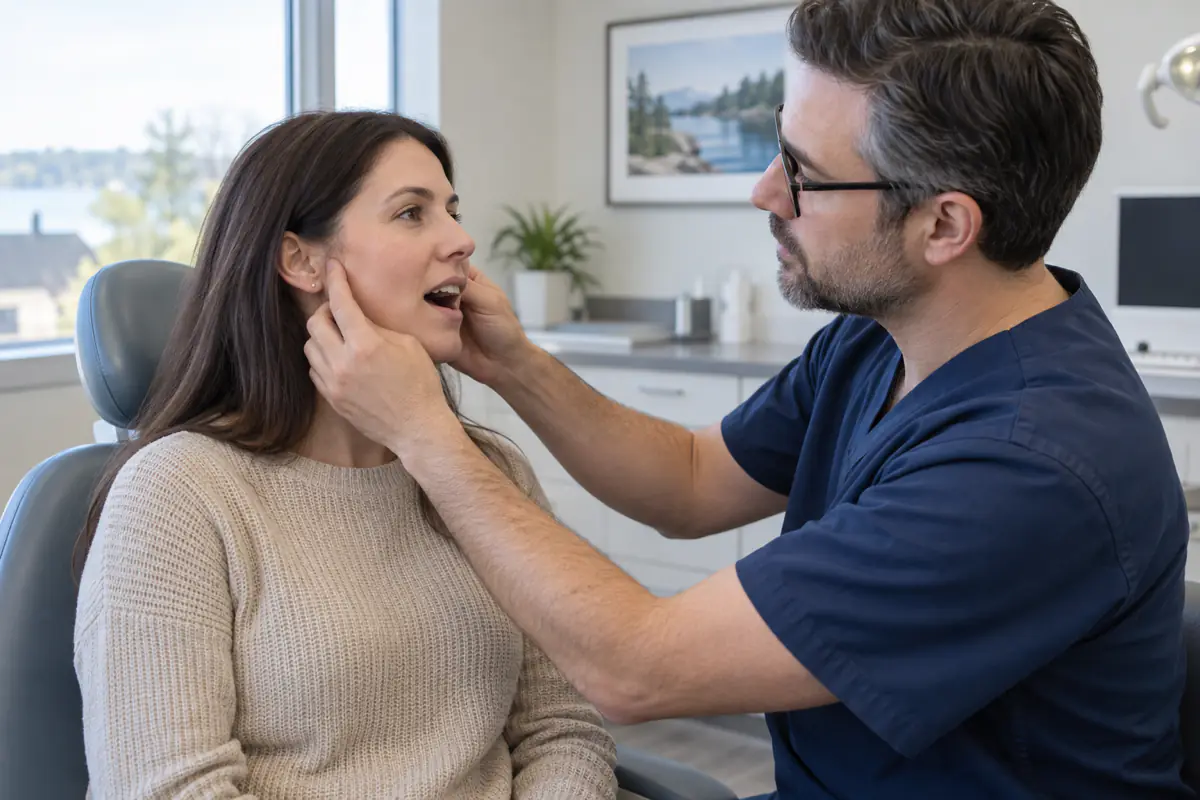
A click beside the ear when you chew or yawn can sound alarming. Yet jaw clicking in Simcoe patients is not automatically a sign of joint damage or a reason for aggressive treatment. Painless sounds are common. What matters is the pattern: whether the click is new, painful, accompanied by locking, or changing how the jaw moves.
The jaw is a working system of joints, muscles, ligaments and teeth. A sound alone does not identify which part is involved. A focused history and examination can separate a harmless noise from a temporomandibular disorder that would benefit from care.
The joint behind the sound
The temporomandibular joints, or TMJs, connect the lower jaw to the skull just in front of each ear. They rotate and slide as the mouth opens. A small disc of tissue moves between the rounded end of the jawbone and the joint socket, while coordinated muscles guide motion.
A click often occurs when the disc and jawbone change their relationship during opening or closing. Grinding sensations, called crepitus, can have different explanations. Tendons and ligaments may also make sounds. You cannot determine the exact cause by how loud the noise is.
The term TMD refers to temporomandibular disorders, a group of more than 30 conditions affecting the jaw joints and chewing muscles. It is not one single disease. The National Institute of Dental and Craniofacial Research notes that clicking or popping without pain is common, considered normal and does not need treatment. That distinction helps prevent unnecessary procedures.
When clicking deserves an assessment
Book an examination when a sound occurs with one or more of these changes:
- pain in the jaw joint, cheek, temple or ear area;
- stiffness or fatigue while chewing;
- an opening that has become smaller or deviates noticeably;
- catching or locking in an open or closed position;
- a sudden change in the way the teeth meet;
- swelling around the joint;
- recurring headaches associated with jaw use;
- symptoms that began after a blow, fall or dental trauma; or
- a click that is becoming more frequent along with functional difficulty.
Ear pain, dizziness and headaches can have non-dental causes. A dentist may recommend medical or ear assessment when symptoms do not fit the jaw findings. Good diagnosis sometimes means involving more than one profession.
Common contributors
TMD symptoms frequently arise from several influences rather than one defective bite. Clenching and grinding can overload chewing muscles. Stress and intense concentration may increase daytime jaw bracing. A long period of chewing gum, biting nails or holding the jaw open can provoke a temporary flare.
Arthritis and injury may affect joint tissues. Sleep problems can occur alongside bruxism. In many people, however, there is no single event that explains the sound. The relationship between bite position and TMD is complex, and a small irregularity in tooth contact should not automatically be blamed.
Posture can influence muscle comfort, especially when someone works at a screen for hours with the head forward. It is still rarely the whole explanation. A useful assessment considers habits, sleep, health, recent dental care, trauma and symptom timing rather than promising one universal cause.
What happens during a jaw examination
The dentist begins by asking when the click occurs, whether it hurts and whether the jaw has ever locked. Be ready to describe morning versus evening symptoms, foods that provoke discomfort, headaches, sleep quality, grinding reports from a partner and any recent injury.
The examination may include:
- measuring how far and in what path the mouth opens;
- feeling the joints during opening and closing;
- listening for clicks or rough sounds;
- checking chewing and neck muscles for tenderness;
- looking for worn, chipped or cracked teeth;
- assessing gum and tooth health that could mimic jaw pain; and
- observing how the teeth meet without assuming the bite caused the problem.
Imaging is not required for every click. Dental X-rays show teeth and portions of bone but not the soft disc well. When persistent locking, trauma, arthritis or another joint condition is suspected, the dentist may refer for specialized imaging or consultation. Tests should answer a clinical question rather than be ordered merely because the joint makes a sound.
Conservative care usually comes first
Many TMD symptoms improve with simple, reversible measures. During a short flare, choose foods that require less force: eggs, fish, pasta, cooked vegetables or food cut into smaller pieces. This is temporary rest, not a permanent liquid diet. Return gradually to normal textures as comfort allows so muscles do not remain unnecessarily deconditioned.
Avoid chewing gum, biting pens and repeatedly opening wide to check whether the joint still clicks. Support a long yawn with a hand under the chin without forcing the jaw shut. Keep the resting position relaxed: lips together, teeth apart and tongue resting gently on the palate.
Warmth may soothe tight muscles, while cold can feel better after an acute irritation. Use a wrapped pack for a limited interval and protect the skin. A clinician can suggest which approach fits the presentation. Exercises can help selected patients, but forceful internet routines may worsen a displaced or inflamed joint. Technique and timing matter.
Over-the-counter pain medicine is not safe for everyone. Ulcers, kidney disease, anticoagulants, pregnancy, allergies and other medicines affect what is appropriate. Ask a pharmacist or medical professional rather than exceeding label directions.
The role of clenching and grinding
Awake clenching may respond to awareness cues. Place a discreet reminder near the computer or steering wheel and check whether your teeth are touching. The goal is not to hold the jaw in a rigid new position; it is to release unnecessary effort.
Sleep bruxism cannot be stopped by willpower. A dental appliance may protect teeth if wear, cracks or restorations are at risk, but a guard is not guaranteed to eliminate joint sounds or pain. It must be chosen and adjusted for the individual. Our article about a dental night guard in Simcoe explains protection, fitting and care in more detail.
Snoring, gasping, marked daytime sleepiness or witnessed breathing pauses should be reported. Grinding and sleep-related breathing disorders can coexist, and an online guard is not a substitute for medical sleep assessment.
Why irreversible treatment requires caution
It can be tempting to accept a promise that permanently changing the bite will make every click disappear. Current evidence does not support routine enamel grinding, extensive crowns, orthodontics or surgery solely to treat an uncomplicated joint sound.
NIDCR recommends starting with simple treatments and avoiding options that permanently change the jaw joints, teeth or bite when possible. Surgery has specific indications, but it is not the first response to painless clicking. Even a reversible appliance should be monitored and discontinued if it causes new pain or a persistent bite change.
Ask any provider to explain the diagnosis, expected benefit, uncertainties, alternatives and what happens if no treatment is performed. Seeking a second opinion before an irreversible procedure is reasonable.
Does stress mean the pain is imaginary?
No. Stress can increase muscle tension, clenching and pain sensitivity, but that does not make symptoms unreal. It is one modifiable contributor among many. Sleep routines, paced activity, relaxation skills and treatment for anxiety can complement dental or physical care when relevant.
Persistent pain can itself disrupt sleep and raise stress. A plan should acknowledge that cycle without blaming the patient. When symptoms become chronic, coordinated care involving a dentist, physician, physiotherapist or pain clinician may be more useful than repeatedly changing the bite.
When jaw symptoms are urgent
Seek prompt care if the jaw locks and you cannot open or close it normally, particularly after trauma. Facial swelling, fever, a bad taste and severe tooth pain may indicate infection rather than a primary joint disorder. Rapidly spreading swelling or difficulty breathing or swallowing requires emergency medical attention.
After a blow to the face, altered bite, numbness, heavy bleeding or inability to move the jaw warrants urgent assessment. Do not try to force a dislocated or locked jaw back into position yourself.
Sudden chest pressure, shortness of breath, sweating or pain radiating into the jaw can represent a medical emergency. Call emergency services rather than assuming the jaw joint is responsible.
Living with a painless click
If the jaw opens fully, functions comfortably and only makes an occasional painless click, monitoring may be enough. Record a baseline and mention changes at checkups. Avoid treating the sound as a challenge that must be reproduced; constant testing can turn an unimportant click into an irritated joint.
Maintain regular dental care so cavities, gum inflammation and cracked teeth do not add other sources of facial pain. If clenching is suspected, watch for changes in tooth wear and restorations. The aim is comfortable function, not a perfectly silent body.
For a broader look at available assessment and conservative options, read about TMJ therapy in Port Dover.
Arrange a jaw assessment near Simcoe
Port Dover Family Dentistry serves Simcoe and communities throughout Norfolk County. We can examine the teeth, muscles and joints, explain whether a click needs treatment and recommend conservative next steps when appropriate.
Call 519-583-2929 or request an appointment if clicking has become painful, movement feels limited or your jaw has started catching. Tell us about recent injuries or locking when you contact the office so we can help determine how quickly you should be seen.
About the author
Port Dover Family Dentistry Team
Our team provides family-focused dental care in Port Dover, Ontario. We create practical oral-health education to help patients ask informed questions and feel more confident about care. This article is general information and does not replace an examination or personalized diagnosis.