
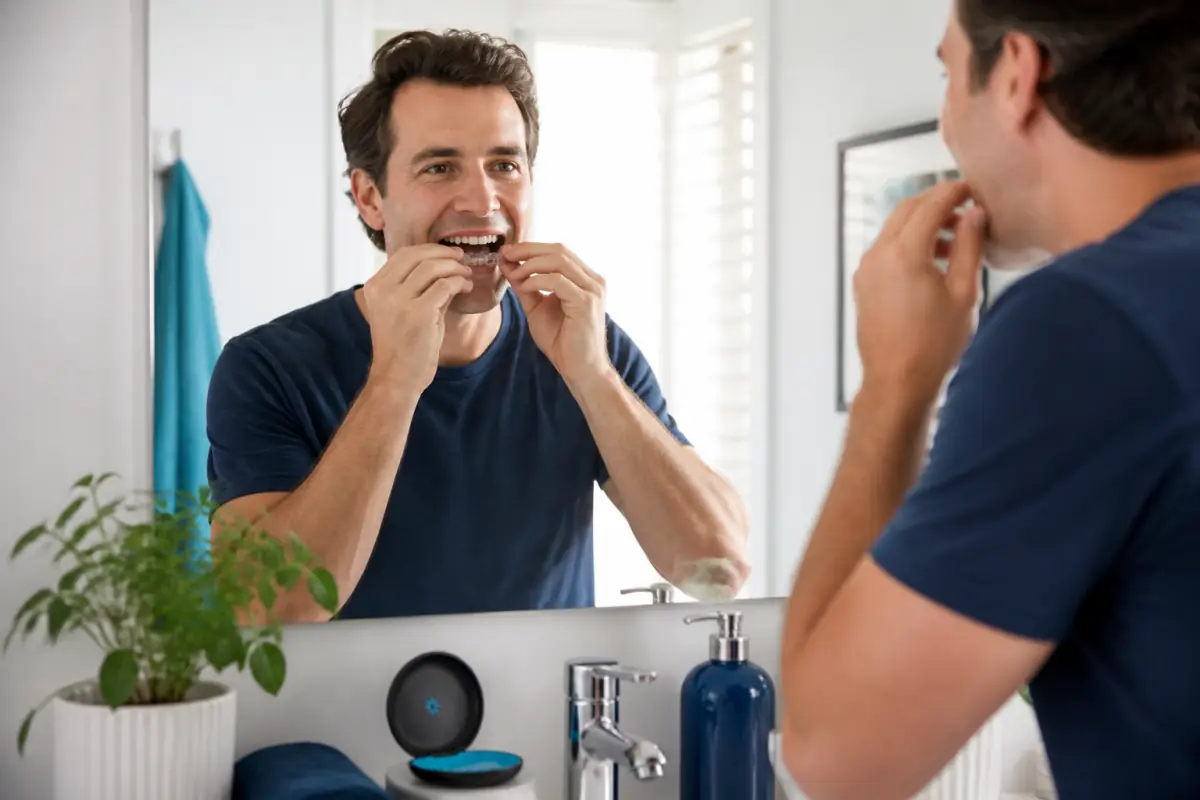
Invisalign in Port Dover can straighten selected smiles using removable clear aligners instead of fixed brackets and wires. The trays are discreet and convenient for eating and brushing, but successful treatment still requires diagnosis, careful planning, consistent wear and long-term retention.
Clear aligners are not simply cosmetic mouthguards ordered from a scan. They apply controlled forces to move teeth through bone. The bite, roots, gums and supporting bone must be evaluated, and progress should be supervised by a licensed dental professional.
How Invisalign treatment works
Invisalign is a brand of clear-aligner orthodontic treatment. A digital model of the teeth is used to plan a sequence of small movements. Each aligner is shaped slightly differently and applies pressure to selected teeth.
Aligners are changed according to the provider’s schedule, often every one or two weeks. Appointments monitor fit, movement, gum health and compliance. Treatment may include attachments, elastics, interproximal reduction or other techniques.
The ADA’s orthodontic overview explains that braces and aligners guide teeth into improved positions and that retainers preserve results afterward. The goal is a healthy, functional bite as well as appearance.
What can clear aligners treat?
Depending on complexity, aligners may improve:
- mild to moderate crowding;
- spaces between teeth;
- selected overbite or deep-bite patterns;
- some crossbites and open bites;
- rotated or tipped teeth; and
- relapse after previous orthodontic treatment.
They may be less predictable for certain severe rotations, large skeletal discrepancies, impacted teeth, major bite corrections or cases requiring complex root movement. Referral to an orthodontist may offer specialized assessment and additional treatment options.
Explore our clear aligners service page for a practice overview.
The consultation and records
An orthodontic evaluation reviews your goals, medical and dental history, jaw relationships, facial profile, tooth position, bite, gums and restorations. Records may include photographs, digital scans and appropriate x-rays to evaluate roots and supporting structures.
Before movement begins, active cavities, gum disease and unresolved pain should be addressed. Moving teeth in an unhealthy mouth can worsen risks. Existing crowns, bridges, implants and missing teeth affect planning because an implant does not move like a natural tooth.
A computer animation can illustrate proposed movement, but it is a treatment simulation—not a guarantee. Biology and wear habits influence real progress.
Attachments, elastics and interproximal reduction
Attachments
Small tooth-coloured composite shapes may be bonded to teeth so aligners can grip and apply specific forces. They are visible at close range and can stain around their edges if plaque accumulates. They are removed after treatment.
Elastics
Elastic bands may connect upper and lower aligners to help guide bite correction. They must be worn as prescribed to work.
Interproximal reduction
Interproximal reduction removes a very small planned amount of enamel between selected teeth to create space and improve contacts. It should be measured and performed professionally. Ask why it is required and which teeth are involved.
Daily wear and discipline
Aligners only move teeth while they are worn. Most plans require wear for roughly 20–22 hours per day, but follow your provider’s exact instructions. Remove them for meals, snacks, hot drinks and anything other than plain water unless advised otherwise.
A realistic day includes:
- Remove aligners and store them in the case.
- Eat or drink.
- Brush and clean between teeth when practical.
- Rinse and replace aligners promptly.
- Track total time out.
Frequent snacking becomes inconvenient and can shorten wear time. Sipping sweet or acidic drinks with trays in can trap liquid against teeth and increase decay or erosion risk.
Cleaning aligners safely
Rinse trays with cool or lukewarm water. Use a soft brush and product recommended by your provider. Hot water can distort plastic. Coloured mouthwash and abrasive toothpaste may stain or scratch aligners.
Clean teeth before reinsertion whenever possible. Putting trays over food debris increases odour, plaque and cavity risk. Keep the case clean and allow it to dry.
Never wrap aligners in a napkin at a restaurant; they are easily discarded. Keep them away from pets, which often chew the plastic.
What does Invisalign feel like?
Pressure or tenderness is common after changing to a new aligner. It generally improves as teeth adapt. Edges can occasionally irritate the tongue or cheek; contact the office rather than making major modifications yourself.
Speech may sound slightly different for a short period. Reading aloud can help adaptation. Excess saliva or dryness can occur initially.
Severe pain, a tray that will not seat, a broken attachment, gum swelling or a tooth that looks unusually discoloured should be reported.
Tracking and refinements
An aligner should fit closely without obvious gaps around intended tooth edges. “Chewies” or seating aids may be recommended. If a tooth does not follow the planned movement, do not simply advance through trays without advice.
Many cases require refinement: a new scan and additional aligners after the first series. Refinement is not necessarily failure; it allows the plan to respond to biological movement. Ask whether refinements are included in the quoted fee and for how long.
Invisalign versus braces
| Consideration | Clear aligners | Fixed braces |
|---|---|---|
| Visibility | Low | More visible, though options vary |
| Removal | Removable | Fixed |
| Hygiene | Easier access when removed | Requires cleaning around brackets |
| Compliance | Wear-dependent | Forces remain active |
| Food limits | Fewer while trays are out | Avoid foods that damage appliances |
| Complexity | Excellent for many, not all cases | Broad control for many complex movements |
The better appliance is the one that can achieve safe goals and that the patient can use reliably. A person unlikely to wear trays consistently may do better with fixed appliances.
Invisalign risks and limitations
Orthodontic risks can include discomfort, gum recession, root shortening, decalcification or cavities, loss of tooth vitality, black triangles between teeth, bite changes and relapse. Risks vary with health, movement, anatomy and care.
Aligners can worsen clenching awareness for some patients and may not correct jaw-joint symptoms. TMD has multiple causes; straightening teeth is not a guaranteed cure.
Pregnancy, medications, bone conditions and periodontal history should be discussed. Treatment may still be possible, but monitoring and timing may change.
Direct-to-consumer aligner concerns
Mail-order systems that remove in-person diagnosis and supervision can miss decay, gum disease, root position and bite complications. The ADA warns that unsupervised direct-to-consumer treatment can cause irreversible harm.
A scan shows surfaces; it does not replace clinical examination or indicated radiographs. Choose a licensed provider who can identify disease, adjust the plan and respond to complications.
How long does Invisalign take?
Minor alignment may take months; complex treatment can take much longer. Timeline depends on number and type of movements, biological response, wear, missed visits, lost trays and refinements.
Be cautious of guaranteed timelines. Ask for a range, milestones and what could extend treatment.
Cost factors in Port Dover
Cost reflects complexity, treatment length, provider time, records, number of aligners, refinements and retention. A small relapse case differs from comprehensive bite correction.
Ask whether the estimate includes:
- diagnostic records;
- all planned aligners;
- attachments and elastics;
- refinement series;
- replacement trays;
- retainers; and
- follow-up after active movement.
Dental benefit plans may include orthodontic lifetime maximums or age limits. The current CDCP benefits guide states that orthodontic services are not yet available and will require preauthorization when introduced. Verify current federal rules rather than assuming future coverage.
Retainers are part of treatment
Teeth naturally tend to move after orthodontics. Bone and soft tissues reorganize, and aging continues to change alignment. Retainers hold the result.
Options include removable clear retainers, wire-and-acrylic retainers or fixed bonded wires. Each has cleaning and maintenance requirements. Retainer wear often becomes nighttime long-term, following the provider’s protocol.
If a retainer stops fitting, do not force it. Contact the office before movement progresses.
Oral hygiene during treatment
- Brush twice daily with fluoride toothpaste.
- Clean between teeth every day.
- Clean around attachments carefully.
- Keep drinks with sugar or acid out of aligners.
- Attend professional teeth cleanings.
- Use fluoride products recommended for your risk.
- Report bleeding gums rather than ignoring them.
Whitening during active aligner treatment should be discussed, especially with attachments, sensitivity or restorations.
Questions to ask at an Invisalign consultation
- What is my orthodontic diagnosis?
- Can aligners predictably achieve the goal?
- Would an orthodontist or braces offer an advantage?
- Will I need attachments, elastics or enamel reduction?
- What happens if teeth do not track?
- How many refinement rounds are included?
- What are my specific risks?
- Which retainers and long-term wear are expected?
Invisalign consultations in Port Dover
Port Dover Family Dentistry provides clear-aligner assessment with attention to oral health, bite and realistic expectations. If Invisalign in Port Dover may fit your goals, call 519-583-2929 or request a consultation.
We will explain whether your case appears suitable and when referral or a different approach could be more predictable.
Frequently asked questions
Can I eat with Invisalign trays in?
Generally no. Remove aligners for meals and snacks, and drink only plain water while wearing them unless your provider gives different instructions.
Is Invisalign faster than braces?
Not automatically. Speed depends on the required movement, biology and compliance. Each appliance has cases where it may be more efficient.
Can teenagers use Invisalign?
Many can, provided growth, tooth eruption, treatment needs and reliable wear are suitable. A consultation determines candidacy.
About the author
Port Dover Family Dentistry Team
Our team provides family-focused dental care in Port Dover, Ontario. We create practical oral-health education to help patients ask informed questions and feel more confident about care. This article is general information and does not replace an examination or personalized diagnosis.