How often should you get your teeth cleaned in Port Dover? The familiar answer is “every six months,” but the most accurate answer is: as often as your individual oral health requires. A six-month interval is common, yet it is not a universal biological rule. Your gum health, history of cavities, tartar buildup, home care, medications, tobacco use and medical conditions can all influence an appropriate schedule.
Professional cleanings are part of preventive dental care, not a substitute for daily brushing and cleaning between teeth. Understanding what they accomplish—and why intervals differ—can help you follow a schedule based on evidence and personal risk rather than habit alone.
Why professional teeth cleanings matter
Dental plaque is a soft, sticky community of bacteria that forms continuously on teeth. Careful brushing and interdental cleaning disrupt plaque before it contributes to cavities or gum inflammation. When plaque is not removed, minerals in saliva can harden it into calculus, commonly called tartar.
Once deposits have hardened, a toothbrush cannot remove them. The National Institute of Dental and Craniofacial Research explains that tartar buildup can contribute to gum disease and that only professional cleaning can remove tartar. Its rough surface also makes it easier for more plaque to accumulate.
A cleaning appointment may help to:
- remove calculus above and, when indicated, below the gumline;
- remove soft plaque in areas that are difficult to reach;
- polish selected surface stains and roughness;
- assess bleeding, inflammation and changes in gum health;
- identify home-care areas that need attention; and
- support a preventive plan tailored to your current risk.
The clinical examination and the cleaning are related but distinct. A dentist examines and diagnoses; a dental hygienist or dentist may provide preventive cleaning within their professional scope. Your visit schedule can include both, but their frequency is not necessarily identical.
Why “every six months” is not right for everyone
Six months is a useful recall pattern for many people because it creates regular opportunities to monitor changes and interrupt plaque and tartar buildup. However, two people can accumulate deposits at very different rates. They can also have very different risks of decay or periodontal disease.
A person with healthy gums, excellent home care and a low cavity rate may be advised to return on one schedule. Someone with active periodontal disease, heavy tartar, dry mouth or difficulty cleaning around crowded teeth may need more frequent professional support. The decision should be based on an assessment, not a sales package or a calendar convention.
The ADA recommends regular dental visits, while emphasizing that oral care should be personalized. “Regular” means a clinically appropriate interval agreed upon with your dental team.
Factors that may shorten your cleaning interval
Current or previous gum disease
Gingivitis causes red, swollen or bleeding gums without the attachment and bone loss of periodontitis. Periodontitis affects the structures supporting the teeth. If periodontal disease is present, care may involve treatment below the gumline followed by periodontal maintenance rather than a standard routine cleaning.
Previous gum disease remains relevant even after inflammation improves because maintenance helps monitor stability. Your clinician may measure gum pockets, bleeding and recession to determine an appropriate interval.
Rapid tartar accumulation
Some people form calculus quickly because of saliva composition, tooth position, oral appliances, home-care access and other factors. Lower front teeth and the cheek side of upper molars are common buildup areas because they are close to salivary ducts.
If substantial tartar returns well before your usual visit, waiting longer can make cleaning more involved and allow inflammation to persist. Your hygienist may recommend a shorter interval and show you techniques for those specific areas.
Frequent cavities or high decay risk
Past disease is one predictor of future disease. Recent cavities, exposed roots, frequent sugar or acidic drinks, inadequate fluoride exposure and reduced saliva can raise risk. More frequent visits do not magically prevent cavities, but they allow closer monitoring, reinforcement of home habits and preventive services when appropriate.
If a tooth already needs repair, explore how composite fillings restore decay rather than expecting a cleaning to reverse a cavitated lesion.
Dry mouth
Saliva neutralizes acids, washes the mouth and supplies minerals that support enamel. Dry mouth can result from many medications, health conditions, dehydration, radiation treatment or mouth breathing. People with reduced saliva may experience faster decay, sensitivity, oral discomfort or difficulty wearing dentures.
Report persistent dryness rather than simply drinking more water before an appointment. The underlying cause and its oral effects should be assessed.
Smoking or other tobacco use
Smoking is a major risk factor for gum disease and can make periodontal treatment less successful. It may also mask obvious bleeding by affecting blood vessels, so gums can look less inflamed than the disease level suggests. Tobacco use also increases oral-cancer risk.
Cleaning removes deposits and some stain but cannot cancel tobacco’s health effects. Tell your clinician honestly so screening and prevention can be appropriate.
Diabetes and other health considerations
Diabetes and periodontal health have a complex, two-way relationship. Other medical conditions, immune changes and medications may also affect healing, saliva or the ability to maintain home care. The dental team should know your current diagnoses, medications and recent changes.
Orthodontic appliances, bridges, implants or dentures
Brackets, fixed retainers, bridges and implant restorations create additional surfaces that require specific cleaning techniques. Denture wearers still need oral examinations and professional care, even if they have no natural teeth, because tissues, fit and oral lesions need monitoring.
What happens during a teeth-cleaning visit?
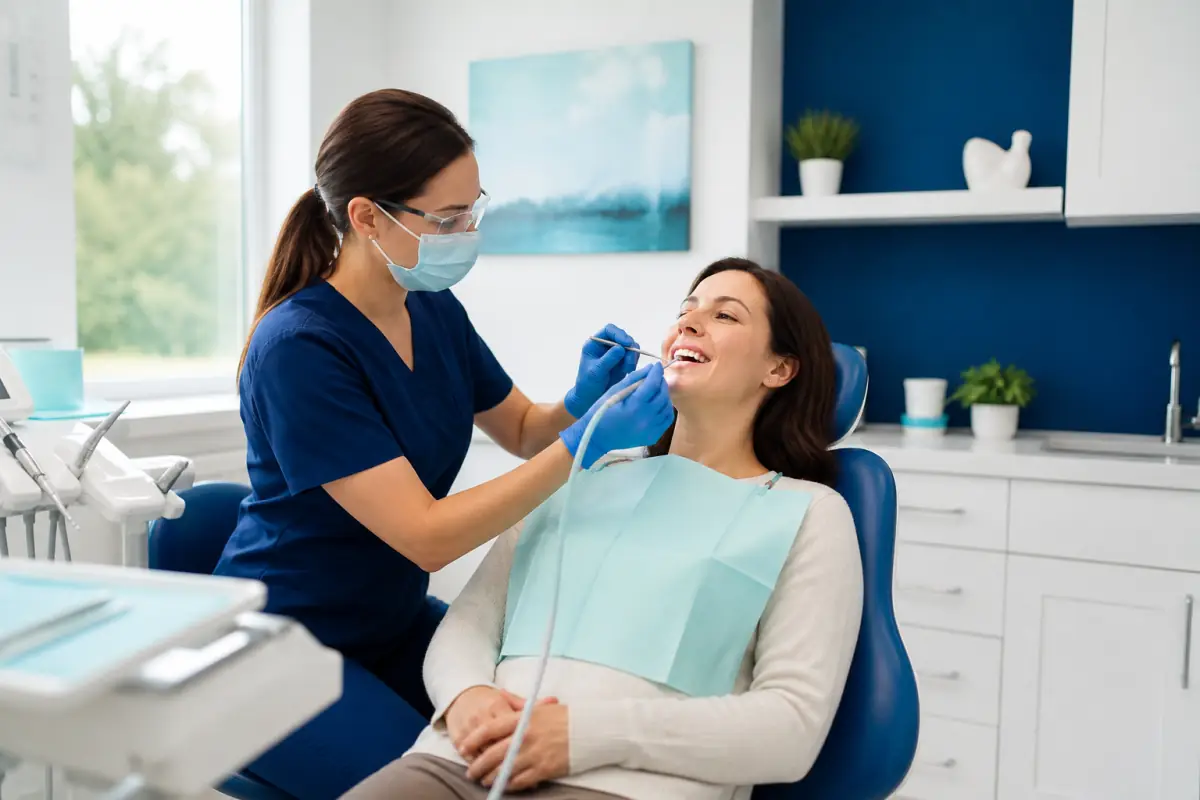
The exact sequence varies according to your needs and the type of appointment. A routine visit commonly includes an update to medical and dental history, assessment of gums and deposits, removal of calculus and plaque, selective polishing, home-care discussion and an examination when due.
Health-history update
Tell the team about new diagnoses, pregnancy, allergies, hospitalizations and medication changes. Include non-prescription drugs and supplements. This information can affect oral findings, bleeding, healing and treatment planning.
Gum assessment
The clinician observes tissue colour, contour, swelling, recession and bleeding. Periodontal measurements may be recorded to evaluate the space around teeth and changes over time. Bleeding is information, not a reason for embarrassment.
Scaling
Hand instruments and/or powered scalers remove hard deposits. The clinician adapts technique to tooth surfaces and gum condition. If you feel sensitivity or need a pause, say so. Comfort options can be discussed for more extensive treatment.
Polishing and prevention
Polishing can remove selected external stain and smooth surfaces, but it is not the central purpose of every cleaning. Fluoride may be recommended based on risk. You may also receive coaching on brushing angle, interdental brushes, floss, water flossers or cleaning around restorations.
Routine cleaning versus deep cleaning
These terms are often confused. A routine cleaning generally focuses on deposits associated with otherwise healthy or mildly inflamed gums. “Deep cleaning” commonly refers to scaling and root planing or other non-surgical periodontal treatment below the gumline for diagnosed periodontal disease.
| Feature | Routine preventive cleaning | Periodontal therapy or maintenance |
|---|---|---|
| Main goal | Control plaque and calculus in a generally healthy mouth | Treat or maintain areas affected by periodontal disease |
| Typical assessment | General gum condition and deposits | Detailed periodontal measurements and disease history |
| Area treated | Primarily accessible tooth surfaces around gum margins | May extend below the gumline onto root surfaces |
| Comfort needs | Often little or no anaesthesia | Local anaesthesia may be considered by area and need |
| Recall timing | Based on preventive risk | Often closer and based on periodontal stability |
The label is less important than the diagnosis. Ask which condition is being treated, what measurements support the recommendation and how success will be evaluated.
Can you clean your teeth too often?
Appropriate professional instrumentation is designed to remove deposits while preserving tooth structure and tissue. More visits are not automatically better, however. Treatment should have a clinical purpose. An unnecessarily frequent schedule may add cost without meaningful benefit, while an interval that is too long may allow disease and deposits to progress.
At home, aggressive technique can cause harm. Scrubbing hard with a stiff brush or abrasive products can contribute to gum recession, root wear and sensitivity. Use a soft-bristled brush, gentle pressure and fluoride toothpaste unless your dental professional advises otherwise.
Do cleanings whiten your teeth?
Cleaning may remove external stain from coffee, tea, tobacco or other sources, making teeth look fresher. It does not chemically change the inherent shade of enamel. Professional teeth whitening uses bleaching agents and is a separate elective treatment.
Only natural tooth structure responds to bleaching; fillings, crowns and veneers do not whiten. An examination before whitening can identify decay, gum irritation, existing sensitivity or restorations that could affect the result.
Will a dental cleaning hurt?
Many routine cleanings are comfortable. Tenderness is more likely when gums are inflamed, deposits are heavy, roots are exposed or teeth are already sensitive. Anxiety can also heighten how sensations are experienced.
Tell your hygienist:
- where you have felt sensitivity before;
- whether cold water or air is difficult;
- if you need shorter sections or breaks;
- if a particular tooth feels different from the rest; and
- whether previous dental experiences affect your comfort.
Do not delay care solely because you expect judgment. Dental professionals regularly see patients returning after long gaps. The useful question is what can improve from today forward.
How to make the time between cleanings healthier
Professional care works best when daily habits control plaque and reduce acid exposure.
Brush twice daily
Use fluoride toothpaste and a soft brush. Angle bristles toward the gumline and clean outer, inner and chewing surfaces. An electric brush can help some people, but consistent technique matters more than price.
Clean between teeth every day
Toothbrush bristles do not fully reach contact areas. Floss, interdental brushes or another recommended aid can disrupt plaque there. The best tool is one that fits safely and that you can use consistently.
Reduce frequent sugar and acid exposure
Frequency matters. Repeated sipping and snacking create more acid challenges throughout the day. Keep sweet drinks and treats to defined times, choose water often and avoid brushing immediately after a strongly acidic exposure when enamel is temporarily softened.
Do not ignore bleeding
Bleeding during brushing or flossing often reflects inflammation. It does not usually mean you should stop cleaning the area. Improve gentle plaque removal and arrange an assessment if bleeding persists.
Protect saliva
Stay hydrated and discuss ongoing dry mouth. Sugar-free gum may stimulate saliva for some people, but it is not suitable for everyone, especially those with jaw pain. Medication should never be changed without the prescribing clinician.
Signs you should not wait for your next cleaning
A recall date is not a reason to postpone a new problem. Contact a dentist sooner for:
- tooth pain that persists, interrupts sleep or occurs when biting;
- facial or gum swelling;
- a broken tooth or lost restoration;
- spontaneous or persistent gum bleeding;
- a loose adult tooth;
- a sore, lump or colour change that does not resolve;
- worsening sensitivity; or
- difficulty opening, chewing or swallowing.
Fever, spreading facial or neck swelling, trouble breathing or trouble swallowing can require urgent medical attention. Call emergency services when symptoms are life-threatening.
Building your personalized cleaning schedule
So, how often should you get your teeth cleaned? Ask your dentist or hygienist to connect the recommended interval to specific findings. A useful answer might reference tartar rate, bleeding, periodontal measurements, recent decay, dry mouth or a restoration that needs closer monitoring.
Your schedule can change. Improving home care may stabilize some risks; new medications, pregnancy, illness or dental treatment may create different needs. Reassess rather than treating the interval as permanent.
At Port Dover Family Dentistry, we provide teeth cleanings for adults and teeth cleanings for kids with recommendations based on the person—not a one-size-fits-all calendar. Call 519-583-2929 or request an appointment to arrange an assessment.
Frequently asked questions
Is one cleaning per year enough?
It may be appropriate for some low-risk patients, but not for everyone. The decision should consider gum measurements, tartar, cavity history, home care and health factors. Do not choose an interval without a current assessment.
Can brushing replace a professional cleaning?
No. Daily brushing and interdental care remove soft plaque and are essential, but they cannot remove hardened tartar. Professional cleaning cannot replace daily care either; the two work together.
Why do my gums bleed during a cleaning?
Bleeding commonly reflects inflamed tissue, although medical factors and medications may contribute. The clinician can assess the pattern and explain how home care and any indicated periodontal treatment may help.
About the author
Port Dover Family Dentistry Team
Our team provides family-focused dental care in Port Dover, Ontario. We create practical oral-health education to help patients ask informed questions and feel more confident about care. This article is general information and does not replace an examination or personalized diagnosis.