
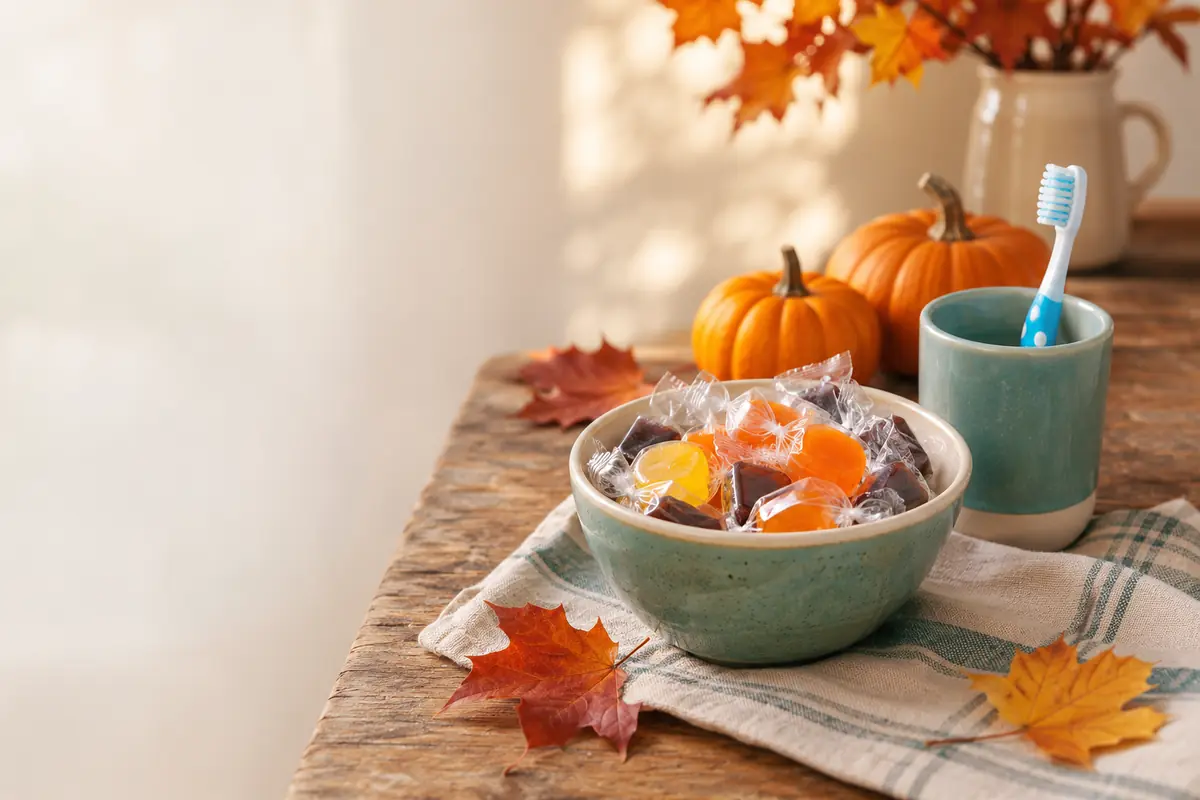
Teeth do not keep a tally of how many mini chocolate bars a child eats in October. What they respond to is how often sugar arrives, how long it lingers and whether acid is part of the mix. That principle takes much of the guilt out of Halloween and replaces it with something more useful: a plan.
The topic of Halloween candy and kids’ teeth in Port Dover comes up every autumn, usually from parents who want their children to enjoy the night without paying for it at the next checkup. There is no need to ban candy. A few sensible decisions about which treats to keep, when they are eaten and how teeth are cleaned afterwards go a long way.
This guide walks through how cavities form, which treats cause the most trouble, how to handle the haul in the days and weeks after Halloween, and what to do if a tooth chips or a filling pulls out on a caramel.
How sugar turns into a cavity
Bacteria in dental plaque feed on sugars and produce acid. Each time a child eats or drinks something sugary, the acid level at the tooth surface rises for a period, and minerals are drawn out of the enamel. Saliva gradually neutralizes the acid and helps put minerals back.
If sugar arrives only a few times a day, the enamel has time to recover between exposures. If it arrives every half hour, the teeth spend much of the day under acid attack and the balance tips toward mineral loss. Over time, that loss can show up as white chalky spots and eventually as a cavity.
Children’s teeth, particularly baby teeth and newly erupted adult molars, have thinner enamel and deep grooves that trap food, which makes them more vulnerable. Our article on children’s cavities in Norfolk County explains the process in more detail.
Not all treats behave the same way
When you sort the bag, it helps to think about how each type of treat interacts with teeth.
Plain chocolate melts and clears from the mouth relatively quickly. It still contains sugar, but it does not cling in the same way as some other options. Chocolate with caramel, nougat or toffee centres is stickier.
Gummies, caramels, taffy and fruit chews pack themselves into the grooves of back teeth and between teeth, where they can stay for a long time. They can also pull on loose baby teeth, sealants, fillings and orthodontic brackets.
Hard candies and lollipops dissolve slowly, keeping sugar in contact with teeth for many minutes. Children who bite down on them rather than letting them dissolve risk chipping or cracking a tooth.
Sour candies often contain citric or malic acid in addition to sugar. Acid can soften the enamel surface directly, separate from the acid made by bacteria. Sour powders and sour-coated gummies combine stickiness, sugar and acid.
Sugary drinks and juice boxes handed out at parties work similarly to sweets, particularly when sipped over a long time.
Sorting the haul together
Once the costumes are off, many families spread the candy on the kitchen table. That is a good moment to check wrappers for tampering or damage, remove anything unwrapped or homemade from people you do not know, and set aside items that are unsafe for younger siblings, such as small hard candies that can be a choking hazard for toddlers.
It is also a chance to involve children in choosing favourites. Kids who pick their top treats tend to care less about the rest. Some families keep a set number of favourites and donate, trade or freeze the remainder. Others use a swap system in which a child exchanges candy for a small toy, a book or an outing. Whatever approach you choose, explaining why you are doing it helps children learn the reasoning, not just the rule.
If your child has food allergies, check every label carefully. Fun-size packages sometimes contain different ingredients or allergen statements than the full-size versions.
Timing matters more than total amount
The most practical way to protect teeth is to group treats together rather than spreading them out. Eating a few pieces of candy right after a meal is generally kinder to teeth than eating the same amount one piece at a time throughout the afternoon. After meals, saliva flow is already high, which helps clear sugar and neutralize acid.
Avoid letting the candy bowl become a constant source of snacks. Store the haul out of sight and decide on a time, such as after dinner, when a treat can be part of the day. Many parents find that a predictable routine leads to fewer negotiations than a vague promise of “some later.”
Bedtime deserves special attention. Saliva flow drops during sleep, so sugar left on teeth overnight has a longer window to cause damage. Once teeth have been brushed for the night, the rule should be water only.
Brushing and rinsing on the big night
Children should brush twice a day with fluoride toothpaste, including before bed on Halloween. For children under three, Canadian guidance commonly recommends a smear about the size of a grain of rice, and for children three to six, a pea-sized amount. Young children need an adult to help them brush thoroughly, and supervision continues to be useful well into the school years. The CDC’s oral health tips for children also stress twice-daily brushing with fluoride toothpaste and help for younger kids.
After sour candy, it is better to rinse with water and wait a little while before brushing. Brushing immediately after an acid exposure can wear softened enamel. A glass of water after any treat helps wash away sugar and acid.
Flossing or using a small interdental tool matters after sticky candy, which tends to wedge between teeth where a toothbrush cannot reach. If flossing is new for your child, Halloween week is a fine time to start.
Sugar-free gum and other helpful habits
For school-age children who can chew gum safely, a piece of sugar-free gum after a treat stimulates saliva and helps clear the mouth. Gum sweetened with xylitol is a common choice. Xylitol is toxic to dogs, so keep gum well out of reach of family pets.
Offering cheese, plain nuts for children without allergies, or crunchy vegetables after a treat can also help, since these foods encourage saliva and do not feed cavity-causing bacteria the way sugar does. Plain milk and water are the best drinks between meals.
Sealants, fluoride and existing protection
Children who already have dental sealants on their back teeth have a protective coating over the grooves where food tends to lodge. Fluoride varnish applied at checkups strengthens enamel and helps it resist acid. These measures reduce risk; they do not make teeth immune.
Very sticky candy can occasionally loosen a sealant. If you notice that a sealant seems to be missing or the surface of a back tooth feels different, mention it at the next visit. Our post on dental sealants and fluoride in Port Dover explains how these treatments work and who benefits.
Kids with braces, spacers or loose teeth
Orthodontic appliances add another layer of caution. Hard and sticky candies can break brackets, bend wires and loosen bands, which can mean extra appointments and delays. Chewy treats also leave plaque trapped around brackets, increasing the risk of white spots on enamel. Your orthodontist will have a list of foods to avoid; Halloween is when that list matters most. Our article on oral hygiene with braces has cleaning tips that apply after a candy-heavy evening.
Children with wiggly baby teeth sometimes use caramel to help a tooth come out. A loose tooth will usually come out on its own, and pulling on it with sticky candy can be painful or cause bleeding. If a baby tooth seems to be loose for an unusually long time or the adult tooth is coming in behind it, mention it at a checkup.
If something breaks
Chipped teeth and lost fillings are common around Halloween, especially with hard candies and frozen chocolate bars. If your child chips a tooth, rinse the mouth with water, check for bleeding and save any fragment in a clean container. Call the dental office to describe what happened. A small chip without pain may be seen at a routine appointment, while pain, sensitivity, a larger break or a loose tooth needs more prompt attention.
If a filling or sealant comes out, avoid chewing on that side and keep the area clean until it can be checked.
Falls in costumes, especially in the dark, can also injure teeth. Seek emergency medical care for signs of a head injury, such as confusion, vomiting or loss of consciousness, as well as for trouble breathing or swallowing, uncontrolled bleeding or major facial injury. For a knocked-out adult tooth, time is critical; call a dental office right away.
Making Halloween night safer
Port Dover’s streets can be dark by early evening at the end of October. Costumes that let children see clearly and walk without tripping, along with a flashlight or reflective tape, reduce the chance of falls. Masks that block vision are a common culprit in face and mouth injuries; face paint, tested on a small patch of skin first, can be a safer choice.
For families heading to friends and relatives in Simcoe, Jarvis or Waterford, decide ahead of time how the candy will be handled when you get home. Having that plan settled before the excitement starts tends to make the evening smoother.
Handing out treats yourself
If you are on the giving side of the door, you have options that are easier on teeth. Small packages of plain chocolate, sugar-free gum for older children, pencils, stickers, glow sticks or temporary tattoos are all popular. Non-food items are also welcome for children with food allergies or other dietary restrictions. You do not need to be the house that gives out toothbrushes, although some children would be delighted.
Looking beyond October
The habits that protect teeth at Halloween are the same habits that matter year round: limiting how often sugary foods and drinks are consumed, brushing twice a day with fluoride toothpaste, cleaning between teeth, and keeping up with regular dental visits. Halloween simply provides a natural moment to practise them. Christmas, birthdays and summer ice cream at the beach will offer more chances.
If a child is getting frequent cavities despite good habits, a dental visit can look at other factors, such as how often they snack, what they drink between meals, dry mouth from medications, or how well brushing is reaching the back teeth.
Frequently asked questions
Is it better to let kids eat all their candy at once or spread it out?
For teeth, how often sugar reaches the mouth matters more than the total amount. Eating a few treats together after a meal, then brushing or rinsing later, is generally kinder to enamel than grazing on candy throughout the day for weeks. A family plan that limits treats to set times is a reasonable middle ground.
Which Halloween treats are hardest on children’s teeth?
Sticky candies such as caramels and gummies cling to grooves and between teeth, hard candies and lollipops bathe teeth in sugar for a long time and can crack teeth if bitten, and sour candies add acid that can soften enamel. Plain chocolate tends to clear from the mouth more quickly, though it still contains sugar.
My child chipped a tooth on hard candy. What should I do?
Rinse the mouth with water, save any tooth fragment in a clean container and call a dental office for advice. Seek prompt care for pain, bleeding that will not stop, a loose or displaced tooth, or injury from a fall. Emergency medical care is needed for head injury symptoms, trouble breathing or swallowing, or major facial trauma.
Book a post-Halloween checkup
November is a good time to schedule your child’s next examination and cleaning, especially if it has been more than six months. Bring your children to Port Dover Family Dentistry at 697 Norfolk County Hwy 6, Unit 2, Port Dover, or call 519-583-2929 to find a time. You can also request an appointment online. Learn what a visit includes on our children’s dental exams page.
This article offers general guidance for families and does not replace a personal dental examination for your child.
About the author
Port Dover Family Dentistry Team
Our team provides family-focused dental care in Port Dover, Ontario. We create practical oral-health education to help patients ask informed questions and feel more confident about care. This article is general information and does not replace an examination or personalized diagnosis.





