
Noticing that a tooth looks longer can be unsettling. Gum recession in Simcoe patients can affect one tooth or many, exposing the yellower root surface and sometimes causing sharp sensitivity. Recession is not a diagnosis by itself; it is a physical change that can result from gum disease, tissue anatomy, tooth position, repeated trauma or a combination of factors.
The first priority is to identify why the gumline moved. A whitening toothpaste will not correct active inflammation, and brushing less may allow more plaque to accumulate. With a proper assessment, many people can stabilize the area, protect the exposed root and decide whether corrective treatment is worthwhile.
What gum recession means
Healthy gum tissue forms a close collar around each tooth. Recession occurs when the edge of that tissue shifts away from the crown and exposes part of the root. Because roots do not have the same thick enamel covering as crowns, they are more vulnerable to sensitivity, wear and decay.
Recession can be visible on the cheek side, tongue side or between teeth. Loss between teeth may create a dark triangular space. The amount you see in a mirror does not reveal the condition of the supporting bone, so dentists measure the tissues rather than judging appearance alone.
One isolated area may be associated with brushing pressure or tooth position. Widespread recession may reflect thin tissue, long-term inflammation, tobacco exposure, aging or several contributors acting together.
Signs you may notice
A longer-looking tooth is the best-known sign, but early changes can be subtle. Watch for:
- a notch where the crown meets the root;
- brief sensitivity to cold, touch, sweets or acidic food;
- a yellow or darker area near the gumline;
- food collecting between teeth;
- a new gap or “black triangle”;
- bleeding, swelling or persistent bad breath;
- tenderness while brushing; or
- a restoration at the gumline that now appears raised or exposed.
Some recession is painless. Periodontal disease can also advance with few obvious symptoms. Regular periodontal measurements help identify change before a patient notices it.
Gum disease and recession
Plaque is a sticky bacterial biofilm that forms continually. When it is not disrupted, the gums can become inflamed and bleed. Plaque that hardens into calculus cannot be removed with a toothbrush. In susceptible people, inflammation can progress below the gumline and damage the attachment and bone supporting teeth.
The National Institute of Dental and Craniofacial Research lists receding gums, sensitivity, loose teeth, painful chewing and persistent bad breath among possible signs of periodontal disease. Smoking, diabetes, genetics, certain illnesses and medications can increase risk or affect healing.
Recession caused by periodontitis needs control of the infection and contributing risks. Covering a root without first managing active disease would not address the underlying problem.
Brushing can contribute—but brushing is still essential
Repeated aggressive side-to-side scrubbing, especially with a medium or hard brush, can traumatize thin tissue and wear a groove in the exposed root. Pressure is only one variable. Brush angle, bristle stiffness, frequency, abrasive toothpaste and tooth position also matter.
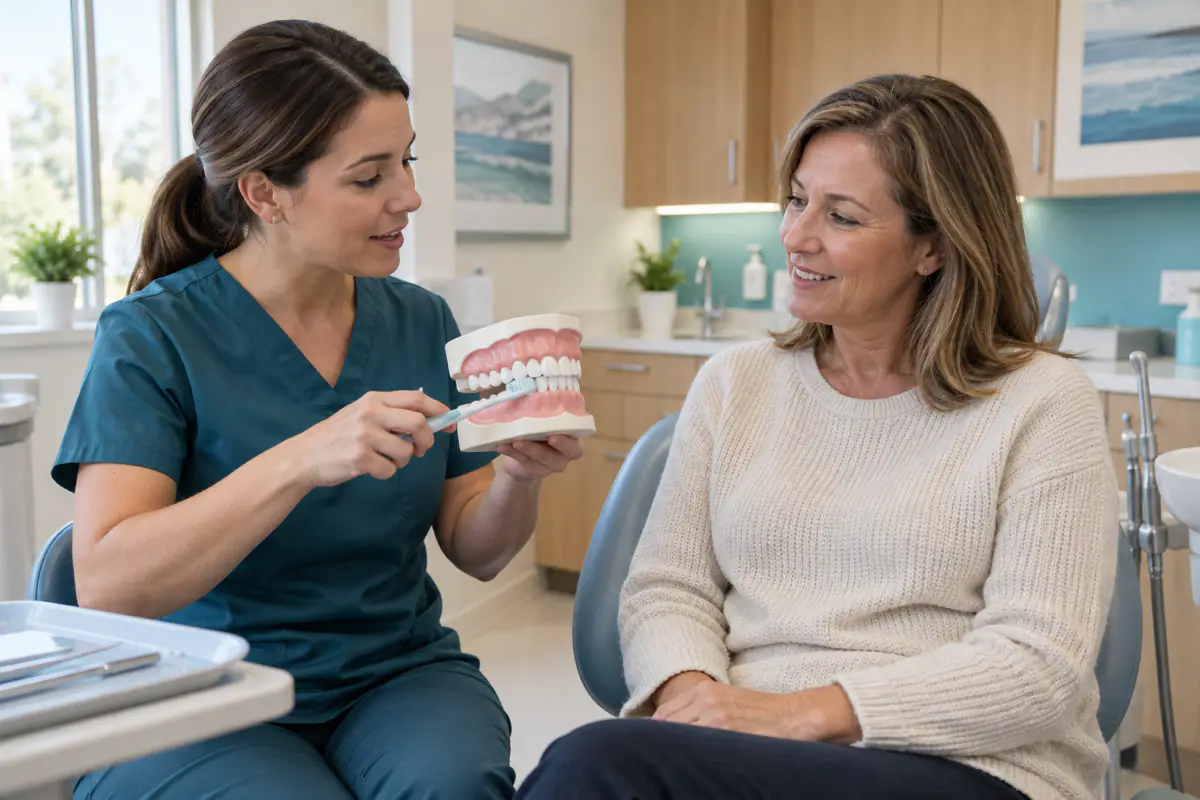
Do not respond by avoiding the area. Plaque-related inflammation can worsen tissue breakdown. Instead, use a soft or extra-soft brush and light pressure. Place the bristles at the gumline as demonstrated by your hygienist, use small controlled movements and let an electric brush’s pressure sensor guide you if it has one.
A two-minute timer does not guarantee safe technique. Bring your toothbrush to a hygiene visit and ask for feedback using your own mouth as the example.
Thin gums and tooth position
Gum thickness varies naturally. Some people have a delicate tissue type through which root contours are easy to see. A tooth positioned toward the outer edge of the jaw may have a thin layer of bone and gum over its root, making recession more likely.
Crowding, rotation and past orthodontic movement can influence the anatomy. Orthodontic treatment does not automatically cause recession, and properly planned movement may improve the environment for some teeth. Risk depends on starting tissue, bone boundaries, inflammation, movement direction and home care.
This is why an individual examination matters before orthodontics. A dentist, orthodontist or periodontist may recommend periodontal monitoring or tissue augmentation for selected high-risk sites.
Clenching, grinding and bite forces
People often blame an uneven bite for every receding area. The relationship is more complex. Heavy forces may contribute to wear, tooth movement or stress around a vulnerable tooth, but recession rarely has one universal mechanical cause.
The examination may include worn edges, cracks, tooth mobility, muscle tenderness and how the teeth contact. If you grind during sleep, an appliance may protect teeth from damage, although it will not regrow gum tissue.
Do not reshape your bite or order a guard solely from an online photo. Irreversible adjustment and appliances should follow a diagnosis.
Other contributors
Several habits and health factors deserve discussion:
- Smoking and other tobacco exposure can impair healing and increase periodontal risk.
- Oral piercings can repeatedly rub the gum and tooth surface.
- Poorly fitting removable appliances may traumatize tissue.
- Dry mouth raises root-decay risk once recession is present.
- Diabetes can increase periodontal risk, especially when blood glucose is not well controlled.
- Hormonal changes and some medicines can alter gum response.
Recession also becomes more common with accumulated years of exposure. Age alone is not a reason to ignore active inflammation or rapidly changing tissue.
How recession is diagnosed
The dentist or hygienist records the gum margin and uses a small periodontal probe to measure the space around each tooth. Measurements are compared with the fixed enamel-root junction to calculate recession and attachment loss. Bleeding, plaque, calculus, tooth mobility and tissue thickness provide additional context.
Dental X-rays show supporting bone and root condition. They do not show soft gum contours directly, but they help distinguish an isolated surface defect from broader periodontal breakdown. Photographs or digital scans can provide a useful baseline.
The clinician may also ask about sensitivity, toothbrush type, orthodontic history, tobacco, diabetes, dry mouth, reflux and how quickly the area changed. A periodontist may be consulted when defects are advanced, progressive or considered for grafting.
Can receding gums grow back?
Once the gum margin and attachment have been lost, the tissue generally does not regenerate on its own. This differs from gingivitis, where redness and swelling caused by plaque can resolve with effective cleaning before attachment is destroyed.
That does not mean every receding site needs surgery. Stable, clean, comfortable recession may be monitored. The goals are to stop ongoing trauma or disease, prevent root decay, manage sensitivity and maintain appearance and function.
When coverage is important or the tissue is at risk, periodontal surgery may reposition or add tissue. The amount of predictable root coverage depends on defect shape, supporting tissue between teeth, tooth position and other factors.
Non-surgical care
Treatment begins with the cause. Plaque-related inflammation may require professional cleaning and improved daily care. Periodontitis may call for scaling and root planing, risk-factor management and more frequent maintenance.
For sensitivity, options can include desensitizing toothpaste, professionally applied fluoride or a protective bonding material. These approaches reduce fluid movement or shield exposed dentin; they do not move the gumline.
A tooth-coloured restoration may repair a deep non-carious notch or root cavity. It must be contoured so the area remains cleanable. Filling every shallow depression can create unnecessary margins, so restoration is based on structure, symptoms and decay risk.
Gum grafting and root coverage
A periodontist may recommend grafting when recession progresses, sensitivity remains difficult to control, the root is vulnerable, tissue is very thin or appearance is a significant concern. Common procedures use tissue from the palate, processed donor material or nearby gum, depending on the defect and clinician’s approach.
The graft can thicken the tissue, increase the zone of firm gum and sometimes cover part or all of the exposed root. Complete coverage is not possible in every case, particularly when supporting tissue between teeth has been lost.
Discuss discomfort, healing time, expected coverage, colour match, alternatives and long-term maintenance. Surgery does not replace gentle cleaning or periodontal care.
Managing root sensitivity at home
Use a desensitizing fluoride toothpaste as directed and give it time to work. Some formulations require consistent use for several weeks. After brushing, avoid vigorously rinsing away all the toothpaste unless your dental professional gives different instructions.
Limit frequent acidic exposures such as pop, sports drinks, sour candy and lemon water. Acid softens the exposed root, making it easier to wear. If you consume something acidic, rinse with water and wait before brushing rather than scrubbing immediately.
Whitening products can increase sensitivity and do not change the darker natural colour of exposed root in the same way as enamel. Ask before whitening when recession is extensive.
A practical brushing routine
Choose a soft brush that reaches the back teeth comfortably. Apply a pea-sized amount of fluoride toothpaste for adults and follow age-appropriate guidance for children. Clean every surface with light, deliberate strokes instead of forceful sawing.
Clean between teeth daily using floss, an interdental brush or another tool recommended for the available spaces. The goal is to remove plaque without snapping floss into the gums. An interdental brush that is too large can traumatize tissue; one that is too small may not clean effectively.
If an area bleeds, do not abandon it indefinitely. Persistent bleeding calls for an assessment of inflammation and technique.
Protect exposed roots from decay
Root surfaces are softer and more vulnerable to acid attack than enamel. Recession plus dry mouth, frequent sugar, partial dentures or difficulty cleaning can sharply raise cavity risk.
Keep sugary and starchy snacks to planned meals when possible, choose water between meals and use fluoride toothpaste. A dentist may recommend higher-fluoride products or varnish based on risk. Saliva substitutes and medication review may help people with persistent dryness.
Report a sticky, rough, discoloured or newly sensitive root area. Root decay can spread around a tooth and may be difficult to restore once it extends below the gum.
When to book an assessment
Arrange a visit when you notice a changing gumline, exposed root, sensitivity, bleeding, tooth mobility or a persistent bad taste. Prompt care is especially important when change is rapid, pus or swelling appears, or chewing becomes painful.
Recession itself rarely requires a hospital visit. Seek urgent medical help if facial or neck swelling affects breathing or swallowing, or if serious systemic illness accompanies an oral infection.
Bring photos if you documented the change over time and a list of medicines that may affect dry mouth or bleeding.
Gum recession care near Simcoe
Port Dover Family Dentistry assesses gum recession for patients from Simcoe and across Norfolk County. A visit can include periodontal measurements, dental imaging when indicated, brushing guidance and a plan to manage sensitivity, inflammation or root-decay risk. Referral to a periodontist is arranged when specialized care may benefit the site.
Call 519-583-2929 or request an appointment. If you are also noticing bleeding or persistent bad breath, our gum disease prevention guide provides useful background before your visit.
Frequently asked questions
Is an electric toothbrush safe for receding gums?
It can be. A soft head, pressure sensor and correct technique may help, but pushing harder or lingering aggressively can still cause trauma. Ask a hygienist to check your method.
Will mouthwash stop recession?
No rinse regrows lost gum or substitutes for mechanical plaque removal. A therapeutic rinse may be recommended for a specific reason, but the cause of recession still needs to be addressed.
Do all exposed roots need fillings?
No. Restorations are considered for decay, structural wear, persistent sensitivity or appearance. A shallow, stable root surface may be protected with fluoride and monitoring instead.
About the author
Port Dover Family Dentistry Team
Our team provides family-focused dental care in Port Dover, Ontario. We create practical oral-health education to help patients ask informed questions and feel more confident about care. This article is general information and does not replace an examination or personalized diagnosis.