
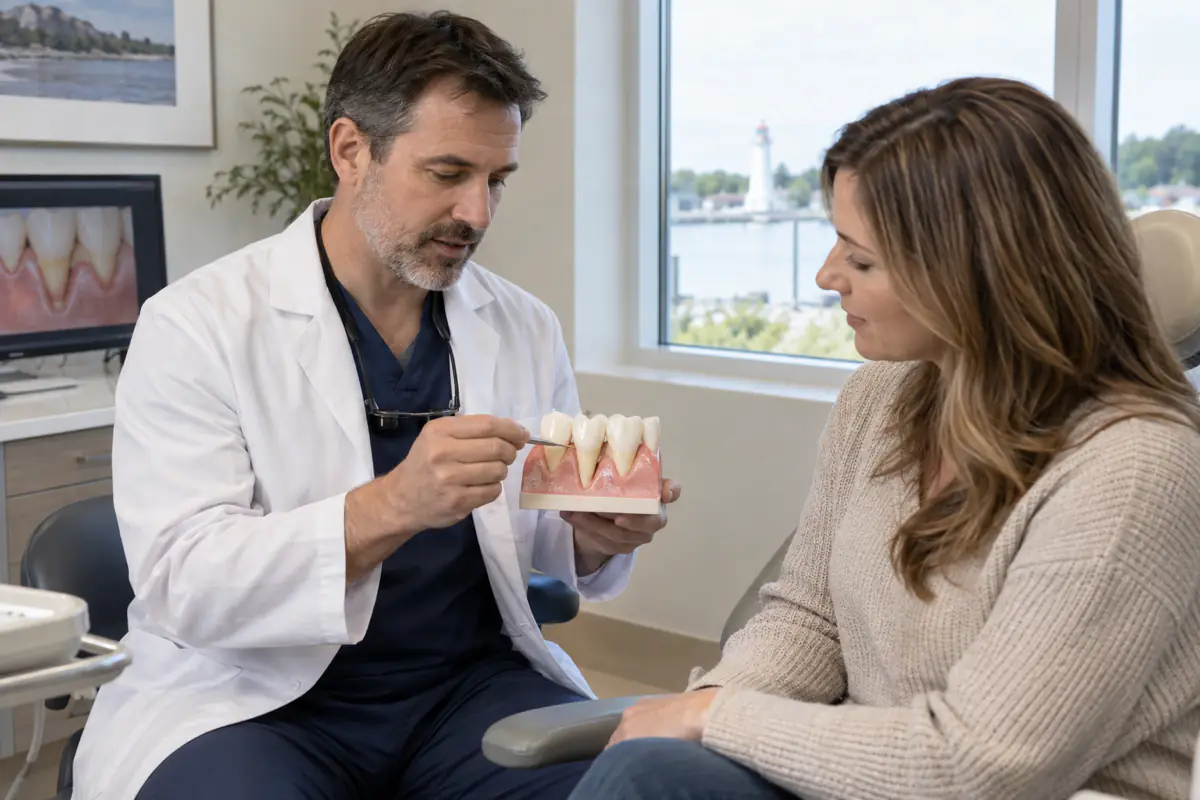
When a tooth looks longer or its root reacts sharply to cold, a patient may wonder about gum graft surgery in Port Dover. Grafting adds or repositions tissue around selected teeth or implants. It can cover an exposed root in favourable cases, thicken a vulnerable gumline, reduce sensitivity and improve access for long-term care.
Surgery is not the first or only response to recession. The cause must be assessed and active inflammation controlled. A graft placed without correcting traumatic brushing, plaque, tobacco exposure or tooth-position issues may be less predictable. Good planning defines the goal before choosing the tissue source or technique.
What gum recession means
Recession occurs when the gum margin moves away from the crown and exposes part of the root. Roots lack the thick enamel that protects tooth crowns, so they are more vulnerable to sensitivity, wear and decay.
Recession can affect one tooth or many. It may be related to:
- periodontal disease and supporting bone loss;
- naturally thin gum tissue;
- a tooth positioned toward the edge of the bone;
- forceful brushing or abrasive products;
- plaque around crowded teeth or restorations;
- orthodontic movement in a susceptible area;
- tobacco use;
- oral piercings; or
- previous surgery or trauma.
A mirror shows the gum edge but not underlying bone. Periodontal measurements and, when indicated, X-rays help determine whether disease, anatomy or both are involved.
When a graft may be considered
Not every exposed root needs surgery. The dentist or periodontist may first improve brushing technique, treat periodontal inflammation, restore root decay or monitor a stable site.
Grafting becomes a stronger consideration when:
- recession is progressing;
- tissue is very thin and vulnerable;
- sensitivity persists despite conservative care;
- root decay or wear risk is high;
- plaque control is difficult because of the tissue contour;
- orthodontic or restorative treatment needs a more stable gum foundation; or
- the appearance is a significant concern and anatomy is favourable.
The American Academy of Periodontology explains that gum graft surgery can cover exposed roots, help prevent further recession and bone loss, and may reduce sensitivity or improve appearance.
The periodontal assessment
The clinician measures recession, pocket depth and the width and thickness of firm gum tissue. They check plaque, bleeding, tooth mobility, root wear, frenum pull and how teeth meet. Tooth position and supporting bone affect predictability.
Photographs document the starting condition. X-rays show bone levels but not soft-tissue thickness. In selected cases, an orthodontic or restorative consultation is coordinated before surgery so treatments occur in the safest order.
Tell the clinician about diabetes, bleeding disorders, immune conditions, smoking or vaping, medications and previous healing problems. These factors influence timing and risk.
Connective tissue graft
A connective tissue graft commonly uses tissue from beneath the surface layer of the palate. The surgeon creates a small access area in the roof of the mouth, removes the needed tissue and closes the donor site. The graft is placed beneath or against gum around the exposed root and secured with fine sutures.
This technique can provide good colour blending and root coverage in suitable defects. There are two healing areas: the treated tooth and the palate. The surgeon may use a protective stent or dressing for comfort.
The amount and location of donor tissue limit how much can be treated at once. Your periodontist will explain whether one or several teeth can be addressed during the same appointment.
Free gingival graft
A free gingival graft takes a thin piece of surface tissue from the palate and places it where more firm, attached gum is needed. Its primary goal is often to increase tissue width or thickness rather than create a perfect colour match or full root coverage.
The palate donor site heals like a superficial wound and can feel more noticeable during early recovery. Protection, diet and bleeding instructions are important.
This approach may be selected when tissue is very thin or functional stability matters more than aesthetic blending.
Pedicle and tunnel techniques
When there is enough healthy gum next to a recession, the surgeon may reposition nearby tissue while keeping part of its blood supply intact. Tunnel techniques mobilize tissue through small access points and place a graft underneath.
These names describe approaches, not promises. Suitability depends on recession depth, tooth position, papilla height, tissue thickness and the number of sites. A technique that works well in one mouth may be inappropriate in another.
Processed donor tissue may avoid a second surgical site, but availability, cost, indication and expected outcome differ. Ask about source, evidence and alternatives.
Preparing for surgery
Control plaque before the procedure. The periodontal team may recommend a professional cleaning and demonstrate gentle brushing. Active gum infection should be treated first.
Review prescriptions, supplements and allergies. Do not stop blood thinners or other medication without coordinated advice from the prescriber and surgeon. Arrange transportation if sedation is planned and follow fasting directions exactly.
Prepare soft food, cold packs and prescribed or recommended supplies. If a palatal stent will be provided, learn how and when to wear and clean it. Plan lighter activity for the early recovery period.
Smoking and vaping compromise blood flow and healing. Discuss cessation well before surgery rather than only skipping tobacco on the procedure day.
What happens during the procedure
Local anaesthetic numbs donor and recipient areas. Sedation may be available for suitable patients, but it is separate from freezing. The surgeon prepares the root and surrounding tissue, obtains or prepares the graft, positions it and uses sutures to keep it immobile.
Stability is essential because tiny blood vessels must grow into the graft. A dressing may protect the site. Procedure time depends on the number of teeth and technique.
You may feel pressure or movement but should not feel sharp pain. Use the agreed signal if you need a pause or more anaesthetic.
The first 24 hours
Rest and protect both sites. Apply a wrapped cold pack externally in short intervals if instructed. A little oozing can be normal, but persistent heavy bleeding needs a call.
Do not pull the lip to inspect the graft, brush it, spit forcefully or rinse vigorously. Avoid straws, strenuous exercise, smoking and vaping. These actions can disturb the clot or move the graft.
Take medication exactly as directed. Do not place aspirin on the tissue. If pain control is inadequate or an allergic reaction develops, contact the surgical office.
Eating during recovery
Choose cool or lukewarm soft foods that do not require chewing near the graft: yogurt, eggs, pasta, soft fish, mashed vegetables and blended foods eaten with a spoon. Avoid sharp crusts, chips, seeds, nuts, spicy food and very hot drinks.
Chew away from the treated side. If the palate is involved, even soft food can irritate it, so a protective stent may help when used as directed.
Maintain hydration and adequate protein. Gradually return to normal texture according to the surgeon’s timeline, not merely because pain has decreased.
Cleaning while the graft heals
Do not brush or floss the graft until the surgeon says it is safe. Clean the rest of the mouth carefully. A prescribed antimicrobial rinse may be used for a limited period; follow dose and duration because prolonged use can stain teeth or alter taste.
When brushing resumes, an ultra-soft post-surgical brush and specific technique may be recommended. The graft is not ready for aggressive scrubbing even when stitches are gone.
Long term, the goal is gentle plaque removal. A soft brush and low pressure protect the tissue better than avoiding it or trying to “toughen” it.
Normal recovery and warning signs
Swelling, bruising and soreness are expected to some degree. The palate may feel like a burn. Graft tissue can look white, yellowish or uneven during healing; colour alone is not a reliable sign of failure.
Call the surgeon for:
- bleeding that does not stop with instructed pressure;
- increasing swelling or pain after initial improvement;
- fever, pus or foul drainage;
- the graft or dressing becoming markedly displaced;
- an allergic medication reaction;
- persistent numbness; or
- uncertainty about a loose suture.
Difficulty breathing or swallowing or rapidly spreading face or neck swelling requires emergency medical care.
Will the graft fully cover the root?
Complete coverage is more predictable when recession is shallow, bone and papillae between teeth are intact and the tooth sits favourably in the arch. Deep recession with substantial interproximal bone loss is less likely to achieve full coverage.
The surgeon should discuss realistic goals in millimetres and function, not promise a perfect gumline. Increasing tissue thickness and reducing progression may count as success even if some root remains visible.
Healing and tissue maturation continue for months. Early appearance is not the final result.
Sensitivity after grafting
Covering root dentin may reduce cold or touch sensitivity, but relief is not guaranteed. Root wear, cracks, pulp inflammation and bite forces can contribute independently.
While healing, exposed neighbouring roots may feel more sensitive because they were cleaned. Desensitizing toothpaste or fluoride may be recommended once safe around the surgical site.
Persistent severe or lingering pain needs assessment rather than repeated application of numbing products.
Protecting the result
Use a soft toothbrush with light pressure and the method demonstrated by your hygienist or periodontist. Clean between teeth daily once approved. Control periodontal inflammation through professional maintenance at the recommended interval.
Avoid tobacco. Manage diabetes and dry mouth. If clenching or grinding is present, a night guard may protect teeth, but it does not directly prevent all recession and must fit without traumatizing the graft.
Orthodontic movement and new restorations should be coordinated with the periodontal team. Continue photographs and measurements to monitor stability.
Read gum recession in Simcoe for causes and non-surgical management before or after referral.
Costs and treatment planning
Cost depends on the number of sites, graft source, technique, sedation and insurance. Ask for a written estimate and whether diagnostic records and follow-ups are included. Coverage varies and does not determine medical necessity.
If several areas are involved, treatment may be staged. Ask which sites are highest priority and what could happen if a stable area is monitored instead.
A second opinion is reasonable before elective extensive surgery, especially when goals are mainly aesthetic.
Discuss gum grafting in Port Dover
Port Dover Family Dentistry can assess recession, address plaque and brushing factors, protect sensitive roots and coordinate periodontal referral when grafting may add value.
Call 519-583-2929 or request an appointment if a tooth looks longer, roots are sensitive or recession appears to be progressing. Bring prior photos or records if available so change over time can be evaluated.
About the author
Port Dover Family Dentistry Team
Our team provides family-focused dental care in Port Dover, Ontario. We create practical oral-health education to help patients ask informed questions and feel more confident about care. This article is general information and does not replace an examination or personalized diagnosis.