
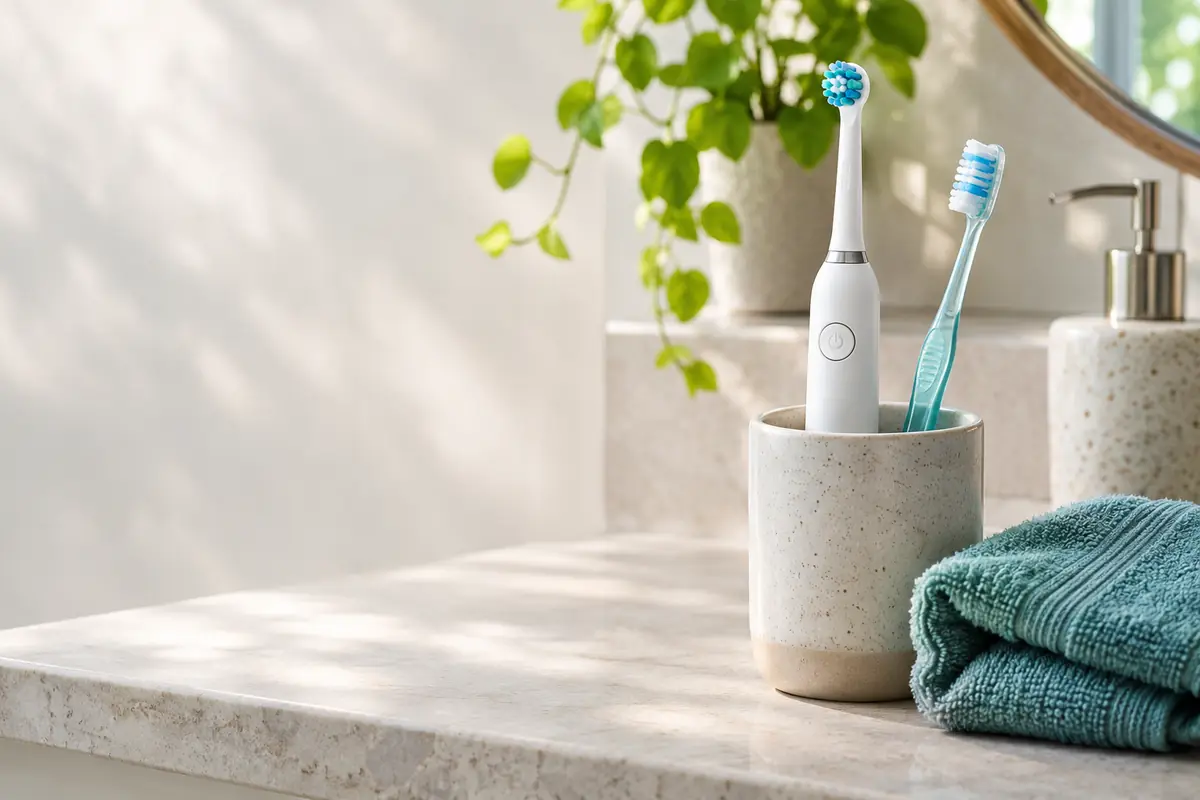
Here is the short answer first: either kind of toothbrush can keep your teeth and gums healthy. A powered brush is not a requirement for good oral health, and a manual brush is not a second-class tool. What makes the difference is how the brush is used, how often, and whether it suits the hands and mouth holding it.
That said, the electric vs manual toothbrush in Port Dover question comes up at almost every hygiene visit, often around the holidays when powered brushes appear in flyers and gift lists. There are real situations where one type has an advantage. This article compares the two honestly, explains the main styles of powered brush, and helps you decide whether switching is worthwhile for you or a family member.
If you are also choosing toothpaste, our broader guide to choosing a toothbrush and toothpaste covers fluoride levels, sensitivity formulas and children’s products. Here we stay focused on the brush itself.
What the evidence actually says
Research comparing brush types has generally found that powered brushes, especially those with a small round head that oscillates and rotates, can remove somewhat more plaque and reduce gum inflammation a little more than manual brushes over time. The differences are modest on average, and they come from studies where people were often coached to brush properly.
The American Dental Association takes a practical view: both manual and powered brushes can effectively remove plaque, and the right choice depends on what works for the individual. That is the stance we take too. A well-used manual brush beats a powered brush left on the charger, or one swept quickly across the front teeth for twenty seconds.
How a manual toothbrush does its job
With a manual brush, your hand supplies all the motion. The usual guidance is to angle the bristles toward the gumline at about 45 degrees and use short, gentle strokes or small circles, working around the mouth so that the outer, inner and chewing surfaces of every tooth are covered.
The strengths of a manual brush are simplicity and control. It needs no charging, it is light to pack for a weekend at Turkey Point or a hockey tournament, and it is inexpensive to replace on schedule. Many people with excellent gum health have used manual brushes all their lives.
The weakness is that technique depends entirely on the person. It is easy to scrub too hard, to rush, or to skip the inside surfaces of the lower front teeth and the backs of the last molars. Those are exactly the places where tartar tends to build up.
Oscillating-rotating and sonic designs
These powered brushes have a small round head that turns rapidly back and forth, sometimes with a pulsing motion as well. You guide the head slowly from tooth to tooth, pausing on each one, rather than scrubbing.
Because the head is small, it fits well around individual teeth and behind the back molars. People who are new to this style sometimes find the sensation strong at first. It becomes familiar within a few days for most users.
Sonic brushes work differently. They have an elongated head, similar in shape to a manual brush, that vibrates side to side at high speed. You hold the bristles at the gumline and move slowly along the teeth, letting the vibration do the work.
People switching from a manual brush often find a sonic brush more familiar in shape. Some also prefer the feel along the gumline. Inexpensive battery-powered brushes sold at the checkout aisle are not quite the same as rechargeable sonic or oscillating models; they can still be useful, but their motion and durability vary widely.
Who may benefit most from a powered brush
A powered brush can be particularly helpful for people with limited dexterity, such as those with arthritis in the hands, tremors, or reduced strength after a stroke or injury. The thicker handle is easier to grip, and the head provides motion the hand no longer can. For older adults, our article on senior dental care covers other practical adaptations.
Caregivers brushing someone else’s teeth sometimes find a powered brush quicker and more thorough, although some people find the noise or vibration unsettling. It is worth trying before committing.
People with braces often like powered brushes because the motion helps clean around brackets, though careful manual brushing with the right technique works as well. Those with a history of heavy plaque or gum inflammation despite good effort may also find that a powered brush, combined with a built-in timer, improves their results.
Who may do perfectly well with a manual brush
If your hygienist consistently finds healthy gums and light plaque at your checkups, there may be little reason to change. Likewise, if you brush gently and thoroughly for two minutes and clean between your teeth every day, a manual brush is serving you well.
Some people simply dislike the vibration, the noise or the sensation on sensitive teeth. Forcing yourself to use a tool you dislike usually leads to shorter brushing, not better brushing.
Brushing too hard: a problem with either type
One of the most common findings at a hygiene visit is wear caused by overzealous brushing: notches near the gumline, gum recession and sensitivity. This happens with manual brushes when people scrub sideways with firm pressure, and it happens with powered brushes when people push the head against the teeth as if it were a manual brush.
Always choose soft bristles. If you use a powered brush, rest it lightly on the teeth and let it work. Many rechargeable models have a pressure sensor that lights up or slows down when you push too hard, which can be a useful training aid. If you already have receding gums, our article on gum recession explains why gentle technique matters so much.
Timers, apps and other features
Most rechargeable brushes include a two-minute timer, often with a short pulse every 30 seconds to remind you to move to the next quarter of the mouth. For many people, the timer alone is the most valuable feature, since most of us brush for less time than we think.
Beyond that, extras such as multiple cleaning modes, smartphone apps, travel cases and charging indicators are matters of preference. They do not necessarily make teeth cleaner. A mid-range model with a timer, a pressure sensor and a soft brush head covers the features most people benefit from. You can also get a timer effect with a manual brush by using a phone timer or a song of about the right length.
Children and powered brushes
Children can use either type. Powered brushes designed for children have smaller heads and gentler settings, and some youngsters are more willing to brush when the brush feels like a gadget. Others are startled by the vibration.
Whichever brush a child uses, an adult should brush for them or supervise until they can do a thorough job on their own, which for many children is around age seven or eight. Use an age-appropriate amount of fluoride toothpaste and make sure the brush head is small enough to reach the back teeth comfortably.
Cost, waste and replacement heads
Manual brushes are inexpensive, and replacing them every three months fits most budgets. Powered brushes involve an upfront cost for the handle, plus replacement heads that are usually more expensive than a manual brush. Over several years, the difference adds up.
Whichever you use, replace the brush or head about every three months, or sooner if the bristles splay. Worn bristles do not clean well. If waste concerns you, look for brushes with replaceable heads and consider how long a handle’s battery is likely to last. For powered brushes, follow the manufacturer’s instructions for charging and cleaning the handle.
Cleaning between teeth still matters
No toothbrush, manual or powered, reliably cleans the tight contacts between teeth. Floss, interdental brushes or a water flosser are needed for those surfaces, which is where many cavities and much gum disease begin. Our hygienists can recommend the best tool for the spaces in your mouth during a teeth cleaning visit.
If you have bridges, implants, or wide spaces after gum treatment, interdental brushes are often more effective than floss. A powered toothbrush does not replace them.
Making the switch
If you decide to try a powered brush, expect a short adjustment period. Start with the gentlest setting if there is one. Guide the head slowly along the teeth instead of scrubbing, and keep the brush angled toward the gumline.
Some people notice a little gum bleeding during the first week or two of improved cleaning. Light bleeding that settles quickly is common when plaque that was previously missed is being removed. Bleeding that continues, gets worse, or comes with pain or swelling should be checked.
Bring your brush, manual or powered, to your next hygiene appointment if you would like feedback. Watching how you hold it and where you begin can reveal small changes that make a big difference.
Questions to ask yourself before buying
A few questions can narrow the decision quickly:
- At my last checkup, were there areas of plaque, tartar or bleeding that keep coming back?
- Do I find it hard to grip a thin handle or move my wrist for two minutes?
- Do I tend to brush too hard or too briefly?
- Will I keep a powered brush charged and replace the heads on schedule?
- Is the vibration comfortable for me, or does it bother sensitive teeth?
If most answers point toward technique or dexterity challenges, a powered brush may be worth trying. If your mouth is healthy and you are happy with your routine, there is no need to change.
Frequently asked questions
Is an electric toothbrush better than a manual one?
Some studies suggest powered brushes, particularly oscillating-rotating designs, may remove somewhat more plaque on average, but a manual brush used thoroughly can also clean very well. The best brush is the one you use gently, for two minutes, twice a day, reaching every surface.
Can an electric toothbrush damage my gums?
Pressing hard or scrubbing with any brush can irritate gums and wear exposed roots. Let a powered brush do the work, use a soft head, and consider a model with a pressure sensor if you tend to push too hard.
How often should I replace a brush head or manual toothbrush?
About every three months, or sooner if the bristles are frayed or splayed. Worn bristles clean less effectively, and children often wear out brushes faster than adults.
Get personal brushing advice
The right brush is easier to choose once someone has looked at your teeth and gums. Port Dover Family Dentistry, at 697 Norfolk County Hwy 6, Unit 2, Port Dover, can check how your current routine is working and suggest adjustments. Call 519-583-2929 or request an appointment. If plaque keeps returning despite your best effort, our dental hygiene and preventive care page describes how we can help.
About the author
Port Dover Family Dentistry Team
Our team provides family-focused dental care in Port Dover, Ontario. We create practical oral-health education to help patients ask informed questions and feel more confident about care. This article is general information and does not replace an examination or personalized diagnosis.





