
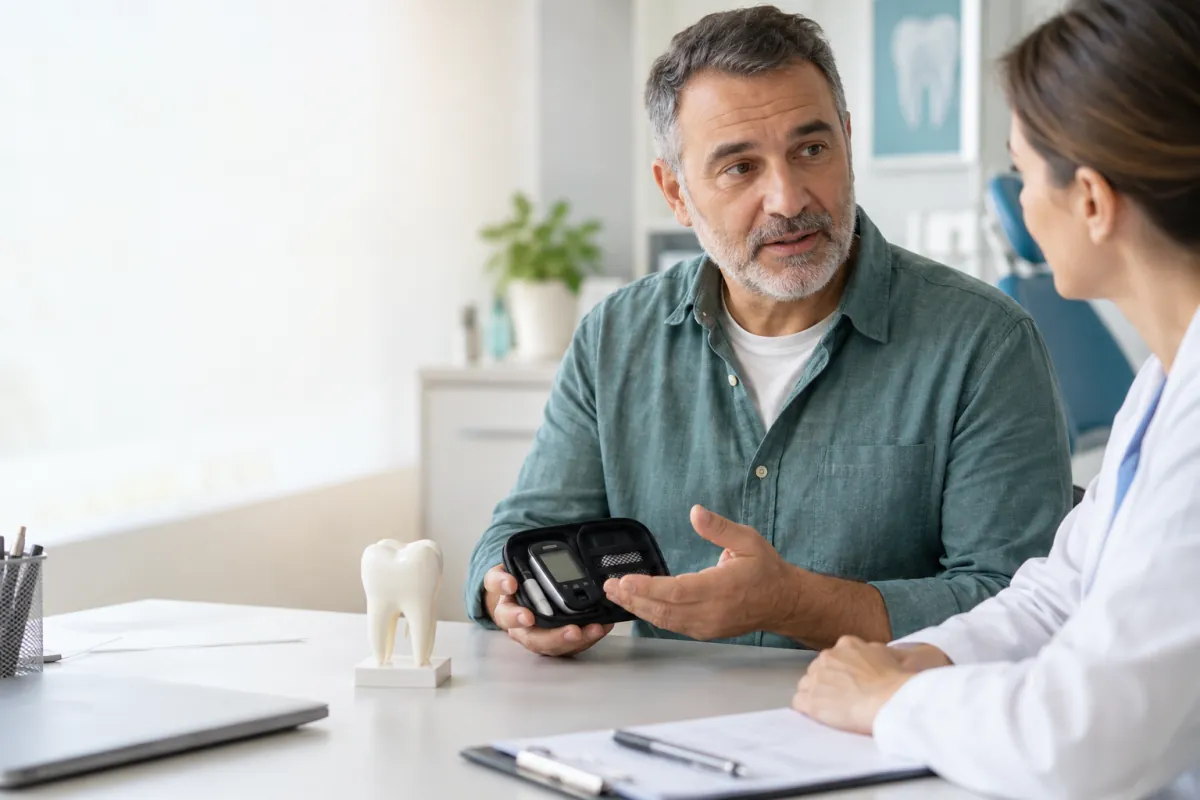
Managing diabetes already involves many decisions: meals, medicines, monitoring, exercise and medical appointments. Dental care can feel like another item competing for attention. Yet keeping the mouth comfortable makes eating and daily routines easier, and identifying gum problems early can prevent a small concern from becoming a disruptive episode of pain or infection.
If you are looking into diabetes and gum health in Simcoe, begin with a practical partnership. Your dentist needs to understand your medical situation, and your medical team needs to know when oral disease or dental treatment may affect eating and recovery. Neither team should expect you to connect every detail alone.
The relationship goes beyond brushing
Diabetes can affect the body’s response to infection and tissue healing. When blood glucose is above the individual target range, oral-health problems may be more difficult to control. Gum disease can also add an inflammatory burden that complicates diabetes management.
The National Institute of Dental and Craniofacial Research describes an increased risk of periodontal disease, dry mouth and certain oral infections in people with diabetes. It also explains the relationship between gum disease and blood glucose management. This is a reason for coordinated care, not a prediction that every person with diabetes will develop severe dental disease.
Your own risk depends on several factors, including current gum health, glucose management, smoking, saliva and cleaning access. A diagnosis of diabetes is useful context, but it does not replace an examination of what is actually happening in your mouth.
What gum disease can look like
Early gum inflammation may produce redness, puffiness or bleeding during cleaning. More advanced periodontal disease can damage the support around teeth, sometimes with surprisingly little pain. A tooth may become mobile, spaces may change or chewing may feel different.
A persistent bad taste, swelling in one area or repeated food trapping also deserves attention. These signs have more than one possible cause, so they should prompt assessment rather than self-diagnosis. Do not wait for all of them to appear together.
Smoking can make visible bleeding less obvious, which means the absence of blood is not a reliable all-clear. Similarly, a mouth that feels comfortable can still have deep gum pockets. Professional measurements provide information that a mirror and toothbrush cannot.
What happens at a periodontal assessment
The dentist or hygienist measures the spaces between the gums and teeth, records bleeding and checks for recession and mobility. X-rays may be needed to assess supporting bone and other problems, depending on the findings and existing records.
These measurements establish a baseline. When they are repeated after treatment, the team can judge whether tissues are responding and which areas remain difficult to manage. Ask to have the results explained in ordinary language: where is the concern, how serious is it and what should change?
If the recommendation is more frequent maintenance, ask which findings justify the interval. The plan should reflect your periodontal condition and risk, rather than treating diabetes as an automatic reason for the same schedule in every patient.
Information worth bringing to the visit
Bring a current medication list, including insulin or other glucose-lowering treatment, and explain any recent changes in your health. If you know your recent HbA1c result or usual glucose pattern, share it. The dentist may ask for medical information when it would affect treatment planning.
Describe episodes of low blood glucose, how you usually recognize them and what your established response plan involves. Tell the office about a glucose monitor, pump or other equipment you use. These details help the team prepare without making assumptions about the type of diabetes you have.
Also mention kidney disease, cardiovascular conditions, allergies and medicines that affect bleeding. Dental decisions depend on the whole medical picture. A printed or digital list can be easier than trying to remember every name and dose while sitting in the chair.
Meals and medicines should follow a clear plan
For an ordinary appointment, do not decide on your own to fast or skip diabetes medicines because dental treatment is scheduled. If sedation, surgery or another procedure requires fasting, obtain specific instructions coordinated with the clinician managing your diabetes.
The same applies after treatment. If chewing will be uncomfortable, discuss suitable foods and how changes in intake may affect your medical routine. The NIDDK’s dental-care guidance for diabetes recommends planning around glucose monitoring, medicines and recovery when extensive dental work is expected.
Bring the monitoring and low-glucose treatment supplies you normally use, as advised by your medical team. Tell the dental staff immediately if you feel shaky, sweaty, confused or otherwise suspect a low. Do not try to endure symptoms until the appointment ends.
Dry mouth may change your prevention needs
A dry mouth can make talking, swallowing and wearing dentures uncomfortable. It may also reduce some of saliva’s protective effects. People sometimes respond by constantly sipping a sweet drink or sucking sweets, which can create an additional problem for teeth.
Discuss persistent dryness with both the dental and medical teams. Medicines, hydration, glucose levels and other health factors may contribute. A review can identify options without requiring you to stop a necessary medicine on your own.
Plain water, appropriate saliva substitutes and selected sugar-free products may improve comfort. Additional fluoride may be considered when cavity risk is elevated. Choose products according to professional advice rather than assuming every product labelled for dry mouth provides the same benefits.
A daily routine that is manageable
Brush twice daily with fluoride toothpaste and a soft brush. Pay particular attention to the gumline and the backs of the last teeth. If hand pain, reduced sensation or vision changes make cleaning difficult, tell the hygienist so the tools and technique can be adapted.
Clean between teeth daily using an appropriate aid. A larger-handled brush, floss holder or water flosser may make the task easier for some people. Our guide to water flossers and flossing in Simcoe compares practical options.
Keep the routine specific enough to repeat. “Brush better” is vague; “angle the brush toward this back gumline and use this small brush in this gap” gives you something concrete to practise. Ask the clinician to demonstrate, then try it yourself while help is available.
Treatment is based on the disease found
A person with mild gingivitis may need professional deposit removal and more effective home care. Someone with periodontitis may need deeper instrumentation, reassessment and ongoing maintenance. More complex disease may require referral to a periodontist.
Antibiotics are not a routine substitute for cleaning and treating the source of disease. They are used for selected indications, taking the patient’s medical situation into account. Do not assume that diabetes means you should automatically receive antibiotics before every dental procedure.
If treatment is staged, ask what the first stage is intended to achieve. A written sequence can distinguish urgent problems, active periodontal treatment and later restorative work. That makes a larger plan less overwhelming and helps coordinate the visits with medical care and everyday commitments.
After treatment, watch the direction of recovery
Some tenderness can occur after periodontal treatment, particularly where tissues were inflamed. Follow the specific cleaning and comfort instructions provided. The important question is whether symptoms are settling as expected or moving in the wrong direction.
Increasing swelling, worsening pain, pus, fever or persistent bleeding should prompt a call. Mention any difficulty eating or unexpected change in glucose patterns. The dental team may need to assess healing, while the medical team may need to advise on your diabetes plan.
Do not wait for a scheduled review if you are concerned. Early communication can clarify whether an adjustment is needed. A question about recovery is useful clinical information, not an interruption or a reason to feel embarrassed.
Food choices and emergency glucose treatment are different situations
Everyday dental advice often focuses on reducing frequent sugar exposure. That advice must never delay necessary treatment for low blood glucose. Follow your established medical plan for a low; the immediate medical need takes priority.
For routine meals and snacks, work within the plan developed with your diabetes clinician or dietitian. Tell them if dental pain or missing teeth makes certain foods difficult to eat. Adapting texture while maintaining nutritional needs is preferable to quietly narrowing your diet to whatever is easiest to chew.
If a dental procedure will temporarily change what you can eat, plan suitable options in advance. Ask both teams what matters for your situation. This is especially helpful when several appointments or a longer recovery period are expected.
Keep expectations realistic and supportive
Treating gum disease protects the mouth, but it is not a cure for diabetes. Continue medicines, monitoring and medical follow-up as prescribed. Avoid claims that a cleaning can replace medical treatment or guarantee a particular HbA1c improvement.
Equally, a period of difficult glucose management does not mean you should avoid the dentist. Share what is happening so the team can decide which care is appropriate now and what needs coordination. Delaying every visit until circumstances feel perfect can allow preventable problems to advance.
For patients travelling from Simcoe, scheduling linked stages of care thoughtfully can reduce disruption. Ask how long visits are likely to take, whether eating will be affected afterward and when reassessment is planned. These practical details often determine whether a good clinical plan works in daily life.
Frequently asked questions
Does diabetes mean I will lose my teeth?
No. Diabetes can increase oral-health risks, but tooth loss is not inevitable. Preventive care, gum treatment when needed and medical management help protect oral health.
Can gum treatment replace diabetes medication?
No. Treating gum disease supports oral health and may help overall diabetes management, but it does not replace medication, glucose monitoring or your medical care plan.
Should I skip a meal before a dental appointment?
Do not change meals or diabetes medicines on your own. Routine visits and procedures involving fasting have different requirements; obtain a coordinated plan when fasting or altered eating is expected.
Arrange a dental assessment near Simcoe
Port Dover Family Dentistry is located at 697 Norfolk County Hwy 6, Unit 2, Port Dover and welcomes patients from Simcoe. Call 519-583-2929 or request an appointment, mentioning diabetes and any current symptoms. If you have noticed bleeding, our bleeding-gums guide can help you prepare questions for the visit.
About the author
Port Dover Family Dentistry Team
Our team provides family-focused dental care in Port Dover, Ontario. We create practical oral-health education to help patients ask informed questions and feel more confident about care. This article is general information and does not replace an examination or personalized diagnosis.