
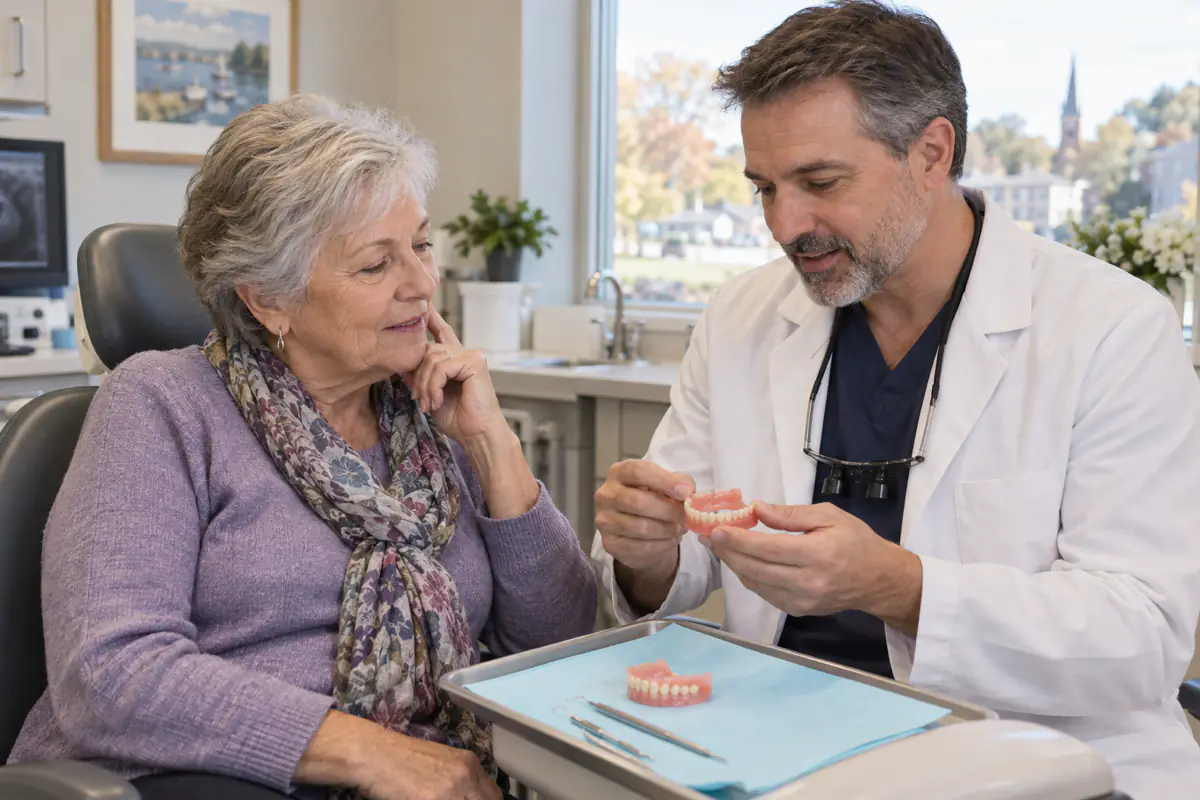
Removable dentures sit on living tissue that changes throughout life. A new appliance may create pressure during the adjustment period, while an older one can become loose as gum and bone contours change. Denture sore spots in Simcoe should be assessed rather than managed by grinding the acrylic or adding layers of adhesive at home.
Most pressure areas improve after a careful adjustment. Persistent ulcers can also reflect dry mouth, fungal infection, a rough tooth, medication effects or a condition unrelated to the denture. The goal is to find the cause while keeping the appliance functional and the tissue healthy.
How a pressure sore develops
A denture spreads chewing force across the ridge and palate. If one area contacts too strongly, movement concentrates friction on a small patch of tissue. The site may appear red, white, raw or ulcerated and hurt during insertion or chewing.
Common pressure locations include the fold where cheek meets gum, the bony ridge, under a clasp and along the back edge of an upper denture. A lower denture often moves more because it has less surface area and must share space with the tongue.
The painful point in the mouth does not always match the spot that needs adjustment on the denture. Dentists use fit-indicating material to map pressure accurately.
New dentures require adjustment
Even a carefully made denture may need follow-up after it is worn during speaking and eating. Impressions record resting tissues; daily function introduces muscle movement and changing pressure. Small refinements are a normal part of delivery.
Follow the wearing schedule provided. Begin with softer foods cut into small pieces, chew on both sides and practice speaking. Call when a specific spot becomes painful rather than waiting until it becomes a deep ulcer.
Do not assume that “breaking in” a denture should involve severe pain. Tissue injury can make future fitting more difficult.
Immediate dentures change as healing occurs
An immediate denture is inserted on the day teeth are removed. It supports appearance and protects extraction sites, but gums and bone change rapidly as they heal. The appliance may loosen within weeks or months.
Temporary liners, adjustments and later relining may be needed. Follow instructions about when the denture can first be removed, how extraction sites are cleaned and when review occurs.
Do not use an over-the-counter reline material during early healing without approval. It can press on surgical areas and make professional adjustment harder.
Why an older denture loses its fit
Jawbone remodels after teeth are lost. Over years, the ridge becomes smaller and the denture no longer matches it. Weight change, illness and muscle changes can also affect support. Worn artificial teeth alter the bite and may make the appliance rock.
Signs include clicking, food collecting underneath, adhesive use increasing, cheek biting, reduced chewing efficiency and recurring ulcers. A reline, rebase or new denture may be considered depending on tooth wear, acrylic condition and jaw relationships.
Adding adhesive indefinitely cannot replace lost fit or restore worn teeth.
Dry mouth increases friction
Saliva lubricates tissue and helps create retention. Medicines, dehydration, diabetes, autoimmune disease and cancer treatment can reduce flow. Without enough moisture, a denture may drag against tissue, feel loose and contribute to sore spots.
The NIDCR information for older adults notes that dry mouth can make dentures uncomfortable and increase rubbing and fungal infection risk.
Sip water and ask about saliva substitutes. Avoid sweet or acidic lozenges used continuously for moisture. Never stop a prescribed medicine without consulting the prescriber.
Fungal infection under a denture
Denture stomatitis often appears as diffuse red tissue under an upper denture. It may burn or cause little discomfort. Candida yeast can overgrow when the appliance remains in overnight, hygiene is inadequate, the denture fits poorly or dry mouth and medical risks are present.
Treatment may include antifungal medication, improved denture disinfection, fit correction and overnight removal. Treating the mouth without cleaning the appliance can allow recurrence.
Do not use leftover antifungal cream or household disinfectant. Products meant for skin may not be safe inside the mouth or compatible with acrylic.
Angular cracks and other infection signs
Fungal or bacterial factors can contribute to cracks at the corners of the mouth, unpleasant taste and burning. Reduced facial support from worn dentures may keep the corners moist and folded.
White patches that wipe away, persistent redness or soreness deserve examination. Diabetes, inhaled steroids, antibiotics and immune suppression may influence risk.
The clinician may examine both the tissue and appliance, review health history and prescribe targeted care. Not every red area is fungal, so self-treatment can delay the correct diagnosis.
Partial dentures create different pressure points
A removable partial uses clasps, rests and acrylic or metal bases around remaining teeth. Soreness can occur beneath the base, near a clasp or where the framework contacts gum. Food and plaque may also collect around supporting teeth.
Never bend a clasp with pliers. It can fracture the metal, overload a tooth or make the partial unsafe. A dentist assesses the framework, bite and supporting teeth before adjustment.
Clean under clasps and around abutment teeth carefully. These teeth often carry extra load and have a higher decay risk if plaque remains.
What to do when a sore spot starts
Remove the denture when pain becomes significant and contact the dental office. Rinse the mouth gently with water and keep the appliance clean. Choose soft food and avoid chewing on the injured area.
Ask whether you should wear the denture before the appointment. Dentists sometimes request several hours of use so the exact pressure site is visible; wearing it continuously over a severe ulcer may be inappropriate.
Do not place aspirin, peroxide, alcohol or essential oil on the tissue. These can burn the mouth and do not correct the fit.
Never file or heat a denture at home
Removing acrylic with a nail file or rotary tool can create a thin, rough edge and permanently change the fit. Heating or bending may distort the entire base. Once landmarks are altered, the dentist may no longer be able to identify the original pressure source.
Mail-order reline kits can create uneven bulk, change the bite and trap material. Some contain chemicals that irritate tissue when mixed or cured incorrectly.
Bring the denture as-is. A controlled adjustment removes a small amount at the mapped pressure point and preserves the rest of the support.
Adhesive is not a repair
Denture adhesive can improve stability for a well-fitting appliance and increase confidence. Use the minimum amount according to product and dental instructions. Clean all adhesive from the denture and mouth daily.
Large amounts used to fill gaps indicate a fit problem. Excess can ooze into the mouth, affect taste and make cleaning difficult. Adhesive cannot repair a crack, restore worn teeth or compensate indefinitely for ridge change.
If the denture suddenly needs much more adhesive, arrange an assessment.
What happens during an adjustment
The dentist examines the ulcer and checks for suspicious features. Pressure-indicating paste is placed inside the denture, then the appliance is seated and moved through function. Thin areas in the paste reveal excess contact.
The dentist adjusts and polishes the corresponding acrylic. Bite contacts and borders are checked because movement may come from imbalance rather than the sore point itself.
More than one adjustment may be needed as the patient returns to normal chewing. Follow-up is part of fitting, not evidence that the denture failed.
Reline, rebase or remake?
A reline replaces the tissue-facing surface so it matches the current ridge. A rebase replaces most of the acrylic base while retaining suitable artificial teeth. A new denture is needed when teeth are worn, the bite has changed substantially, the base is repeatedly fractured or design no longer meets the mouth’s needs.
Soft liners can cushion selected sensitive tissues, but they require meticulous cleaning and periodic replacement. They are not permanent solutions for every loose denture.
The dentist considers tissue health, jaw relationship, appliance age and patient goals before recommending an option.
Clean the denture every day
Rinse after meals when practical. Brush all surfaces with a denture brush and cleaner recommended for the material. Regular toothpaste may be too abrasive and create scratches that retain stain and microorganisms.
Clean over a towel or basin of water so a dropped appliance is less likely to break. Remove adhesive fully. Soak only in a solution compatible with the acrylic and metal components.
Never use boiling water; heat can warp the base. Bleach and harsh household chemicals may damage acrylic, corrode metal and injure the mouth.
Give tissues time without the denture
Most people should remove dentures overnight so tissues can recover and the appliance can be cleaned. Store it as directed so acrylic does not dry out or distort.
Immediate-denture and surgical instructions may temporarily differ. Follow the treating dentist during early healing.
Sleeping in a denture increases contact time and can contribute to inflammation and fungal overgrowth. If removing it creates safety or caregiving challenges, discuss a workable routine rather than silently leaving it in continuously.
Clean the mouth as well as the appliance
Brush the tongue, palate and ridges gently with a soft brush. Clean remaining natural teeth twice daily with fluoride toothpaste and clean between them. A partial denture does not protect those teeth from cavities or gum disease.
Massage is not a substitute for plaque removal, and aggressive scrubbing of an ulcer delays healing. Ask the hygienist to demonstrate pressure and tool selection.
Even a person with no natural teeth needs regular oral examinations for tissue health, fit and cancer screening.
Persistent ulcers need investigation
A pressure sore should improve after the cause is removed. An ulcer lasting more than about two weeks, recurring in the same place, feeling firm, bleeding without explanation or accompanied by a lump needs prompt assessment.
Tobacco and alcohol exposure increase oral cancer risk, but suspicious lesions can occur without those factors. A dentist may review the area, adjust the appliance and arrange referral or biopsy when needed.
Do not keep wearing the denture over a persistent lesion while assuming the plastic is the only cause.
Eating while the tissue heals
Choose soft but nutritious foods such as eggs, yogurt, cooked vegetables, fish and tender proteins. Cut food into small pieces and chew on both sides to balance the denture.
Avoid very hot, spicy, sharp or acidic items when tissue is ulcerated. Nuts, hard crusts and seeds can lodge beneath the base.
If pain limits calories or fluids, contact the dentist promptly. A prolonged liquid or low-protein diet is not a sustainable solution to poor fit.
Diabetes and healing
Poorly controlled diabetes can increase infection risk and slow healing. Dry mouth may also be present. Tell the dentist about glucose control, medications and recent changes.
Do not alter diabetes medicine because eating is difficult without speaking to the medical team. Dental adjustments should help restore comfortable nutrition quickly.
The denture, tissue and overall health need to be managed together rather than treating each sore as an isolated mechanical issue.
When care is urgent
Call promptly for severe pain, facial swelling, fever, pus, inability to wear the denture after surgery, a fractured appliance with a sharp edge or reduced ability to eat and drink. Seek emergency medical care for breathing or swallowing difficulty, rapidly spreading swelling, uncontrolled bleeding or serious illness.
A mild pressure area is usually handled in the dental office, but it should not be ignored until it becomes a large wound.
Denture adjustment near Simcoe
Port Dover Family Dentistry assesses full and partial dentures for patients from Simcoe and surrounding Norfolk County communities. We can identify pressure areas, evaluate fit and bite, screen persistent tissue changes and discuss adjustment, reline or replacement when appropriate.
Call 519-583-2929 or request an appointment. Bring the denture, cleaning products and adhesive you use. Our denture guide covers types, cleaning and long-term maintenance.
Frequently asked questions
Can I use mouth-numbing gel under my denture?
Do not use it routinely without professional advice. Gel may mask worsening injury, irritate tissue or be swallowed. Correcting the pressure source is the priority.
How many adjustments should a new denture need?
There is no fixed number. Tissue anatomy, healing and function differ. Contact the office whenever a specific painful area develops rather than waiting for a scheduled visit.
Is a soft liner permanent?
Usually not. Soft materials wear, harden and retain microorganisms over time. They require special cleaning and planned review or replacement.
About the author
Port Dover Family Dentistry Team
Our team provides family-focused dental care in Port Dover, Ontario. We create practical oral-health education to help patients ask informed questions and feel more confident about care. This article is general information and does not replace an examination or personalized diagnosis.