
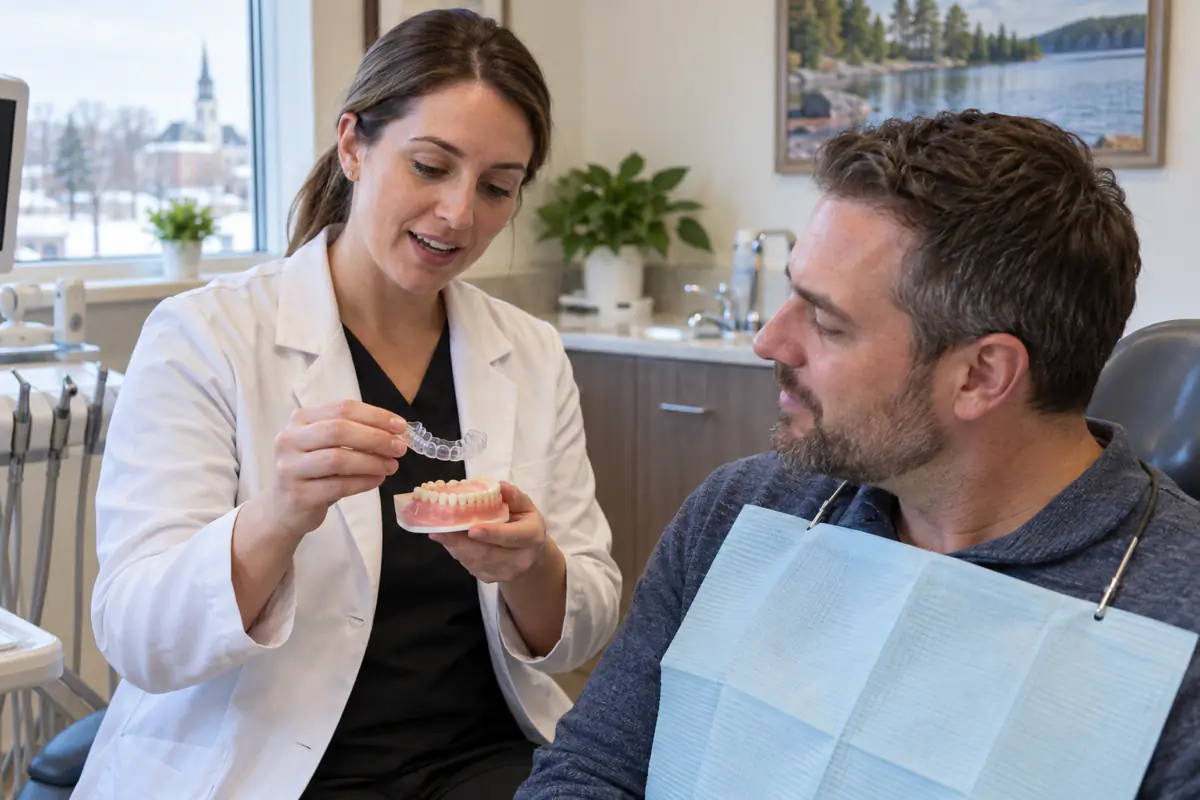
Morning jaw fatigue, flattened tooth edges or a partner who hears grinding may lead you to consider a dental night guard in Simcoe. The appliance can be valuable, but its job is often misunderstood. A guard primarily places a protective layer between the teeth; it does not automatically stop bruxism or cure every headache and jaw-joint symptom.
The best results begin with an examination. Tooth wear has several causes, and a poorly fitting appliance can create new discomfort. A diagnosis, suitable design and periodic review turn a piece of plastic into part of a responsible prevention plan.
What bruxism means
Bruxism is clenching, grinding or bracing the jaw. Awake bruxism usually involves sustained contact or tension during concentration, stress, driving or screen work. Sleep bruxism occurs without conscious control and may include rhythmic muscle activity and grinding sounds.
Not everyone with bruxism needs an appliance. Occasional activity may cause no damage. The concern rises when the teeth or restorations show progressive wear, chips or cracks, or when the muscles feel repeatedly tired and sore.
The National Institute of Dental and Craniofacial Research lists flattened, chipped, loose or sensitive teeth, tired or sore jaw muscles and headache among possible signs. A bed partner may hear grinding, but silent clenching can still apply substantial force.
Signs that deserve an examination
Arrange a dental assessment if you notice:
- tooth edges becoming flatter, shorter or uneven;
- repeated chips in enamel, fillings or crowns;
- new temperature sensitivity without an obvious cavity;
- tight jaw muscles on waking;
- impressions along the tongue or cheek;
- morning temple headaches associated with jaw tension;
- a cracked tooth or pain on biting; or
- a current guard that has split, worn through or stopped fitting.
These findings are not unique to grinding. Acid erosion from reflux or diet, abrasive habits, an unstable restoration, tooth decay and certain bite patterns can resemble or compound bruxism damage. Treating “wear” without identifying its pattern may miss the main contributor.
What a night guard can—and cannot—do
A correctly fitted guard distributes contact across a durable surface and prevents opposing teeth from directly rubbing. It can reduce the chance of further wear and protect vulnerable restorations. Some people also feel less muscle fatigue, although relief is not guaranteed.
A guard cannot rebuild lost enamel, heal a crack or eliminate the biological process that generates sleep bruxism. It does not treat sleep apnea. It may show wear instead of the teeth, which is a useful trade, but that wear means the appliance must be inspected and eventually replaced.
For jaw-joint symptoms, appliances are only one conservative option. Painless joint clicking often needs no treatment, while painful or restricted movement requires diagnosis. Read jaw clicking in Simcoe before assuming a click needs a guard.
Custom versus store-bought guards
Over-the-counter products include stock guards and “boil-and-bite” materials. They cost less and are available quickly, but bulk, retention and uneven contact can be issues. A product that falls out, makes breathing uncomfortable or encourages chewing may not be suitable for nightly use.
A custom guard is made from an impression or digital scan of your teeth. The laboratory or dental office can select a design, material and thickness for the clinical goal. The dentist then checks retention and adjusts how opposing teeth contact the surface. Custom does not mean indestructible, but it usually allows more controlled fit and follow-up.
Cost is only one part of the comparison. Ask how the appliance will be adjusted, what follow-up is included and what signs mean it should be reviewed. If you try a non-custom guard and develop pain, gum injury, gagging or a lasting bite change, stop using it and arrange an assessment.
Night guards are not sports mouthguards
A sports mouthguard is designed to cushion an impact and help protect teeth and soft tissues during athletic activity. It is commonly thicker and covers teeth differently. A night guard is designed for prolonged use during sleep and controlled contact with the opposite arch.
Do not wear a hard night guard for contact sports and do not assume a bulky sports guard is ideal for grinding. Each appliance has a different purpose. Children and teenagers whose teeth and jaws are developing need particularly careful selection and review.
How a custom guard is made
The process usually starts with a complete check of the teeth and gums. Active decay, broken fillings, mobile teeth and significant gum inflammation may need attention first. The dentist documents the wear pattern and asks about symptoms, habits, medications and sleep.
An impression or scan records the tooth shapes. Bite information may also be taken. The guard is then made for the upper or lower arch depending on tooth condition, restorations, comfort and the design chosen. There is no universal rule that one arch is always better.
At delivery, the dentist checks that the guard seats fully without rocking or pinching tissue. Contact with the opposing teeth is adjusted so force is not concentrated on one spot. You should practise inserting and removing it without biting it into place or levering against one tooth.
A follow-up is useful after the mouth has adapted. Bring the appliance sooner if it becomes painful or no longer seats completely.
Getting used to the appliance
Extra saliva and a sense of fullness are common during the first few nights. Wear the guard for a short period before bed while reading to become familiar with it. Breathing should remain easy, and the appliance should stay in place without constant clenching.
Mild awareness is different from sharp pressure, gum cuts or increasing joint pain. Do not reshape a custom guard with hot water or a household tool. Even a small change can alter fit and tooth contact. Contact the dental office for an adjustment.
When the guard comes out in the morning, the bite may feel briefly different because the jaw muscles have been resting in another position. That sensation should resolve quickly. A persistent bite change, tooth mobility or pain is not an adaptation to push through.
Cleaning a night guard safely
Clean the appliance every morning before saliva and plaque dry on it:
- Rinse it with cool or lukewarm water.
- Use a separate soft brush and a cleaner recommended for its material.
- Rinse thoroughly and inspect both surfaces.
- Let it dry in a ventilated case away from pets and children.
- Clean the storage case regularly and allow it to dry as well.
Hot or boiling water can distort many materials. Abrasive toothpaste may scratch the surface, leaving it cloudier and easier for deposits to cling to. Bleach, alcohol, dishwashers and prolonged soaking can damage some guards. Follow the instructions for your specific appliance rather than relying on a generic online cleaning hack.
Brush and floss your teeth before inserting the guard. Trapping food and plaque against teeth overnight increases the risk of odour, gum inflammation and decay.
Storage and travel
Never wrap a guard in a tissue at breakfast; that is an easy way to throw it away. Use a rigid, labelled, ventilated case. Keep it away from a hot car dashboard, direct sun and curious pets, which often chew appliances.
For travel, let the guard dry before closing the case for a long period. Pack the case in carry-on luggage rather than leaving the appliance exposed. Continue your normal cleaning routine, and bring it to the dental office if it was lost, distorted or contaminated.
How long a night guard lasts
There is no reliable calendar expiration. A heavy grinder may wear through a guard much faster than someone with mild clenching. Material, thickness, missing teeth, restorations and daily care all affect longevity.
Look for thinning, rough grooves, splits, sharp edges, colour or odour that does not improve with cleaning, and a change in fit. Do not wait for the guard to break into pieces during sleep. Bring it to routine appointments so the dentist can inspect wear and check that the teeth and restorations remain stable.
If you receive a crown, bridge, implant restoration or orthodontic treatment, the old guard may not fit. Never force it over changed dental work.
Addressing awake clenching
An appliance worn at night does not address hours of daytime tooth contact. Use environmental reminders to release the jaw: lips gently together, teeth apart and facial muscles relaxed. Check yourself during concentrated tasks, stressful conversations and driving.
Reduce habits such as gum chewing and pen biting if muscles are tired. Ergonomic changes, movement breaks, stress management and clinician-directed exercises may help selected people. The goal is awareness without becoming preoccupied with every normal jaw movement.
For more on causes and broader management, see teeth grinding and bruxism in Port Dover.
Sleep symptoms matter
Tell your dentist if anyone observes loud snoring, gasping or pauses in breathing, or if you have substantial daytime sleepiness despite enough time in bed. These symptoms can suggest a sleep-related breathing disorder. A dentist can note oral findings, but diagnosis may require a physician and sleep testing.
Do not use a night guard to self-treat breathing symptoms. Some patients need a medically coordinated oral appliance of a different design, continuous positive airway pressure or another treatment. Managing tooth wear and assessing sleep can happen in parallel.
Special situations
Children often grind at stages of development, and many do not need a guard. Because teeth are erupting and jaws are growing, parents should seek an assessment rather than ordering an adult-style appliance online.
People with braces, removable dentures, loose teeth or active periodontal disease also need an individualized plan. The guard must not interfere with tooth movement or place unsafe pressure on vulnerable teeth. Pregnancy, medication changes and new neurological or sleep symptoms should be included in the history.
When to call promptly
A night guard is preventive equipment, not emergency treatment. Call promptly for a cracked tooth, swelling, severe biting pain or a restoration that has broken. Stop wearing the appliance and request advice if it causes significant pain, numbness, sores, trouble breathing, tooth movement or a bite that remains altered after removal.
Jaw locking, major facial trauma, rapidly spreading swelling or difficulty breathing or swallowing needs urgent assessment. The guard should not delay care.
Ask about a night guard near Simcoe
Port Dover Family Dentistry can assess grinding signs, distinguish them from other forms of tooth wear and discuss whether a custom guard fits your needs. We welcome patients from Simcoe and throughout Norfolk County for preventive and restorative care.
Call 519-583-2929 or request an appointment to have worn teeth, morning jaw fatigue or an existing appliance checked. Bring any guard you currently use so its fit, contact and wear can be evaluated directly.
About the author
Port Dover Family Dentistry Team
Our team provides family-focused dental care in Port Dover, Ontario. We create practical oral-health education to help patients ask informed questions and feel more confident about care. This article is general information and does not replace an examination or personalized diagnosis.