
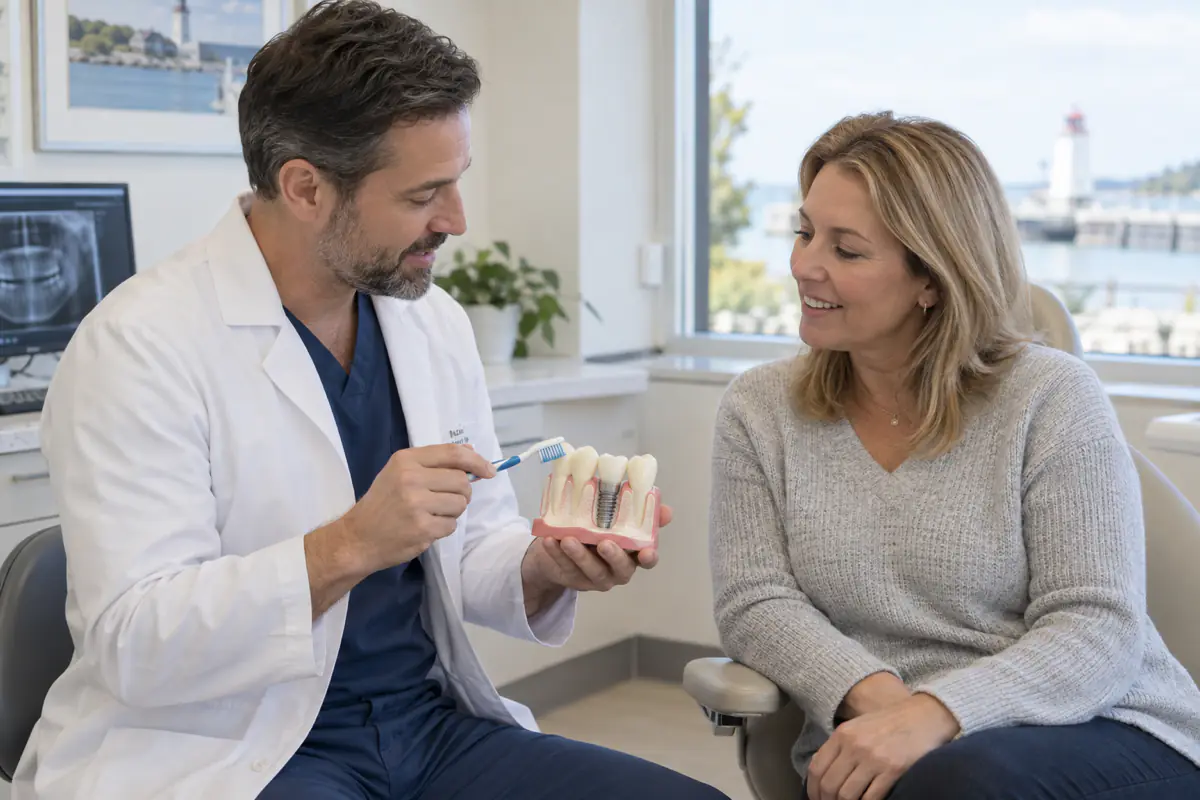
Implant surgery is only one stage of replacing a tooth. Consistent dental implant aftercare in Port Dover supports early wound healing, protects the developing bone-to-implant connection and keeps the final restoration clean over the long term.
Instructions vary because an implant may be placed in healed bone, immediately after extraction, with a bone graft or beneath a temporary tooth. Your surgeon’s written directions take priority over any general guide. The principles are steady: protect the site, control plaque without trauma, avoid overload and attend scheduled reviews.
Understanding the healing stages
Immediately after placement, a blood clot and early soft-tissue seal form around the surgical area. Swelling and mild bleeding are expected to a degree. Over the following days, gum tissue begins closing and discomfort should generally decrease.
Inside the jaw, a slower process called osseointegration occurs. New bone forms close contact with the implant surface, creating stability for the future crown, bridge or denture. The American Association of Oral and Maxillofacial Surgeons explains that this connection develops over several months and is monitored before final restoration.
Feeling comfortable after one week does not mean osseointegration is complete. The implant still needs protection from excessive chewing forces and missed follow-up.
The first day
Bite on gauze as directed to control oozing. A small amount of blood mixed with saliva can look dramatic, but steady heavy bleeding is not expected. Replace gauze only according to instructions; repeatedly pulling it away can disturb clot formation.
Use a wrapped cold pack against the outside of the face for short intervals if advised. Rest with the head elevated. Avoid strenuous exercise, heavy lifting and bending that can increase throbbing or bleeding.
Do not rinse vigorously, spit forcefully, probe the site with your tongue or drink through a straw. Suction and agitation can disturb early healing. Avoid smoking and vaping.
If sedation was used, follow restrictions on driving, work, alcohol, legal decisions and supervision. A responsible adult may need to stay with you.
Eating after implant placement
Choose cool or lukewarm soft foods while numbness and tenderness are present. Options may include yogurt, eggs, oatmeal cooled to a safe temperature, mashed vegetables, soft fish, pasta and smoothies eaten with a spoon rather than a straw.
Avoid very hot, spicy, sharp or crunchy food near the site. Seeds, popcorn and small grains can lodge in healing tissue. Chew away from the implant and do not test the area to see how much force it can tolerate.
Nutrition supports healing. Include protein, fluids and a varied diet within the texture limits. Patients with diabetes should continue an appropriate glucose-management plan and discuss intake changes with their medical team.
Progress texture according to comfort and your surgeon’s directions. A grafted or immediately loaded implant may have longer restrictions.
Pain and swelling
Discomfort often rises as freezing wears off, and swelling may peak during the first few days before improving. Bruising can appear later. The exact pattern depends on the number of implants, grafting and surgical complexity.
Take prescribed or recommended medication exactly as directed. Non-prescription pain relievers are not safe for everyone; kidney disease, liver disease, ulcers, anticoagulants, pregnancy and allergies affect choices. A pharmacist can review interactions.
Call if pain or swelling keeps increasing after the expected peak, suddenly worsens after improving, or is accompanied by fever, pus or a foul taste. Do not use leftover antibiotics or double doses.
Cleaning the mouth during early healing
Plaque control is important, but the surgical site must not be scrubbed. Brush unaffected teeth normally and use a soft brush carefully near the area according to the surgeon’s timeline. Stitches, graft membranes and healing caps may require a specific method.
If a medicated rinse is prescribed, use the amount and duration directed. More frequent or prolonged use can cause staining, taste change or irritation. Do not substitute peroxide, alcohol or concentrated essential oils.
Warm salt water may be recommended after the first day, but timing and concentration should follow the office’s instructions. Let liquid fall from the mouth rather than forcefully spitting during early healing.
Stitches and healing caps
Some stitches dissolve, while others are removed at a follow-up. Do not pull a loose end. If a suture unravels, contact the office and describe whether the wound has opened or is bleeding.
A small metal healing cap may be visible above the gum. Keep it clean as directed but do not twist it. If the cap feels loose, call promptly. A loose component is different from a moving implant, and both need professional assessment.
Do not place denture adhesive, whitening gel or home remedies over the site unless instructed.
Temporary teeth and immediate loading
Some implants support a temporary crown or bridge on the day of surgery. “Immediate tooth” does not mean the implant is fully integrated or ready for normal biting. The provisional is often shaped to limit contact and must be treated gently.
Follow a soft diet for the specified period. Do not bite directly with a temporary front implant crown unless cleared. If the temporary chips, loosens or seems to contact first, stop using it and call.
A removable temporary denture should not press on the wound. If it rubs or rocks, have it adjusted rather than adding layers of adhesive.
Tobacco, vaping and alcohol
Smoking restricts blood flow, interferes with tissue healing and increases implant complications. Vaping exposes the site to heat, chemicals and suction. Avoid both, ideally stopping before surgery and continuing abstinence long term.
Alcohol can interact with pain medicine, antibiotics or sedatives and may increase bleeding or dry tissues. Follow the surgeon’s restrictions. Cannabis products can interact with sedation and affect judgment; disclose use honestly before treatment.
If quitting tobacco is difficult, ask a physician, pharmacist or dental professional about evidence-based support. Hiding use prevents accurate risk planning.
Follow-up appointments
Early review checks tissue closure, infection signs, bite, sutures and the fit of temporary appliances. Later visits evaluate implant stability and bone response. Dental X-rays may be selected when they provide useful information.
Do not skip a follow-up because the site feels fine. Some problems develop quietly. Conversely, contact the office between visits for new mobility, bleeding, swelling, numbness that does not improve or a loose component.
The restorative dentist and surgeon may share care. Know whom to call for the surgical site versus the provisional or final tooth.
When the final crown is placed
After integration and tissue maturation, an impression or scan records the implant position. The laboratory makes a crown designed for fit, bite and cleanability. It may be attached with a screw or cement, each with maintenance considerations.
At delivery, the dentist checks contacts and bite. The implant lacks the same periodontal ligament sensation as a natural tooth, so a high contact may not be obvious to you immediately. Report persistent biting awareness or discomfort.
Ask where the cleaning access is and have the technique demonstrated. The final crown marks a transition to long-term maintenance, not the end of care.
Daily cleaning around the implant
An implant cannot get a cavity, but plaque can inflame surrounding gum. Brush twice daily with a soft brush and low-abrasive fluoride toothpaste appropriate for the rest of your teeth. Clean between the implant and neighbouring teeth every day.
Depending on space and restoration design, tools may include:
- regular floss;
- implant-specific floss or a threader;
- properly sized interdental brushes;
- a water flosser; and
- an end-tuft brush for difficult contours.
Avoid exposed metal wire rubbing against the implant surface unless the product is designed and sized for this use. A hygienist can select tools and show the angle on your actual restoration.
Peri-implant inflammation
Peri-implant mucositis is inflammation limited to soft tissue and may produce redness, swelling or bleeding. It can often improve when plaque and contributing factors are controlled. Peri-implantitis includes progressive bone loss and requires professional treatment.
Pain is not always present. Watch for:
- repeated bleeding during gentle cleaning;
- pus or a bad taste;
- gum recession exposing implant components;
- swelling;
- increasing pocket depth;
- radiographic bone change; or
- implant or restoration mobility.
Do not wait for the implant to hurt. Bone loss may be advanced before pain develops.
A loose crown versus a loose implant
A crown can loosen from its screw or cement while the implant in bone remains stable. You may notice clicking, rotation or a changing bite. Avoid chewing and call; early tightening or recementation may prevent component fracture.
If the implant fixture itself is mobile, the situation is more serious and needs prompt evaluation. Do not keep testing movement with fingers or tongue. Only examination and imaging can distinguish the component involved.
Grinding and overload
Clenching and grinding can overload implant components and natural teeth. Signs include chipped porcelain, screw loosening, muscle tenderness and wear on neighbouring teeth. A night guard may distribute forces when professionally designed.
An old guard may not fit after the implant crown is placed. Never force it over new dental work. Bring it to the restoration appointment for assessment.
Health factors and long-term success
Diabetes control, periodontal history, tobacco use, medications and immune health can influence healing and maintenance. Tell the team about changes rather than assuming they are unrelated.
Patients with a history of gum disease often need closer monitoring because they may be at higher risk around implants. Professional maintenance intervals are based on risk, cleaning access and findings—not a single schedule for everyone.
Our guide to dental implants in Norfolk County explains planning, grafting and replacement choices before surgery.
Urgent warning signs
Call the surgical office for uncontrolled bleeding, rapidly increasing swelling, fever, pus, severe pain that does not respond as expected, worsening numbness, a loose implant or an allergic reaction. Difficulty breathing or swallowing and rapidly spreading face or neck swelling require emergency medical care.
Do not wait for a scheduled follow-up if symptoms are worsening. Provide the date of surgery, site and medications when calling.
Arrange implant follow-up in Port Dover
Port Dover Family Dentistry can help coordinate implant restoration and long-term maintenance, assess the surrounding gum and review cleaning tools suited to your crown or bridge.
Call 519-583-2929 or request an appointment for implant-care questions. For recent surgery with increasing swelling, bleeding, fever or mobility, call the treating office directly and describe the symptoms promptly.
About the author
Port Dover Family Dentistry Team
Our team provides family-focused dental care in Port Dover, Ontario. We create practical oral-health education to help patients ask informed questions and feel more confident about care. This article is general information and does not replace an examination or personalized diagnosis.