
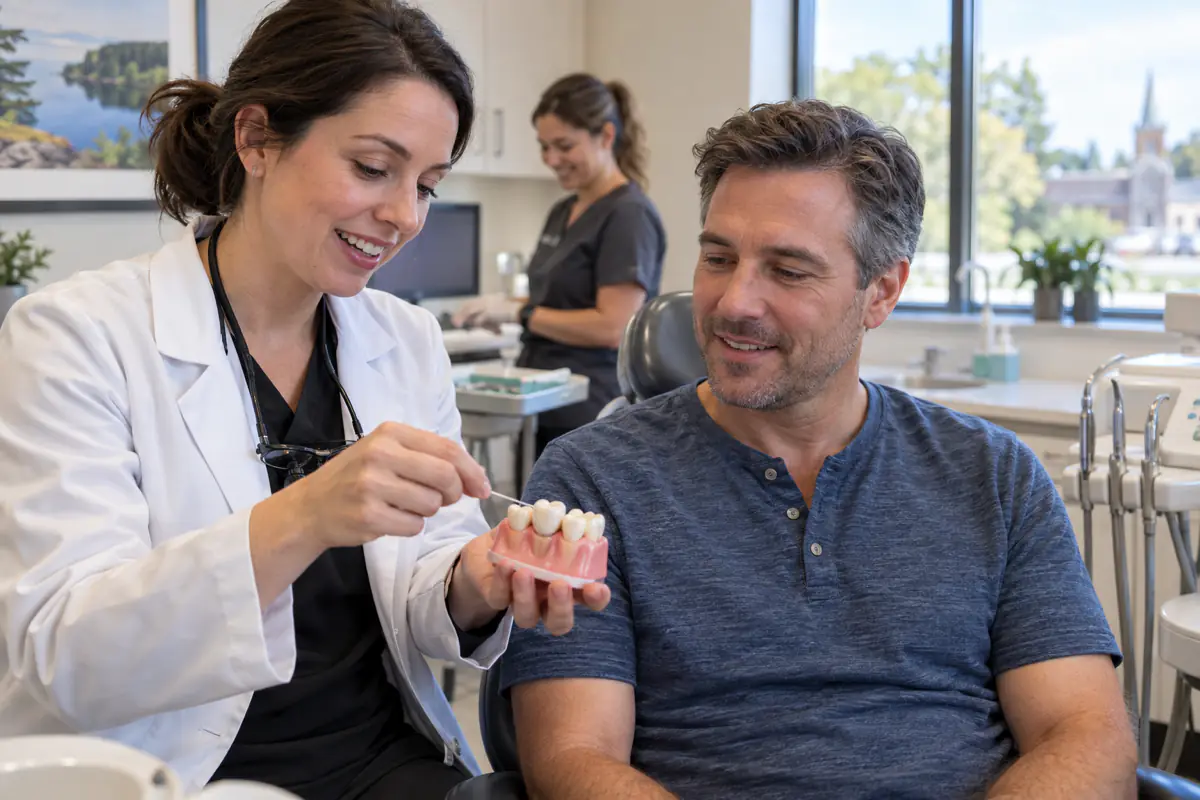
A crown restores a tooth that is too weakened, cracked or heavily repaired for a smaller filling. Good dental crown aftercare in Simcoe protects both the restoration and the natural tooth underneath. The first few days focus on cement, bite and sensitivity. Long-term success depends on cleaning the margin, controlling decay risk and avoiding forces that can fracture the crown or supporting tooth.
A crown is sometimes called a cap, but it does not make the tooth maintenance-free. Natural root and tooth structure remain beneath the edge. Plaque, cavities, gum inflammation and cracks can still develop, so ongoing examinations matter.
Temporary and permanent crowns need different care
A laboratory-made crown often requires two visits. At the first, the dentist prepares the tooth, takes a scan or impression and places a temporary crown. At the second, the temporary is removed and the definitive crown is checked and cemented.
Some offices fabricate final crowns in one visit. Material and cement still affect immediate instructions, so ask before leaving.
Temporary crowns use weaker cement because they must be removed. They protect the prepared tooth but are less resistant to sticky food, hard chewing and floss being pulled upward. A final crown is stronger, but its cement also needs the care period specified by the dentist.
Wait for numbness to wear off
Local anesthetic can affect the tongue, lip and cheek for several hours. Avoid chewing until normal feeling and control return. Otherwise, you may bite soft tissue or burn yourself with a hot drink without realizing it.
If a child or dependent adult received treatment, supervise closely. A numb lip may feel enlarged even when it looks normal, and repeated chewing can create a painful ulcer.
Numbness should gradually fade. Contact the office if it persists far beyond the expected timeframe or is accompanied by unusual weakness, swelling or other symptoms.
What to eat on the first day
Follow the instructions for the crown and cement used. Once eating is allowed and numbness has resolved, begin with food that is easy to chew and moderate in temperature. Use the other side if the tooth is tender.
Avoid ice, hard candy, popcorn kernels and very sticky sweets. With a temporary crown, caramel, gum and chewy bread can pull the restoration free. Cut firm food into smaller pieces rather than biting directly with a newly restored front tooth.
A definitive crown should ultimately function in a normal balanced diet. Long-term avoidance may signal an unresolved bite or sensitivity problem.
Mild sensitivity can occur
The tooth may react briefly to cold or pressure after preparation and cementation. Gum tissue can also feel tender where the crown edge was shaped or excess cement removed. Symptoms should become less noticeable, not progressively worse.
Use a soft brush and fluoride toothpaste. A desensitizing formula may help when recommended, but it often requires consistent use. Avoid repeatedly testing the tooth with ice water.
Call for lingering heat or cold pain, spontaneous throbbing, night pain, swelling or a bad taste. The pulp may need further evaluation.
A crown can feel high after numbness fades
The dentist checks your bite before you leave, but anesthetized tissues and a tired jaw can make the normal closing position difficult to reproduce. A small high point may only become obvious at dinner.
Signs include one tooth touching before the others, sharp pain when chewing, jaw shifting to avoid the crown or a sense that the crowned tooth is taller. Do not wait for porcelain or opposing enamel to “wear it in.” Call for a bite check.
A simple adjustment may protect the crown, tooth and jaw muscles from repeated overload.
Brushing around the crown margin
Brush twice daily with fluoride toothpaste. Angle soft bristles toward the gumline so they contact the junction between crown and tooth. Use light pressure; aggressive scrubbing can irritate gums and wear exposed roots.
An electric brush can help with timing and pressure when used correctly. The crown material does not require a hard brush or special abrasive paste.
If the gum bleeds initially, continue gentle cleaning. Persistent bleeding, swelling or tenderness requires an assessment of plaque, cement remnants, crown contour and periodontal health.
Flossing a single crown
Guide floss through the contact without snapping it into the gum. Curve it around the crowned tooth and move vertically along the side, then repeat against the neighbour. Clean slightly below the gum edge where plaque collects.
Floss should pass with light resistance and return without shredding. If it cannot enter, catches sharply or tears repeatedly, call the office. The contact or margin may need finishing.
For a temporary crown, the dentist may tell you to slide floss out through the side instead of lifting it back through the contact. Follow that instruction to avoid dislodging the temporary.
Bridges and connected crowns
Ordinary floss cannot drop between connected units. Use a floss threader, bridge floss, interdental brush or water flosser to clean beneath the replacement tooth and around supporting crowns.
The space must be cleaned daily because plaque and food can collect on the tissue-facing surface. Your hygienist should demonstrate the exact path and size of tool that fits without force.
A water flosser may be a helpful addition but does not remove existing tartar or guarantee that every surface is clean.
If a temporary crown comes off
Keep the crown in a clean container and call the dental office. The prepared tooth may be sensitive, and neighbouring teeth can shift enough to complicate final-crown fit if the temporary remains out.
Do not use household glue. Do not force the crown into place if it does not seat easily. Pharmacy temporary cement may be appropriate in limited circumstances, but ask the dental team before using it.
Avoid chewing on the exposed tooth and keep it gently clean. Significant pain, swelling or fracture needs urgent assessment.
If a permanent crown loosens or falls out
Save the restoration and arrange prompt care. A crown may loosen because cement failed, decay developed, the underlying tooth fractured or retention changed. Simply re-cementing without checking the cause can miss a serious problem.
Do not clean the inside with sharp tools or bleach. Never glue it yourself. If the tooth is painful, avoid temperature extremes and chewing on that side.
A crown that repeatedly loosens may need replacement or a different restorative plan.
Crowns can still develop cavities
The crown material cannot decay, but the natural tooth at its margin can. Plaque, dry mouth, frequent sugar exposure and a difficult-to-clean edge raise risk. Root decay can travel beneath a crown and weaken the foundation.
Fluoride toothpaste, daily interdental cleaning and water between meals help. Higher-risk patients may need varnish or prescription fluoride.
The NIDCR dental-fillings overview notes that fillings and crowns do not last a lifetime and may need replacement. Regular examinations detect margin changes before the crown becomes visibly loose.
Gum recession can expose the edge
Gums may recede because of periodontal disease, tissue anatomy, brushing trauma or tooth position. A dark line can appear where the root or metal substructure becomes visible. The crown itself may still be intact.
Treatment depends on cause, sensitivity, decay and appearance. Options may include monitoring, desensitizing care, gum treatment, grafting or crown replacement. Replacing a sound crown does not correct active gum disease.
Bring older photographs if appearance changed gradually; they can help document recession.
Grinding and crown fractures
Porcelain and ceramic are strong under normal chewing but can chip under concentrated force. Grinding also threatens the natural tooth and opposing enamel. Signs include flattened edges, morning muscle fatigue and repeated restoration damage.
A custom night guard may be recommended after the bite and jaw are assessed. It distributes force and separates teeth but does not guarantee that no restoration will break.
Avoid chewing ice, pens and hard kernels. Do not use crowned teeth to open packages.
What if porcelain chips?
A small surface chip may be smoothed or repaired with composite. A larger fracture, exposed core, sharp edge or compromised contact may require crown replacement. The dentist also checks for decay or fracture underneath.
Save any fragment and avoid chewing on the area. Dental wax can temporarily cover a sharp edge that rubs the tongue or cheek.
Do not file ceramic at home. Dust, heat and uncontrolled removal can damage the crown and surrounding tissue.
Pain months or years later
A crowned tooth can develop pulp inflammation, root infection, recurrent decay, fracture or gum disease long after placement. Pain on biting, a gum bump, swelling, bad taste or lingering temperature sensitivity deserves assessment.
Root canal treatment can often be completed through a crown when the restoration and tooth remain suitable. In other cases, crown removal or replacement is necessary. A vertical root fracture may make the tooth non-restorable.
Do not assume a crowned tooth has no nerve. Unless previous root canal treatment removed the pulp, the living tissue remains inside.
Crown colour and whitening
Whitening products change natural tooth colour but do not lighten porcelain, ceramic or composite restorations. If you whiten after a visible crown is made, the surrounding teeth may become lighter and create a mismatch.
Discuss cosmetic plans before crown shade selection. If the colour changes later, replacing a healthy crown solely for appearance sacrifices additional tooth structure and should be considered carefully.
Whitening toothpaste may remove some surface stain but can be abrasive. Ask which product is safe around exposed roots and restorative materials.
How long does a crown last?
There is no fixed expiry date. Longevity depends on remaining tooth, crown material, fit, bite force, decay risk, gum health and daily care. A crown that functions well and has healthy margins is not replaced just because it reached a particular age.
At checkups, the dentist evaluates the margin, contact, bite and supporting tooth. X-rays may be prescribed when useful for detecting hidden decay or infection.
Repairing a small chip can sometimes preserve a serviceable crown. Confirmed leakage, fracture or recurrent disease may require replacement.
When to call urgently
Call the dental office for a loose crown, high bite, increasing pain, swelling, fever, drainage, a broken tooth or a restoration that prevents normal eating. Seek emergency medical care for rapidly spreading swelling, difficulty breathing or swallowing, swelling near the eye or neck, or serious facial trauma.
Mild temporary sensitivity can be observed according to the dentist’s instructions, but symptoms should trend toward improvement. When uncertain, an early call is safer than prolonged testing at home.
Dental crown follow-up near Simcoe
Port Dover Family Dentistry provides crown placement, maintenance and repair assessment for patients from Simcoe and throughout Norfolk County. We can check sensitivity, adjust a high bite, assess a loose restoration and demonstrate cleaning around single crowns and bridges.
Call 519-583-2929 or request an appointment. Our crown versus filling guide explains why one option may be recommended over the other.
Frequently asked questions
Can I use an electric toothbrush on a crown?
Yes. Use a soft compatible head and light pressure. An electric brush does not loosen a properly cemented crown when used as directed.
Why is the gum dark beside my crown?
Possible causes include recession, inflammation, staining, the crown material or decay. Appearance alone cannot distinguish them, so arrange an examination if the change is new.
Do I need a special toothpaste for crowns?
Most people can use a regular fluoride toothpaste. Avoid unnecessarily abrasive products and follow individualized advice for sensitivity, dry mouth or high cavity risk.
About the author
Port Dover Family Dentistry Team
Our team provides family-focused dental care in Port Dover, Ontario. We create practical oral-health education to help patients ask informed questions and feel more confident about care. This article is general information and does not replace an examination or personalized diagnosis.