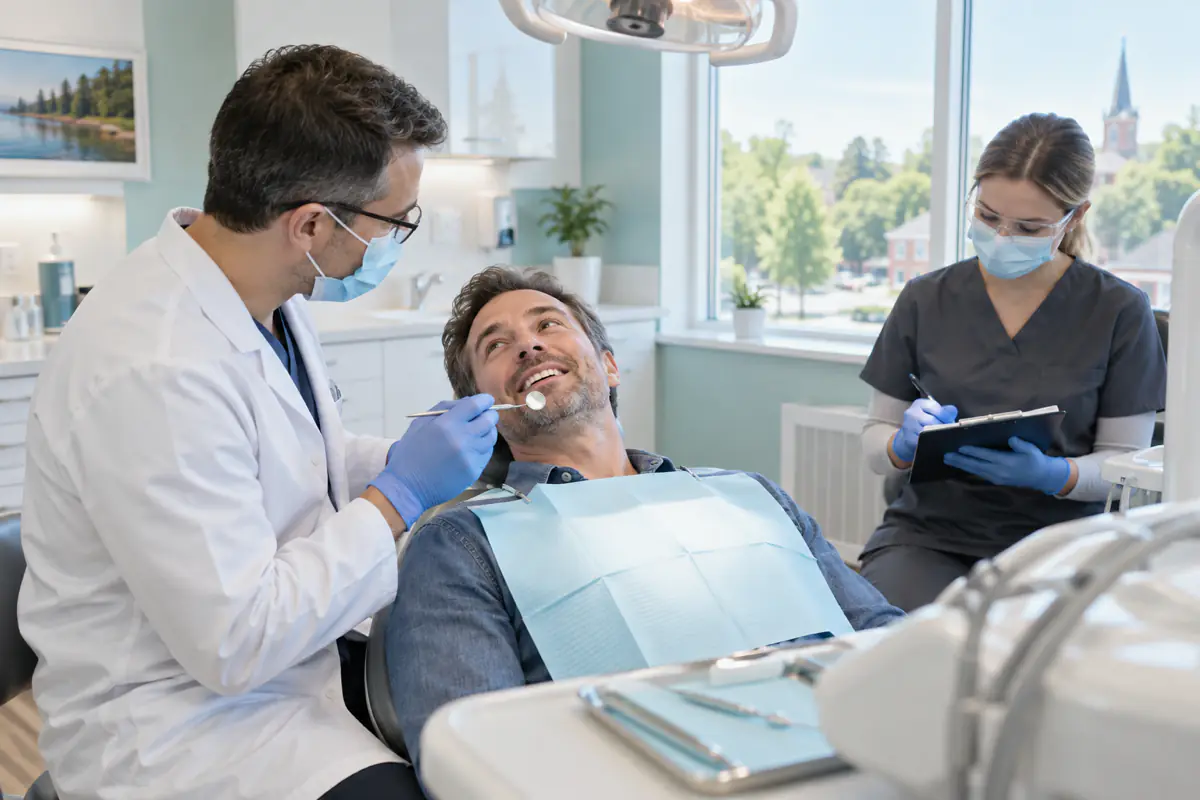
A dental checkup in Simcoe is more than a quick search for cavities. It is a structured review of your teeth, gums, bite, soft tissues and changing risk factors. A good examination also gives you time to discuss sensitivity, appearance, dry mouth, jaw symptoms or anything that has changed since your previous visit.
Knowing what will happen can make the appointment easier, particularly if you are new to a practice or returning after a long gap. The exact steps vary with age, health and findings, but the purpose remains consistent: identify problems early, understand why they developed and create a proportionate plan.
Checkup, cleaning and consultation are different
These terms are often used as if they mean the same thing. A checkup is a diagnostic service performed by a dentist. A professional cleaning is preventive or periodontal care provided by a dentist or dental hygienist. A consultation may focus on one concern, such as an implant, cosmetic change or second opinion.
Many routine visits combine an examination and cleaning for convenience. That does not make them one procedure. Someone with active gum disease may need a different type or length of hygiene appointment. Someone with acute pain may need a focused emergency examination before routine preventive care.
When booking, describe what you need instead of simply asking for “a visit.” That helps the office reserve appropriate time.
Updating your health history
Oral care is connected to general health. At each checkup, confirm diagnoses, allergies, pregnancy status, surgeries and current medications, including non-prescription products and supplements. Mention changes even if they do not seem dental.
Blood thinners can affect bleeding decisions. Diabetes can influence gum health and healing. Some medicines reduce saliva, increasing cavity risk. Osteoporosis medicines and cancer therapies can change planning for invasive treatment. A new heart condition may require communication with your physician.
Do not stop a prescribed medicine before dental care unless the prescribing clinician and dentist direct it. Bring an accurate list with doses rather than trying to remember names in the chair.
The conversation before the examination
The dentist or team will ask about pain, sensitivity, bleeding, chewing, sleep, appearance and previous treatment. This history often provides clues that cannot be seen on an X-ray.
Describe when a symptom began, what triggers it and how long it lasts. Note whether pain wakes you, whether food packs in one spot or whether your bite recently changed. If you grind, snore, use tobacco or sip sweet drinks frequently, honest details support better recommendations.
This is also the time to share anxiety, a sensitive gag reflex, mobility needs or a previous difficult experience. Small adjustments—clear explanations, agreed pauses or a more upright chair—can make the examination more manageable.
Examination of the teeth
The dentist visually and tactically assesses each tooth and existing restoration. They look for decay, cracks, wear, erosion, chips, leaking margins and changes in colour or shape. A small mirror and light provide different viewing angles; air may be used to dry a surface so early changes are easier to see.
Existing fillings, crowns, bridges, implants and dentures are checked for stability and cleanability. A restoration does not expire on a fixed date. It is repaired or replaced when findings such as decay, fracture, poor fit or symptoms justify treatment.
The dentist may also assess how the teeth contact. Uneven wear, mobility or a fractured cusp can make bite evaluation especially relevant.
Gum and bone assessment
Healthy-looking teeth can still lose support from periodontal disease. The team examines gum colour, contour, bleeding and recession. A thin periodontal probe measures the space between each tooth and gum. Deeper sites, bleeding and attachment changes help determine whether more investigation or treatment is needed.
Dental X-rays may show the bone level around teeth. Mobility, tartar, plaque and risk factors such as smoking or diabetes add context. Measurements are most useful when tracked over time, not viewed as isolated numbers.
If periodontal disease is present, an ordinary polish is not a complete treatment. Scaling, root planing, individualized home care and ongoing maintenance may be recommended.
Oral cancer and soft-tissue screening
A routine examination includes more than teeth. The dentist reviews the lips, cheeks, tongue, floor of the mouth, palate and visible throat. They may feel the jaw and neck for unusual firmness or enlarged nodes.
Most sores and colour changes are not cancer, but a persistent ulcer, red or white patch, unexplained lump, numbness, hoarseness or swallowing difficulty needs assessment. Tell the dentist when you first noticed it and whether it changes.
Screening can identify something that deserves follow-up; it cannot guarantee that no disease exists. A suspicious area may require review, referral or biopsy for diagnosis. Our oral cancer screening guide explains the process in more detail.
Jaw joints and muscles
If you report clicking, locking, morning tightness, headaches or chewing pain, the dentist may assess jaw movement and the muscles around the face. Tooth wear and cheek ridges can support a history of clenching, but no single sign proves sleep grinding.
Jaw symptoms have several possible causes, and treatment is usually conservative first. Advice may include temporary diet changes, exercises, habit awareness, physiotherapy or a properly assessed oral appliance.
Mention snoring, witnessed breathing pauses and daytime sleepiness. A dental examination does not diagnose sleep apnea, but dental findings can prompt appropriate medical referral.
Are X-rays always needed?
No. Dental radiographs are prescribed according to clinical need. A new patient with extensive past treatment may need different images from a low-risk child with open contacts or an adult who recently supplied diagnostic-quality records.
X-rays can reveal decay between teeth, bone loss, infection, impacted teeth and conditions hidden beneath restorations. They do not show every fine crack or soft-tissue problem, so they complement rather than replace the examination.
Tell the team if you may be pregnant and provide the date and location of recent images. Dentists balance the expected diagnostic benefit with radiation exposure and use protective measures and modern techniques. Learn more in our guide to dental X-rays.
Professional cleaning at the same visit
If a cleaning is scheduled, the hygienist removes plaque and calculus from accessible tooth surfaces and below the gumline as appropriate. Hand instruments and ultrasonic devices may be used. Polishing removes selected surface stain and leaves teeth smooth, but it is not the step that removes all hardened deposits.
The hygienist also reviews brushing and interdental cleaning. Useful coaching is specific: which surface is being missed, what brush angle reaches it and which size interdental brush fits. Bring your home tools if you want practical feedback.
The amount of calculus, gum condition and sensitivity affect appointment length. Some patients require more than one visit or periodontal treatment rather than a standard cleaning.
Fluoride and preventive recommendations
Fluoride strengthens enamel and supports remineralization. An in-office varnish or home product may be recommended when cavity risk is elevated by dry mouth, exposed roots, orthodontic appliances, frequent decay or dietary patterns.
Sealants may protect deep grooves in selected permanent molars. A sports mouthguard may be discussed for contact activities, and a night guard may be considered when grinding is damaging teeth.
Prevention should match risk. Not everyone needs every product, and no rinse or varnish compensates for untreated disease or ineffective daily cleaning.
How often should you return?
There is no ideal interval for every person. Someone with active cavities, periodontal treatment, dry mouth or complicated medical needs may benefit from shorter intervals. A person with stable health and consistently low risk may be reviewed less often.
The NIDCR oral-hygiene guidance recommends routine checkups and professional cleaning while noting that higher-risk patients may need more frequent care. Your schedule should reflect current findings and be reconsidered as risk changes.
Ask why a particular interval is recommended and what the team plans to monitor. A recall date is a clinical decision, not just a calendar habit.
What if it has been years?
Do not wait until you have completed a perfect home-care routine or feel less embarrassed. Dental teams routinely see people who delayed care because of anxiety, cost, illness, caregiving or past experiences.
The first visit establishes a baseline. Urgent pain and infection are prioritized; the rest can be organized into manageable stages. You remain part of the decision-making process, and informed consent includes discussing alternatives and the consequences of waiting.
If lying back, taking images or completing the full examination is difficult, say so. A phased approach may be possible without ignoring immediate risks.
Preparing for a new-patient checkup
Before the appointment:
- Complete health forms accurately.
- Bring a medication and allergy list.
- Arrange transfer of recent dental records and X-rays.
- Bring insurance or benefit information, understanding that coverage does not determine clinical need.
- Write down your main questions.
- Note when any symptom began.
- Tell the office about accessibility or communication needs.
Eat and take routine medicines as directed unless the office or your physician provides different instructions. Brush normally; there is no need for aggressive last-minute cleaning that leaves gums sore.
Understanding the treatment plan
After the examination, the dentist explains findings and distinguishes urgent care from care that can be monitored or scheduled. Ask to see relevant images or photographs and request plain-language explanations.
A useful plan identifies the diagnosis, recommended option, alternatives, expected benefits, material risks, likely sequence and what may happen without treatment. Cost estimates and insurance predeterminations are administrative tools; they are not guarantees of payment or clinical outcomes.
You can ask for time to consider elective care. Pain, infection or progressive damage may change the urgency, so confirm what delay means in your situation.
Questions worth asking
Consider bringing these questions:
- What has changed since my last examination?
- Which areas are at highest risk?
- Why are these X-rays recommended today?
- Are my gums stable?
- Is any restoration being watched rather than treated?
- Which home-care change would make the greatest difference?
- What symptoms should make me call sooner?
- When should the next examination and cleaning occur?
Clear answers help you participate in decisions and understand the purpose of follow-up.
A dental checkup near Simcoe
Port Dover Family Dentistry welcomes individuals and families travelling from Simcoe and other Norfolk County communities. A dental checkup can establish a baseline, investigate concerns and create a preventive plan suited to your current health.
Call 519-583-2929 or request an appointment. Mention pain or swelling when booking so the team can determine whether you need an urgent focused visit instead of a routine examination.
Frequently asked questions
Will the dentist find every cavity without X-rays?
Not always. Decay between contacting teeth or beneath a restoration may not be visible directly. X-rays are prescribed when their expected diagnostic value justifies them.
Can I have a checkup if I am pregnant?
Yes. Necessary dental assessment should not be postponed automatically. Tell the team about the pregnancy, symptoms, medicines and prenatal care so treatment and imaging decisions can be individualized.
What if I only want a cleaning?
A current examination is important because cleaning without diagnosis can miss decay, infection, advanced periodontal disease or another condition requiring a different approach. The office can explain which examination is appropriate.
About the author
Port Dover Family Dentistry Team
Our team provides family-focused dental care in Port Dover, Ontario. We create practical oral-health education to help patients ask informed questions and feel more confident about care. This article is general information and does not replace an examination or personalized diagnosis.