
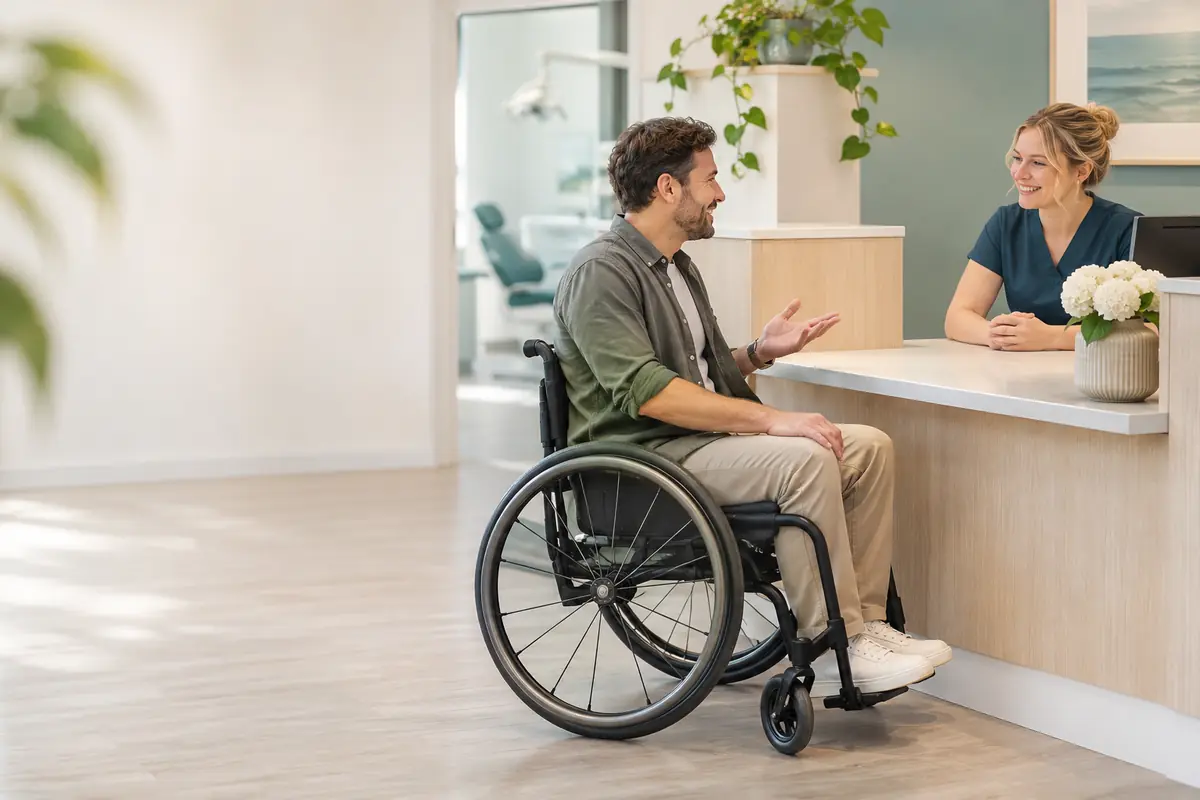
Disability covers an enormous range of experiences. One patient uses a power wheelchair and needs nothing else changed; another has autism and finds bright lights and buzzing instruments overwhelming; a third is Deaf and communicates in ASL; a fourth lives with an intellectual disability and attends with a support worker who knows their routines well. A good dental visit looks different for each of them.
Dental care for people with disabilities in Port Dover works best when it starts with a conversation rather than assumptions. This article is for patients, family members, group-home staff and other caregivers who want to plan a visit that fits. It explains what information is useful to share, practical adjustments you can ask about, and how daily mouth care at home can be adapted.
Why oral health deserves extra attention
People with disabilities have the same need for dental care as anyone else, but they may face more barriers to getting it. Those barriers can be physical, such as stairs or a narrow treatment room, or they can involve communication, sensory overload, transportation, cost or difficulty with daily brushing.
The National Institute of Dental and Craniofacial Research notes that people with developmental disabilities may have higher rates of tooth decay and gum disease, and that some medicines can cause dry mouth or gum overgrowth. It also points out that most people with mild or moderate disabilities can be treated in a general dental practice when care is adapted to them.
Mouth problems can be harder to notice when a person cannot easily describe pain. Changes in eating, sleeping, mood or behaviour are sometimes the first sign of a toothache. Regular examinations help find problems before they cause distress.
Start by sharing what helps
When you book, tell the receptionist about any needs that will shape the appointment. You do not need to explain a diagnosis in detail. Focus on what helps the visit go well. Useful details might include:
- whether you use a wheelchair, scooter, walker or service animal;
- whether you can transfer to a dental chair, and how;
- preferred ways of communicating, including any device or interpreter;
- sensory sensitivities to light, sound, touch, smells or tastes;
- times of day that work best for energy, medication or transportation;
- what has helped or made things harder at past dental visits; and
- who should receive information and appointment reminders.
Our team offers accessible dental care and is glad to talk through specific needs ahead of time. If a detail matters to you, such as entrance access or parking, ask directly when you call so you can plan with accurate information.
Physical access and mobility
For people who use mobility devices, the main questions are usually getting into the building, moving through it and getting into a position for treatment.
Some people prefer to transfer to the dental chair, with or without help. Others find transfers difficult, painful or unsafe. Let the team know your preference and whether you use a transfer board or other equipment. Discuss what support you need and who will provide it.
If sitting back in a reclined position causes discomfort, breathlessness or spasms, say so. Short breaks, pillows or supports and adjustments to the angle of the chair can sometimes help. Bring any cushions or positioning aids you rely on.
Sensory-friendly adjustments
Dental offices are full of sensory input: overhead lights, high-pitched instruments, suction noises, mint flavours and the feeling of tools and gloved hands in the mouth. For people with sensory processing differences, including many autistic people, these can be the hardest part of a visit.
Adjustments worth discussing include:
- wearing sunglasses or a cap to reduce light glare;
- using your own headphones or ear defenders and bringing familiar music;
- bringing a weighted lap pad, fidget item or comfort object;
- asking the team to explain or show each instrument before it is used;
- requesting unflavoured or mild options where suitable;
- scheduling a quieter time of day with less waiting; and
- planning breaks and agreeing on a clear stop signal.
Not every adjustment will be possible for every procedure, but many small changes can make a visit more predictable. Telling the team what has worked elsewhere, at the doctor’s office or hairdresser, is often very useful.
Communication and consent
Everyone has the right to be spoken to directly and with respect. Clinicians should address the patient first, even when a caregiver is present, and allow time for responses.
If you communicate using an augmentative and alternative communication device, sign language, picture symbols or written notes, mention it when booking. Ask what arrangements are possible for an interpreter. Visual schedules, a “first, then” sequence or photographs of the treatment room can help some people know what to expect.
Consent belongs to the patient whenever they are capable of giving it. When a person is not able to make a particular treatment decision, a substitute decision-maker may be involved according to Ontario law. Bring documentation that clarifies this role, and expect the dental team to explain treatment in a way that includes the patient as much as possible.
Medical information the team needs
Some health conditions and medicines affect dental care. Bring a current list of all medicines, supplements and allergies, and mention:
- seizure disorders, including typical triggers and what to do during a seizure;
- heart conditions, bleeding disorders or blood thinners;
- swallowing difficulties or a history of choking or aspiration;
- reflux, which can also wear tooth enamel;
- latex allergy or other sensitivities; and
- any guidance from a physician about positioning, breathing or medicines.
Certain anti-seizure medicines and other drugs can cause gum overgrowth, and many medicines reduce saliva and raise cavity risk. Our article on dry mouth in Norfolk County explores that issue in more depth.
Building familiarity before treatment
Short, gentle visits that do not involve treatment can build trust. A first visit might simply be meeting the team, sitting in the chair and having a quick look with a mirror. Gradual steps over several visits can make later cleanings and treatment much easier.
The same approach helps people with dental anxiety, whether or not they have a disability. Our dental anxiety guide for Port Dover shares further strategies for making visits feel manageable.
Adapting daily mouth care at home
Daily brushing and cleaning between teeth remain the foundation of good oral health. When a disability affects hand strength, coordination, sensory tolerance or cooperation, the routine may need to change.
Tools. Power toothbrushes, toothbrushes with built-up or angled handles, floss holders and interdental brushes can make cleaning easier. A three-sided toothbrush cleans several surfaces at once. Ask your dental team which tools suit the person’s abilities.
Positioning for caregivers. Standing or sitting behind the person, cradling the head gently against your body, often provides better visibility and support than facing them. For someone in a wheelchair, lock the brakes and stand behind or beside the chair. Good lighting matters.
Toothpaste. A small amount of fluoride toothpaste is usually recommended. If the person has trouble spitting or swallowing safely, ask the dental team about the amount and type of toothpaste and about techniques that reduce the risk of choking.
Routine. Brushing at the same times each day, in the same place and in the same order, helps many people tolerate it better. A visual timer or song can mark how long brushing lasts.
Preventive care that may help
Because daily cleaning can be challenging, professional prevention often plays a larger role. Depending on risk, the dentist may suggest more frequent cleanings, fluoride varnish or sealants on the back teeth. Regular dental hygiene and preventive care visits help catch problems early, when treatment is simpler.
Diet also matters. Frequent sweet drinks, sugary snacks or sweetened supplements raise cavity risk. If sweet foods are used as rewards or comfort, consider whether some can be replaced with non-food rewards or tooth-friendlier options.
When more support is needed
Some people need additional help to receive dental treatment safely and comfortably. Options may include nitrous oxide for relaxation, other forms of sedation, or treatment under general anesthesia in a hospital setting. Each option requires an individual assessment of health, needs and safety, and not every option is suitable for everyone.
Our special care dentistry service focuses on patients who benefit from extra time, planning and adapted care. Where a person needs a level of care beyond what is available in the office, a referral to a hospital-based or specialist program may be discussed.
Cost and coverage questions
Dental benefits differ widely. Some people have private insurance, while others may qualify for public programs. The Canadian Dental Care Plan may help eligible residents with certain services; our page on the CDCP outlines how it works. Coverage rules depend on the program and can change, so ask for an estimate and check with your plan before treatment.
Signs that need urgent attention
Call the office promptly if you notice facial or gum swelling, bleeding that will not stop, a broken tooth, a new refusal to eat, pulling or hitting at the face or jaw, or a sudden change in behaviour that might point to pain. People who cannot describe pain may show it in other ways, and caregivers know those signals best.
Swelling that is spreading, fever with facial swelling, difficulty breathing or swallowing, or a seizure that is prolonged or different from usual requires emergency medical care right away.
Frequently asked questions
Can I visit the office before the first appointment?
Many people find a short familiarisation visit helpful, especially with sensory or anxiety-related needs. Ask when booking whether a brief visit to see the space and meet the team can be arranged before any examination or treatment.
What should a caregiver bring to the appointment?
Bring an up-to-date list of medicines, allergies and medical conditions, contact details for physicians, information about communication preferences and anything that helps the person feel calm. If someone else makes health decisions, bring documentation that confirms their role.
Is sedation always needed for patients with disabilities?
No. Many people with disabilities receive routine dental care without sedation when the visit is adapted to their needs. Sedation or general anesthesia may be considered for some treatments or situations after a careful assessment of health, needs and safety.
Planning your visit with our team
Whether you live in Port Dover, Jarvis, Waterford or elsewhere in Norfolk County, we want your visit to start with an understanding of what helps you. Tell us about your needs when you book, and we will talk through the options. Our office is at 697 Norfolk County Hwy 6, Unit 2, Port Dover; call 519-583-2929 or request an appointment. Caregivers supporting an older family member may also find our guide to dementia oral care for caregivers useful.
About the author
Port Dover Family Dentistry Team
Our team provides family-focused dental care in Port Dover, Ontario. We create practical oral-health education to help patients ask informed questions and feel more confident about care. This article is general information and does not replace an examination or personalized diagnosis.





