
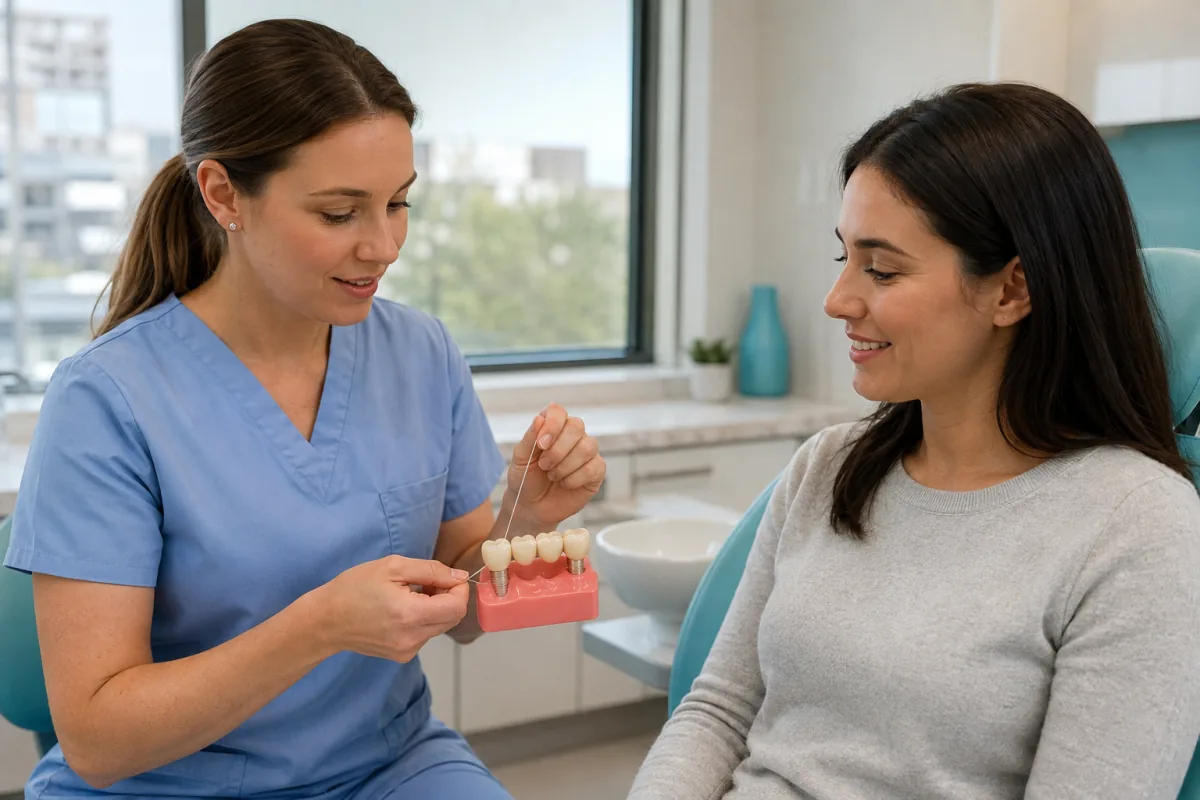
Good dental bridge care in Port Dover focuses on the places a regular toothbrush cannot reach. A fixed bridge replaces one or more missing teeth by joining an artificial tooth to supporting teeth or implants. Because the artificial tooth is connected, ordinary floss cannot drop through from the chewing surface.
Plaque and food still collect along the gumline and underneath. Daily cleaning protects the support teeth from decay and the gums from inflammation. For patients in Port Dover and surrounding Norfolk County communities, learning the correct technique at delivery is as important as choosing the bridge material.
How a traditional bridge works
A conventional bridge uses crowns on teeth beside the space, called abutments. The replacement tooth between them is the pontic. The entire restoration is cemented as one piece.
The abutment teeth carry chewing forces. They may already have large fillings or may be prepared specifically for crowns. Their roots, nerves and gum support remain biological and can develop disease.
An implant-supported bridge uses implants instead of natural teeth. Cleaning principles are similar, but peri-implant tissue and components have different risks.
Why ordinary flossing is not enough
The joined crowns block floss from passing down between units. Plaque can gather where the pontic meets gum and at the crown margins on abutment teeth.
A floss threader is a flexible loop that pulls floss under the bridge. Stiff-ended bridge floss combines a firm leader, spongy section and regular strand. Guide it gently beneath the pontic, curve it along each support and clean with controlled strokes.
Do not snap the threader into tissue or saw aggressively. The hygienist can demonstrate using your bridge because access differs by design.
Interdental brushes
Small cone or cylinder brushes can clean open spaces under or beside a bridge. Choose a size that contacts surfaces without force. A brush that is too small misses plaque; one that is too large can traumatize gums or bend.
Insert from the cheek or tongue side according to access. Replace when bristles become worn. If the wire contacts porcelain or titanium, use a product recommended for the restoration.
Interdental brushes are especially helpful where gum recession creates larger spaces.
Water flossers
A water flosser can flush loose debris and disrupt plaque around a bridge. Aim along the gumline and beneath the pontic at a comfortable setting. Start low if tissue is inflamed.
It does not remove tartar and may not replace all mechanical contact in every design. Many patients use it with bridge floss or small brushes.
Use lukewarm water if teeth are sensitive and clean the reservoir and tip according to manufacturer instructions.
Brushing the bridge
Brush twice daily with fluoride toothpaste and a soft manual or powered brush. Angle bristles toward the gumline of each support tooth and clean the tongue side carefully.
Fluoride protects natural abutment teeth even though porcelain or metal cannot decay. Spit excess paste and avoid rinsing it all away unless directed.
Highly abrasive charcoal or whitening paste can roughen some materials and worsen root sensitivity. Ask which product suits the bridge.
Food trapped under a bridge
Occasional small debris can be removed with floss, an interdental brush or water flosser. Persistent packing may mean the pontic shape, gum contour or neighbouring contact needs review.
Do not dig with pins, toothpicks or metal tools. They can cut tissue and scratch the restoration. A sudden new trap can signal a loose bridge, gum change or fracture.
Bad taste, bleeding or odour beneath one area deserves assessment. Mouthwash may mask smell without removing the cause.
What to eat
A well-functioning bridge should support a varied diet. During initial cement setting or temporary wear, follow specific restrictions. Avoid biting extremely hard items such as ice, kernels and hard candy.
Sticky foods can pull on a temporary bridge. Once the final bridge is stable, ordinary foods are usually acceptable, but chewing packages or objects is never appropriate.
If you avoid an entire side because of pain or looseness, call rather than adapting indefinitely.
Temporary bridges
A temporary protects prepared teeth while the laboratory makes the final restoration. It may be more fragile and is cemented for removal.
Clean carefully. When using floss beside a temporary, the team may instruct you to slide it out sideways rather than pull upward. Avoid sticky and hard foods.
If it comes off, keep it safe and call. Do not use superglue. An uncovered prepared tooth may become sensitive or shift, affecting final fit.
Sensitivity after placement
Mild temperature sensitivity can occur temporarily after teeth are prepared. It should improve. A bite that feels high, pain that increases, lingering heat pain or spontaneous throbbing requires review.
An abutment nerve may become inflamed and occasionally need root canal treatment. This does not always mean preparation was improper; teeth with deep fillings or cracks can have uncertain pulp health.
Never wait for severe pain because you assume a new bridge must “settle.” Small bite adjustments are easier before overload causes damage.
How long bridges last
A bridge may function for many years, but averages do not predict an individual. Longevity depends on:
- health and structure of support teeth;
- crown margin quality;
- gum and bone support;
- daily plaque removal;
- cavity activity and dry mouth;
- grinding and bite force;
- bridge length and design;
- material; and
- professional maintenance.
The artificial tooth cannot decay, but the abutments can. A cavity at one margin may undermine the whole connected restoration.
Warning signs
Contact the office for:
- movement or clicking;
- a new gap at a margin;
- floss shredding;
- persistent bleeding or bad taste;
- food trapping;
- pain on biting;
- temperature sensitivity that lingers;
- chipped porcelain;
- swelling or a gum pimple; or
- a change in bite.
A bridge can loosen on one support while appearing attached on the other. Bacteria may enter beneath it without dramatic movement.
Can a bridge be repaired?
A small porcelain chip may sometimes be polished or bonded. A loose intact bridge may be recemented if support teeth are healthy and fit remains accurate.
Decay, structural fracture or loss of one abutment may require bridge removal. The tooth might need a filling, root canal treatment, build-up or extraction. Sometimes the original bridge can be modified; often a new design is needed.
Household glue is toxic to tissue and makes professional repair harder. Save any detached piece and bring it to the office.
Grinding and night guards
Grinding can chip ceramic, loosen cement and overload abutment teeth. A custom night guard may distribute force and protect the bridge, though it cannot prevent every failure.
The guard must fit over the new contours. An old appliance may no longer seat after bridge placement and should not be forced. See our teeth grinding guide for signs and limitations.
Gum recession
Gums may recede with periodontal disease, thin tissue, brushing trauma or time. A dark crown edge can become visible, and spaces under the bridge may open.
Recession does not automatically mean failure, but the cause must be assessed. Cleaning tools may need to change. Advanced bone loss can weaken support.
Professional gum measurements and radiographs monitor stability. Gum disease prevention remains essential around crowned teeth.
Dry mouth and root decay
Reduced saliva raises cavity risk at bridge margins and exposed roots. Medication is a common contributor. Frequent sweet drinks or lozenges used for dryness add further risk.
Use plain water and non-acidic sugar-free products. Prescription fluoride may be advised. Do not stop medication without the prescriber.
Our dry mouth article explains protective strategies.
Bridge versus implant
A bridge avoids implant surgery and may be efficient when adjacent teeth already need crowns. An implant crown generally avoids preparing sound neighbours but needs bone, surgery and healing.
Neither is maintenance-free. Bridge supports can decay; implant tissue can lose bone. The missing tooth replacement guide compares both with partial dentures and monitoring.
Professional maintenance
The dental team checks margins, gums, bite, porcelain and support teeth. Radiographs may be taken according to risk to look for hidden decay and bone change.
Professional cleaning removes tartar but does not replace daily care under the pontic. Bring your tools so the hygienist can refine technique.
Visit frequency is based on periodontal and cavity risk rather than the presence of a bridge alone.
A daily routine
Morning:
- Brush bridge margins and all teeth with fluoride toothpaste.
- Rinse removable cleaning tools and let them dry.
Evening:
- Thread floss beneath every pontic.
- Use a correctly sized interdental brush where indicated.
- Water-floss difficult spaces if recommended.
- Brush thoroughly before sleep.
Consistency matters more than owning every device. Choose the combination you can use effectively.
Dental bridge care near Port Dover
Port Dover Family Dentistry provides dental bridge assessment, maintenance and repair planning for patients from Port Dover and across Norfolk County. We demonstrate cleaning techniques on the finished restoration and monitor support teeth over time.
Call 519-583-2929 or request an appointment if a bridge feels loose, traps food or has become difficult to clean.
Frequently asked questions
Should my gum touch the bridge tooth?
Pontic shape varies. Some lightly contact gum for appearance, while others allow more cleaning space. It should not create persistent pressure, ulceration or an inaccessible trap.
Can decay under a bridge be seen?
Not always directly. Changes at margins, symptoms and dental X-rays can reveal decay. Regular examinations are important even when the bridge feels normal.
Can I use an electric toothbrush on a bridge?
Yes. A soft powered brush can clean crown margins effectively. It still cannot pass beneath the joined pontic, so add floss or another interdental tool.
About the author
Port Dover Family Dentistry Team
Our team provides family-focused dental care in Port Dover, Ontario. We create practical oral-health education to help patients ask informed questions and feel more confident about care. This article is general information and does not replace an examination or personalized diagnosis.