
A persistent toothache, tender bump on the gum or swelling beside a tooth may indicate a dental abscess in Simcoe. An abscess is a collection of pus associated with infection. It can develop at the root of a tooth, within the supporting gums or in nearby tissues. Some abscesses hurt intensely; others create surprisingly little pain.
What matters is not how dramatic the pain feels but whether infection is present and where it is spreading. Home remedies may briefly dull symptoms, and an abscess may drain on its own, but neither event proves that the source has healed. Dental assessment and definitive treatment protect the tooth when possible and reduce the risk of a more serious infection.
How a tooth becomes abscessed
The centre of a tooth contains pulp tissue made up of nerves, blood vessels and connective tissue. Deep decay, a crack, trauma or a leaking restoration can allow bacteria to reach this space. When the pulp becomes infected and dies, bacteria and inflammatory products can travel through the root tip into the surrounding bone. This is called a periapical abscess.
A periodontal abscess begins in the tissues supporting the tooth. A deep gum pocket, trapped debris or advanced periodontal disease may create an enclosed area where infection accumulates. An abscess can also arise after an injury or when a partially erupted tooth creates a difficult-to-clean pocket.
These conditions can look similar from the outside, but their treatments are different. Root canal treatment addresses infection inside a restorable tooth. Periodontal treatment focuses on the gum pocket and supporting tissues. Extraction removes a tooth that cannot be predictably saved.
Symptoms you may notice
Possible signs include:
- throbbing, constant or pressure-like tooth pain;
- tenderness when biting or tapping the tooth;
- sensitivity to heat or cold that lingers;
- a pimple-like bump on the gum;
- swelling of the gum, cheek or jaw;
- a bad taste or sudden release of foul-tasting fluid;
- fever, fatigue or swollen lymph nodes;
- a tooth that looks darker after an earlier injury; or
- difficulty opening the mouth normally.
The American Association of Endodontists notes that an abscess associated with inflamed or dead pulp may or may not be painful. This is why waiting for severe pain can be misleading.
Why pain sometimes stops
An untreated abscess can find a drainage path through the gum. As pressure decreases, pain may improve and a small gum bump may shrink. Alternatively, the nerve inside the tooth may die and stop responding to temperature. Neither event necessarily removes the bacteria within the root canal system.
The quiet period can last days or much longer while bone around the root continues to be affected. Symptoms may return suddenly if drainage closes or the infection spreads. A tooth that stopped hurting after several severe days still deserves an examination.
How dentists diagnose the source
The dentist begins with the history: when symptoms started, what triggers them, whether swelling is growing, and whether there has been trauma or recent treatment. Medical conditions, allergies and medications matter because they can affect infection risk and safe prescribing.
The examination may include:
- checking the face and neck for swelling or tender nodes;
- inspecting the gums for drainage, pockets and localized swelling;
- tapping teeth and testing bite pressure;
- testing response to cold or another pulp stimulus;
- measuring periodontal pocket depths; and
- taking dental X-rays to view the roots and surrounding bone.
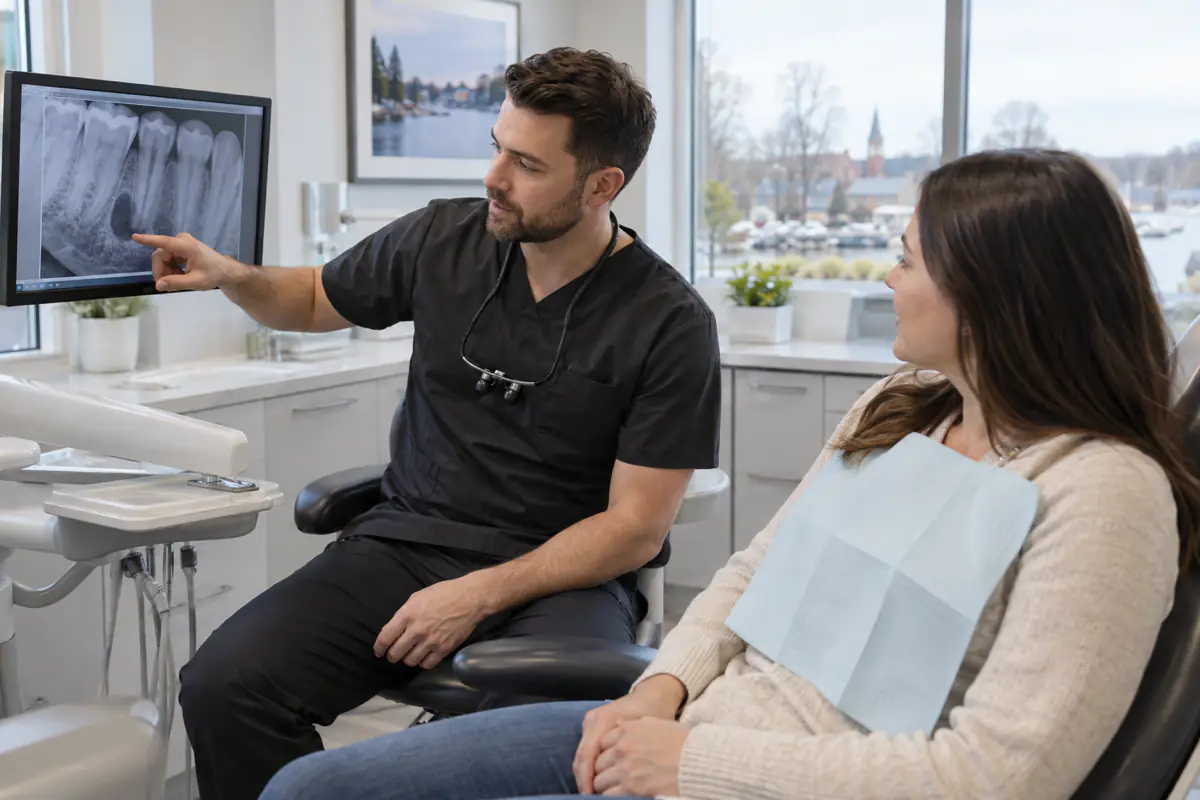
An X-ray may show bone change at a root tip, deep decay or periodontal bone loss, but early disease is not always obvious in one image. Findings are interpreted together rather than using a single test as proof.
Root canal treatment
If infection is inside a tooth that can be restored, root canal treatment may preserve it. After local anaesthetic, the dentist or endodontist opens the tooth, removes infected pulp, cleans and shapes the canal spaces, and seals them. Drainage may occur through the tooth when appropriate.
The tooth then needs a durable final restoration. Back teeth frequently require a crown or another restoration that protects weakened cusps. Root canal treatment removes the internal source; it does not make a cracked or heavily restored tooth immune to future fracture.
Complex anatomy, previous root canal work or an uncertain diagnosis may lead to endodontic referral. For a broader comparison with removal, see root canal versus extraction in Simcoe.
Extraction and drainage
Extraction may be advised when a tooth is vertically fractured, lacks enough sound structure, has severe periodontal support loss or has another poor-prognosis condition. Removing the tooth also removes the infected pulp source, but the socket must heal and replacement options should be discussed.
In some infections, the dentist creates an opening in swollen tissue so pus can drain. This can reduce pressure and help control local infection. Drainage alone does not repair the diseased tooth or periodontal pocket, so follow-up definitive care remains essential.
Do not try to puncture a swelling yourself. Sharp objects can push bacteria deeper, injure blood vessels and introduce new organisms.
The limited role of antibiotics
Antibiotics circulate through blood. They can be important when a dental infection is spreading, accompanied by fever or affecting a medically vulnerable patient. However, blood supply inside dead pulp is absent, and medication cannot mechanically clean a root canal, seal a crack or remove a non-restorable tooth.
The dental procedure is therefore usually the central treatment. Prescribing decisions depend on clinical signs, health history, allergies and current guidance. Do not use leftover antibiotics, share someone else’s prescription or stop early unless the prescriber directs you to do so. Unnecessary or incorrect use can cause side effects and contribute to antimicrobial resistance.
If antibiotics were prescribed and symptoms worsen, contact the dental office. A change in pain does not replace the planned root canal, extraction or periodontal care.
Safe comfort measures while waiting
Call first to determine how quickly you should be seen. Until the appointment:
- Keep the area reasonably clean with gentle brushing.
- Rinse softly with warm salt water if comfortable, then spit it out.
- Choose soft food and chew on the other side.
- Apply a wrapped cool pack to the outside of the face for short intervals.
- Rest with the head somewhat elevated if lying flat increases pressure.
- Use non-prescription pain medicine only if it is medically safe and according to the label.
A pharmacist can help check pain medicine against anticoagulants, ulcers, kidney or liver disease, pregnancy, allergies and other prescriptions. Never place aspirin directly on the gum; it can cause a chemical burn. Avoid heating a swollen face, as warmth may increase discomfort and blood flow in an acute infection.
Warning signs that require emergency care
Dental infections can spread through tissue spaces of the face and neck. Call emergency services or go to an emergency department if there is:
- difficulty breathing or swallowing;
- rapidly increasing swelling beneath the jaw or in the neck;
- swelling that is closing an eye or spreading toward it;
- drooling or inability to swallow saliva;
- confusion, faintness or severe weakness;
- a high fever with marked illness; or
- a rapidly worsening condition in someone with significant immune suppression.
These symptoms need medical stabilization as well as dental source control. Do not drive yourself if breathing feels threatened.
Call a dentist urgently—without waiting for a routine visit—for new facial swelling, fever associated with a toothache, a gum swelling that is enlarging, or pain that prevents sleep and eating. Explain the exact symptoms when booking.
Children and dental abscesses
A child with facial swelling needs prompt assessment. Infection in a primary tooth can spread, and the tooth’s proximity to the developing permanent successor influences treatment. Do not assume a baby tooth can be ignored because it will eventually fall out.
Watch for reduced drinking, unusual sleepiness, fever, trouble swallowing or swelling near the eye. Use only age- and weight-appropriate medication under professional directions. Never give aspirin to a child unless a physician specifically prescribes it.
Parents can read our guide to a child toothache in Simcoe for practical questions to ask and signs that should change the urgency.
Can an abscess return after treatment?
Recurrence is possible if bacteria remain in complex canal anatomy, a restoration leaks, new decay forms or a root fractures. Periodontal abscesses can return when deep pockets are not maintained. This is why the final restoration and follow-up matter.
After treatment, contact the office for swelling that returns, a gum bump that does not resolve, increasing pain or a tooth that feels high when biting. Endodontic retreatment or surgery can sometimes preserve a previously treated tooth; in other situations extraction is more predictable.
Routine checkups can identify decay and failing restorations before pulp becomes infected. Daily fluoride toothpaste, cleaning between teeth, a lower frequency of sugary drinks and professional periodontal care reduce preventable routes to infection.
What an abscess is not
A canker sore is a shallow soft-tissue ulcer and is not pus from a tooth root. A cold sore is viral. A salivary gland blockage may swell around meals. A jaw cyst, benign growth or oral cancer can occasionally resemble a persistent bump.
Do not self-diagnose a lump based on a photograph. Any unexplained swelling, draining spot or sore that persists should be examined. A dentist can determine whether teeth, gums, salivary tissue or another structure is involved and arrange referral when needed.
Preventing another infection
Prevention focuses on controlling decay, cracks and gum disease:
- brush twice daily with fluoride toothpaste;
- clean between teeth every day;
- limit frequent exposure to sugary and acidic drinks;
- wear a sports mouthguard for collision and fall-risk activities;
- have chipped, cracked or loose restorations assessed promptly;
- manage dry mouth before decay accelerates; and
- attend recall visits based on personal risk.
People with diabetes, immune suppression or a history of head and neck radiation should tell the dental team. Coordination with medical clinicians may affect timing, prevention and treatment.
Get help for a suspected abscess near Simcoe
Port Dover Family Dentistry welcomes patients from Simcoe and throughout Norfolk County for tooth pain, swelling and infection assessment. We can identify the likely source, explain whether a tooth is restorable and coordinate specialist care when appropriate.
Call 519-583-2929 if you suspect an abscess; do not rely solely on an online request when swelling or fever is present. For non-urgent concerns, you may also request an appointment. Difficulty breathing or swallowing, rapidly spreading swelling or severe systemic illness requires emergency medical care.
About the author
Port Dover Family Dentistry Team
Our team provides family-focused dental care in Port Dover, Ontario. We create practical oral-health education to help patients ask informed questions and feel more confident about care. This article is general information and does not replace an examination or personalized diagnosis.