
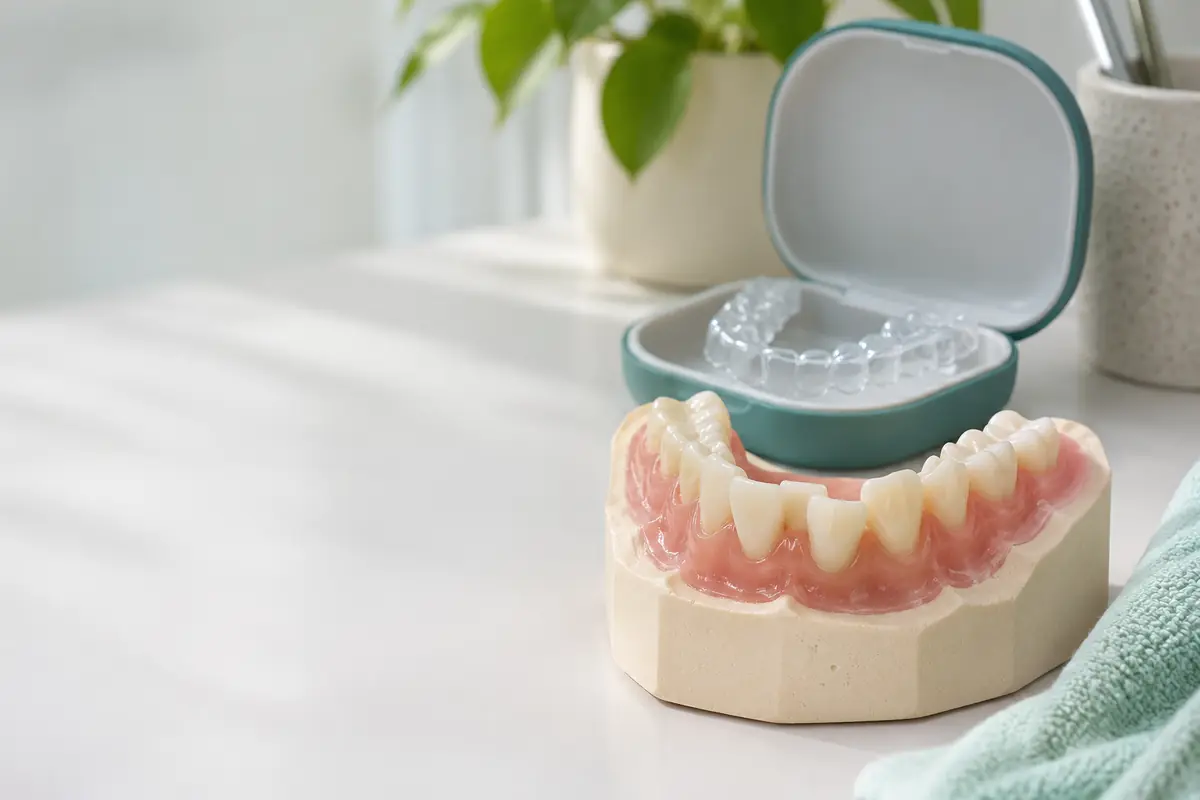
Teeth are not set in stone once you reach adulthood. The bone around them remodels, the bite settles and small forces from chewing, swallowing and speaking keep acting on them for decades. For most people these changes are slow and subtle. For others, they eventually show up as a lower front tooth that has started to twist or overlap, or as a smile that no longer looks the way it did in old photos.
Crowded teeth in adults in Port Dover bring patients in for a range of reasons. Some are bothered by appearance. Many more notice practical effects first: floss shredding between two tight teeth, food packing in the same spot, tartar building up behind the lower front teeth, or a hygienist mentioning that one area keeps bleeding. A few people had braces as teenagers and are frustrated to see teeth moving again.
This article explains why crowding develops or worsens later in life, how it affects your oral health, and the range of options from better cleaning tools to orthodontic treatment.
Why teeth keep moving after adolescence
Several normal processes contribute to late crowding. The jaws continue to change slowly in adulthood, and the lower jaw’s growth pattern can leave less room for the lower incisors over time. Teeth also have a natural tendency to drift toward the front of the mouth. As enamel wears where teeth touch each other, the arch can shorten slightly, and the front teeth may overlap to take up the slack.
The lower front teeth are often affected first because they are small, have narrow roots and sit in a tight curve. Many adults notice a single tooth that has turned or moved in, even if the rest of their smile looks unchanged.
The retainer factor
People who had orthodontic treatment are often told to wear retainers for a long time, sometimes indefinitely at night. When retainers are lost, stop fitting or are put away in a drawer, teeth can relapse toward their original positions. Fixed wire retainers bonded behind the front teeth can also break or come loose without being noticed.
If you still have a retainer that fits, keep wearing it as instructed. If it feels tight, cracked or no longer seats properly, do not force it. Bring it to your dental visit. Our guide to retainer care in Port Dover explains cleaning, storage and what to do when a retainer stops fitting.
Tooth loss and gum disease can trigger shifting
When a tooth is removed and not replaced, the teeth on either side and the opposing tooth can move into the gap. That shift can ripple through the arch, opening spaces in one place and crowding in another.
Gum disease is an important cause to rule out. As periodontitis reduces the bone that anchors teeth, they become more mobile and can tip, rotate or flare outward. Upper front teeth may fan out, and lower teeth may start to overlap. New crowding accompanied by bleeding gums, bad breath, gum recession or teeth that feel loose should be checked soon rather than treated as a cosmetic issue.
What about wisdom teeth?
It is a common belief that erupting wisdom teeth push the other teeth forward and cause crowding. Research has not supported that idea as the main explanation. Crowding of the lower front teeth occurs in people who have never had wisdom teeth or who had them removed.
That does not mean wisdom teeth never need attention. They can be difficult to clean, may develop cavities or gum infections, or may damage the tooth in front of them. Those are separate reasons for assessment, explained in our article on wisdom teeth removal. Removal is not generally recommended solely to prevent crowding.
Grinding, habits and the bite
Heavy grinding or clenching wears teeth and can change how they meet. A tongue that presses forward, nail biting, chewing on pens and lip habits apply small repeated forces that may contribute to movement over time. The way the upper and lower teeth meet also matters; teeth that are pushed during biting may migrate gradually.
Your dentist will look at these factors during an examination, because addressing a contributing habit can make treatment more stable.
How crowding affects your gums and teeth
Crowded teeth create tight contacts, overlapping surfaces and hidden corners where plaque is hard to reach. Over time that can mean:
- more bleeding and inflammation in specific areas;
- faster tartar buildup, especially behind the lower front teeth;
- a higher chance of cavities starting between teeth;
- food impaction that causes soreness or odour; and
- uneven wear if certain teeth take more force during chewing.
Crowding does not guarantee these problems, and many people with mildly crooked teeth keep healthy gums with good daily habits. But it raises the effort required, so the right tools and professional cleanings matter more.
Cleaning around crowded teeth
Toothbrush angle makes a difference. Tilt the brush vertically to reach behind lower front teeth and work on each tooth individually rather than sweeping across the whole arch. A smaller brush head or a single-tufted brush can reach tucked-in surfaces that a regular head skips. Electric brushes help some people, though technique still counts.
For between the teeth, you may need a combination of tools. Waxed or tape-style floss slides more easily through tight contacts. Floss threaders and holders help with overlapping teeth. Interdental brushes in the right size can be excellent where there is room, and a water flosser may help people who struggle with string floss, though it does not replace mechanical cleaning everywhere. The American Dental Association’s MouthHealthy page on flossing offers general guidance on cleaning between teeth.
Ask your hygienist to point out the areas that consistently collect plaque. Seeing those spots in a mirror during your visit makes home care more targeted.
Treatment options for adult crowding
Monitoring with focused hygiene
If crowding is mild, stable and not affecting your gums, you may choose to leave the teeth as they are and focus on cleaning. Regular measurements and photos can show whether things are changing.
Clear aligners
Clear aligners are a series of removable trays that move teeth gradually. They are often considered for mild to moderate adult crowding, particularly relapse after previous braces. Success depends on wearing them for the prescribed hours each day and on the type of movement needed. Small tooth-coloured attachments may be bonded to some teeth to help the trays grip. Our article on Invisalign in Port Dover describes the process in more detail.
Fixed braces
Braces remain a versatile option, especially for more complex crowding or bite problems. Modern brackets can be metal or tooth coloured. Adults choose braces for many reasons, including predictability for certain movements or not wanting to manage removable trays.
Creating space
To align crowded teeth, room has to come from somewhere. Options include slightly widening the arch where appropriate, tipping teeth forward a little, or carefully removing small amounts of enamel between certain teeth, called interproximal reduction. In more severe crowding, removing a tooth is sometimes part of an orthodontic plan. Your dentist or orthodontist will explain how space would be created in your case and why.
Cosmetic approaches
For minor irregularities, reshaping edges or adding composite bonding can make teeth look more even without moving them. Veneers can mask some crowding, but using them to hide significant misalignment may require removing more tooth structure than aligning the teeth would. That trade-off deserves a frank conversation.
Gum health comes first
Orthodontic movement in an adult with untreated gum disease can make bone loss worse. Before any straightening, the gums should be assessed and, if needed, treated and stable. People with a history of periodontitis can often still have orthodontic treatment, but it is planned carefully, with closer hygiene follow-up throughout.
Exposed root surfaces, receding gums or thin gum tissue also influence which movements are safe. These findings are not reasons to give up on treatment; they are reasons to plan it well.
Retention is part of the treatment, not an afterthought
Once teeth are aligned, they need to be held in place. Most adults are advised to use a retainer long term, often at night. Bonded wires behind the front teeth are another option. Without retention, the same forces that caused crowding in the first place can gradually undo the result.
Think of the retainer as the final phase of treatment that continues indefinitely, rather than as an extra purchase. Keeping it clean and bringing it to checkups helps make sure it still fits.
Deciding whether to treat
Crowding is not an emergency, and treatment is a personal choice in many cases. Factors to consider include how it affects your ability to clean, whether gum or tooth damage is occurring, how you feel about appearance, your schedule and the cost. Adults across Norfolk County juggle work shifts, harvest seasons and family obligations, so it helps to choose an approach you can realistically follow through on. Our article on adult braces compares fixed braces and aligners for grown-ups weighing their options.
Frequently asked questions
Why are my teeth becoming more crowded as I get older?
Teeth move slightly throughout life. Natural age-related changes, a tendency for teeth to drift forward, stopping retainer wear after braces, tooth loss and gum disease can all contribute. The lower front teeth are often the first place adults notice new overlapping.
Do wisdom teeth cause crowding in adults?
Many people believe so, but research has not shown that wisdom teeth are the main cause of front-tooth crowding. Crowding often appears even in people without wisdom teeth. Wisdom teeth may still need assessment for other reasons, such as decay, infection or gum problems.
Is it too late to straighten crowded teeth as an adult?
There is no strict upper age limit for orthodontic treatment. What matters more is the health of your gums and bone, the condition of your teeth and your goals. An assessment can show whether braces, clear aligners or another approach would be appropriate.
Find out what is behind your shifting teeth
If your teeth have started to overlap, the first step is learning why. We can check your gums, look at how your bite has changed and talk through practical options, from better cleaning tools to straightening. A routine dental exam and checkup is often where that conversation begins.
Port Dover Family Dentistry is at 697 Norfolk County Hwy 6, Unit 2, Port Dover. Give us a call at 519-583-2929 or request an appointment, and bring along any old retainers you still have.
This article provides general information only. Treatment suitability depends on an individual examination.
About the author
Port Dover Family Dentistry Team
Our team provides family-focused dental care in Port Dover, Ontario. We create practical oral-health education to help patients ask informed questions and feel more confident about care. This article is general information and does not replace an examination or personalized diagnosis.





