Preventing children’s cavities in Norfolk County is not about creating a perfectly sugar-free childhood. It is about making a handful of protective habits routine: fluoride twice a day, adult help with brushing, sensible snack timing, water for thirst and dental visits based on the child’s risk.
Cavities are common, but they are not inevitable. They begin when bacteria in plaque use sugars and other fermentable carbohydrates, producing acids that pull minerals from enamel. Saliva and fluoride can repair the earliest mineral loss. If acid attacks happen too often, the surface eventually breaks down into a hole that cannot brush itself away.
Families in Port Dover, Simcoe and throughout Norfolk County can use the same principle at every age: reduce how often teeth face acid and strengthen them during the time between exposures.
Why baby teeth matter
Primary teeth help children chew, speak clearly, smile comfortably and hold space for adult teeth. A baby molar may remain until the preteen years. An untreated cavity can become painful, interfere with sleep or eating, and progress to infection well before the tooth is ready to fall out.
At the same time, treatment is individualized. A small cavity in a tooth close to natural shedding is not the same as deep decay in a young child’s molar. The dentist considers depth, symptoms, cooperation, spacing, the tooth’s expected lifespan and the child’s overall risk.
Keeping baby teeth healthy also gives a family time to practise routines before permanent teeth arrive. The first adult molars often erupt around age six behind the baby teeth, where parents may not notice them. Their deep grooves can collect plaque before the child has the dexterity to clean them well.
Early signs parents may notice
Early decay may be painless. Watch for:
- chalky white bands near the gumline;
- brown or dark areas that do not brush away;
- a visible pit or hole;
- food repeatedly catching between the same teeth;
- sensitivity to cold, sweets or brushing;
- chewing on only one side;
- avoiding firm foods;
- waking with tooth pain;
- swelling or a small “pimple” on the gum; and
- unexplained irritability in a child who cannot describe pain.
White spots can represent early mineral loss, staining or normal enamel variation. A dental examination distinguishes them. Seeking care before a tooth hurts usually preserves more options.
Facial swelling, fever with dental pain, trouble swallowing or breathing, or a child who appears seriously unwell requires urgent assessment. Call the dental office for guidance and seek emergency medical care for breathing difficulty or rapidly spreading swelling.
The first dental visit and ongoing schedule
An early dental visit helps establish a “dental home,” assess development and give advice before problems start. A common recommendation is by age one or within six months of the first tooth. If that milestone has passed, it is not too late; start now without blame.
Visit frequency is based on risk. Some children benefit from shorter intervals because of new decay, weak enamel, orthodontic appliances, dry mouth, dietary patterns or difficulty cleaning. Others remain healthy with a different schedule. Our guide to a child’s first dental visit explains how parents can make the experience familiar and low pressure.
The goal is not merely to “check for holes.” Visits can monitor eruption, jaw growth, gum health, home technique, fluoride needs and injuries. Regular positive appointments also make future care less unfamiliar.
Brushing: where prevention becomes real
Brush twice a day for two minutes with fluoride toothpaste, especially before bed. Night brushing matters because saliva flow falls during sleep, reducing natural protection.
Use a soft, age-appropriate brush. Angle the bristles to reach the gumline and clean the outer, inner and chewing surfaces. Lift the lip to see the front tooth gumline, a common place for early childhood decay. Children often brush only the easy front surfaces or chew on the brush, so watching from across the room is not enough.
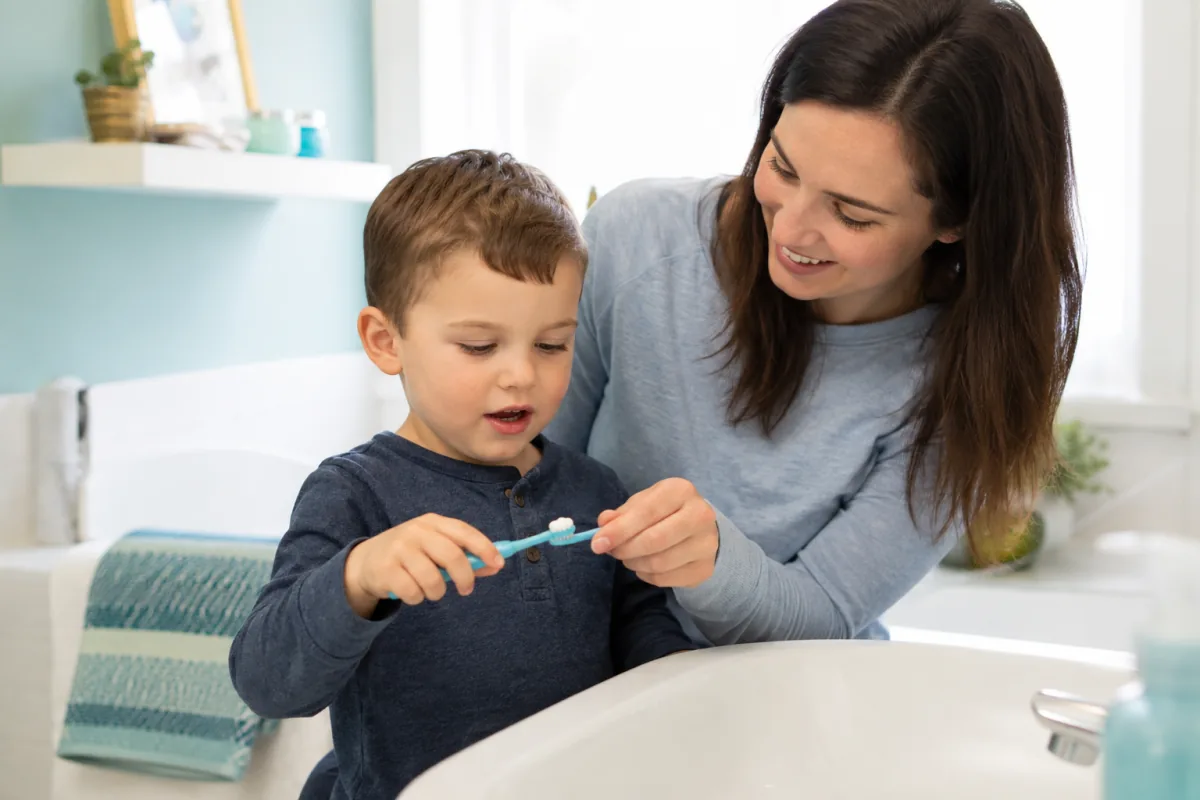
An adult should brush or thoroughly finish brushing until the child has the coordination to clean every surface reliably. Age alone is an imperfect measure. If they cannot tie shoelaces neatly or write with good control, they probably still need hands-on help.
For children younger than three, professional guidance considers cavity risk when recommending fluoride toothpaste; when used, only a rice-grain smear is needed. From ages three to six, use a pea-sized amount. An adult should dispense it, supervise, and encourage the child to spit out the excess rather than swallow it.
Do not rinse repeatedly with water after brushing; leaving a small fluoride residue gives more time for protection. Store toothpaste out of reach so a young child cannot eat it.
Cleaning between children’s teeth
Once two teeth touch, brush bristles cannot clean the contact fully. Floss those contacts daily. Floss picks can be easier for parents, although string floss allows the angle to be adjusted around each tooth.
Have the child lie with their head in your lap or stand in front of you while you look into a mirror. Slide the floss gently through the contact, curve it around one tooth, move below the contact, then repeat against the neighbour. Snapping can hurt the gum and make a child reluctant next time.
Bleeding usually reflects inflammation or a technique issue, not a reason to stop forever. Ask the dental team to demonstrate if flossing is consistently painful or impossible.
Sugar frequency matters more than many parents realize
After a sugary or starchy exposure, plaque bacteria produce acid for a period of time. Teeth handle occasional exposures better than grazing throughout the day. A small sweet eaten once with a meal can create less repeated acid challenge than the same amount nibbled over hours.
Common frequent exposures include:
- juice carried in a cup;
- sweetened milk or tea sipped slowly;
- crackers, cereal and dried fruit eaten repeatedly;
- gummy vitamins;
- sports drinks at every practice;
- cough syrups and other sweetened medicines; and
- snacks offered each time boredom appears.
This does not mean crackers or fruit are “bad.” The pattern matters. Offer planned meals and snacks, finish them within a reasonable period, and use plain water between. Keep treats occasional and serve them with a meal rather than turning them into an all-afternoon event.
Check medicine labels and speak with a pharmacist if a child needs long-term sweetened medication. Never stop prescribed treatment for dental reasons.
Bottles, breastfeeding and bedtime
Breastfeeding supports infant health and does not need to be framed as wrongdoing. Cavity risk is influenced by the total pattern after teeth erupt: feeding frequency, plaque, fluoride, other carbohydrates and whether teeth are cleaned.
Avoid putting a child to bed with a bottle containing milk, formula, juice or another sweetened drink. Liquid can pool around upper front teeth while saliva flow is low. If a comfort bottle is used after brushing, fill it with plain water only.
Begin cleaning the first tooth with a small soft brush. As nighttime feeding patterns evolve, discuss practical prevention with the child’s dentist rather than accepting shame-based advice.
Drinks for school, sports and hot days
Plain water is the best routine thirst drink. Milk can be nutritious with meals, but flavoured milk contains added or free sugars and should not be sipped all day. Juice exposes teeth to both sugar and acidity; whole fruit provides fibre and is generally a better regular choice.
Sports and energy drinks are usually unnecessary for ordinary children’s activities. They can be acidic and sugary. For prolonged, intense exercise, families should follow medical or sports nutrition advice, but frequent sipping should not become the default for every short practice.
After an acidic drink, rinse with water and wait before brushing so softened enamel is not scrubbed immediately. Do not use lemon water as a constant “healthy” sip; acidity still matters.
Fluoride varnish and dental sealants
Fluoride helps enamel resist acid and supports remineralization. Professional varnish places concentrated fluoride on tooth surfaces for children who may benefit. It complements fluoride toothpaste rather than replacing daily care.
Sealants are thin protective coatings placed in the grooves of susceptible back teeth. They can reduce the chance that plaque and food settle in pits too narrow for toothbrush bristles. A sealant does not cover every surface or make the tooth cavity-proof; brushing, flossing and monitoring remain necessary.
Our detailed guide to sealants and fluoride in Port Dover explains how these prevention tools differ.
What happens if a cavity is found?
The plan depends on whether the surface is intact, how far decay has progressed and whether the tooth is causing symptoms. Very early non-cavitated changes may be managed with fluoride, diet timing, better plaque removal and close monitoring. Once a physical hole forms, a restoration is often needed.
A tooth-coloured filling removes damaged structure and seals the area. Deep decay may require a protective pulp procedure, a crown made for a primary tooth or extraction. If a baby tooth is removed early, a space maintainer may sometimes be discussed.
Some minimally invasive approaches can slow selected cavities, but they have specific uses, limitations and appearance considerations. No product should be promised to reverse every cavity. Ask how success will be monitored and what would make treatment change.
Helping an anxious child
Use simple, honest language: “The dentist will count and check your teeth.” Avoid sharing stories about needles, drilling or your own difficult visits. Do not promise that nothing will feel unusual; tell them they can ask questions and the team will explain what is happening.
Schedule at a time when the child is rested. Bring medication and health information, and tell the office about sensory needs, previous experiences or communication preferences. A first visit may focus on trust and examination rather than completing every procedure.
At home, praise specific cooperation—opening, listening, trying—not a perfect outcome. Avoid using dental visits as punishment for eating sweets.
A realistic family routine
Morning:
- Brush with the correct small amount of fluoride toothpaste.
- Pack a water bottle for school.
- Choose a defined breakfast rather than constant grazing.
After school:
- Offer one planned snack.
- Keep water available for thirst.
- Save sweet items for a meal when possible.
Before bed:
- Floss contacts that touch.
- Have an adult brush or finish the brushing.
- After brushing, provide only water.
Habits will not be perfect every day. Returning to the routine at the next opportunity matters more than turning one missed brushing into conflict.
Children’s dental care in Port Dover
Port Dover Family Dentistry provides children’s dentistry, preventive visits, fluoride care, sealants and treatment planning for families in Port Dover and across Norfolk County. We focus on clear explanations for parents and age-appropriate experiences for children.
Call 519-583-2929 or request an appointment if you see a suspicious spot, your child reports pain or it is time to establish regular care. Early questions are welcome; prevention works best before discomfort begins.
Frequently asked questions
Are cavities contagious?
Cavities themselves are not passed from one person to another. Oral bacteria can be shared, but disease develops through the interaction of plaque, diet, fluoride, saliva, tooth structure and time. Avoid sharing toothbrushes and focus on healthy family routines.
Should children use mouthwash?
Mouthwash is not a substitute for brushing or flossing. Some older children at increased risk may be advised to use a fluoride rinse if they can reliably swish and spit. Use only an age-appropriate product under adult and dental guidance.
Why does my child keep getting cavities between teeth?
Close contacts retain plaque where brushing cannot reach. Daily flossing, fluoride exposure, snack timing and radiographs when indicated help manage this pattern. The dentist can demonstrate technique and assess whether other risk factors are present.
About the author
Port Dover Family Dentistry Team
Our team provides family-focused dental care in Port Dover, Ontario. We create practical oral-health education to help patients ask informed questions and feel more confident about care. This article is general information and does not replace an examination or personalized diagnosis.