
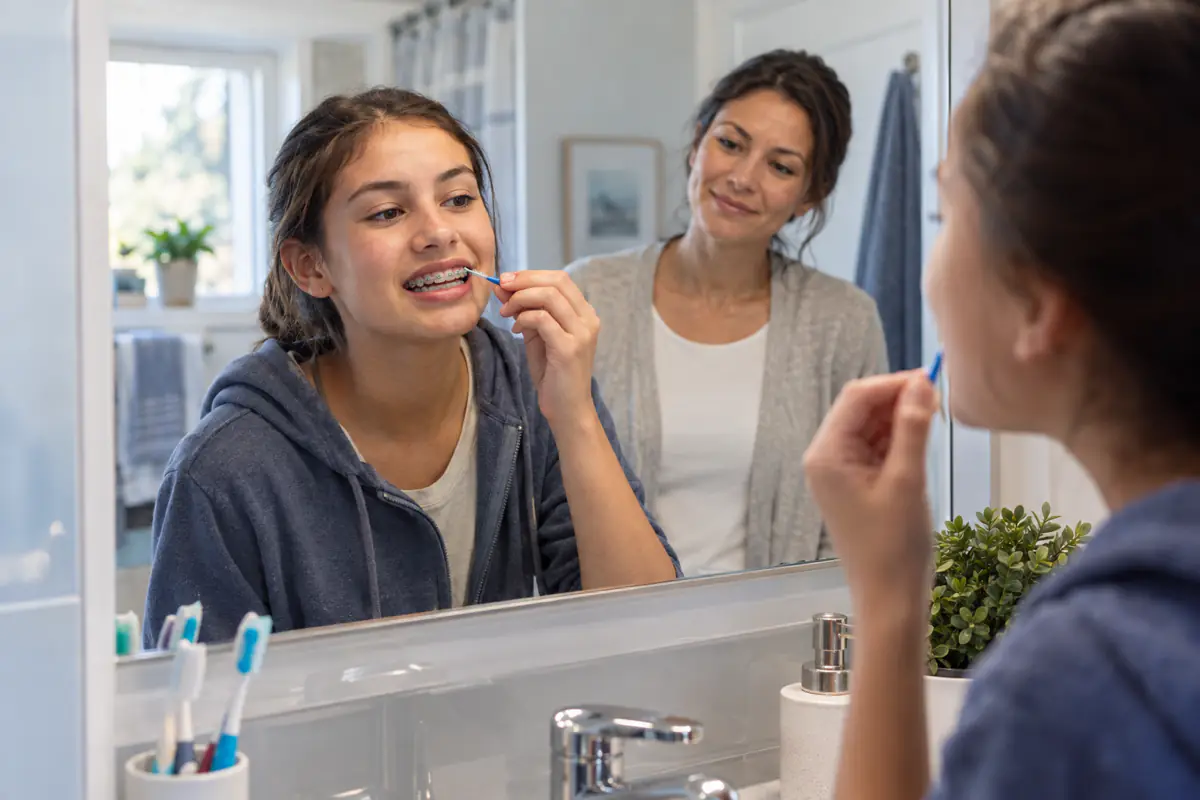
Fixed braces create ledges and narrow spaces where plaque and food collect. A thoughtful routine for braces oral hygiene in Simcoe can protect enamel and gums while the orthodontic appliance guides teeth into new positions. The routine takes longer than brushing without braces, but it becomes manageable when each tool has a clear purpose.
Your orthodontist adjusts the appliance and monitors tooth movement. Your family dentist and hygienist continue to examine for cavities, gum inflammation and other oral health concerns. Keeping both types of appointments helps you finish treatment with teeth that are not only straighter but also healthy.
Why braces change the cleaning challenge
Brackets, wires, hooks and elastics interrupt the smooth surfaces that a toothbrush normally sweeps. Plaque can mature along the gumline and around bracket edges, especially on upper front teeth and lower molars. Trapped food is visible, but invisible plaque is the greater long-term concern.
When bacteria in plaque encounter sugars and starches, they produce acids. Repeated acid attacks draw minerals from enamel. The earliest visible result can be a chalky white outline beside a bracket. If the process continues, a cavity forms.
Plaque also inflames gums. Puffy tissue may partially cover brackets, bleed during cleaning and make thorough brushing more difficult. Gentle but consistent cleaning interrupts that cycle.
Your braces-cleaning toolkit
A useful kit may include:
- a soft manual orthodontic brush or an electric brush with a suitable head;
- fluoride toothpaste;
- floss threaders or orthodontic floss;
- an appropriately sized interdental brush;
- a small mirror;
- orthodontic wax; and
- a travel pouch for school, work or sports.
A water flosser may be a valuable additional tool. It can flush around brackets and under wires, but technique matters and it may not replace contact cleaning for every person. Ask your hygienist to disclose plaque after you clean so you can see which areas remain.
Avoid hard bristles and improvised sharp objects. Pins, fingernails and toothpicks can injure the gum or distort the appliance.
A step-by-step brushing method
Start by removing elastics or removable parts exactly as your orthodontist instructed. Rinse to dislodge loose food. Place a small amount of fluoride toothpaste on a soft brush.
Clean in sections:
- Angle the bristles toward the gumline above the brackets.
- Brush the top edge of each bracket.
- Angle upward from below to clean the lower bracket edge.
- Brush the chewing and inside surfaces as usual.
- Spend extra time behind the lower front teeth and around molar tubes.
Use light pressure and small movements. Forceful scrubbing can damage gums without reaching under the wire. Brush for long enough to clean every surface rather than treating two minutes as an automatic finish line.
Check in a well-lit mirror. If a bracket edge still looks cloudy or food remains, return to it.
When to brush
The American Association of Orthodontists notes that braces create extra spaces where food, plaque and bacteria hide and recommends diligent cleaning between visits. Your personal schedule should come from your dental and orthodontic teams.
Many patients brush after breakfast, after major meals and before bed. If you cannot brush at school or work, rinse vigorously with water and clean when you can. Carrying a compact brush makes consistency easier.
After acidic food or drink, rinse with water and allow saliva time to neutralize the mouth before brushing. Immediate aggressive brushing can add wear while enamel is softened.
Bedtime cleaning deserves particular attention because saliva flow falls during sleep and no later meal will dislodge debris.
How to floss under the wire
Fixed braces block ordinary floss from dropping between teeth from the biting edge. A floss threader or stiff-ended orthodontic floss guides the strand under the main wire. Once through, curve it around one tooth in a C shape, slide gently below the gum edge and repeat on the neighbouring tooth.
Use a clean section as you move around the mouth. Do not snap floss into the papilla. Bleeding commonly reflects inflammation, but rough technique can also injure tissue. Ask for a demonstration if you cannot tell which is happening.
The process may feel slow at first. A consistent sequence—upper right to upper left, then lower left to lower right—reduces missed spaces.
Interdental brushes and water flossers
A small interdental brush can pass under the archwire and beside brackets. Insert it gently without forcing the wire. The size should contact the area without bending excessively or traumatizing gums.
A water flosser directs a pulsating stream around the appliance and gumline. Begin at a low setting, lean over the sink and trace each bracket and space. It can be particularly helpful for people with limited dexterity, but it does not make brushing optional.
Tools are not competitors. One person may use threaded floss nightly and an interdental brush after lunch; another may combine brushing, an interdental brush and a water flosser. What matters is measurable plaque control without injury.
Fluoride protects vulnerable enamel
Fluoride toothpaste helps replace minerals lost during early acid attacks and makes enamel more resistant. Spit after brushing and follow your dental professional’s advice about rinsing. Keep toothpaste appropriate for the patient’s age and supervise younger children.
Patients with active white spots or higher cavity risk may need fluoride varnish or a prescription-strength home product. More fluoride is not automatically better, and high-concentration products must be used and stored exactly as directed.
Whitening toothpaste can be abrasive or create uneven colour because enamel beneath brackets is not exposed in the same way. Save cosmetic whitening decisions until after treatment and a dental assessment.
White-spot lesions need early attention
A white spot beside a bracket is often an area of demineralized enamel. It may look matte or chalky when dry. This is not glue left behind, and waiting until braces are removed can allow the process to become a cavity.
Contact your dentist or orthodontist. Early management focuses on better plaque removal, reducing frequent sugar and acid exposure, and appropriate fluoride. Some lesions become less noticeable after treatment; others remain visible and may need cosmetic care later.
Do not try to scrub the colour away. Aggressive brushing cannot remove subsurface mineral loss and may damage the gumline.
Food habits that protect braces and teeth
Orthodontic food rules serve two goals: avoid breaking the appliance and reduce cavity risk. Hard foods can detach brackets or distort wires. Sticky foods can pull on components and remain around teeth.
Follow the orthodontist’s specific list. Common strategies include cutting raw apples and firm vegetables into small pieces, removing corn from the cob, avoiding ice and hard candy, and not chewing pens. Popcorn kernels are a frequent culprit for both broken appliances and cracked teeth.
Frequency matters for decay. Sipping sweet coffee, energy drinks, sports drinks or pop over hours creates repeated acid attacks. Choose water between meals and keep sweet items to limited occasions rather than grazing continuously.
What to do after a sugary or acidic drink
Water is the best routine drink for teeth. If you have another beverage, finish it rather than sipping all day, use a straw when appropriate, and rinse with water afterward. Do not hold or swish acidic drinks around the brackets.
Wait before brushing after a strongly acidic exposure. Saliva needs time to buffer acids and begin remineralization. Your dental team can advise timing based on your risk and routine.
Sugar-free gum may help saliva flow for some people, but chewing gum is not suitable with every appliance. Ask the orthodontist before using it.
Sore spots, loose wires and broken brackets
New braces and adjustments can cause short-lived tenderness. Soft food and the comfort measures advised by your orthodontist can help. Orthodontic wax creates a temporary barrier over a bracket or wire that rubs the cheek.
Call the orthodontic office for a broken bracket, distorted wire, missing component or persistent ulcer. Do not cut a wire unless the orthodontic team specifically guides you, and never use household glue.
A broken appliance is not always a hospital emergency, but severe facial swelling, uncontrolled bleeding, breathing difficulty or a swallowed component affecting the airway requires immediate medical help.
Continue cleaning around a loose bracket carefully until it is repaired.
Dental cleanings during orthodontic treatment
Orthodontic appointments do not replace routine dental examinations and hygiene visits. The dentist checks for decay, gum disease, enamel changes, failing restorations and other conditions outside tooth movement.
Some patients need more frequent professional cleaning because plaque accumulates rapidly around the appliance. The interval depends on gum health, cavity experience, home care, diet and medical risks—not simply the presence of braces.
Coordinate appointments when possible. If the dentist sees a white spot or cavity, information can be shared with the orthodontist so care is planned around the wire and brackets.
Braces, sports and mouthguards
Athletes with braces need a mouthguard designed to accommodate the appliance and ongoing tooth movement. An ordinary tight guard can fit poorly as teeth shift. Orthodontic guards generally provide room around brackets while protecting lips and cheeks.
Wear the guard for practice and games. Clean it after every use and check for tears, rough edges and fit changes. Never chew it, leave it in a hot car or store it wet in a sealed container.
If a tooth is displaced or knocked out during sports, seek urgent care even if the braces appear to hold it in place.
Building independence for teens
Parents can support a routine without turning every brushing session into a conflict. Agree on fixed cleaning times, keep supplies in more than one location and use disclosure tablets occasionally if recommended. Focus feedback on visible plaque rather than general criticism.
Teens should know how to describe a broken appliance, where wax is stored and whom to call. A school kit can include a brush, interdental brush, mirror and wax in a labelled pouch.
Independence still includes professional checks. A young person may believe the teeth are clean because no food is visible while plaque remains at the bracket margins.
Braces oral hygiene support near Simcoe
Port Dover Family Dentistry provides preventive and restorative dental care for patients with braces from Simcoe and other Norfolk County communities. We can monitor gums and enamel, provide professional cleaning, demonstrate tools and coordinate with the treating orthodontist when concerns arise.
Call 519-583-2929 or request an appointment. Bring the brushes and flossing tools you use at home so the hygienist can offer practical, personalized feedback rather than a generic demonstration.
Frequently asked questions
Why do my gums bleed around braces?
Plaque-related inflammation is common when cleaning is difficult, but forceful technique can also cause bleeding. Improve gentle plaque removal and book an assessment if bleeding persists, swelling is significant or discomfort increases.
Can I whiten my teeth while wearing braces?
Whitening may act unevenly because brackets cover part of the enamel, and it can increase sensitivity. It is usually better to discuss whitening after braces are removed and oral health is stable.
Do I still need a family dentist if I see an orthodontist?
Yes. The orthodontist manages tooth movement and the appliance, while routine dental care monitors cavities, gums, restorations and overall oral health. Both roles are important during treatment.
About the author
Port Dover Family Dentistry Team
Our team provides family-focused dental care in Port Dover, Ontario. We create practical oral-health education to help patients ask informed questions and feel more confident about care. This article is general information and does not replace an examination or personalized diagnosis.