
Seeing pink in the sink after brushing can be easy to dismiss. However, bleeding gums in Simcoe residents often provide an early warning that the tissue is inflamed or being injured. Bleeding is common, but healthy gums generally should not bleed during careful daily cleaning.
The good news is that an early plaque-related problem can often improve when the cause is identified and daily care becomes consistent. The important step is not to guess. Bleeding can have several contributors, and the right response depends on whether the issue is simple gingivitis, more advanced gum disease, technique-related trauma, medication or a health condition.
Why gums bleed
Plaque is a soft, sticky bacterial film that continually develops on teeth. When it remains around the gumline, the immune system responds and the tissue can become red, swollen and easier to bleed. This early stage is called gingivitis. It does not yet involve the attachment and bone loss seen in periodontitis, and it can usually be reversed with effective plaque removal and professional guidance.
Plaque that is not removed can harden into calculus, also called tartar. A toothbrush and floss cannot lift hardened calculus from the tooth. It creates a rough surface that retains more plaque, which is why a professional cleaning may be needed even when someone starts brushing carefully.
According to the National Institute of Dental and Craniofacial Research, red, swollen or bleeding gums are among the symptoms of gum disease. Other possible signs include persistent bad breath, tender gums, recession, loose or sensitive teeth, pain while chewing and a change in the fit of partial dentures. Gum disease can also be quiet, so the absence of pain does not prove everything is healthy.
Is new flossing the cause?
People sometimes notice bleeding immediately after restarting flossing and conclude that floss is damaging their gums. More often, the cleaning reveals inflammation that was already present. If plaque has collected between teeth, gentle daily cleaning can cause short-term bleeding before the tissue improves.
Technique still matters. Snapping floss hard into the gum can cut delicate tissue. Guide it between the teeth, curve it around one tooth in a C shape and move it gently below the edge of the gum. Clean the neighbouring tooth before moving to the next space. An interdental brush, water flosser or floss holder may be easier for some hands and spaces, but the correct size and method vary.
If bleeding remains after a period of consistent, gentle care—or one spot repeatedly bleeds—arrange an examination. Calculus, a rough filling, decay, crowding or a periodontal pocket may prevent home care from solving the problem alone.
Brushing pressure and the wrong tools
Hard scrubbing can irritate gums and contribute to recession or root wear. Choose a soft-bristled manual or powered brush and use only enough pressure to keep the bristles in contact with the tooth. Aim along the gumline rather than polishing only the centres of the crowns.
Brush twice daily for two minutes with fluoride toothpaste. Spitting out excess paste without immediately rinsing heavily can leave fluoride in contact with the teeth longer. Replace a brush or powered head when the bristles are splayed; bristles that flare quickly may signal too much pressure.
Bleeding is not a reason to skip the area. Avoidance lets more plaque accumulate and can perpetuate inflammation. If even light contact causes substantial bleeding or pain, call the dental office for individualized advice instead of forcing the brush into tender tissue.
Other factors that can contribute
Plaque is the most common starting point, but it is not the only consideration. A dental and medical history may uncover several overlapping factors:
- Pregnancy and other hormonal changes can make gums respond more strongly to plaque.
- Diabetes, particularly when it is not well controlled, is associated with greater periodontal risk and can affect healing.
- Smoking raises the risk of gum disease yet may reduce visible bleeding by changing blood flow. Less bleeding does not mean a smoker’s gums are healthier.
- Dry mouth from medication, illness or dehydration reduces saliva’s protective effect and can make plaque control harder.
- Braces, retainers, bridges and crowded teeth create additional areas where plaque can collect.
- Blood-thinning medication and some supplements can make bleeding easier to notice.
- Medicines can also cause gum enlargement, which creates deeper plaque-retaining contours.
- A nutritional deficiency, blood disorder or another medical condition is less common but may be considered when bleeding is unusual, widespread or accompanied by other symptoms.
Never stop an anticoagulant, aspirin or any prescribed medicine because your gums bleed. Bring an up-to-date medication and supplement list to your appointment. Your dentist can communicate with your physician or pharmacist when coordination is appropriate.
Gingivitis versus periodontitis
Gingivitis is inflammation limited to the gum tissue. Periodontitis involves loss of the attachment and bone that hold teeth in place. You cannot reliably distinguish them in a bathroom mirror. Both may bleed, and neither must be painful.
During an assessment, the dental team looks at colour, swelling, plaque and calculus. A small periodontal probe measures the spaces around teeth and records bleeding. Tooth mobility, recession and the way restorations fit may also be checked. Dental X-rays can show supporting bone and hidden deposits when indicated.
This information determines whether routine preventive care is appropriate or whether periodontal treatment is needed. If you are also noticing that teeth look longer, our guide to gum recession in Simcoe explains why exposed roots deserve a closer look.
How treatment is matched to the cause
For gingivitis, a professional cleaning removes deposits that home tools cannot, while coaching helps you clean the areas that were being missed. Improvement then depends on daily plaque control. Mouthwash may be a useful addition in selected cases, but it cannot remove calculus and does not replace mechanical cleaning.
Periodontitis may require scaling and root planing, sometimes called deep cleaning, to remove deposits below the gumline. The dentist may treat the mouth in sections and arrange reassessment to see how pockets and bleeding respond. Advanced or complex disease may need a periodontist’s care. Long-term periodontal maintenance is often more frequent than a standard preventive schedule because controlling recurrence is part of treatment.
A rough restoration can sometimes be adjusted or replaced. Dry-mouth management, smoking cessation support and coordination of diabetes care may improve the environment for healing. Treatment is individualized; buying an antiseptic rinse without an examination cannot reveal or correct bone loss.
A practical home routine
While waiting for a non-urgent appointment, keep care simple and gentle:
- Brush morning and night with a soft brush and fluoride toothpaste.
- Clean between every tooth once a day using a tool that fits without force.
- Pay attention to the back teeth and the tongue side of lower front teeth, where deposits are easily missed.
- Rinse the brush and let it air-dry; do not share it.
- Note where and when bleeding occurs, along with swelling, bad taste or discomfort.
- Avoid tobacco and frequent sugary snacks, and drink water regularly.
- Keep dental visits at the interval recommended for your risk rather than waiting for pain.
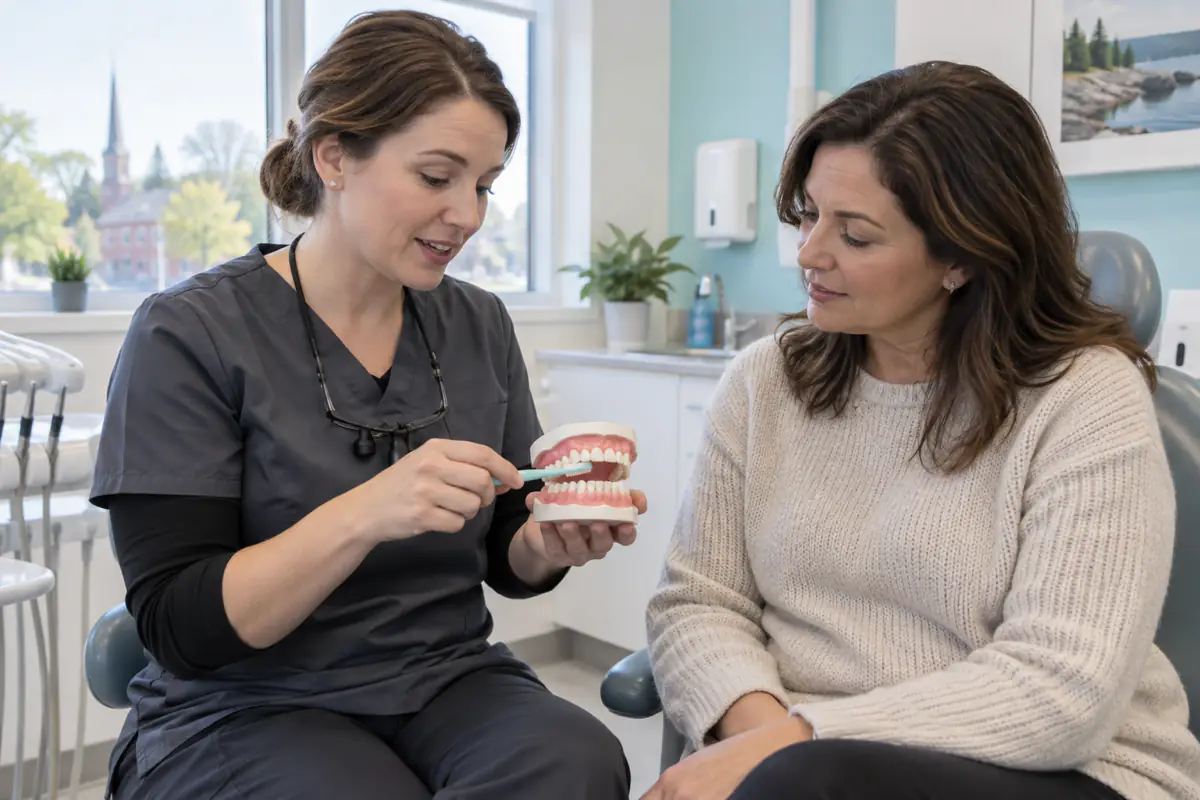
If dexterity, arthritis, braces or a fixed bridge makes cleaning difficult, ask for a demonstration with tools suited to your mouth. The best device is one you can use safely and consistently.
What not to do
Do not scrub harder to “toughen” the gums. Healthy tissue does not need to form a callus. Do not apply peroxide, undiluted essential oils, aspirin or harsh household substances to the gumline. These products can burn tissue without treating the underlying problem.
Do not assume that bleeding from one site is simply floss damage. A food trap, cavity, cracked tooth, overhanging filling or localized periodontal problem may need attention. Likewise, do not use the lack of bleeding as proof of health—especially if you smoke or have not had periodontal measurements recently.
For a clearer explanation of why hard deposits persist despite brushing, see plaque versus tartar in Simcoe.
When bleeding needs urgent attention
Routine bleeding during brushing generally warrants a dental appointment rather than an emergency-room visit. Seek prompt dental care if bleeding is spontaneous, increasing, associated with pus, a loose tooth, significant swelling or severe pain.
Obtain urgent medical help for bleeding that will not stop with gentle pressure, heavy bleeding after an injury or procedure, faintness, difficulty breathing or swallowing, rapidly spreading face or neck swelling, or swelling accompanied by fever and feeling very unwell. Unexplained bruising, nosebleeds or bleeding elsewhere should also be discussed with a physician.
Preventing the next episode
Once inflammation settles, prevention means keeping plaque disrupted every day and removing calculus professionally when it develops. It also means managing risks that are not purely dental. Tell the dental team about pregnancy, diabetes, tobacco use, medication changes, dry mouth and family history of early tooth loss.
Photographs and periodontal measurements create a useful baseline. At later visits, changes in pocket depth, recession and bleeding can be compared rather than relying on memory. A personalized recall interval allows small problems to be addressed before they threaten tooth support.
Bleeding may be the first symptom that motivates a visit, but the real goal is comfortable, stable gums and teeth that remain functional for the long term.
Book a gum assessment near Simcoe
Persistent bleeding deserves an explanation, not embarrassment. Port Dover Family Dentistry welcomes patients from Simcoe and across Norfolk County for gum assessments, preventive care and individualized treatment planning. We can identify likely causes, demonstrate techniques and explain any recommended care in plain language.
Call 519-583-2929 or request an appointment if your gums keep bleeding, look swollen or have changed. If symptoms are severe or spreading, tell our team when you call so the urgency can be assessed appropriately.
About the author
Port Dover Family Dentistry Team
Our team provides family-focused dental care in Port Dover, Ontario. We create practical oral-health education to help patients ask informed questions and feel more confident about care. This article is general information and does not replace an examination or personalized diagnosis.